Gazania cultivation methods and precautions
Gazania, also known as treasure flower, is a plant in the Asteraceae family. Native to South Africa, gazania requires certain cultivation methods when planted in China. To grow gazania well, in addition to understanding its living habits, you also need to master certain techniques. Below is a detailed introduction to the cultivation methods and key points for gazania.
Morphological characteristics of gazania
Gazania is an annual or biennial herb. It has rhizomes. The leaves grow in clusters from the base, are lanceolate or obovate-lanceolate, with entire or shallow pinnatifid margins, and the undersides are densely covered with white woolly hairs. The ligulate flowers are white, yellow, or orange-red with a glossy sheen. Common gazania varieties include the Daybreak series, an early-flowering type that blooms 7-20 days earlier than all other gazanias, with flower colors in yellow, orange, red-brown, pink, white, and orange/yellow bicolor; among these, new varieties include Bright Orange and Red Stripe.
Planting gazania
Potted gazania commonly uses 12-15 cm pots. The potting soil can be a mix of leaf mold, barnyard manure soil, and coarse sand in equal parts. Seedlings can be potted up when they grow to 4-5 leaves.
Key points for potted gazania
Potted gazania is grown in 10 to 16 cm flower pots with a well-draining medium. The medium pH is 5.8 to 6.2, and the EC value is 1.0 to 1.5. Keep the potting soil dry, and water only after the potting soil dries out each time. Gazania should be watered in the morning, which helps the leaf surface stay dry at night and prevents disease. Too much water causes leggy growth, while too little water causes early flowering and the leaf surface is easily scorched under strong light.
Post-production handling after planting gazania
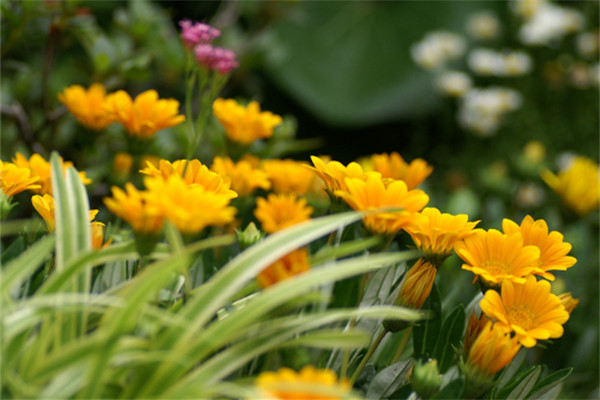
Gazania's ligulate petals have novel patterns, and the flowers open toward the sun and close after sunset, which is very interesting. Using potted gazania to edge flower beds or lawns is very natural and harmonious. Dotted in a small courtyard or on a windowsill, they look like rows of flower faces, comical and amusing. Of course, gazania is also a very good cut flower material.
Planting gazania
Potted gazania commonly uses 12-15 cm pots. The potting soil can be a mix of leaf mold, barnyard manure soil, and coarse sand in equal parts. Seedlings can be potted up when they grow to 4-5 leaves.
Key points for potted gazania
Potted gazania is grown in 10 to 16 cm flower pots with a well-draining medium. Keep the potting soil dry, and water only after the potting soil dries out each time. Gazania should be watered in the morning, which helps the leaf surface stay dry at night and prevents disease. Too much water causes leggy growth, while too little water causes early flowering and the leaf surface is easily scorched under strong light.
Key points for watering gazania
Keep the soil moderately moist during the growing period.
Temperature and light for gazania
Under conditions of sufficient light and suitable temperature, it can bloom continuously. If you are not saving seeds, promptly cut off spent flowers after they fade, which helps form more flower buds and produce more blooms.
Key points for fertilizing gazania
Fertilize about once every half month. You can use Huiyou 15-15-30 special fertilizer for potted flowers or decomposed cake fertilizer water.
Pest and disease control for gazania
Leaf spot disease is a common problem and can be sprayed with a 1000-fold dilution of 25% carbendazim wettable powder.
Pests include red spider mites and aphids. For aphids, spray with a 1000-fold dilution of 2.5% rotenone emulsifiable concentrate; for red spider mites, spray with a 1500-fold dilution of 40% omethoate emulsifiable concentrate.
Propagation of gazania
Gazania is commonly propagated by sowing, division, and cuttings.
Sowing can be done in April for spring sowing or in September for autumn sowing. The suitable germination temperature is 16-20°C, and germination occurs 15-25 days after sowing. Transplant the seedlings for the first time when they grow one pair of true leaves.
Division of gazania is mostly done in March-April before the leaf clusters sprout. Dig out the overwintered mother plant and cut it vertically from the root crown with a sharp knife. Each division should carry buds and roots and can be directly potted.
Cuttings of gazania can be done in spring and autumn. Cut shoots with stem nodes, keep the top 2 leaves, insert them into a sand bed, and keep the medium moist. At 20-25°C, roots form 20-25 days after insertion. If cuttings are treated with 0.1% indolebutyric acid for 1-2 seconds, rooting is faster.
Detailed explanation of gazania cultivation methods
Gazania generally refers to treasure flower
Treasure flower (scientific name: Gazania rigens), also known as gazania and African daisy, belongs to the order Asterales and is a perennial herbaceous plant in the family Asteraceae. Its flowering period is roughly from late spring to early summer. The leaves are clustered, lanceolate, obovate-lanceolate, or flat-linear, with entire or shallow pinnatifid margins, and the undersides are densely covered with white woolly hairs. The flower diameter is 7~8 cm, and the ligulate flowers are white, yellow, or orange-red with a glossy sheen. The flowering period is April~May. Native to South Africa and Mozambique, it is suitable for arranging flower beds and flower borders. Because the entire inflorescence resembles a medal, it is called treasure flower. It likes sunlight, prefers growing in cooler places, is drought-tolerant, and tolerates poor soil; it is semi-hardy, so it can overwinter successfully in regions with milder winters.
The cultivation methods for gazania are basically similar to those for ordinary flowers, but it also has some characteristics of its own! It is commonly propagated by sowing, division, cuttings, and tissue culture.Propagation by sowing: Sow in spring in April or in autumn in September. Each gram contains 560~580 seeds. The suitable germination temperature is 16~18°C, and germination occurs 14~30 days after sowing. When the seedlings have 1 pair of true leaves, move them to 4 cm seedling trays. In some regions, the seeds have the ability to self-sow and reproduce.
Propagation by division: Before stem and leaf growth in March~April, dig out the overwintered mother plant and cut it vertically from the root crown with a knife, but each division must carry buds and roots and can be directly potted. Propagation by cuttings: Often done in spring and autumn; indoor cultivation can be done year-round. Cut shoots with stem nodes and keep the top 2 leaves. If the leaves are too large, you can also cut off 1/2 to reduce water evaporation from the leaf surface. Insert into a sand bed, keep the room temperature at 20~24°C and maintain relatively high air humidity. Roots form 20~25 days after insertion. If treated with 0.1% indolebutyric acid for 1~2 seconds, rooting is faster. Propagation by tissue culture: Shoot tips and flower buds are commonly used as explants. After disinfection, shoot tips are inoculated on MS medium supplemented with 1~3 mg/L 6-benzylaminopurine and 0.2 mg/L naphthaleneacetic acid to induce callus and differentiate shoots. Then transfer to MS medium supplemented with 1 mg/L naphthaleneacetic acid and culture for 30~40 days; the seedlings root and form complete small plantlets.
Sowing can be done in spring or autumn, with a light covering of soil, and humidity must be maintained very well. Germination occurs in about 7~10 days. The cycle for division and shoot cuttings is about April or October. For division, divide into one plant with 2~3 shoots. Plant out in early spring; for cuttings, insert each shoot into well-draining soil.
Treasure flower, also known as gazania, has common high-quality varieties such as: the Daybreak series, the Harlequin series, and the Kiss series. The flower colors are colorful, bright and beautiful, and the petals are glossy. They open by day and close at night, which is very charming. They are excellent materials for edging flower beds and flower borders and for cut flowers.
The main common disease of treasure flower is leaf spot disease. This disease should be prevented mainly. You can use a 1000-fold dilution of 25% carbendazim for foliar spraying. If it has already occurred, spray the leaves with an 800-fold dilution once every 7 days for 2-3 consecutive times, and it can basically be cured.
The main pests of this flower include black red mites and aphids. They are piercing-sucking pests. For these pests, you can use imidacloprid and its improved formulations, such as Wanlihong and Dinghong, for foliar spraying. At present, domestic varieties produced as potted flowers and flower bed flowers are mainly propagated by sowing imported F1 hybrid seeds to ensure consistent and efficient variety performance. In addition, treasure flower can also be propagated by division and cuttings.
Propagation by division. Before stem and leaf growth in spring, dig out the overwintered mother plant. For potted plants, pour the mother plant out of the flower pot, cut vertically at the root crown with a knife, and divide it into several clumps. Each clump must carry buds and roots.
Propagation by cuttings. Indoor cultivation can be cuttings year-round, while open-field cultivation can be cuttings in the cool seasons of spring and autumn. Use shoots as cuttings and keep the top 2 leaves. If the leaves are large, cut off 1/2 to reduce water evaporation from the leaf surface. Insert into 50-cell plug trays or directly into a sand bed, control the temperature at 20°C to 25°C, and maintain relatively high air humidity. Generally, roots form 20 to 25 days after cutting. If dipped in 1000 mg/kg indolebutyric acid solution for 1 to 2 seconds, rooting can be accelerated. After rooting, transplant into flower pots with a diameter of 8 to 12 cm for cultivation.