The reasons hydrangeas fail to bloom are improper lighting and excessive fertilisation
Hydrangeas have a long blooming period and large, brightly coloured flowers, making them a favourite among many flower lovers. In daily life, many people grow hydrangeas and look forward to them blooming. But by June, many growers' hydrangeas still show no signs of activity, so why won't hydrangeas bloom? On this, the editor has summarised 5 reasons why hydrangeas fail to bloom. Growers with problems, come and take a look!
1. Why hydrangeas fail to bloom: it is related to lighting/fertilisation
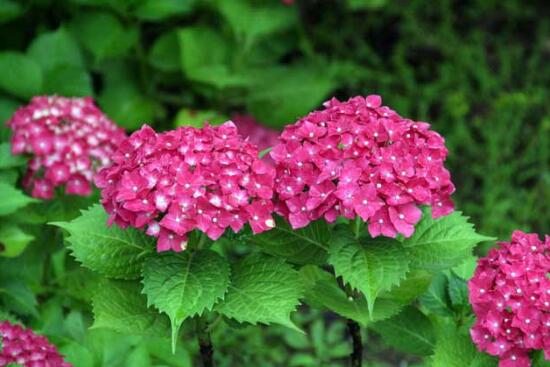
Growing hydrangeas at home is all about admiring their huge flower clusters and their changeable flower colours. But if you don't follow the hydrangea growing methods when caring for them, they will struggle to bloom. As for why hydrangeas fail to bloom, the editor has summarised 5 points: too much nitrogen fertiliser, indoor room temperature too high in winter, light too weak, light too long, and pruning not done in time. Let's look at the specific solutions below.
2. Reasons hydrangeas fail to bloom and their solutions
1. Too much nitrogen fertiliser
Hydrangeas like fertiliser, and before the flower bud differentiation stage, nitrogen fertiliser is the main type used. But if too much nitrogen fertiliser is applied at this time, it will cause nutrient excess in the plant, inhibit growth, make flower bud differentiation difficult, and thus produce the symptom of not blooming.
Solution: If too much fertiliser has been applied and you notice something is wrong, you should water to dilute it, or directly change the potting soil to let the hydrangea dry out. If you notice it in time, the hydrangea will still bloom.
2. Indoor room temperature too high in winter
Hydrangeas are not cold-tolerant, so in winter they must be moved indoors for care. Hydrangea flower bud differentiation occurs after flowering, that is, in the autumn and winter seasons, when the temperature is 5-10°C. Long-term growth in the wild has allowed hydrangeas to adapt to this temperature. But when cared for indoors, the temperature is above 18°C, and at this time hydrangea flower bud differentiation is very difficult, so of course they won't bloom.
Solution: In winter, if the hydrangea is placed indoors, we should control the temperature at 5-10°C.
2. Light too weak
Hydrangeas prefer shade and do not like full sun; they need appropriate lighting. Once there is too little light, the leaves will grow leggy, consuming a large amount of nutrients, and the result is insufficient nutrition during flower bud differentiation, which affects blooming.
Solution: Appropriately increase the hydrangea's light exposure time, and fertilise in the right amount.
3. Light too long
In the hydrangea growing methods, we emphasised lighting, because hydrangeas are short-day plants, so during the flower bud differentiation stage the light duration must not exceed 10 hours. Once the light period is too long, it will affect flower bud differentiation and affect blooming.
Solution: Do not let the hydrangea receive excessively long light exposure; besides this, for hydrangeas placed in living rooms, they must not be exposed to light for long periods at night either.
4. Improper pruning
The hydrangea blooming period is June-August. After it finishes blooming, its flower branches should be properly pruned to reduce nutrient loss. If not pruned, or not pruned in time, in the following year's June-August, it will be very difficult for the hydrangea to form flower branches, causing reduced or no blooming. Solution: Just prune in time.
Overall, the beauty of hydrangeas is mainly concentrated in their flowers, and failing to bloom would be a very serious matter. Therefore, we must carefully care for them according to the requirements. Of course, if problems are found, they should be solved in time according to the methods above. That is all the editor has to introduce about the reasons hydrangeas fail to bloom, and I hope it can help everyone.
Reasons hydrangeas fail to bloom: 4 causes lead to no blooming
When caring for hydrangeas you will always encounter some problems. Some flower lovers have found that the hydrangeas they grow do not bloom, so what causes hydrangeas not to bloom? Below are several reasons hydrangeas fail to bloom, such as lighting, fertilisation, unsuitable temperature and other reasons.
Reason 1 why hydrangeas fail to bloom: insufficient or excessively long light durationIf during the process of growing hydrangeas they receive very little light, it will cause the hydrangea leaves to grow leggy and grow poorly, so the leaves consume too many nutrients, and then the hydrangea has insufficient nutrition during flower bud differentiation, which naturally affects the blooming result.
Although hydrangeas are short-day flowering plants, during the flower bud differentiation stage the light duration should not easily exceed 10 hours. But if the hydrangea is placed in a living room, being exposed to light for long periods at night will increase the light duration and affect flower bud differentiation.
2. Too much nitrogen fertiliser appliedAlthough hydrangeas have a relatively large demand for fertiliser during the growing period, in the early stage of hydrangea flower bud differentiation, nitrogen fertiliser is the main type used to promote hydrangea branching; during the differentiation stage, phosphorus fertiliser is the main type used to promote flower bud growth. But in autumn and winter the sunshine duration is short, and hydrangea growth is relatively slow. If flower lovers apply excessive nitrogen and phosphorus fertiliser, it will cause nutrient excess in the plant and inhibit growth, so hydrangea flower bud differentiation becomes difficult and will affect the following year's blooming.
3. Winter temperature too highHydrangea flower bud differentiation occurs after flowering, that is, in the autumn and winter seasons. The long-term growth environment has led them to adapt to this lower-temperature environment. Usually the temperature is 5-10°C, and too high a temperature instead affects differentiation. At home, hydrangeas are placed indoors for care, with the temperature above 18°C, making normal flower bud differentiation difficult.
4. Unreasonable pruningGenerally the hydrangea blooming period is June-July. After the blooming period, the hydrangea's flower branches need to be pruned to reduce nutrient loss. If the plant grows too vigorously and is also heavily pruned in early spring, then it will be very difficult to form flower branches in June-August, causing reduced or no blooming.
Why won't hydrangeas (bigleaf hydrangea) bloom?
To ensure hydrangeas bloom normally, you need to pay attention to these points: reasonable fertilisation, appropriate lighting, lowering the temperature in winter, and timely pruning.
The main reasons for not blooming are as follows:
Too much nitrogen fertiliser
Hydrangeas have a relatively large demand for fertiliser during the growing period. In the early stage of flower bud differentiation, nitrogen fertiliser is mainly used to promote branching; during the differentiation stage, phosphorus fertiliser is mainly used to promote flower bud growth. But in autumn and winter the sunshine duration is short, and hydrangea growth is relatively slow. If excessive nitrogen and phosphorus fertiliser is applied, it will cause nutrient excess in the plant and inhibit growth, making flower bud differentiation difficult and affecting the following year's blooming!
Light too weak
Home cultivation is limited by conditions and receives less light, which will cause leaves to grow leggy and grow poorly. The leaves consume too many nutrients, so there is insufficient nutrition during flower bud differentiation, affecting blooming.
Light duration too long
Hydrangeas are short-day plants, and during the flower bud differentiation stage the light duration must not exceed 10 hours. Under normal circumstances the light will not be too long. But for hydrangeas placed in living rooms, long periods of light at night will increase the light exposure and affect flower bud differentiation.
Winter room temperature too high
Hydrangea flower bud differentiation occurs after flowering, that is, in the autumn and winter seasons. The long-term growth environment has led them to adapt to this lower-temperature environment. Usually the temperature is 5-10°C, and too high a temperature instead affects differentiation. At home, hydrangeas are placed indoors for care, with the temperature above 18°C, making normal flower bud differentiation difficult.
Unsuitable pruning time
The hydrangea blooming period is June-July. Usually after the blooming period the flower branches should be pruned to reduce nutrient loss. If the plant grows too vigorously and is also heavily pruned in early spring, it will be very difficult to form flower branches in June-August, causing reduced or no blooming.