What to do when camellia sasanqua leaves turn yellow? Control watering, adjust temperature, and shade from strong light
Camellia sasanqua, a famous flowering plant equally prized for its blooms and foliage, combines the virtues of camellias and beauty, making it an ideal choice for indoor growing. However, during cultivation, improper care and other reasons can cause the symptoms of yellowing leaves in camellia sasanqua, so what should you do then? Below are 5 causes of yellowing camellia sasanqua leaves summarized by the editor, read on to find out!
1. What to do when camellia sasanqua leaves turn yellow: find the cause
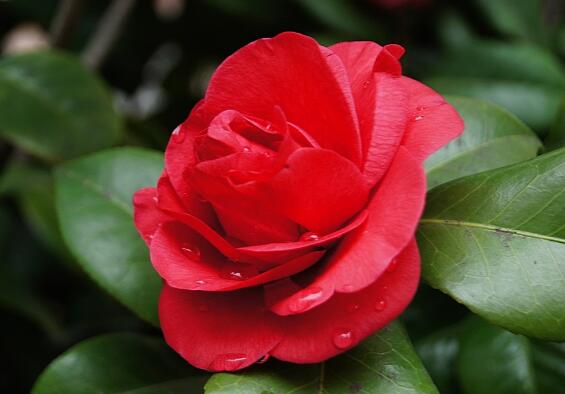
Camellia sasanqua, a foliage and flowering plant with brilliantly colored flowers and a long blooming period, looks superb when grown at home. However, most flower lovers are not professionals, so when growing camellia sasanqua, situations such as improper care often arise, causing yellow leaves. As for what to do when camellia sasanqua leaves turn yellow, the editor has summarized 5 points and included solutions, let us continue reading.
2. Causes of yellowing camellia sasanqua leaves and solutions
1. Sudden environmental change
There are actually many causes of yellowing camellia sasanqua leaves, but we should first consider environmental factors. In daily life, many flower lovers buy their camellia sasanqua online, and the regional span is large, so once bought and brought home, the environment changes too much all at once, and the camellia sasanqua cannot adapt in time, showing symptoms of yellow leaves.
Solution: Quickly communicate with the seller to understand the growing environment of the camellia sasanqua before purchase, then make corresponding changes at home so that the camellia sasanqua has a process of adaptation. Then slowly change the environment until the plant fully adapts to the current environment, and after a period of time, the camellia sasanqua will recover its health.
2. Improper temperature
Among the cultivation methods and precautions for camellia sasanqua, temperature is a point that is easily overlooked but very important. Too high or too low a temperature is unfavorable to the growth of camellia sasanqua, especially when the temperature is higher than 35°C or lower than minus 2°C, which can cause leaf scorch or frostbite in the plant, resulting in the symptom of yellowing camellia sasanqua leaves.
Solution: When the temperature is too high, cut off the scorched leaves, place it in a ventilated semi-shaded spot, then water appropriately, and it will recover after a period of care; when the temperature is too low, increase the indoor temperature; however, if you want the camellia sasanqua to grow well, it is best to keep it in an environment of 18-25°C, and in winter, the room temperature is best kept at 3-6°C.
3. Too much light
Camellia sasanqua is a semi-shade plant; it likes light but is slightly shade-tolerant, and dislikes strong light. In summer, once the camellia sasanqua is exposed to the scorching sun, its leaves will be sunburned and turn yellow.
Solution: What to do when camellia sasanqua leaves turn yellow? At this time, we should remove the yellowed leaves, then move the camellia sasanqua to a semi-shaded spot for careful care, and it will recover after a period of time.
4. Too little watering
Camellia sasanqua likes a moist environment, so it needs frequent watering; when the summer temperature is high, it may even need watering once in the morning and once in the evening. Once you have not watered it for a long time or have given it too little water, the camellia sasanqua leaves will not be able to absorb water, and then symptoms of yellowing will appear.
Solution: At this time, we only need to increase the frequency of watering. But note that the amount of water each time should not be too much, to avoid waterlogging and thus harming the roots of the camellia sasanqua.
5. Too much fertilizing
Having discussed watering, let us now talk about fertilizing. It is understood that camellia sasanqua does not have high requirements for fertilizer and water; although proper watering can promote its growth, once too much fertilizer is applied, it easily causes the camellia sasanqua leaves to scorch and wither.
Solution: Stop fertilizing and water to dilute it; in severe cases, change the potting soil to make the camellia sasanqua fresh and refreshed again.
Overall, camellia sasanqua is not difficult to grow, and it has strong resistance, few pests and diseases, and is very clean to keep at home. So in the process of growing camellia sasanqua, everyone must be careful; of course, if problems really arise, there is no need to panic, just follow the methods above. That is all the editor has to introduce about yellowing camellia sasanqua leaves, hoping it can help everyone.
What to do when goldfish plant leaves turn yellow: control watering, shade appropriately, adjust temperature
Goldfish plant, also called goldfish flower, as the name suggests is a plant whose flower shape resembles a goldfish, very suitable for indoor potted cultivation. In daily life, many people grow goldfish plant, but during cultivation, they often encounter a problem, namely yellowing leaves, so what to do when goldfish plant leaves turn yellow? Today the editor will solve this problem.
1. What to do when goldfish plant leaves turn yellow: find the cause
As a potted plant, the goldfish plant is not easy to grow; once we do not strictly follow the cultivation methods for goldfish plant, symptoms of yellowing leaves may appear. By then, flower lovers must be very anxious, right? To solve this problem, the editor has summarized 5 causes of yellowing goldfish plant leaves and included solutions, let us continue reading.
2. Causes of yellowing goldfish plant leaves and solutions
1. Sudden environmental change
There are actually many causes of yellowing goldfish plant leaves, but environmental factors are the first thing everyone should consider. Nowadays, many flower lovers buy their goldfish plant online, which easily causes a large regional span, and the goldfish plant cannot adapt for a while, thus showing symptoms of yellow leaves.
Solution: At this time, everyone can communicate with the seller to understand the previous growing environment of the goldfish plant, then we change it at home to the same environment. After the goldfish plant adapts, slowly change it until it fully adapts to the current environment, and after a period of time, the goldfish plant will recover its health.
2. Unsuitable soil
Besides the environment, everyone should also consider the soil problem. It is understood that the goldfish plant does not have high requirements for soil; ordinary cultivation soil is fine, but one point is very important, namely that the soil must be loose, with good air permeability and drainage. Once this requirement is not met, it will cause poor root respiration in the goldfish plant, or water accumulation in the pot, leading to root rot, and thus the symptom of yellow leaves.
Solution: When the condition is mild, we can repot the goldfish plant with soil, replacing it with loose cultivation soil with good air permeability and drainage. Then cut off the rotten roots and replant.
3. Too much light
The goldfish plant is shade-tolerant and likes diffused light; when growing it, do not let it receive direct sunlight. Once the light is too strong, it will cause the goldfish plant leaves to turn yellow, and in severe cases the plant may die.
Solution: Move the flowerpot to a ventilated, shady spot, water appropriately, and after a period of careful care it will slowly recover. In normal indoor cultivation, except that winter needs relatively sufficient light, in spring, summer, and autumn 60%-70% of sunlight should be shaded, or it can be hung in an outdoor shade shed.
4. Too much watering
The goldfish plant likes a moist environment, so we should water frequently to keep the potting soil moist; however, it is also afraid of waterlogging, so watering should not be too much; if there is water accumulation in the pot, the phenomenon of yellowing goldfish plant leaves will appear.
Solution: Move the flowerpot to a ventilated spot with diffused light to let the water evaporate quickly; in severe cases, repot with soil, replacing it with fresh cultivation soil.
5. Improper temperature
For the causes of yellowing goldfish plant leaves, besides the above points, everyone should also consider the temperature factor. The most suitable temperature for goldfish plant growth is between 15-20°C; once the temperature is too low (10°C) or too high (30°C), it will cause the phenomenon of yellowing leaves in the goldfish plant.
Solution: When growing goldfish plant indoors, the temperature should not be too high or too low; keeping it at 20°C is fine, and in winter the indoor temperature should be kept at around 5°C.
Overall, the goldfish plant is not easy to grow, and since many flower lovers are beginners, symptoms of yellow leaves are unavoidable. But after reading the whole article, I believe everyone knows not to panic, right? When the yellow leaf problem appears, just follow the methods above. That is all the editor has to introduce about yellowing goldfish plant leaves, hoping it can help everyone.
What to do when pothos leaves turn yellow: supplement light, adjust temperature, water appropriately
Pothos, I believe everyone is familiar with it; it is a very beautiful foliage plant with the effect of absorbing formaldehyde and purifying the air. In daily life, many people grow pothos, but as they grow it, many encounter symptoms of yellow leaves, so what to do when pothos leaves turn yellow? In this regard, the editor has summarized 6 causes, let us take a look together.
1. Yellowing pothos leaves: find the cause
In the process of growing pothos, beginners usually do not follow the cultivation methods for pothos, and the result is mistakes here and there causing the appearance of yellow leaves. As for what to do when pothos leaves turn yellow, it is not difficult to say; you only need to find the problem, then solve it accordingly. In this regard, the editor will bring everyone 6 causes of yellowing pothos leaves and include solutions, let us continue reading.
2. Causes of yellowing pothos leaves and solutions
1. Sudden environmental change
There are actually many causes of yellowing pothos leaves, but environmental factors are the first thing everyone should consider. Because nowadays buying plants online is popular, this easily causes a large regional span, and the pothos cannot adapt for a while, thus showing symptoms of yellow leaves.
Solution: At this time, everyone only needs to communicate with the seller to understand the previous growing environment of the pothos, then we change it at home to the same environment. After that, slowly change it until it fully adapts to the current environment, and after a period of time, the plant will recover its health.
2. Insufficient light
Pothos likes shade and dislikes direct strong light; this characteristic makes many beginners misunderstand, thinking that pothos can do without light. But this is wrong, because an overly shady environment is unfavorable to the growth of pothos and easily causes the leaves to receive insufficient light, turning yellow and wilting.
Solution: When growing indoors, everyone should best place it by a window, but avoid direct sunlight. Receiving four hours of diffused light every day, after a period of such care, the pothos leaves will turn green again.
3. Temperature too low
Pothos likes a warm environment, and in winter good warmth measures must be taken, because once the room temperature is lower than 10°C, the symptom of yellowing pothos leaves will appear, and in severe cases it may even die from cold damage.
Solution: In this situation, everyone should first cut off the leaves that have already suffered severe cold damage, then move the plant to a relatively warm location for care; winter sunlight is not strong, so full-sun care is fine.
4. Improper watering
Regarding the causes of yellowing pothos leaves, there is another point everyone cannot ignore, namely watering. Improper watering is divided into two situations: one is overwatering, the other is underwatering; the specific symptoms and solutions are as follows:
① Overwatering: Although pothos likes a moist environment, watering should not be too much, especially in winter; too much water easily makes the soil sticky and heavy, affecting the normal respiration of the plant, thus causing yellowing pothos leaves. Solution: Move the plant to a ventilated spot with diffused light to let the water evaporate quickly; besides that, in winter pay attention to strictly controlling the amount of watering for pothos, basically watering once every half month is enough, and do not water if not dry.
② Underwatering: The potting soil in which pothos grows should be kept moist; once it is not watered for a long time, or watered too little, it is also easy to cause the leaves to lack water, turn yellow, and die. Solution: Appropriately increase the amount of watering; if it is winter, then grow the pothos in a place with heating or other heating equipment, and follow normal daily care.
5. Poor ventilation
If the above points can be ruled out, then the cause of yellowing pothos leaves may be that the environment is too closed off. Pothos is suitable for growing in a ventilated place; once the room is not ventilated for a long time, it easily causes its leaves to turn yellow, and even winter is no exception.
Solution: In winter, do not keep pothos shut in a room with closed doors and windows for a long time; when the winter weather is good, you can open the windows and doors to promote indoor air circulation. Besides that, do not forget to take warmth measures.
Overall, pothos is very beautiful and also easy to grow, but because many flower lovers are beginners, symptoms of yellow leaves inevitably appear. But after reading the whole article, I believe everyone has a better idea, right? When the yellow leaf problem appears, just follow the methods above. That is all the editor has to introduce about yellowing pothos leaves, hoping it can help everyone.