When Do Pansies Bloom? Flowering Season Care Tips for April to July
As described in the article on the benefits and uses of pansies, the pansy is a highly ornamental flower. Whether grown at home or used as a garden flower, its beauty serves well. When it comes to the time when it is at its most ornamental, that is certainly when it blooms. So when do pansies bloom, and what care is needed during the flowering season? Below, the editor will walk you through it.
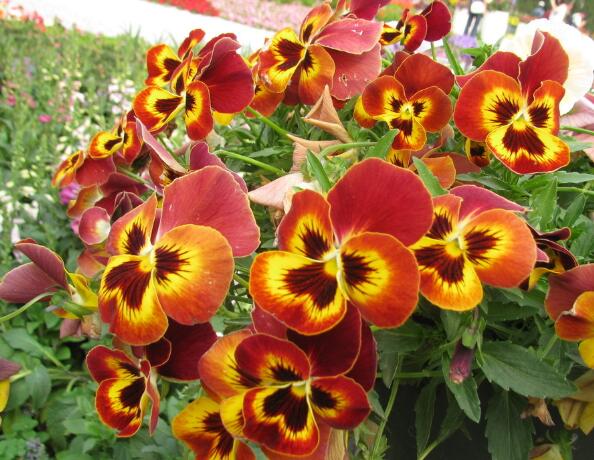
I. When Do Pansies Bloom
As for when pansies bloom, there is no specific day. It is generally around April each year, that is, at the start of spring. Their flowering season is generally from April to July, lasting 4 months, which is relatively long among flowering plants. However, to achieve such a long flowering season, care during the flowering period cannot be sloppy. Below is a detailed guide to pansy flowering season care. Let's take a look.
II. Pansy Flowering Season Care
1. Fertilization Requirements
When pansies enter the flowering season, they consume nutrients heavily, so at this time we need to properly supplement them with fertilizer so they can produce more beautiful flowers. As for the specific fertilizer choices and application methods, you can refer to the article on how to fertilize pansies, which has detailed instructions.
2. Temperature Control
During pansy flowering season care, temperature control is a very important point. The most suitable ambient temperature for pansy growth is between 12-18°C. You can appropriately adjust the temperature so that pansy flowers will bloom even more beautifully.
3. Watering Requirements
Pansies like water but are not tolerant of waterlogging, so when watering during the pansy flowering season, it must be done in moderation. If watered too much, it is very likely to cause root rot in pansies, causing the flowers to wither prematurely, so everyone must remember this point. As for the specific watering methods, you can refer to the article on how to water pansies. The editor will not go into too much detail here.
4. Light Requirements
During pansy flowering season care, you must maintain sufficient light, which helps them carry out photosynthesis. Most of their flowering season is in spring, when the climate is relatively suitable, so letting pansies receive all-day light is also fine. However, toward the end of the flowering season, summer arrives, and at that point we need to provide shade.
When Do Pansies Bloom and How Long Is the Pansy Flowering Season
Pansy is also called cat's face. Pansies have strong adaptability and are relatively low-maintenance, and are one of the main flowers for arranging spring flower beds. Pansies have a low plant form, beautiful flower shapes, brilliant colors, and a velvety texture. So when do pansies bloom? How long is the pansy flowering season? Let's find out together.
I. When Do Pansies Bloom
Pansies take about 150 days from sowing to flowering. The flowering period is relatively long, generally from the end of November to April to May of the following year, with large and abundant flowers during the peak blooming period. The optimal temperature during the flowering period is 18 to 22°C; they will not bloom above 25°C, and a certain humidity must be maintained. If the climate is dry and the temperature is too high, they will immediately wither and die. During flowering and fruiting, they prefer fertilizer. Generally, supply sufficient phosphorus and potassium fertilizer and apply less nitrogen fertilizer. During this period, the maternal plant's fertilizer requirement is greater than that of the paternal plant.
During the growth period, pansies can be given 2 to 3 applications of quick-acting fertilizer. During the bud stage, apply 1 to 2 applications of 0.3% to 0.5% superphosphate or potassium dihydrogen phosphate solution to make the flower colors more brilliant. Normally keep the soil moist. After flowering, promptly prune away spent flowers and dead leaves so that the remaining flowers on the plant bloom more vibrantly.
II. The Pansy Flowering Season
Pansies bloom in spring and summer. The flowering season is generally between April and July each year. Each flower usually has three colors such as yellow, purple, and white, hence the name pansy.
Pansies are mostly propagated by sowing. The best sowing period is from late August to early September. Generally, seedlings emerge about 10 days after sowing, and all seedlings can emerge within 20 days, at which point the covering should be removed. When the seedlings grow to 5 leaves, they can be transplanted, with a plant spacing of about 20 cm. Cover with plastic sheeting before freezing, and they can overwinter safely. After Awakening of Insects in early March of the following spring, remove the cold protection, and they can grow normally. During the growth period, give sufficient water and fertilizer. Seed selection work must not be neglected. When flowering begins early, mark those varieties with large flowers, short plant form, early flowering, and many flowers, harvest as they ripen, and store them properly.
Pansies have relatively strong cold resistance. They will not suffer cold damage during short periods of minus 5 to 6°C, and can begin slow growth when the temperature is above 10°C. It is particularly worth mentioning that in recent years, pansies that were not artificially sown have been found in gardens and nurseries. Without any cold protection measures, they can safely overwinter even in cold winters, and also bloom brightly colored flowers in April.
RelatedPansy Flowering SeasonThat concludes the related knowledge for everyone. As long as pansies are cared for properly, blooming is quite easy. Once you understand the flowering season, you won't have to worry about missing the best viewing period for pansies.
When Is the Pansy Flowering Season, and How Do You Extend the Pansy Flowering Season?
Image: Pansy
[Common Questions] When is the pansy flowering season, and how do you extend the pansy flowering season?
[Expert Answer]Pansies can bloom about two months after sowing. If you want to extend their flowering season, the methods are as follows:
1. Pansies generally bloom about 2 months after sowing, and different sowing times can be used. Sowing in spring results in flowering from June to September; sowing in summer results in flowering from September to October; sowing in November results in flowering from February to March of the following year. In this way, they can bloom continuously throughout the year.
2. Strengthen management. The soil must be kept slightly moist at all times. Before flowering, apply 3 applications of diluted compound liquid fertilizer. During the bud stage, add 2 applications of 0.2% potassium dihydrogen phosphate solution. After entering winter, the plants must be moved indoors to a sunny spot for care. The daytime temperature should not exceed 12 degrees, and the nighttime temperature should not fall below 7 degrees. On sunny days, windows must be opened at noon for ventilation.
[Editor's Comments] The above is the First Agricultural Economics editor's introduction to the pansy flowering season and methods for extending it. We hope it is helpful to you. For more related materials, such as"Pansy Propagation Methods," "Sharing Key Points for Pansy Care," "Pansy Cultivation Methods and Precautions," "Common Pansy Pest and Disease Control," "Summary of Common Pansy Questions", please follow the related columns or special topic channels of First Agricultural Economics!