How to Grow and Care for Camellia sasanqua: Avoid Direct Strong Light
Camellia sasanqua and plum blossoms are certainly familiar to everyone; they are among China's top ten famous flowers. But do you know about Camellia sasanqua? It is said that Camellia sasanqua gets its name because its leaves resemble those of tea and its flowers resemble plum blossoms. It is a beautiful flowering plant. In daily life, many beginners want to know how to grow Camellia sasanqua. In response, the editor has carefully compiled the growing methods and precautions for Camellia sasanqua. Friends who want to grow it, come in and take a look!
I. How to Grow Camellia sasanqua: Create the Right Environment
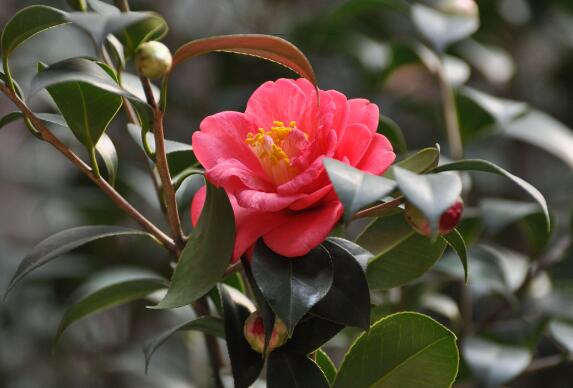
Camellia sasanqua combines the best qualities of tea and plum blossoms, and its beauty is astonishing to imagine. It is also loved by many people for this reason. As for how to grow Camellia sasanqua, we need to create the most favorable environment for it based on its growth habits. In this regard, the editor will explain in detail the growing methods and precautions for Camellia sasanqua from aspects such as soil, light, and watering. Let's continue reading.
II. Growing Methods and Precautions for Camellia sasanqua
1. Soil: Slightly Acidic
How to grow Camellia sasanqua? First, of course, is choosing soil. Even if you buy a potted Camellia sasanqua directly from a flower shop, you still need to change the soil. According to the growth habits of Camellia sasanqua, we should choose loose, fertile, well-drained acidic sandy soil.
Precautions: To ensure good drainage, it is best to use a clay pot with good breathability and strong water absorption, and first lay a layer of coarse sand or coarse slag particles at the bottom of the pot to facilitate drainage and aeration.
2. Light: Avoid Strong Light
In the growing methods and precautions for Camellia sasanqua, light is particularly important to pay attention to. It is said that Camellia sasanqua is a semi-shade plant. It likes light but is somewhat shade-tolerant, and avoids strong light, so it is best grown in a semi-shade, semi-sun environment. Appropriate light can promote the blooming of Camellia sasanqua flowers and make them bloom abundantly.
Precautions: During the hot summer sun, you must provide shade for Camellia sasanqua, otherwise strong light may scorch its leaves and buds, causing the leaves to turn yellow, curl, or even fall off, seriously affecting its ornamental value.
3. Temperature: 18-25°C
Camellia sasanqua likes a warm environment and is slightly cold-tolerant. The optimal growing temperature is 18-25°C. If you want Camellia sasanqua to grow well, it is best to keep it in this temperature environment.
Precautions: Although Camellia sasanqua is cold-tolerant, if potted, it is best not to go below minus 2°C, otherwise it is prone to frost damage and plant growth will be affected. Therefore, in winter, you should move Camellia sasanqua indoors for the winter, preferably maintaining room temperature at 3-6°C. In other seasons, it can be maintained under a shade canopy.
4. Watering: Water Thoroughly When Watering
How to grow Camellia sasanqua? Watering is a very crucial part. It is said that Camellia sasanqua likes a humid environment. We should water frequently, but each watering must be thorough! In spring and autumn, water Camellia sasanqua once a day to keep the potting soil moist; in summer, water once each morning and evening; in winter, water once every few days.
Precautions: Watering of Camellia sasanqua should depend on the situation, but not too wet, so as not to affect soil breathability. Also, overwatering can easily cause diseases. Except in winter, you should also spray water on the leaf surface once every few days to keep the leaves clean.
5. Fertilizing: Apply Light Fertilizer Frequently
Camellia sasanqua does not have high requirements for fertilizer and water, so if you want it to grow quickly, it is best to apply light fertilizer frequently. Generally, in February-March, you can apply 1 or 2 times of human waste to promote the growth of branches and leaves; in April-May, apply 1 time of cake fertilizer water to promote flower bud differentiation; in September-October, apply 1 time of phosphorus fertilizer to promote good flowering and also help it overwinter.
Precautions: Fertilizing Camellia sasanqua should be light, especially during the seedling stage. Do not fertilize too early to avoid burning the seedlings. In addition, for newly transplanted Camellia sasanqua, fertilizing also requires attention. Once too much fertilizer is applied, it can easily burn the seedlings and cause plant death.
How to Grow a Cactus Ball: Growing Methods and Precautions for Cactus Ball / Avoid Direct Strong Light
Everyone is certainly familiar with the cactus ball; almost any household might have one, after all, it can protect against radiation (the result of merchant hype). As growing indoor plants has become very popular, many people choose to grow a pot of cactus ball. So how do you grow a cactus ball? In response, the editor has carefully compiled the growing methods and precautions for cactus ball. Friends who want to grow one must take a look!
I. How to Grow a Cactus Ball: Be Careful
In daily life, many people grow cactus balls, but the vast majority hardly take care of them. Over time, it dies, and then they buy another pot. This is actually a wrong approach, because growing a cactus ball well not only saves money but also has good ornamental value. So how do you grow a cactus ball? The editor will explain in detail from 7 aspects including soil, light, water and fertilizer.
II. Growing Methods and Precautions for Cactus Ball
1. Potting Soil
How to grow a potted cactus ball? First, of course, is choosing soil. Although many people directly buy potted cactus balls and do not need to prepare soil separately, when repotting, we still need to prepare the soil ourselves. According to the growth habits of cactus ball, you should choose sandy soil (or sandy loam) with good drainage and breathability, containing lime.
Soil recommendation: Mix 2 parts loam and 2 parts coarse sand, with 1 part crushed brick, 1 part leaf mold, and 1 part aged lime wall debris. First place a layer of small stones about 3 cm thick at the bottom of the pot to facilitate drainage. The planting depth should be such that the root crown of the ball is level with the soil surface.
2. Light
In the growing methods for cactus ball, light is very important. It is said that cactus ball requires sufficient sunlight. Except for appropriate shading in summer, it should be placed in a sunny location for maintenance in other seasons.
Precautions: Cactus ball likes light. When grown indoors, if there is insufficient light, artificial lighting can be used to promote healthy growth.
3. Temperature
How to grow a cactus ball? When growing indoors, temperature needs attention. Cactus ball likes high temperatures and dry environments. During the growing period, normal room temperature is sufficient. In winter, the daytime temperature should be maintained above 20°C, and the nighttime temperature should not be lower than 10°C.
Precautions: Cactus ball is quite cold-tolerant, but for it to overwinter safely, room temperature should be kept above 5°C; too low a temperature can easily cause root rot, so everyone must pay attention to temperature changes.
4. Watering
When growing plants indoors, watering is indispensable. During the summer growing period, cactus ball has a high water demand. You must water thoroughly, and the time should be chosen when temperatures are low in the early morning or evening; in winter, watering should be done on sunny mornings. As the temperature rises, the plant will gradually come out of dormancy, and the frequency and amount of watering can gradually increase accordingly.
Precautions: (1) In summer, do not water at noon, as it is very hot at that time and watering can easily cause scorching of the ball; (2) For cactus balls with a sunken top, be careful not to let water get into the depression, as this can cause rot; (3) During winter dormancy, watering should be restricted, just keeping the potting soil from becoming excessively dry. The lower the temperature, the more the potting soil should be kept dry.
5. Fertilizing
Having covered watering, let's talk about fertilizing, which is also very important in the growing methods for cactus ball. During the summer growing period, appropriate fertilization should be applied. A fully decomposed dilute liquid fertilizer can be used, applied once every 10-15 days; after autumn begins, generally once a month is sufficient.
Precautions: In early October, we should stop fertilizing the cactus ball. If fertilizing continues, the cactus ball will continue to grow, and the tender ball is susceptible to frost damage during overwintering. In addition, when fertilizing, be careful not to get it on the ball. If it does get on, rinse immediately with water.
6. Repotting
The above are essential in the growing methods for cactus ball, and next, repotting and pest and disease control are what everyone needs to pay attention to. First is repotting. It is best to repot the cactus ball once every other year in early spring, removing some old soil and adding new potting soil. Stop watering 2-3 days before repotting, and trim some old roots when repotting.
7. Pest and Disease Control
In the growing process of cactus ball, it is inevitably disturbed by pests and diseases. For example, in high-temperature, poorly ventilated environments, pests and diseases are prone to occur. As for what pesticide to spray, it is described in detail in the pest and disease control section for cactus ball, so it will not be elaborated here.
How to Grow a Dragon Bone Flower: Growing Methods and Precautions for Dragon Bone Flower / Avoid Direct Strong Light
Dragon Bone Flower may not be familiar to many, but everyone certainly knows dragon fruit, and it is the fruit that grows on the Dragon Bone Flower. Nowadays, more and more people are starting to grow a pot of Dragon Bone Flower at home. So how do you grow a Dragon Bone Flower? In response, the editor has carefully compiled the growing methods and precautions for potted Dragon Bone Flower, very detailed. Friends who want to grow one must take a look!
I. How to Grow a Dragon Bone Flower: Understand Its Habits
Dragon Bone Flower likes a warm, humid environment with not-too-strong light, and is not cold-tolerant. So when growing indoors, besides watering more, you should also take good measures to keep it warm in winter. Therefore, for how to grow a Dragon Bone Flower, you just need to follow its growth habits and create the most favorable conditions. For specific requirements, let's continue reading.
II. Growing Methods and Precautions for Dragon Bone Flower
1. Soil
How to grow a potted Dragon Bone Flower? First, of course, is choosing soil. According to the growth habits of Dragon Bone Flower, we should choose sandy loam rich in humus with good water permeability for it. Avoid heavy clay and poor, waterlogged soil. In this regard, the editor recommends using: a mix of leaf mold and coarse sand, with a small amount of decomposed chicken manure or cow manure added, blended into potting soil.
2. Light
In the growing methods for Dragon Bone Flower, light is naturally indispensable. It is said that Dragon Bone Flower likes an environment with not-too-strong sunlight, so under the condition of ensuring sufficient light, do not let it be exposed to strong sun.
Precautions: The growth of Dragon Bone Flower cannot do without light. In winter, it can be placed in a sunny indoor spot to receive sunlight; in summer, when light is strong, place the Dragon Bone Flower in a semi-shaded environment for maintenance, with appropriate shading.
3. Temperature
When growing Dragon Bone Flower indoors, temperature also needs everyone's attention. Because Dragon Bone Flower originates from tropical regions, it likes a warm environment, and its most suitable growing temperature is 25-35°C. So to let it grow well, you can keep this temperature constant.
Precautions: Dragon Bone Flower is not cold-tolerant. For it to overwinter safely, room temperature should be kept above 13°C, and at least not lower than 10°C, otherwise frost damage is likely to occur, causing the stem segments of the Dragon Bone Flower to rot.
4. Watering
Dragon Bone Flower is drought-tolerant but not moisture-tolerant, so it does not have high water requirements. In spring and autumn, water thoroughly after the soil dries out, once every half a month is sufficient; in summer, when temperatures are high and water evaporates quickly, replenish water in time, watering once a day; in winter, when temperatures are low, reduce watering.
Precautions: Dragon Bone Flower is not moisture-tolerant. We must be very careful when watering it, because if the potting soil is too wet for a long time, it will cause root rot.
5. Fertilizing
Having covered watering, let's talk about fertilizing, which is also indispensable in the growing methods for Dragon Bone Flower. Although Dragon Bone Flower has low fertilizer requirements, during the growing period, for it to grow well, we should still apply decomposed liquid fertilizer once every 15-20 days.
Precautions: Stop fertilizing in winter. Granular compound fertilizer or ammonium fertilizer water can be used, but do not apply concentrated fertilizer, as concentrated fertilizer is the most likely to cause root rot.
6. Repotting
How to grow a Dragon Bone Flower? Timely repotting is also very important. As the plant grows, the Dragon Bone Flower will get bigger and bigger. To accommodate its growth, you can repot once every one to two years.
Precautions: Because the root system of Dragon Bone Flower is not well developed, when repotting, you can choose a flower pot with a suitable ratio to the Dragon Bone Flower plant. Take out the Dragon Bone Flower and let it dry for half a month before potting.
7. Pest and Disease Control
In the growing process of Dragon Bone Flower, it is inevitably disturbed by pests and diseases. For example, in high-temperature, poorly ventilated environments, pests and diseases are prone to occur. For the health of the plant, everyone should observe carefully, discover pests and diseases in time, and spray pesticide for treatment. As for what pesticide to spray, it is described in detail in the pest and disease control section for Dragon Bone Flower, so it will not be elaborated here.