How to prune and fertilize lilacs? Dilute before fertilizing and prune dead branches
In the process of growing lilacs, there are many aspects that need attention, such as pruning and fertilizing, which are two of the more important ones. Lilacs are highly ornamental plants, and proper pruning during cultivation can make them even more ornamental, while maintaining sufficient fertilizer will also make them grow more robustly. So how do you prune and fertilize lilacs? Below, the editor will walk you through it.
How to prune and fertilize lilacs
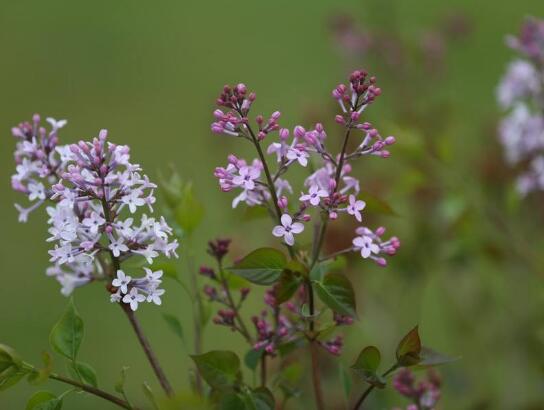
Regarding the question of how to prune and fertilize lilacs, there are actually many points that need attention. These two aspects are introduced in detail below, and interested friends can take a look.
1. How to prune lilacs
a: Thinning
Thinning lilacs is mainly to allow them to grow better. This pruning method is generally carried out after leaf fall, mainly removing dead branches and rotten leaves, as well as some small side branches. Timely removal not only benefits the growth of the following year but also has a certain beautifying effect on the shape.
b: Light pruning
Regarding the question of how to prune lilacs, light pruning is a very important aspect, mainly trimming away some branches that are growing too densely. This can increase the light penetration rate of the lilacs and also reduce the nutrients consumed during flowering. If overly dense branches are not pruned in time, it can easily affect the flowering rate of lilacs, so everyone must remember this point.
2. How to fertilize lilacs
a: Fertilizer selection
When fertilizing lilacs, we can generally choose phosphorus and potassium fertilizers, and of course we can also choose specialized fertilizers for flowering plants, but before fertilizing, they must be diluted first, otherwise it is easy to burn the plant. Everyone should remember this point.
b: Fertilizing method
Regarding how to fertilize lilacs, the method is actually very simple. First, we need to dilute the fertilizer with water, then apply it. The fertilizer is generally applied to the soil, and then the lilacs gradually absorb it. It must never be applied to the plant itself, as this will cause the plant to turn yellow and die.
Main occurrence characteristics of major lilac pests and diseases and their control measures
What are the common pest and disease types of lilacs? How to control them? Today the editor of Huinong Network will introduce a fund project that mainly discusses the occurrence characteristics and control management of lilac pests and diseases. Farmers who are interested should hurry up and learn!
1 Diseases of lilacs
1.1 Black spot disease
In the early stage of disease onset, there are chlorotic spots on the leaves, which gradually expand to form circular or nearly circular lesions, 3 to 10 mm in diameter, brown or dark brown, with inconspicuous concentric rings. In the later stage, the lesions turn grayish brown and are densely covered with black mold spots, which are the conidiophores and conidia of the pathogen. The lesions connect with each other, causing a large portion of the leaf to turn brownish yellow and die, and to shrivel and even break apart. The pathogen of lilac black spot disease is a fungus of the genus Alternaria. Conidiophores are scattered or gathered in several strands, brown; conidia are brown.
1.2 Brown spot disease
Brown spot disease mainly harms leaves, and can occur in both seedlings and mature trees. In the early stage of disease onset, small lesions appear on the leaves, water-soaked, nearly circular, grayish green, 3 to 12 mm in diameter. When humid, small mold spots are scattered on them. When the disease is severe, the lesions merge into large dead patches, grayish brown, covering the leaves, looking like fire from a distance, causing lilac leaves to dry up and eventually fall early, leaving only a small number of leaves on the whole plant. The pathogen is a fungus of the genus Cercospora, which also infects camellia, pomegranate, Euonymus japonicus, crape myrtle, rhododendron and cockscomb.
1.3 Powdery mildew
This disease can occur on both sides of the leaves, mainly on the upper side. In the early stage of disease onset, scattered small powdery spots are produced on the diseased leaves, gradually expanding, and the powdery spots connect with each other to cover the leaf surface. In the later stage, the white powdery layer becomes sparse, appearing dusty, with small white particles appearing on it, finally turning into black powdery dots - cleistothecia, which are the sexual stage of the disease, while the white powdery layer is the asexual stage. Lilac powdery mildew is caused by Erysiphe syringae. Cleistothecia are spherical or flattened spherical, with the tips of appendages forked several times; there are multiple asci in the cleistothecium, elliptical to broadly elliptical; ascospores number 4 to 6, elliptical or oval.
1.4 Pestalotiopsis leaf spot disease
The lesions are small round spots 1 to 5 mm, white in the center with dark brown edges, accompanied by purple halos. When humid, a large number of small black dots grow on the lesions, and the lesions penetrate both sides of the leaf. The pathogen is Pestalotiopsis funerea. The black dots on the leaf spots are acervuli, and the conidia are spindle-shaped, with 4 septa dividing them into 5 cells, the middle 3 light brown, the two ends colorless, with
3 flagella at the top.
1.5 Macrophoma leaf spot disease
The lesions are nearly circular or irregular, 10 to 30 mm in diameter, and at their largest can occupy more than 1/2 of the leaf area. The lesions are grayish brown, with a wavy purple-black band at the boundary between diseased and healthy tissue, on which a large number of small black dots are scattered, and in the later stage the diseased leaves become deformed. The pathogen mainly invades from the leaf tip. The pathogen is Macrophoma theicola. Conidiophores are small and unbranched. Conidia are elliptical, single-celled, colorless, 15.5 to 17.5 μm × 3.8 to 4.2 um in size. The small black dots on the leaf spots are the pathogen's pycnidia, flattened spherical, 100 to 120 μm in diameter.
1.6 Corynespora leaf spot disease
It is reported that this disease once occurred in India. In the early stage, small water-soaked lesions appear on the leaves, up to 1 to 3 mm in diameter, with yellow halos at the edges, the centers noticeably turning white. In most cases the lesions unite, showing typical leaf rot symptoms, and the leaf tip can wither up to half a leaf. The pathogen is a fungus of the genus Corynespora, a Deuteromycete, with erect septate conidiophores growing in bundles on the underside of the leaf. They are branched, each branch can produce phialides, and finally produce conidia, club-shaped with multiple septa.
1.7 Dieback disease
This disease is mainly common in Sumatra and other places, and has not been seen in China so far. After infection, the bark and xylem of the branches turn reddish brown, small black dots can be produced, yellow mucus grows on them, and the surface of the diseased part becomes rough. Individual branches die back, and in severe cases the whole plant dies. The pathogen is caused by a fungus of the genus Cryptosporella. This is a wound parasite. The pathogen's pycnidia are scattered, with long necks, and the conidia are filiform, yellow, single-celled, and can form masses. Asci are elongated without appendages, containing 8 spores, and the spores are filiform, single-celled.
1.8 Bacterial blight
Lilac bacterial blight is also called bacterial leaf spot disease, mainly infecting leaves[8]. There are mainly 4 types of symptoms on leaves: first, spot blotch, which starts on the lower leaves, forming chlorotic spots, soon turning brown, and later the center of the lesion becomes grayish white; second, star spot, in which one or several brown lines extend from the circular lesion and connect with other small spots to form a star shape; third, flower spot, in which the spots continuously expand outward, forming concentric rings, with a grayish white center, and finally wavy lines are produced around the circular spot, making the circular spot resemble a flower shape; fourth, scorch, in which the whole leaf turns brown, dries up and curls on the branches, looking like fire from a distance, and in severe cases the whole shrub dies. The pathogen of this disease is a bacterium, Pseudomonas syringae, belonging to Pseudomonas. The bacterial cells are single, rod-shaped, with 1 to 2 flagella at one end, able to swim in water, and without capsules. Gram staining reaction is negative.
1.9 Algal leaf spot disease
The lesions are nearly circular or irregular, 5 to 12 mm in diameter, initially purplish red, then the center turns purplish black, while the edges remain purplish red. A large amount of golden yellow felt-like material grows on the underside of the lesions. The pathogen is a parasitic algal plant. The vegetative body of the pathogenic algae spreads on the lesions to form a dense nearly circular felt-like material, and later produces sporangiophores and zoosporangia. The tips of the sporangiophores expand, bearing 8 to 12 small stalks, each bearing an oval, yellowish brown zoosporangium at the top, which releases biflagellate, oval zoospores upon contact with water when mature.
1.10 Root-knot nematode disease and root rot
They belong to root diseases. Nematodes can cause weak plant growth, yellowing of branches and leaves, and root knots; while root rot causes root decay. In mild cases growth stops, and in severe cases the plant withers and dies.
2 Lilac insect pests
2.1 Scale insects
There are many varieties of scale insects that damage lilacs, such as Icerya purchasi and Unaspis euonymi. The pests mainly damage the branches and trunks of lilacs, and in severe cases cause leaves to wither and black mold spots to grow on the branches and trunks.
2.2 Leaf-mining flea beetle
The leaf-mining flea beetle, also known as the privet flea beetle, belongs to Coleoptera, Chrysomelidae, and mainly harms lilacs. In North China there are 3 generations per year. Adults mainly feed on leaf mesophyll, causing circular or irregular small spots to appear on the leaves, while larvae burrow into the leaf epidermis, forming curved mining tunnels in the epidermis, causing leaf damage and a large number of leaves to scorch.
In addition, pests that harm lilacs also include aphids, leaf moths and others.
3 Control and management of lilac pests and diseases
3.1 Chemical control
In early spring, spray protective agents such as Bordeaux mixture, zineb, and lime sulfur in advance for prevention and control. After disease onset, promptly spray fungicides such as chlorothalonil and carbendazim, or after lilac leaves unfold, spray 50% thiophanate-methyl 800 times solution once every 15 d, or use 50% carbendazim wettable powder 1,000 times solution for control, spraying 2 to 3 times. You can also spray 1:1:150 Bordeaux mixture before disease onset or in the early stage of disease to protect new leaves and increase disease resistance.
For the control of bacterial diseases, spray 3% zhongshengmycin wettable powder 600 to 800 times solution, or 2% kasugamycin wettable powder 300 to 500 times solution, or 60% copper succinate·fosetyl-aluminium wettable powder 500 to 700 times solution, or 20% bismerthiazol wettable powder 600 to 800 times solution, or 30% copper fatty acid wettable powder 400 to 600 times solution for control. When the disease is widespread, use 72% agricultural streptomycin sulfate soluble powder 2,000 to 4,000 times solution, or 88% oxytetracycline soluble powder 3,000 to 4,000 times solution, or 20% zinc thiazole suspension 600 to 800 times solution, or 25% copper ammonium complex aqueous solution 400 to 600 times solution, etc., spraying once every 5 to 10 d depending on the disease situation.
To control scale insects, spray the trunks with lime sulfur during the dormant period. Pesticides should also be sprayed in early spring, and once every 14 d in June, which can also control other fungal diseases at the same time. When the larval activity period is detected, immediately spray 80% dichlorvos 1,000 to 1,500 times solution or pyrethroid pesticides, then spray again after an interval of 14 d, repeating twice, with notable effect. When female insects are fixed and damaging the branches and trunks, you can also use a knife to cut the epidermis of the stem and trunk, then apply the pesticide, so that the plant absorbs the pesticide internally and kills the insects. Red spider mites harm the leaves; use 0.2 to 0.3 Baume degree lime sulfur and 20% tetradifon diluted 500 times solution to spray and kill them. Mixing the two liquids works better, spraying once every 5 to 7 days, used continuously 2 to 3 times.
When lilacs are in a weak growth state, they may occasionally also be damaged by pests such as cotton aphids, flea beetles, and giant hornets, causing sap to flow from the wounds. Careful investigation should be carried out to detect and deal with them promptly. You can choose 10% imidacloprid wettable powder 2,000 times solution, or 4.5% beta-cypermethrin emulsifiable concentrate 1,500 times solution + Haoshi 3,000 times solution, or 40% chlorpyrifos emulsifiable concentrate 1,500 times solution, or 20% diflubenzuron emulsifiable concentrate 3,000 times solution, 40% omethoate 800 to 1,000 times solution or abamectin spray for control. When using chemical pesticides for control, note to rotate their use.
3.2 Field management
3.2.1 Select excellent varieties
When planting, selecting excellent disease-resistant varieties is also crucial for controlling diseases.
3.2.2 Reduce sources of inoculum
Strengthen management after planting. In autumn and winter, clean the field, promptly remove dead branches, fallen leaves and diseased residues and burn them in a concentrated manner to reduce sources of pathogen infection.
3.2.3 Prune branches and trunks
When cultivating lilacs, they should not be too dense and require extensive pruning. If there are several forked main trunks, remove the weak and keep the strong, remove the slanted and keep the straight, keeping 1. During the growing period, pruning and shaping should be done in time to control the density of branches and leaves, which is conducive to ventilation and light penetration.
3.2.4 Strengthen drainage and irrigation
Young lilacs have weak root systems and are not drought-tolerant. For young trees under 3 a old, watering is needed in dry seasons; during the flowering and fruiting period, drought seasons easily cause flower and fruit drop, so watering is also needed; in the rainy season, attention should be paid to timely drainage of accumulated water to reduce humidity and prevent water accumulation.
3.2.5 Fertilization
Apply phosphorus and potassium fertilizers at the right time and in the right amount, apply less nitrogen fertilizer, use organic fertilizers such as barnyard manure or compost, mixed with an appropriate amount of superphosphate and plant ash.
3.2.6 Weeding and earthing up
Carry out weeding and earthing up from July to October each year. Lilac trees have shallow root systems, so cover the plants with grass, being careful not to damage the roots, to prevent the occurrence of nematode disease and root rot. Fine roots should not be exposed on the soil surface; if exposed, cover them with fertile loose soil 2 to 5 cm.
The above is all the content compiled by the editor for everyone today. Farmers in need are welcome to learn on Huinong Network!
Complete guide to home flower planting techniques and key points for growing flowers at home
With their gorgeous splendor, flowers decorate nature extraordinarily beautifully and give people aesthetic enjoyment. Growing flowers can enrich and regulate people's cultural life, add fun, cultivate temperament, improve health, and also increase scientific knowledge and improve cultural and artistic literacy, and they also have many important economic values. Below let us take a look at the complete guide to home flower planting techniques!
The "three suitable things" for growing flowers at home
1. It is suitable to grow flowers with strong ability to absorb toxic substances: some flowers can absorb certain concentrations of toxic gases in the air, such as sulfur dioxide, nitrogen oxides, hydrogen fluoride, formaldehyde, hydrogen chloride, etc. Wintersweet can absorb mercury vapor, pomegranate plants can absorb lead vapor in the air, snapdragon, canna, morning glory, gladiolus, dianthus, etc. can through their leaves convert highly toxic sulfur dioxide through oxidation into non-toxic or low-toxicity sulfate compounds, narcissus, four o'clock flower, chrysanthemum, saxifrage, etc. can convert nitrogen oxides into proteins in plant cells, and spider plant, aloe, snake plant can absorb large amounts of indoor pollutants such as formaldehyde.
2. It is suitable to grow flowers that can secrete bactericidal substances: bactericidal substances secreted by flowers such as jasmine, lilac, honeysuckle, and morning glory can kill certain bacteria in the air, inhibit the occurrence of diphtheria, tuberculosis, dysentery pathogens and typhoid bacteria, and keep indoor air clean and hygienic.
3. It is suitable to grow flowers with "complementary" functions: most flowers mainly carry out photosynthesis during the day, absorbing carbon dioxide and releasing oxygen, and carry out respiration at night, absorbing oxygen and releasing carbon dioxide. Cacti are just the opposite, releasing carbon dioxide during the day and absorbing carbon dioxide and releasing oxygen at night. Growing flowers with "complementary" functions in the same room can not only allow the two to benefit each other but also balance the indoor oxygen and carbon dioxide content, keeping indoor air fresh.
The "three taboos" for growing flowers at home
1. Avoid growing too many flowers that give off strong fragrances and pungent odors: orchids, roses, Chinese roses, lilies, night-blooming cereus, etc. can all give off rich aromas. One pot in a room fills it with fragrance, but if too many fragrant flowers are placed indoors and the fragrance is too strong, it will cause people's nerves to become excited, especially when people smell it for a long time in the bedroom, which can cause insomnia. The gas given off by poinsettia and lucky bamboo is not good for people, and the particles given off by tulips and hydrangea can cause skin allergies and itching after prolonged contact.
2. Avoid placing too many: at night most flowers release carbon dioxide and absorb oxygen, "competing for air" with people, and at night most living rooms are closed, with insufficient air circulation with the outside. If too many flowers are placed indoors, it will reduce the indoor oxygen concentration at night and affect the quality of sleep at night, such as chest tightness and frequent nightmares.
3. Avoid placing toxic flowers indoors: for example, oleander is toxic in its stems, leaves and even flowers during spring, summer and autumn, and the milky white sap it secretes contains a kind of oleandrin, and accidental ingestion can cause poisoning. The bulb of narcissus contains lycorine toxin. If a child accidentally eats it, it will cause symptoms such as vomiting. The sap of the leaves and flowers causes skin redness and swelling, and if the sap gets into the eyes, it will harm the eyes. Excessive contact with mimosa can easily cause sparse eyebrows and yellowing of hair, and in severe cases cause hair loss, etc.
The "six don'ts" for growing flowers at home
1. Being careless: flowers, like people, are alive and need careful care. Many flower growers lack the proper careful and diligent attitude toward these beautiful lives. First, they are lazy in mind, not fond of studying flower-growing knowledge, content to remain laymen for a long time, and their management is not methodical. Second, they are lazy with their hands, unwilling to spend too much time and energy on flowers. After the flowers enter the home, they are left aside and ignored, enduring hunger and thirst for a long time and suffering from pests and diseases. In this way, even the best flowers will gradually wither, so lazy people cannot grow flowers well.
2. Loving them too much: contrary to the above situation, some flower growers love flowers too much and their hands itch if they do not fuss with them for a moment. Some water and fertilize without any regularity, watering whenever they think of it, causing the flowers to die from overwatering and overfertilizing. Some casually move the flower pots around, moving them to several places a day, making the flowers have to constantly adapt to the environment, disrupting normal growth patterns. Over time, it would be strange if the flowers were not tortured to death.
3. Chasing fame and profit: some flower enthusiasts believe that growing flowers means growing famous flowers, because famous flowers have high ornamental value and large market profits. Under the control of this mentality, they spare no expense and search everywhere to buy famous flowers and famous trees, but the result is often that due to the lack of good maintenance conditions and management skills, the flowers die soon after being bought, which both mistreats the precious flowers and wastes money. This is a conceptual misunderstanding. The correct approach should be to start with ordinary, lower-grade varieties, gradually explore the rules and techniques of growing flowers, and after reaching a certain technical level, gradually purchase more precious varieties, so that the chance of success is greater.
4. Not distinguishing good from bad: some flower growers are greedy for size and completeness, and regardless of the variety, bring them home as soon as they see them. This not only brings difficulty to management but also brings some flowers unsuitable for growing into the home, polluting the environment and harming health. For example, flowers with toxic sap can easily cause poisoning when people touch them. The smell of some flowers affects the human nervous system and can easily cause breathing difficulty and even allergic reactions. In short, growing flowers at home should not be greedy for size and completeness and should not fail to distinguish good from bad. You should choose some types with smaller plant shapes, beautiful appearance, and no harm to the human body to grow.
5. Constantly changing: some flower growers are restless and have no theme in growing flowers, and the flowers at home are changed back and forth like a merry-go-round. This is a great taboo in growing flowers. First, changing varieties too quickly and growing them for too short a time is not conducive to cultivating flowers and trees with graceful plant shapes and high ornamental value. Second, tasting each kind of flower only superficially is not conducive to improving the level of flower growing, and in the end one is still a flower novice. Therefore, only by selecting one or two kinds of flowers and focusing on studying and cultivating them can flower growers gain something in their hearts.
6. Not having new concepts: nowadays, new knowledge and new technologies in the flower-growing industry emerge endlessly, but most flower growers still stick to traditional maintenance methods, and in aspects such as the use of flower containers, water and fertilizer management, and seedling cultivation, they are not good at using new technologies and new equipment, such as soilless cultivation, odorless flower fertilizers and various flower containers. As a result, home flower growing is unhygienic, unattractive, not novel, and has relatively large side effects.
Spring care for home potted flowers
1. Propagate good seedlings: Chinese roses, geraniums, pomegranates, winter jasmine, etc. can be propagated in spring by cuttings taken from robust branches. Rhododendrons and jasmine prefer acidic soil, and sturdy new branches 5 to 10 cm long can be cut, with the lower leaves removed and 3 to 4 top leaves retained for cuttings. For cuttings, black mountain soil, vermiculite or yellow sand can be used as the medium. The cuttings should be appropriately misted to maintain a certain humidity, and generally they can take root after about 1 month. Orchids, agave and spider plants can be propagated in early spring by division or by stolons respectively. Spring-sown herbaceous plants grown from seed, such as asparagus fern, five-color pepper, mimosa, impatiens, salvia, morning glory, and marigold, can be broadcast or dibbled.
2. Repotting and changing soil: repotting and changing soil is a method of supplementing fertilizer for potted flowers in spring. Generally, small pots are repotted once a year, and large pots once every 3 to 4 years. Tall plants need to be moved to larger pots. Some plants whose root systems are too dense or that have dead roots or rotten roots need appropriate pruning. After repotting, generally the first watering should be thorough, then place them in a cool place, and water again when the pot soil is seen to be dry. Generally, after new roots grow, carry out normal watering and move them to a sunny place.
3. Pruning and trimming: pruning and trimming should be carried out according to different plants. Rhododendrons and winter jasmine should not be pruned excessively. Pomegranates and Chinese roses, etc. can have dead branches, damaged branches or overly dense branches cut off entirely in early spring to promote abundant flowers and lush leaves. Jasmine should have old leaves removed when repotting to encourage more new branches to sprout. Vine and climbing plants such as ivy, banksia rose, wisteria, and rose can be pruned to allow the leaf surface to receive as much sunlight as possible and grow vigorously.
Note: In early spring, potted flowers should not be moved outdoors too early, to avoid frost damage from cold air invasion. Watering can be increased as the temperature rises, and keep dryness and moisture balanced.
Summer care for home potted flowers
1. Timely watering: in summer, flowers have luxuriant branches and leaves and consume a lot of water, so in summer, flowers should be watered sufficiently in the morning and evening every day.
2. Build frames for shade: for all potted flowers, once summer arrives, a frame must be built and reed curtains placed on it for shade, so that they can safely pass through the intense summer heat.
3. Pay attention to ventilation: for indoor flowers, when the temperature exceeds 30°C, attention should be paid to ventilation, opening the windows to let fresh air flow into the room, preventing heatstroke and lowering the temperature.
4. Moisturize and cool down: in summer, some grass can be placed over the pot soil so that sunlight does not shine directly on the pot soil, thereby lowering the temperature of the pot soil and also preventing the moisture in the pot soil from evaporating too quickly. You can also use a sprayer to wet the leaves of the flowers, and at the same time wet the surroundings to lower the temperature and increase humidity. This is very beneficial to some flowers that like coolness.
Autumn care for home potted flowers
1. Add water and fertilizer management: after the Beginning of Autumn, the weather gradually turns cooler. For some foliage plants such as asparagus fern, spider plant, and sago palm, generally apply a thin liquid fertilizer once every half month to keep the leaves green and improve cold resistance. For chrysanthemums, camellias, rhododendrons, etc. that bloom once a year, it is necessary to promptly apply liquid fertilizer mainly based on phosphorus fertilizer to ensure sufficient nutrients and make them bloom more and larger. For Chinese roses, Aglaia, jasmine, etc. that bloom multiple times a year, sufficient fertilizer and water should be supplied to keep them blooming continuously. For some ornamental fruit plants, such as kumquat, Buddha's hand, and fruit pomegranate, 1 to 2 applications of thin liquid fertilizer mainly based on phosphorus fertilizer should be applied.
2. Timely autumn sowing: autumn cuttings. In autumn, promptly harvest mature flower and tree seeds, and promptly sow tulips, gloxinia, snapdragon, etc. Especially for seeds that easily lose germination ability, they should be sown promptly in autumn, and combined with pruning, flower and tree cuttings should be taken. For example, cuttings of Chinese roses, roses, and rose can have a relatively high survival rate.
Winter care for home potted flowers
1. Overwintering of deciduous woody flowers: most deciduous woody flowers originate from temperate regions, and common ones include pomegranate, honeysuckle, Chinese rose, ornamental peach, and winter jasmine. They are generally in a dormant state in winter, so the room temperature can be controlled at about 5°C. If there is a balcony or small courtyard, cold-hardy potted Chinese roses, ornamental peaches, pomegranates, honeysuckles, etc. can be placed together in a wind-sheltered place on the balcony or in a corner of the courtyard, wrapped and covered with plastic film, and they can overwinter safely.
2. Overwintering of evergreen woody flowers: such as oleander, kumquat, osmanthus, etc., which are in a semi-dormant state, and the temperature is generally controlled above 0°C, so they can safely pass through the severe winter. For Aglaia, jasmine, hibiscus, and gardenia, they should be placed in places with sufficient sunlight. The indoor temperature should be maintained at about 15°C. If the temperature is too low, it will cause the flowers to die.
3. Overwintering of annual and biennial herbaceous flowers: such as four-season primrose, coleus, calceolaria, etc., with the room temperature maintained between 5 and 15°C, they can grow normally. For perennial herbaceous flowers such as asparagus fern, impatiens, geranium, and wax begonia, maintaining sufficient sunlight and a room temperature of 10 to 20°C will allow them to grow well. For herbaceous flowers that are in a dormant state in winter such as clivia and oncidium, maintaining a room temperature of about 5°C and giving an appropriate amount of light is enough. Light should not exceed 8 to 10 hours per day, and at the same time strengthen fertilizer and water management, and they can bloom after two months.
What are the particular requirements for water used to water flowers
1. Water selection: the best water for watering flowers is neutral or slightly acidic river water, pond water, and rainwater. Rainwater is best for watering flowers because rainwater contains more natural minerals. Next is river water and pond water, especially green pond water, which is rich in nutrients and is a relatively ideal water for watering flowers. In cities, tap water is mostly used for watering flowers, but tap water has a relatively high content of bleaching powder and chemicals, so it should be stored for one or two days before use. In addition, if a few slices of vitamin C are put into tap water, the chlorine in the water can be eliminated. Generally, add one slice per pot of water, and it can be used to water flowers after half a day.
2. Temperature control: flower proverbs say: "When southern flowers move north, add alum when watering", "For southern flowers grown at home in the north, fish tank water is better for watering", "Fish water is fat and rice water is strong, most suitable for watering potted flowers". Whether in cold winter or midsummer, do not water flowers with cold water. When the temperature is below 10°C, an appropriate amount of hot water can be added to the water, trying to make the water temperature close to the soil temperature and create a microclimate suitable for flower growth.
How to judge whether potted flowers are short of water?
1. Tapping method: gently tap the upper middle wall of the flower pot with the knuckle of a finger. If a relatively crisp sound is made, it indicates that the pot soil is already dry and needs immediate watering. If a dull, muddy sound is made, it indicates that the pot soil is moist and watering can be temporarily skipped.
2. Visual method: observe with the eyes whether the color of the pot soil surface has changed. If the color becomes lighter or appears light grayish white, it indicates that the pot soil is already dry and needs watering. If the color becomes darker or appears dark brown, it indicates that the pot soil is moist and watering can be temporarily skipped.
3. Finger test method: gently insert a finger about 2 cm deep into the pot soil and feel the soil. If it feels dry or rough and hard, it indicates that the pot soil is already dry and needs immediate watering. If it feels slightly moist, delicate and soft, it indicates that the pot soil is moist and watering can be temporarily skipped.
4. Pinching and twisting method: pinch the pot soil with your fingers. If the soil becomes powdery, it indicates that the pot soil is already dry and should be watered immediately. If the soil forms flakes or granular clumps, it indicates that the pot soil is moist and watering can be temporarily skipped. The above methods are all based on experience, and they can only tell people the general condition of the dryness and wetness of the pot soil. If you need to know the degree of dryness and wetness of the pot soil accurately, you can buy a soil moisture meter and insert it into the soil, and you can see words such as "dry" or "moist" on the scale, so you can know exactly when to water.
Homemade fertilizer for home potted flowers
1. Soaking liquid fertilizer: use a small vat (or small jar) to put in waste vegetable leaves, melon and fruit peels, chicken and fish offal, fish scales, waste bones, eggshells and moldy food (peanuts, melon seeds, beans, bean powder), etc., add water and sprinkle a little trichlorfon, then cover tightly. After high-temperature fermentation and decomposition, it can be used. When using, take the supernatant liquid and dilute it with water before trial use. You can also mix the above waste with some old culture soil, add some water, put it into a large plastic bag, tie it tightly and leave it for a period of time, and use it after fermentation.
2. Waste composting: choose a suitable place to dig a soil pit, 60 to 80 cm deep, line it with 10 cm of furnace ash, put rotten vegetable leaves, poultry and livestock viscera, fish scales, chicken and duck manure, eggshells, meat waste and broken bones, etc. into the pit, sprinkle some insecticide, cover with a layer of about 10 cm thick garden soil, and keep the pit humid to promote fertilizer decomposition. It is best to pile and make it in autumn and winter. After spring warming and decomposition without foul odor, it can be mixed into culture soil as base fertilizer. It can also be sifted while wet through a 4 mm sieve and rolled into granules, with the fine ones used as topdressing and the coarse ones as base fertilizer. When composting, some orange peel or diluted rice vinegar can be added to reduce the odor.
Clever fertilization for home flower growing
1. Timely fertilization: so-called timely fertilization means applying fertilizer when flowers need it. It is found that when flower leaves become lighter or yellow and the plant grows thin and weak, this is the most suitable period for fertilization. In addition, when flower seedlings sprout leaves and branches unfold leaves, topdressing should be applied to meet the fertilizer demand for rapid seedling growth. Different growth stages of flowers also have different fertilizer needs. The type and amount of fertilizer applied also differ. For example, applying more nitrogen fertilizer at the seedling stage can promote seedling growth, and applying phosphorus fertilizer at the flower bud stage can promote larger and brighter flowers and a longer flowering period.
2. Appropriate amount of fertilization: fertilization for potted flowers should achieve "eat small meals often", that is, fertilize many times with a small amount each time. Generally, apply thin fertilizer water once every 7 to 10 days, and once every 15 to 20 days after the "Beginning of Autumn". As flowers and trees gradually grow, the fertilization concentration gradually increases. For example, the application concentration of urea gradually increases from 0.2% in the early stage to 1.0%, and phosphorus and potassium fertilizers increase from 1.0% to 3.0 to 4.0%.
3. Seasonal fertilization: in spring and summer, flowers grow quickly and vigorously, so an appropriate amount of more fertilizer can be applied. After autumn begins, the temperature gradually decreases, flower growth weakens, and less fertilizer should be applied. From late August to early September, fertilization should be stopped to prevent a second growth peak, otherwise it is easy to make the flower tissue cells tender and cause difficulty in overwintering. For overwintering flowers, fertilization should be stopped when they are in a dormant state in winter.
4. Temperature control: potted flowers should not be fertilized around noon at high temperatures or on rainy days. Fertilizing at this time easily damages the roots, so it is best to fertilize in the evening. After autumn and in winter when the temperature is low, flowers grow slowly and generally are not fertilized. In summer when the temperature is high, flowers grow vigorously and more fertilizer should be applied. When the temperature is high, the topdressing concentration should be low and the amount should be small, and thin fertilizer water should be used for topdressing several more times.
5. Mixed application of pesticides and fertilizers: if pests and diseases occur during fertilization, an appropriate amount of pesticide can be added to the fertilizer liquid, which can play the dual role of fertilizing and preventing pests and diseases.
Why do flowers grown at home die?
1. Too much fertilization: some people love flowers eagerly and, considering that potted flowers consume a lot of nutrients during the flowering period, apply large amounts of chemical fertilizer, causing excessive concentration. In mild cases it affects the absorption of water by root hairs, and in severe cases it causes the plant to die.
2. Too much undecomposed organic fertilizer applied: because organic fertilizer has a large amount of microbial activity when decomposing in the soil, it causes soil oxygen deficiency, and the roots are suffocated to death. On the other hand, organic fertilizer fermentation produces substances such as alcohol and lactic acid that are toxic to the root system, and at the same time fermentation releases a large amount of heat, raising the temperature and producing the phenomenon of "burning roots".
3. No space for growing flowers: People often place potted flowers in enclosed balconies facing east or west, so that the radiant heat of the sun makes the temperature inside the balcony rise sharply, creating a hot and dry environment. The hot, dry, and unventilated conditions also make red spider mite infestations likely, accelerating the death of the flowers.
4. Suddenly moving overwintered flowers outdoors: The leaves grown by flowers overwintered indoors are semi-shade leaves or shade leaves. If they are suddenly moved outdoors in early spring, the shade leaves cannot adapt, and the young leaves and young buds are easily scorched by sunlight. In addition, the large temperature difference between indoors and outdoors can easily cause fatal damage to the flowers.
5. Lack of sunlight: To make them easier to admire, some people place flowers on indoor desks or tables, far from sunlight, causing their photosynthesis to be inhibited. The organic nutrients in the flowers can only be consumed and cannot be replenished in time, reducing the flowers' resistance and causing the plants to weaken and die. Watering too much and too often is also a cause of plant death.