How to grow Anthurium? Master these 6 cultivation methods and precautions
We know that Anthurium has many uses and benefits, and the advantages of keeping it at home are countless, so more and more people are preparing to grow a few pots. So how do you grow Anthurium in the best way? Here you need to understand the cultivation methods and precautions for Anthurium.
How to grow Anthurium
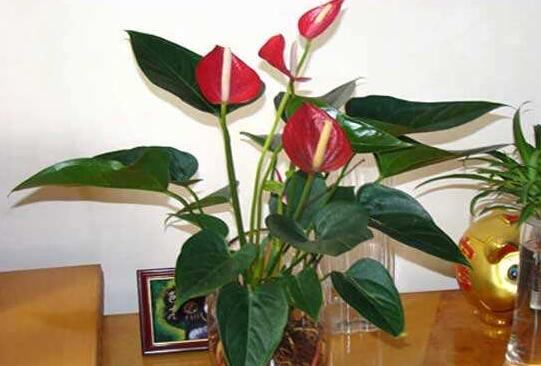
Anthurium is a very unusual plant, so its growth habits differ from many plants. It likes warm and humid environments, and also likes semi-shaded conditions with good drainage. It does not like strong light or dry soil. It is highly tolerant of high temperatures, but does not like lower temperatures.
Cultivation methods and precautions for Anthurium
1. Soil requirements for Anthurium
The soil most suitable for Anthurium growth is sandy soil with good drainage. You can use a composite substrate of peat, perlite and sand, or add a small amount of dry bark to purchased nutrient soil.
Precautions: Before planting Anthurium, make sure the soil has been disinfected. You can place the soil in a ventilated area to dry it, avoiding the presence of pathogens that could affect Anthurium growth.
2. Temperature requirements for Anthurium
The most suitable growing temperature for Anthurium is 20-30°C. It can tolerate high temperatures of 35°C, but should not remain in a high-temperature environment for long periods. Its cold tolerance is poor; growth is hindered at a minimum temperature of 14°C, and below 10°C there is a risk of cold damage.
Precautions: Although Anthurium likes high-temperature environments, the temperature should not be too high. In winter, pay attention to insulation measures, such as covering with plastic bags, to avoid frost damage from temperatures that are too low.
3. Humidity and Anthurium
Anthurium likes a humid environment. Humidity is best at 70-80%, and should not be lower than 50% at minimum. Therefore, when the climate is relatively dry, you need to spray water to maintain higher humidity.
Precautions: In the cultivation methods and precautions for Anthurium, when the temperature is above 28°C, a misting system should be used to increase the relative humidity of the air. In winter, do not moisturize excessively, because excessive moisture may affect Anthurium's cold resistance.
4. Fertilizer requirements for Anthurium
Anthurium is a plant that likes fertilizer, but root fertilization is much more effective than foliar feeding. In autumn, fertilize once every 4 days; in hot summer, fertilize once every 2-3 days.
Precautions: When fertilizing, control the dilution concentration and amount of liquid fertilizer. Do not apply fertilizer on the leaf surface, and never over-fertilize, otherwise seedling burn may occur. This is one of the commonly overlooked cultivation methods and precautions for Anthurium.
5. Water requirements for Anthurium
We know that Anthurium likes humid environments, so its water requirements are very high. Generally, in seasons with higher temperatures, water once every 2-3 days. When watering, water thoroughly, and ensure there are no water droplets on the leaf surface at night.
Precautions: When watering in summer, also spray the leaf surface. In winter, watering is best done between 9:00 and 16:00 to avoid frost damage to the roots.
6. Light intensity needed by Anthurium
A semi-shaded environment is most suitable for Anthurium growth, so its light requirements are moderate. However, because its most suitable temperature occurs in late spring and early summer, when sunlight intensity is higher, do not let it be exposed to direct sunlight.
Precautions: In summer, provide shade, blocking at least 75% of the light. In addition, note that Anthurium needs different light at different growth stages, so be sure to pay attention. For example, after removing flower buds, light should be increased to promote growth.
How to grow Anthurium so it thrives
In addition to the six points above, to make Anthurium grow well, you must also pay attention to nutrient adjustment and bud removal. This is because after a period of growth, Anthurium may show biodegradation and salinization, and at this time the proportion of nutrient elements needs to be adjusted.
Bud removal means removing suckers, because most Anthurium plants naturally sprout small suckers at the roots. They compete with the mother plant for nutrients and affect plant growth and shape, so they should be removed as early as possible.
Cultivation methods and precautions for "Flamingo Flower" Anthurium
Anthurium, with its jade-like dripping green leaves, bright scarlet spathes, and spadix adorned like gold and jade, is captivating. Its atmosphere of warmth, enthusiasm, passion and upward striving makes people spontaneously joyful. In recent years, as potted Anthurium sales have continued to improve, more and more flower producers want to enter this field and are eager to understand the conditions and issues involved in growing Anthurium. The editor has collected a complete set of potted Anthurium cultivation and management experience, and the main experience is introduced as follows:
Cultivation methods and precautions for "Flamingo Flower" Anthurium
——————————————————————————————————————————————
[Plant profile]
——————————————————————————————————————————————
Chinese name:Flamingo Flower
Scientific name:Anthurium andraeanum
Alternative names:Anthurium, Huazhu, Anthurium
Family:Araceae Alismatales
Genus:Anthurium genus Anthurium
Origin and distribution:Anthurium is native to tropical rainforest areas such as Costa Rica and Colombia. It often grows epiphytically on trees, sometimes on rocks or directly on the ground. It is now widely cultivated in Europe, Asia and Africa.
Morphological characteristics:It has a spadix inflorescence and leaf-shaped bracts. Common bract colors include red, pink and white. When the flowers fall, the leaves can also be enjoyed.
Growth habits of Anthurium
——————————————————————————————————————————————
Anthurium is a perennial evergreen herbaceous flower. It likes warm, humid and well-drained environments, and fears drought and strong direct sunlight. Its suitable daytime growing temperature is 26-32°C, and nighttime temperature is 21-32°C. The highest temperature it can tolerate is 35°C, and the lowest temperature it can tolerate is 14°C. Light intensity is best at 16000-20000lx, and relative air humidity is best at 70%-80%.
Selection of potted Anthurium
——————————————————————————————————————————————
There are four common types of potted Anthurium materials: tissue-cultured seedlings, divided plants, plug seedlings and potted seedlings. A basic principle: the smaller the plant, the greater the cultivation difficulty. For growers, if cultivation conditions are good and you have some experience, you can choose potted seedlings 10-15 cm tall. These seedlings can be planted directly into the final pot and are relatively safe. When you have enough experience, you can choose plug seedlings 6-10 cm tall, which are relatively cheaper.
Cultivation methods and precautions for Anthurium
——————————————————————————————————————————————
Anthurium is a flower variety relatively sensitive to salt, so the substrate pH should be controlled between 5.2-6.1 as much as possible, which is most suitable for Anthurium growth. If the pH is too low, the flower stems become shorter, reducing ornamental value. Tap water is suitable for planting Anthurium, but it is expensive; natural rainwater is the best water source for Anthurium cultivation.
Root fertilization of Anthurium is much more effective than foliar feeding. This is because the leaf surface of Anthurium has a waxy layer and cannot absorb fertilizer well. Liquid fertilizer application should follow the principle of regular and quantitative application. In autumn, the general cycle is 3-4 days. If the temperature is high, depending on the dryness and wetness of the substrate in the pot, apply fertilizer water once every 2-3 days; in summer, apply fertilizer water once every 2 days, and when the temperature is high, water once more; in autumn, generally apply fertilizer water once every 5-7 days. Fertilization time varies with climate and environment. Generally, apply between 8:00 am and before 17:00 pm; in winter or early spring, do it between 9:00 am and before 16:00 pm.
Anthurium grows in a cycle of "leaf -> flower -> leaf -> flower." The inflorescence forms in the axil of each leaf. This leads to the same yield of flowers and leaves, and the most important factor affecting yield is light. If there is too little light, under the influence of photosynthesis, the plant also produces very few assimilates; when light is too strong, some leaves of the plant will warm up, possibly causing leaf discoloration, scorching or withering.
Potted Anthurium sometimes shows premature flower aging, deformity, adhesion, cracking, vitrification and blue spots. These are mostly physiological diseases caused by improper management of fertilizer, potting soil and air humidity, or by variety factors. Prevention methods are improving cultivation management, rational fertilization and appropriate ventilation.
"Conclusion:Anthurium flowers are slightly toxic. If not eaten by mistake, there will be no problem. Wash your hands each time after pruning branches and leaves. Its toxicity mainly comes from the sap, and with more care there will be no problem. Well, the above is the related content on Anthurium cultivation methods and precautions. Have you learned it?
【Related recommendations】
·How to grow Agave ·Bedroom? ">Is Calla Lily toxic ·Plant cultivation tips ·How to grow Canna ·How to grow Pachira aquatica
·Dendrobium officinale planting ·How to grow colorful sunflowers ·How to grow Sansevieria ·How to grow Sempervivum tectorum in winter ·How to plant Iris
What are the cultivation methods and precautions for Anthurium?
Plants have become indispensable in people's lives. They have entered people's lives, accompanying people as they live and grow, and have thus become people's good friends. Anthurium is also one of these plants. It belongs to the Araceae family and Anthurium genus, and is a perennial evergreen herbaceous flower. It relatively likes to grow freely in warm, humid and well-drained environments, but fears drought and strong direct sunlight. It generally grows suitably at 21-32°C, and is generally cultivated in South America, tropical rainforests, Europe, Asia, Africa and other regions. Its flowers are very unique, with a spadix inflorescence, very brilliant colors and richer hues. Its flowering period is relatively long. During the process of the flower opening, the flower color changes with the flowering period, from bract to bloom to withering, undergoing a series of color changes: from beige - milky white - green - yellow. Its ornamental value is very high. It can be propagated by sowing, division and other methods. It is very easy to grow and is a very magical flower plant. Below, the editor will look with everyone at what the cultivation methods and precautions for Anthurium are, so that more people can learn to grow Anthurium.
Introduction to Anthurium
Anthurium is also called Huazhu, Red Goose Palm, Flamingo Flower, Anthurium and so on. It is an evergreen herbaceous flower plant. Its leaves and stems are very unusual. The leaves are generally dark green and star-shaped, very tough and thick. Its spadix is long and pointed, with colors including bright red, white and green, generally surrounded by red or pink spathes. It is somewhat toxic, so do not touch it casually. It blooms in all four seasons, so its ornamental value is very high, and it is very easy to grow.
Cultivation methods for Anthurium
Anthurium is relatively suitable for growing in warm, humid and well-drained environments. It fears drought and direct strong light, and is best grown in a semi-shaded environment, not exposed to direct strong light. It is relatively suitable for growing freely at 21-32°C, can best tolerate 35°C, and can tolerate a minimum of 14°C. Air humidity is best at 70%-80%.
1. Temperature: Anthurium has relatively high temperature requirements and avoids direct strong light. It is suitable for growing at 14-25°C. If it is below 13°C for a long time, the Anthurium plant cannot grow normally, and the recovery time is very long. It also cannot be kept at high temperature for a long time, otherwise the leaf surface will be scorched, affecting Anthurium quality and ornamental value.
2. Potting: At different growth stages, Anthurium has different requirements for pot specifications. It is best to use pots with good water and fertilizer retention, no water accumulation and no toxic substances. Disinfection should be carried out during planting so it can grow normally.
3. Watering: At the seedling stage, the plant's root system is relatively weak, distributed relatively shallowly in the substrate, and not drought-tolerant. After planting, spray water 2-3 times a day and keep the substrate moist for a long time, which is beneficial to Anthurium growth. During the flowering period, reduce watering and fertilize to promote flowering.
4. Fertilizing: When fertilizing Anthurium, fertilize according to climate changes. The fertilization time is from 8:00 to 17:00. When fertilizing, follow the dilution concentration and application amount of the liquid fertilizer.
Maintenance precautions for Anthurium
Anthurium is relatively suitable for growing in shady and humid environments and cannot be exposed to the sun for long periods. The soil is best loose. It is best to grow a layer of moss on top of the soil, which helps retain moisture. If Anthurium turns yellow, it is root rot caused by high temperature. Over-fertilization will create certain obstacles to the metabolism of Anthurium. Do not water too much, otherwise the leaves of Anthurium will turn yellow and the ornamental value will be affected. Direct strong light will make the leaves turn yellow, slow growth, and make the petioles relatively short and small, with leaves curling and unable to stretch out.
Summary: The above is the cultivation methods and precautions for Anthurium introduced by the editor. I hope more people can learn to grow Anthurium, enrich their own horizons, beautify their living environment, and let themselves live every day in a beautiful and comfortable environment. Thank you everyone for reading.
More related information Perfume Lily pictures Ebony bonsai pictures Clivia watering methods Hydroponic flower picture appreciation Red Maple prices