What causes the blackened tips of spider plant leaves
Spider plants are extremely popular foliage plants, and many plant lovers have found the joy of gardening success with them, but they also run into the problem of blackened leaf tips, which, although it does not affect the spider plant's growth, seriously affects its appearance. So how do we prevent spider plant leaf tips from turning black?
Generally speaking, blackened leaf tips on spider plants are caused by overwatering. Although spider plants can tolerate a bit of extra water without issue, it is precisely because of this that many plant lovers have no concerns about watering their spider plants, and long-term waterlogging leads to blackened, dried-up leaf tips. Of course, some plant lovers say, I water very frequently, so why haven't my spider plant's leaf tips turned black? Watering and the air permeability of the potting soil correspond to each other. If the potting soil is not breathable enough and you water a lot, waterlogging naturally occurs. If the potting soil has good air permeability, there is no problem no matter how much you water.
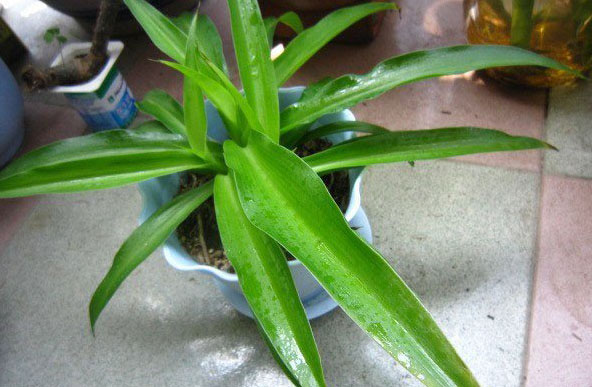
Another cause of blackened leaf tips on spider plants is that if the spider plant is right up against a wall or something else, it can also cause the leaf tips to turn black, so the place where it is placed should be as spacious as possible.
Summary: Water moderately (do not water and mist constantly every day; water according to actual conditions), and choose a spacious, bright location for placement.
Blackened leaf tips on spider plants
Spider plants are extremely popular foliage plants, and many plant lovers have found the joy of gardening success with them, but they also run into the problem of blackened leaf tips, which, although it does not affect the spider plant's growth, seriously affects its appearance. So how do we prevent spider plant leaf tips from turning black?Generally speaking, blackened leaf tips on spider plants are caused by overwatering. Although spider plants can tolerate a bit of extra water without issue, it is precisely because of this that many plant lovers have no concerns about watering their spider plants, and long-term waterlogging leads to blackened, dried-up leaf tips. Of course, some plant lovers say, I water very frequently, so why haven't my spider plant's leaf tips turned black? Watering and the air permeability of the potting soil correspond to each other. If the potting soil is not breathable enough and you water a lot, waterlogging naturally occurs. If the potting soil has good air permeability, there is no problem no matter how much you water.
Another cause of blackened leaf tips on spider plants is that if the spider plant is right up against a wall or something else, it can also cause the leaf tips to turn black, so the place where it is placed should be as spacious as possible.
Summary: Water moderately (do not water and mist constantly every day; water according to actual conditions), and choose a spacious, bright location for placement.
Causes of and solutions for blackened leaf tips on spider plants
Spider plants are extremely popular foliage plants, and many plant lovers have found the joy of gardening success with them, but they also run into the problem of blackened leaf tips, which, although it does not affect the spider plant's growth, seriously affects its appearance. So how do we prevent spider plant leaf tips from turning black?1. Causes: Blackened leaf tips on spider plants can be caused by multiple reasons, most likely poor water permeability of the pot, waterlogging in the potting soil, and rot of the fine feeding roots. Because the potting soil has become compacted or is too sticky and heavy, or because of overly frequent or excessive watering, the spider plant's fine feeding roots rot, causing the root system's ability to absorb water to drop drastically, so that the tips of the spider plant's leaves turn black first. Another cause is that the plant has not been repotted for a long time, causing the roots to grow all the way to the pot wall; in a high-temperature, dry environment or in cold weather, the root tips easily shrivel and die, losing their proper absorbing function, which causes the leaf tips to dry up and shrivel.
2. Solutions: You can take the plant out of the flower pot, shake off some of the old soil, cut off the rotten roots, and replant it in clean, moist sand, keeping the sand moist and not misting too much. After it has put out tender white fine fibrous roots, replant it again in fertile potting soil. If the root rot is not serious, you can also, after cutting off the rotten roots, coat the wounds with plant ash or sulfur powder, and then plant it directly in potting soil. For the other cause, the solution is to first tip the plant out of the flower pot, cut off the leaves that have already withered, remove part of the old soil, and also cut away the aged or dead root system, then replant it in fresh potting soil and keep it in a cool, moist, semi-shady environment for care, paying attention to misting more and watering less; once the plant puts out new tender leaves, it can return to normal care.