What causes the leaves of bamboo palm (Guanyin bamboo) to turn yellow?
Looking across the internet at the varieties called Guanyin bamboo, they not only differ in appearance but each also has its own merits. For beginner flower growers, hydroponic plants seem easier and more worry-free to keep, and perhaps some really are, but many friends always run into the problem of yellowing leaves when growing Guanyin bamboo. Now we will briefly explain the solutions for the yellowing leaves of Guanyin bamboo shown in the pictures below.
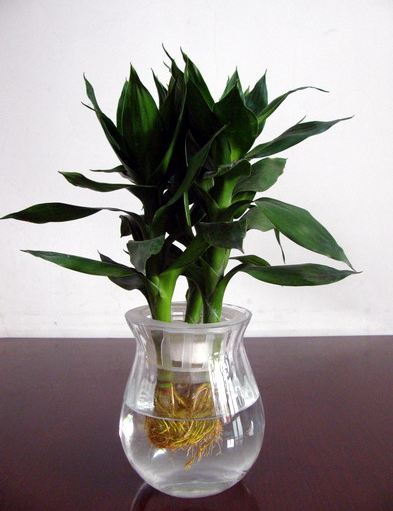
Causes of yellowing leaves in Guanyin bamboo and their solutions:
Water-yellow: Tender leaves turn dull yellow and lose their luster, old leaves show no obvious change, stems are thin and yellow-green, and new shoots shrink and stop growing, indicating overwatering. Take the plant out of the pot, place it in a ventilated, cool spot to let the root ball dry out on its own, then put it back in the pot.
Drought-yellow: The yellowing from lack of water differs from the yellowing from too much water. The yellowing from lack of water shows as withered, dry leaf tips or edges, with old leaves turning yellow and dropping from the bottom up, while new leaves grow relatively normally. Just water thoroughly and deeply.
Scorch-yellow: Strong direct sunlight hitting some shade-loving plants (such as spider plant, hosta, etc.) easily causes the leaf tips and edges to wither, and yellow blotches to appear on the sun-facing parts of the leaves. Simply move them to a shaded spot.
Light-deficiency yellow: Placed in a shaded environment for a long time, the leaves cannot get enough sunlight and cannot form chlorophyll, so the whole plant's leaves turn yellow and then drop. Adding light can prevent this problem.
Fertilizer-yellow: Yellowing caused by too much fertilizer or too high a concentration shows as dry brown tips on new leaves; generally the leaf surface is thick and lusterless, uneven and not smooth, and old leaves turn scorched yellow and drop. Stop fertilizing immediately; in severe cases, flush out some of the fertilizer with plenty of water.
Causes of yellowing leaves in fernleaf hedge bamboo (Phoenix-tail bamboo) and their solutions
Everyone likes fernleaf hedge bamboo; growing it is meant to bring feng shui and wealth to the home. Its cultivation requires careful handling. So what should we do if we find its leaves turning yellow during cultivation? Below we will talk about how to grow fernleaf hedge bamboo.
Causes of yellowing leaves in fernleaf hedge bamboo and their solutions(1) Overwatering: The potting soil stays too wet for a long time, causing a lack of oxygen in the soil, rotting some of the fibrous roots, hindering normal respiration and the absorption of water and nutrients, and causing leaves to turn yellow and drop. After damage occurs, the tender leaves first turn pale yellow, then the old leaves gradually turn yellow too. Watering should be controlled immediately, fertilizing paused, and the soil loosened frequently to keep it well aerated.
(2) Drought and dehydration. Missing waterings or long-term half-watering (i.e., wet on top, dry at the bottom) affects nutrient absorption and also easily causes the leaves to turn dull and lusterless and to wilt and droop. First the lower old leaves age, then gradually turn yellow and drop from the bottom up. At this point, water lightly and mist the plant, let it gradually recover, then return to normal watering.
(3) Long-term fertilizer deficiency. Not applying nitrogen fertilizer or not repotting or changing the soil for a long time leads to a lack of nitrogen and other nutrients in the soil, causing weak branches and leaves and thin, yellow leaves. Repot promptly, replace with fresh loose, fertile potting soil, and gradually apply more dilute, well-rotted liquid fertilizer or compound flower fertilizer.
(4) Overfertilizing. Too much fertilizer causes new leaves to be thick and fleshy with many bumps and unevenness, and old leaves to dry at the tips, turn scorched yellow and drop. Stop fertilizing immediately, increase watering so the fertilizer flows out through the drainage holes at the bottom of the pot, or immediately repot, rinse the root ball with water, and replant it in the pot.
(5) Hot, high temperatures. In summer, if cool-loving plants (such as cyclamen, fuchsia, and wax begonia) are placed in a hot spot under direct strong sunlight, the tips and edges of young leaves very easily wither and scorch, or the leaves turn yellow and drop. Move them promptly to a well-ventilated, cool spot.
(6) Excessive shading. If sun-loving plants are kept for a long time in a shaded spot or a place with insufficient light, the branches and leaves will grow leggy, the leaves will be thin and yellow, and they will not bloom or will bloom very little. Move the pot to a sunny spot.
(7) Alkaline soil and water. In most regions of the north, the soil and water contain more salt and alkali. When planting acid-loving plants such as rhododendron, camellia, banana shrub, gardenia, orchid, white michelia, and osmanthus, the leaves gradually turn yellow because the soil lacks absorbable soluble iron and other elements. Use acidic soil when planting, and regularly water with alum fertilizer water during the growing period.
(8) Too dense and poorly ventilated. If too much nitrogen fertilizer is applied, the branches and leaves grow too lushly, and with no pruning for a long time, the inner branches and leaves get insufficient light, which easily causes leaves to turn yellow and drop. Fertilize reasonably and prune more to improve ventilation and light penetration.
(9) Dry air. When indoor air is too dry, some plants that love humid environments, such as spider plant and orchid, often show dry leaf tips or scorched leaf edges. Take measures such as misting and covering with plastic film to increase air humidity.
(10) Improper temperature. In winter, if room temperature is too low, high-temperature-loving plants often suffer cold damage, causing leaves to turn yellow and, in severe cases, to wither, turn yellow, and die. If room temperature is too high, the plant transpires excessively, and the roots cannot supply enough water and nutrients, which also makes the leaves turn yellow. Adjust room temperature promptly.
(11) Acidic soil. Red soil in the south is acidic, and elements such as magnesium are easily lost. When planting trees and flowers that tolerate alkali or prefer slightly alkaline soil, such as oleander, boxwood, and winter jasmine, the old leaves often show yellowing between the veins. Apply calcium magnesium phosphate fertilizer or spray with magnesium sulfate solution.
(12) Damage from pests and diseases. Leaf spot disease caused by fungal and other pathogens easily causes local necrosis of leaves, with yellow spots or patches appearing; in severe cases the whole leaf withers, turns yellow, and drops. After infection by mosaic virus, yellow-green mottled patches appear on the leaves. Damage by scale insects, red spider mites, and the like also causes parts of the leaves to turn yellow and wither, or even the whole leaf to wilt, turn yellow, and drop. In all cases, spray promptly for control.
(13) Strong irritation. Using pesticide at too high a concentration when controlling pests and diseases, or pollution by toxic gases in the air, or suddenly watering with cold water when the temperature is high, can all easily cause the leaf tips or parts of the leaf surface to turn yellow and scorch, or even the whole plant to wither and die.
Causes of yellowing leaves in Guanyin bamboo and their solutions
Looking across the internet at the varieties called Guanyin bamboo, they not only differ in appearance but each also has its own merits; for beginner flower growers, hydroponic plants seem easier and more worry-free to keep, and perhaps some really are, but many friends always run into the problem of yellowing leaves when growing Guanyin bamboo. Now we will briefly explain the solutions for the yellowing leaves of Guanyin bamboo shown in the pictures below.
Causes of yellowing leaves in Guanyin bamboo and their solutions:
Water-yellow:Tender leaves turn dull yellow and lose their luster, old leaves show no obvious change, stems are thin and yellow-green, and new shoots shrink and stop growing, indicating overwatering. Take the plant out of the pot, place it in a ventilated, cool spot to let the root ball dry out on its own, then put it back in the pot.
Drought-yellow:The yellowing from lack of water differs from the yellowing from too much water. The yellowing from lack of water shows as withered, dry leaf tips or edges, with old leaves turning yellow and dropping from the bottom up, while new leaves grow relatively normally. Just water thoroughly and deeply.
Scorch-yellow:Strong direct sunlight hitting some shade-loving plants (such as spider plant, hosta, etc.) easily causes the leaf tips and edges to wither, and yellow blotches to appear on the sun-facing parts of the leaves. Simply move them to a shaded spot.
Light-deficiency yellow:Placed in a shaded environment for a long time, the leaves cannot get enough sunlight and cannot form chlorophyll, so the whole plant's leaves turn yellow and then drop. Adding light can prevent this problem.
Fertilizer-yellow:Yellowing caused by too much fertilizer or too high a concentration shows as dry brown tips on new leaves; generally the leaf surface is thick and lusterless, uneven and not smooth, and old leaves turn scorched yellow and drop. Stop fertilizing immediately; in severe cases, flush out some of the fertilizer with plenty of water.
Fertilizer-deficiency yellow:It shows as tender leaves becoming paler, turning yellow or pale green, while old leaves remain relatively normal or gradually turn from green to yellow. Check the potting soil; if it is hard and compacted, change the soil. Usually apply light fertilizer frequently and water with some alum water at the right times (Guanyin bamboo is a foliage plant and should be given fertilizer mainly based on nitrogen).
Root-cutting yellow:Do not cut off the roots in winter, otherwise it cannot absorb water and the leaves will naturally turn yellow.
Small tips to keep in mind when growing Guanyin bamboo:
1. Strip the leaves:Before putting it in the vase, strip clean the leaves from the base of the cutting up to the mouth of the vase. This does not mean simply picking or cutting the leaves off; you also need to peel off the leaves clinging to the stem until a ring after ring of bamboo nodes is exposed and its greenish-yellow skin can be seen, only then can it be considered cleanly stripped. This way, when you change the water later, the stem will not feel slippery, and the water will not easily become smelly. After stripping the leaves clean, use a sharp knife to cut the base into a slanted opening, with a smooth cut, to help it absorb water and nutrients.
2. Water:Guanyin bamboo is grown in water. Do not change all the water. Keep 1/3 of the water. Add 2/3 fresh water.
3. Water depth:Do not fill the water too deep, to avoid too much growth; just 1/2 or 3/5 of the vase height is enough (it is recommended to use a transparent vase so you can observe root growth and know the water level).
4. Placement:Do not place Guanyin bamboo where air conditioning often blows on it, as this will make the leaves turn yellow.
5. Humidity:Mist appropriately to increase air humidity and prevent dry leaves and yellow leaves.
Through the detailed introduction in this article, we hope fellow flower growers can gain something from it! Thank you all for your attention and support of Duorou Huapu (Succulent Garden)!