Five Major Benefits and Effects of the Cast Iron Plant, One of the 50 Plants Suitable for Growing Indoors
The Cast Iron Plant is deeply loved for its upright leaves, verdant color, and graceful form, and it is also considered one of the 50 plants suitable for growing indoors. So what are the main benefits and effects of the Cast Iron Plant? Today, we will walk you through them.
Benefits and Effects of the Cast Iron Plant
1. Traditional Value
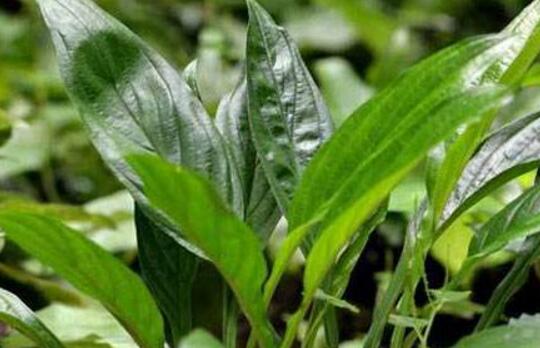
The leaves of the Cast Iron Plant are rich in chlorophyll, amino acids, and other components that are beneficial to human health. In many places during the Dragon Boat Festival, people use the leaves of the Cast Iron Plant to wrap zongzi, which not only provides a good preservative effect but also gives the zongzi a fragrant aroma. Therefore, the Cast Iron Plant has traditional value.
2. Medicinal Value
Among the benefits and effects of the Cast Iron Plant, its medicinal value has long been recognized. Its rhizomes can be used as medicine and have the effect of promoting blood circulation and dissipating blood stasis, so they can treat injuries from falls and blows, rheumatic muscle and bone pain, lower back pain, cough due to lung deficiency, hemoptysis, and more. It is usually taken as a decoction in water.
3. Ornamental Value
The popularity of the Cast Iron Plant is directly related to its extremely high ornamental value. Its leaves are verdant and glossy, and its form looks very upright. Whether placed in a living room, meeting room, or office, it can be appreciated on its own, and its graceful plant shape is very beautiful.
4. Purifying Effect
The leaves of the Cast Iron Plant have a strong ability to absorb sulfur dioxide, hydrogen fluoride, and more. In addition, it can adsorb harmful particles in the air, such as formaldehyde and dust, quietly making the air quality better without us even realizing it.
5. Household Role of the Cast Iron Plant
Among the varieties of the Cast Iron Plant, some have leaves covered with yellow spots. These speckled spots are very attractive. It can be used together with other plants in landscaping arrangements, and can also serve as foliage material for flower arrangements, playing a very good role in beautifying the home.
How to Grow and Care for the Potted Cast Iron Plant (with Pictures)
The Cast Iron Plant is an excellent shade-loving foliage plant for indoor greening and decoration. Also known as spider's egg, ruo leaf, bamboo-leaf plate, and nine-dragon plate, it is a perennial evergreen rhizomatous herbaceous plant of the genus Aspidistra in the family Liliaceae. It is native to the southern provinces and regions of China, and is now cultivated throughout China and used fairly widely. Let us take a look at how to grow the Cast Iron Plant and what to pay attention to!
Growth Habits of the Cast Iron Plant
The Cast Iron Plant is mainly distributed in the southern provinces and regions of China as well as Hainan Island, Taiwan, China, and other areas. Its rhizome is nearly cylindrical, with nodes and scales, and its leaves are solitary. It likes warm, humid, semi-shaded environments, is relatively cold-tolerant, and extremely shade-tolerant. The optimal growth temperature is 10-25°C, the range in which it can grow is 7-30°C, and the overwintering temperature is 0-3°C.
Cultivated Varieties of the Cast Iron Plant
1. Variegated Cast Iron Plant: Also known as sprinkled-gold spider's egg, variegated spider's egg, and star-spotted spider's egg, it is a cultivated variety of the Cast Iron Plant, with milky white or pale yellow spots on the green leaf surface.
2. Golden-line Cast Iron Plant: Also known as golden-striped spider's egg and white-striped spider's egg, it is a cultivated variety of the Cast Iron Plant, with pale yellow longitudinal line markings on the green leaf surface.
Division Propagation of the Cast Iron Plant
1. Division Time: Division propagation of the Cast Iron Plant can be carried out in spring when the temperature rises and before new buds have sprouted, in combination with repotting. It is generally done in early spring (February and March) after the soil thaws.
2. Division Method: Take the mother plant out of the pot, shake off excess potting soil, separate the tangled root system as much as possible, and cut it open with a sharp knife into two or more plants. Each divided plant must have a considerable amount of roots, and its leaves should be properly pruned so that each clump has 3-5 leaves, which helps with survival.
How to Grow the Cast Iron Plant
1. Potting: Soak the divided small plants in a 1500-fold solution of chlorothalonil for five minutes, then take them out and let them dry before potting. You can also drench the roots with chlorothalonil immediately after potting.
2. Management: After dividing and potting, drench the roots or water thoroughly once. Because the root system has been greatly damaged and its water-absorbing capacity is very weak, it takes about 3-4 weeks to recover and sprout new roots. Therefore, within 3-4 weeks after division, watering should be controlled to avoid root rot. However, the transpiration of its leaves is not affected, so to maintain the water balance of the leaves, the leaf surface needs to be misted 1-3 times a day. Do not fertilize during this period either. After division, also be careful of excessively strong sunlight; it is best to place it in a shade shed for care.
3. Potting: First place a 2-3 cm thick layer of coarse substrate at the bottom of the pot as a drainage layer, then place the plant in. The substrate used for potting can be one of the following: peat: perlite: ceramsite = 2:2:1, or peat: vermiculite = 1:1, or peat: cinder: ceramsite = 2:2:1, or sawdust: vermiculite: medium-coarse river sand = 2:2:1, or vegetable garden soil: cinder = 3:1, or garden soil: medium-coarse river sand: sawdust = 4:1:2, or paddy soil, pond mud, leaf mold, and so on. After potting, water thoroughly once and place it in a shaded environment for care.
Care Techniques for the Cast Iron Plant
1. Soil: The Cast Iron Plant is not strict about soil and tolerates poor soil, but a loose, fertile, slightly acidic sandy loam is best. For potting, equal parts leaf mold, peat soil, and garden soil can be mixed as the substrate.
2. Water: During the growing season, the Cast Iron Plant should be watered sufficiently to keep the potting soil consistently moist, and the leaf surface should be misted often to increase humidity, which helps buds sprout and new leaves grow. After late autumn, the amount of watering can be appropriately reduced.
3. Light: The Cast Iron Plant can be grown year-round in a bright indoor setting, but whether indoors or outdoors, it must not be placed in direct sunlight. Even a short period of direct sun exposure can cause leaf scorch and reduce its ornamental value.
Summary: That is all for the introduction to how to grow the Cast Iron Plant. In fact, the Cast Iron Plant is very suitable for placement in homes and offices. It can be appreciated on its own, can be arranged together with other flowering plants, and is also a foliage material for modern flower arrangements. Friends who are interested can continue on to look at the precautions for growing the Cast Iron Plant!
Precautions for Growing the Cast Iron Plant
1. During the growing season, the Cast Iron Plant should be watered sufficiently to keep the potting soil consistently moist, and the leaf surface should be misted often to increase humidity, which helps buds sprout and new leaves grow. After late autumn, the amount of watering can be appropriately reduced.
2. When growing the Cast Iron Plant, in addition to controlling temperature and moisture, special attention should also be paid to whether the Cast Iron Plant is diseased. Diseased leaves should be cut off and burned promptly to reduce sources of infection.
3. Before the rainy season arrives, spray the Cast Iron Plant with a 1000-fold solution of 50% Shibaike or Shibaogong wettable powder, or a 500-fold solution of 25% Tanteling wettable powder. Once every 10 days, for 3-4 treatments.
4. The Cast Iron Plant is a shade-tolerant plant, so the light should not be too strong; otherwise, it will cause the leaves to turn yellow or become diseased. Overwatering, especially in winter, will cause root rot and can also lead to yellowing leaves.
5. When caring for the Cast Iron Plant in a greenhouse or shed, you can raise the nighttime temperature of the shed, increase ventilation time during the day, and reduce the humidity inside the shed and the duration of fog formation, thereby achieving the goal of disease control.
6. During the vigorous growth period in spring and summer, apply liquid fertilizer 1-2 times a month to ensure the leaves remain fresh and bright. It can be grown year-round in a bright indoor setting, but whether indoors or outdoors, it must not be placed in direct sunlight.
Pest and Disease Control for the Cast Iron Plant
1. Anthracnose
[Symptoms] On the leaves of the Cast Iron Plant, the lesions mostly occur at the leaf margins or on the leaf surface. The lesions are nearly round, grayish white to grayish brown, with a yellow-brown or reddish-brown outer edge, and later appear as small black dots arranged in rings. Besides the leaves, the petioles and stems are also affected, producing elongated lesions. The pathogen overwinters in the soil or in diseased leaf tissue. It spreads through airflow or water splash, causing initial infection and reinfection. In the south, there are 2-3 disease peaks each year, while in the north there is only 1 disease peak. Continuous rain and heavy rainfall lead to severe disease.
[Control] ① Cut off and burn diseased leaves promptly to reduce sources of infection. ② Before the rainy season arrives, spray a 1000-fold solution of 50% Shibaike or Shibaogong wettable powder, or a 500-fold solution of 25% Tanteling wettable powder. Once every 10 days, for 3-4 treatments. ③ When necessary, spray a 0.5% potassium dihydrogen phosphate solution or a 300-fold solution of Shuangxiao micronutrient fertilizer, which helps enhance disease resistance.
2. Gray Mold
[Symptoms] It often occurs at the leaf margins. Water-soaked lesions begin to appear from the leaf margins. When humidity is high, the lesions expand very quickly, causing the leaf margins to form irregular withering, and generally no gray mold layer is seen. However, after continuous overcast rain, with high humidity and long duration, sparse gray mold can grow. The disease is prone to becoming epidemic under conditions of high humidity and temperatures around 20°C.
[Control] ① Care carefully, and choose a moist, well-drained, semi-shaded environment for planting. ② If scattered diseased plants are found, spray a 1000-fold solution of 65% Jiameling wettable powder, or a 1500-fold solution of 50% Sukeling wettable powder, or a 1000-fold solution of 50% Puhaiyin wettable powder or 50% Nongliling wettable powder. ③ For Cast Iron Plants cared for in a greenhouse or shed, you can raise the nighttime temperature of the shed, increase ventilation time during the day, and reduce the humidity inside the shed and the duration of fog formation, thereby achieving the goal of disease control.
3. Leaf Spot
[Symptoms] Leaf spot is also called black spot, brown spot, and so on. First, black spots appear in the middle of the leaf, then the leaf color turns yellow and it falls off. The cause is mostly a stuffy, unventilated, and humid environment.
[Control] Pay attention to improving environmental conditions. At the early stage of the disease, the affected leaves can be removed and burned. A 1% Bordeaux mixture can be sprayed for control, once every 7 days, for a total of 4-5 sprays over the whole growing period, or a 1000-fold solution of 50% carbendazim can be sprayed for control.
What to Do If the Leaves of the Cast Iron Plant Turn Yellow?
1. Excessive Light
[Cause] The Cast Iron Plant dislikes direct sunlight. Even a short period of direct sun exposure can cause the leaves to scorch and turn yellow, reducing ornamental value.
[Solution] You can keep the Cast Iron Plant in a bright indoor setting year-round, but whether indoors or outdoors, it must not be placed in direct sunlight.
2. Insufficient Light
[Cause] The Cast Iron Plant is extremely shade-tolerant and can be enjoyed even in a dark room for several months. However, long-term excessive darkness is not good for the sprouting and growth of new leaves. If it stays in a dark place with too little light for a long time, the leaves of the Cast Iron Plant will turn yellow.
[Solution] If the Cast Iron Plant is placed in a dark room, it is best to move it every so often to a place with bright light for a period of care, which benefits growth and appreciation. In particular, during the period from new leaf sprouting to new leaf maturity, it must not be placed in an overly dark place.
3. Overwatering
[Cause] Overwatering is also one of the reasons the leaves of the Cast Iron Plant turn yellow. The Cast Iron Plant likes water and has a certain degree of tolerance; even after several days of drought, it will not die. However, if it is overwatered, root respiration will be affected, causing the leaves to turn yellow.
[Solution] Water the Cast Iron Plant by the principle of watering when dry and stopping when wet. Do not water too much, but do not water too little either. During the growing period, it needs sufficient water.
4. Overly Concentrated Fertilizer
[Cause] The Cast Iron Plant does not have a particularly large demand for fertilizer. It is best to apply only light fertilizer each time. If too much fertilizer is applied, it will burn the roots, disrupt the growth of the Cast Iron Plant, and cause the leaves to turn yellow due to fertilizer damage.
[Solution] Apply a thin liquid fertilizer 1-2 times a month to encourage new leaf sprouting and healthy growth and to keep the leaves fresh and bright. Do not apply too much fertilizer.
5. Pest Infestation
[Cause] Cast Iron Plants cared for indoors are very prone to red spider mites. The appearance of pests is also a reason the leaves of the Cast Iron Plant turn yellow.
[Solution] Frequently check both sides of the leaves and promptly spray dicofol, hexythiazox, or similar for control.
Cultivation and Propagation Methods of the Cast Iron Plant, and Its Morphological Characteristics
The Cast Iron Plant (scientific name: Aspidistra elatior Blume) is also called spider's egg because its fruit closely resembles a spider's egg. It is a flowering ornamental plant of the Liliaceae family, a perennial evergreen rhizomatous herb, with underground rhizomes creeping and spreading; leaves emerge from the roots, growing upright, with long petioles and green leaves, and it does bloom. The Cast Iron Plant is evergreen year-round, with graceful leaf shapes and robust growth, making it an ideal indoor greenery plant. In traditional Chinese medicine, its rhizome is used as medicine. It can be collected in all four seasons, and used dried or fresh. It promotes blood circulation and dissipates blood stasis, and tonifies deficiency and stops coughing. It is used for injuries from falls and blows, rheumatic muscle and bone pain, lower back pain, cough due to lung deficiency, and hemoptysis.
Morphological Characteristics of the Cast Iron Plant
Rhizome
The Cast Iron Plant is a perennial evergreen herb. Its rhizome is nearly cylindrical, 5-10 mm in diameter, with nodes and scales.
Leaves
The leaves of the Cast Iron Plant are solitary, spaced 1-3 cm apart from each other, oblong-lanceolate, lanceolate, to nearly elliptical, 22-46 cm long and 8-10 cm wide, with acuminate apex, wedge-shaped base, and more or less wavy margins, green on both sides, sometimes slightly marked with yellowish-white spots or stripes; the petiole is obvious, thick, and 5-35 cm long.
Flowers
The peduncle of the Cast Iron Plant is 0.5-2 cm long; there are 3-4 bracts, 2 of which are located at the base of the flower, broadly ovate, 7-10 mm long and about 9 mm wide, pale green, sometimes with small purple dots; the perianth is bell-shaped, 12-18 mm long and 10-14 mm in diameter, purple or dark purple on the outside, pale purple or deep purple on the lower inner side, with 6-8 lobes on the upper part; the perianth tube is 10-12 mm long. The lobes are nearly triangular, 3.5-4 mm wide, with obtuse apex, pale green on the margins and upper inner side, and with particularly thick fleshy ridge-like protrusions on the inner surface, with the middle 2 being thin and long and the 2 on each side being thick and short, reaching up to 1.5 mm at the center, purplish red; there are 6-8 stamens, born near the base of the perianth tube, lower than the stigma; the filaments are short, and the anthers are elliptical, about 2 mm long; the pistil is about 8 mm high, and the ovary is scarcely swollen; the style has no joint; the stigma is shield-shaped and swollen, round, 10-13 mm in diameter, purplish red, with 3-4 deep clefts on the upper surface, with both sides of the clefts more or less protruding upward, the central part slightly convex, the lobe tips slightly concave, and the margins often rolled upward.
The natural flowering period of the Cast Iron Plant is March to May.
Ecological Habits of the Cast Iron Plant
The Cast Iron Plant is native to the southern provinces and regions of China, and is now cultivated in various places and used fairly widely. It likes warm, humid, semi-shaded environments, is relatively cold-tolerant, and extremely shade-tolerant. The optimal growth temperature is 10-25°C, the range in which it can grow is 7-30°C, and the overwintering temperature is 0-3°C.
How to Cultivate the Cast Iron Plant
Care Methods for the Cast Iron Plant
The Cast Iron Plant is highly adaptable and grows quickly, so it should be repotted once every 1-2 years. It is often grown in a culture soil made of equal parts loam,
leaf mold, and river sand. When repotting, apply a small amount of crushed bone pieces or cake fertilizer powder as a base fertilizer. After planting, water thoroughly and place it in a cool place for care. During the growing period, it should be watered sufficiently, and the leaf surface should be misted often to maintain relatively high air humidity. Apply a thin liquid fertilizer 1-2 times a month to encourage new leaf sprouting and healthy growth.
Variegated varieties should be given light fertilizer. If the fertilizer is too rich, the spots on the leaf surface are likely to disappear. In summer, avoid direct sunlight, but pay attention to ventilation and promptly remove yellow leaves. During the stage from new leaf sprouting to new leaf growth, it must not be placed in a dark indoor spot; otherwise, the new leaves will grow slender and weak, affecting the ornamental effect. In northern regions, it should be moved indoors in winter, with reduced watering and no fertilizing. If the potting soil is too wet at this time, it easily causes root rot.
Key Growing Points for the Cast Iron Plant
The Cast Iron Plant is mainly propagated by division. In spring, when the temperature rises and before new buds have sprouted, division can be carried out in combination with repotting. Cut the underground rhizome together with the leaves into several clumps, so that each clump has 3-5 leaves, then pot and plant them separately, and place them in a semi-shaded environment for care.
The Cast Iron Plant is not strict about soil and tolerates poor soil, but a loose, fertile, slightly acidic sandy loam is better. For potting, equal parts leaf mold, peat soil, and garden soil can be mixed as the substrate. During the growing season, water sufficiently to keep the potting soil consistently moist, and mist the leaf surface often to increase humidity. This helps buds sprout and new leaves grow; after late autumn, the amount of watering can be appropriately reduced. During the vigorous growth period in spring and summer, apply liquid fertilizer 1-2 times a month to ensure the leaves remain fresh and bright. It can be grown year-round in a bright indoor setting, but whether indoors or outdoors, it must not be placed in direct sunlight; even a short period of direct sun exposure can cause leaf scorch and reduce ornamental value. The Cast Iron Plant is extremely shade-tolerant and can be enjoyed even in a dark room for several months, but long-term excessive darkness is not good for the sprouting and growth of new leaves. So if it is placed in a dark room, it is best to move it every so often to a place with bright light for a period of care, which benefits growth and appreciation. In particular, during the period from new leaf sprouting to new leaf maturity, it must not be placed in an overly dark place.
Propagation Methods of the Cast Iron Plant
Division Propagation
The Cast Iron Plant is evergreen year-round, with upright and neat leaf shapes, deep green and glossy leaves, and a graceful, elegant, and refined bearing. At the same time, it grows vigorously, is highly adaptable, and is extremely shade-tolerant, making it an excellent shade-loving foliage plant for indoor greening and decoration. It is suitable for placement in homes and offices. It can be appreciated on its own, or arranged together with other flowering plants to set off the brightness and beauty of other flowers. It is very suitable for home cultivation. When growing the Cast Iron Plant at home, division can be used for propagation. When propagating, pay attention to the choice of division time, the application of the division method, and post-division care.
Division Time
For division propagation of the Cast Iron Plant, in spring when the temperature rises and before new buds have sprouted, division can be carried out in combination with repotting. It is generally done in early spring (February and March) after the soil thaws.
Division Method
Take the mother plant out of the pot, shake off excess potting soil, separate the tangled root system as much as possible, and cut it open with a sharp knife into two or more plants. Each divided plant must have a considerable amount of roots, and its leaves should be properly pruned so that each clump has 3-5 leaves, which helps with survival.
Potting and Disinfection
Soak the divided small plants in a 1500-fold solution of chlorothalonil for five minutes, then take them out and let them dry before potting. You can also drench the roots with chlorothalonil immediately after potting.
Post-Division Management
After dividing and potting, drench the roots or water thoroughly once. Because its root system has been greatly damaged and its water-absorbing capacity is very weak, it takes about 3-4 weeks to recover and sprout new roots. Therefore, within 3-4 weeks after division, watering should be controlled to avoid root rot. However, the transpiration of its leaves is not affected, so to maintain the water balance of the leaves, the leaf surface needs to be misted 1-3 times a day (more misting when the temperature is high, less or none when the temperature is low). Do not fertilize during this period either. After division, also be careful of excessively strong sunlight; it is best to place it in a shade shed for care.
Potting or Transplanting
First place a 2-3 cm thick layer of coarse substrate at the bottom of the pot as a drainage layer, then place the plant in. The substrate used for potting can be one of the following: peat: perlite: ceramsite = 2:2:1; peat: vermiculite = 1:1; or peat: cinder: ceramsite = 2:2:1; sawdust: vermiculite: medium-coarse river sand = 2:2:1; vegetable garden soil: cinder = 3:1; or garden soil: medium-coarse river sand: sawdust (mushroom residue) = 4:1:2; or paddy soil, pond mud, leaf mold, and so on. After potting, water thoroughly once and place it in a shaded environment for care.
Variety Classification of the Cast Iron Plant
Variegated
Also known as sprinkled-gold spider's egg, variegated spider's egg, and star-spotted spider's egg. It is a cultivated variety of the Cast Iron Plant. The green leaf surface has milky white or pale yellow spots.
Golden Line
Also known as golden-striped spider's egg and white-striped spider's egg. It is a cultivated variety of the Cast Iron Plant. The green leaf surface has pale yellow longitudinal line markings.
After reading the above introduction to the cultivation and propagation methods of the Cast Iron Plant, do you have a better understanding of how to cultivate it? If you want to know more about the Cast Iron Plant, please continue to follow us.