When Does the Madagascar Periwinkle Bloom? Frequent Fertilization Is Needed for Care During the Flowering Period
Among the effects and functions of the Madagascar periwinkle, ornamental value is the most well-known one. When it comes to when the Madagascar periwinkle is most ornamental, it is certainly when it blooms. So when does the Madagascar periwinkle bloom? What should be done for care during its flowering period? Below, the editor will walk everyone through it.
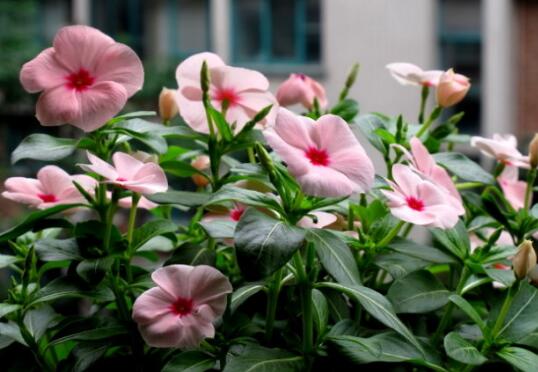
I. When Does the Madagascar Periwinkle Bloom
Regarding the question of when the Madagascar periwinkle blooms, it generally blooms around April to May each year. This flower has a very long flowering period, and with proper care it can even bloom all year round. However, its blooming is accompanied by flowers opening and fading; generally a single flower only stays open for a few days before withering, but it will continue to bloom.
II. Care During the Flowering Period of the Madagascar Periwinkle
1. Fertilization Management
If you want the Madagascar periwinkle to be able to bloom over a long period, regular fertilization is an indispensable step, because blooming consumes a lot of nutrients, so fertilizer must be kept sufficient. Generally, fertilization is needed once every 10 days, but before fertilizing it needs to be diluted first. Everyone should remember this point.
2. Temperature Control
When caring for the Madagascar periwinkle during its flowering period, the environmental temperature must be well controlled. The most suitable temperature for the growth of the Madagascar periwinkle is between 20-33°C. Growing in such a suitable environment can allow the Madagascar periwinkle to bloom continuously.
3. Watering Management
Although the Madagascar periwinkle does not have very high water requirements, it still needs regular watering. If watered too little, it will cause the Madagascar periwinkle to appear withered and yellow. When watering the Madagascar periwinkle, maintain the principle of watering when dry, and water thoroughly each time.
4. Light Management
The Madagascar periwinkle is a light-loving plant, so during its flowering period, sufficient light must be maintained. This is beneficial for its photosynthesis, and sufficient light will also make the flowers of the Madagascar periwinkle bloom more brilliantly.
How to Fertilize the Madagascar Periwinkle: A Complete Guide to Fertilization Methods / Fertilizer Must Be Diluted First
Among the effects and functions of the Madagascar periwinkle, its ornamental value is the most well-known one. However, if you want the Madagascar periwinkle to be ornamental, the care process cannot be careless at all. So how do you fertilize the Madagascar periwinkle? What are the fertilization methods for the Madagascar periwinkle? Below, the editor will walk everyone through it.
I. How to Fertilize the Madagascar Periwinkle
Regarding how to fertilize the Madagascar periwinkle, it is actually different at each stage. Whether it is the choice of fertilizer or the frequency of fertilization, there are particular points to consider. These points are introduced in detail in the complete guide to fertilization methods for the Madagascar periwinkle below. Let's continue reading.
II. Complete Guide to Fertilization Methods for the Madagascar Periwinkle
1. Fertilizing Before Planting
Before planting the Madagascar periwinkle, we need to first apply a little humus-based base fertilizer in the soil. This can allow the Madagascar periwinkle to have sufficient nutrients after sprouting, and will not cause some care troubles due to insufficient nutrients, so this step is very important.
2. Fertilizing During the Growth Period
Among the fertilization methods for the Madagascar periwinkle, the growth period is when the demand for fertilizer is greatest. At this time, we basically need to supplement fertilizer for the Madagascar periwinkle about once every 10 days, so that it can grow quickly. In terms of fertilizer, we can choose water-soluble fertilizer.
3. Fertilizing Before Blooming
The Madagascar periwinkle consumes a large amount of nutrients when blooming, so before blooming, fertilizer must be supplemented sufficiently. This can allow the Madagascar periwinkle to produce more flowers and can also make the flowering period longer.
4. Fertilizing in Winter
Winter is the dormant period of the Madagascar periwinkle, so there is no need to fertilize. However, before entering winter, we still need to apply a certain amount of fertilizer to the Madagascar periwinkle. This can enhance its cold resistance and let it get through winter better.
III. Precautions for Fertilizing the Madagascar Periwinkle
When fertilizing the Madagascar periwinkle, you must be careful. Never let it splash onto the plant itself, as this can easily burn the plant and cause yellowing and other phenomena. Also, before fertilizing, it must first be diluted with water so that the Madagascar periwinkle can absorb it better.
When to Sow the Madagascar Periwinkle (Which Month) - The Flowering Period of the Madagascar Periwinkle
Flowers, plants and the like all have times suitable for their growth and sprouting. Under such time conditions, the natural environment can provide the temperature, light and water the plants need. So when growing them at home, we also need to consider some growth patterns that plants have formed in nature, in order to make our cultivation process go more smoothly.
When to Sow the Madagascar Periwinkle
Sow around March to May in spring, with the best temperature between 20-25°C, and generally sprouting 14-21 days after sowing. In early spring, seedlings can begin to be cultivated, and in the warm spring they can be planted.
The Flowering Period of the Madagascar Periwinkle
The flowering period of the Madagascar periwinkle is very long. Basically, when the Madagascar periwinkle blooms, the flowering period begins from April to May, and generally can last quite a long time, blooming continuously from spring to autumn, and can even continue blooming all year round, so it is called "Ri Ri Chun" (Everyday Spring).
However, a single flower of the Madagascar periwinkle does not last very long; generally one flower can stay open for 3-5 days.
Fertilization Methods for the Madagascar Periwinkle
1. What Fertilizer Should Be Used for the Madagascar Periwinkle
The Madagascar periwinkle is not tolerant of waterlogging and is most afraid of being soaked in the flower pot. Fertilization should also use some water-soluble fertilizer, applied once every seven to ten days, and in the cold winter the amount of fertilization should be relatively reduced. It mainly depends on what kind of soil medium it is. If it is ordinary soil, compound fertilizer can be mixed into the soil as base fertilizer when potting, and when the plant shows a need for topdressing, water-soluble fertilizer can be added.
2. How to Fertilize the Madagascar Periwinkle
During the seedling stage of the Madagascar periwinkle, it will undergo one operation of removing the growing tip, after which normal fertilization should begin, which is watering with water-soluble fertilizer at a cycle of seven to ten days as mentioned above. When the flowering period begins, the fertilizer should mainly be organic fertilizer, supplemented by compound fertilizer, added once a month. This can both ensure the vividness of the flowers during the flowering period and extend the flowering period of the Madagascar periwinkle, achieving the greatest ornamental value.
Pruning the Madagascar Periwinkle
1. Pruning Methods for the Madagascar Periwinkle
The Madagascar periwinkle is an herbaceous plant and is suitable for pot cultivation. However, it should be noted that its plant must not be allowed to grow too tall, so as not to affect indoor decoration and ornament. Therefore, after potting and surviving, it needs to go through several pinching operations to promote the Madagascar periwinkle to produce more branches and more flowers. After blooming, the spent flowers need to be cut off.
In addition, pest-damaged branches also need to be pruned, and fertilizer and water management should be strengthened. When pruning in winter and summer, pest-damaged branches and dry, withered branches should be heavily pruned. At the same time, fertilizer and water management should also be strengthened to promote the Madagascar periwinkle to send out new shoots, renew the crown, and restore tree vigor.
2. Pinching Work for the Madagascar Periwinkle
In addition to normal fertilizer and water management, the key is pinching and the prevention and control of stem and leaf rot during the rainy season. The purpose of pinching is to promote branching of the Madagascar periwinkle and at the same time control the flowering period. Generally, pinching begins when there are 4-6 true leaves, and the second pinching is carried out when the new shoots grow 4-6 leaves. It is best not to pinch more than 3 times.
The last pinching directly affects the flowering period. Generally speaking, the last pinching in autumn needs to be 25 days before the initial flowering period, and the last pinching in summer should be 3-5 days earlier than in autumn.
The Madagascar periwinkle can go without pinching, but in order to obtain a better plant shape, it is best to pinch once or twice. The first time is when there are 3-4 pairs of true leaves; the second time, leave 1-2 pairs of true leaves on the new branches. During cultivation, regulators can usually be used, but paclobutrazol must not be applied.
The reason the Madagascar periwinkle is called "Chang Chun Hua" (Everlasting Spring Flower) should include the reason that its flowering period is long. The Madagascar periwinkle begins blooming at the end of spring, and then can remain in a blooming state all year round, just like spring staying forever. However, if you want to maintain a long flowering period, the necessary procedures and methods of care are indispensable.