Why do pothos leaves turn yellow, and how should it be fixed?
Many plant lovers have noticed their indoor pothos leaves turning yellow while growing them. So why do pothos leaves turn yellow, and what should be done when pothos leaves turn yellow?
1. Main causes of pothos leaves turning yellow
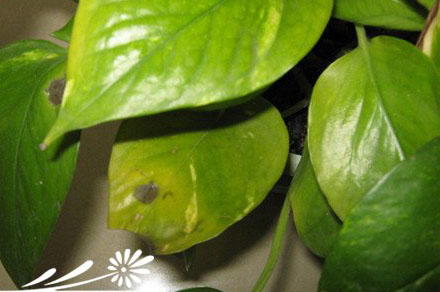
Overall, when pothos leaves turn yellow, if it is grown in water, it is mostly because there are bacteria in the water; if it is grown in soil, it may be root rot. Relatively speaking, water-grown pothos is more likely to develop yellow leaves than soil-grown pothos. The specific factors that cause pothos leaves to turn yellow are mainly improper watering, imbalanced light, and incorrect fertilizing. Below, the editor gives a detailed analysis of the conditions behind these three major factors that cause pothos leaves to turn yellow.
1. Improper watering: Both overwatering and underwatering can cause water-yellowing in pothos. If the leaf surface appears dark yellow and dull, and the newly grown tips shrink and stop growing, it may be overwatering. If the leaf tips or edges become scorched and dry, while new leaves grow normally but old leaves turn yellow and fall off, then it is underwatering.
2. Sunlight: Pothos prefers shade. Strong light will cause the leaf tips and leaf edges of the plant to become scorched, and yellow spots will appear on the sun-facing part of the leaves. On the contrary, if it is placed in a dark environment for a long time, the leaves cannot get enough sunlight and cannot form chlorophyll, which will also cause pothos leaves to turn yellow, so light should be supplemented in time.
Causes of pothos leaves turning yellow and solutions
Many plant lovers have noticed their indoor pothos leaves turning yellow while growing them. So why do pothos leaves turn yellow, and what should be done when pothos leaves turn yellow?1. Main causes of pothos leaves turning yellow
Overall, when pothos leaves turn yellow, if it is grown in water, it is mostly because there are bacteria in the water; if it is grown in soil, it may be root rot. Relatively speaking, water-grown pothos is more likely to develop yellow leaves than soil-grown pothos. The specific factors that cause pothos leaves to turn yellow are mainly improper watering, imbalanced light, and incorrect fertilizing. Below, the editor gives a detailed analysis of the conditions behind these three major factors that cause pothos leaves to turn yellow.
1. Improper watering: Both overwatering and underwatering can cause water-yellowing in pothos. If the leaf surface appears dark yellow and dull, and the newly grown tips shrink and stop growing, it may be overwatering. If the leaf tips or edges become scorched and dry, while new leaves grow normally but old leaves turn yellow and fall off, then it is underwatering.
2. Sunlight: Pothos prefers shade. Strong light will cause the leaf tips and leaf edges of the plant to become scorched, and yellow spots will appear on the sun-facing part of the leaves. On the contrary, if it is placed in a dark environment for a long time, the leaves cannot get enough sunlight and cannot form chlorophyll, which will also cause pothos leaves to turn yellow, so light should be supplemented in time.
3. Fertilizer yellowing: Applying too much fertilizer or too high a concentration when growing pothos, or even when there is no shortage of fertilizer, can cause pothos leaves to turn yellow. When too much fertilizer is applied, the pothos leaf surface is thick and dull, and the leaves look cramped rather than spread out, and old leaves turn yellow and fall off; this can be reduced by flushing out the fertilizer. When fertilizer is lacking, the leaf color becomes lighter, appearing pale green or yellow, and fertilizer should be supplemented in time; in severe cases, the potting soil should be changed.
2. Solutions for pothos leaves turning yellow
The solution for pothos leaves turning yellow should be adjusted in good time according to the cause of the yellowing. Because pothos can be propagated by cuttings, each node of its stem has a leaf bud, and taking just one section for planting can allow it to grow. So when the leaves of cultivated pothos turn yellow severely, the rotted roots can be removed, the yellow leaves picked off, and it can be replanted as a cutting. Note that when growing in water, it should be changed to fresh water. You can also cut off vines whose leaves have not yet turned yellow and replant them as cuttings. During planting, two to three nodes should be buried; for water culture it is likewise two to three nodes, and the water should be changed once every three to four days (cool boiled water is best). Just after planting, it must not be exposed to direct strong light and can be placed in a position with weaker light. After about 20 days, the newly planted pothos will root and grow.
Causes of pothos leaves turning yellow and solutions
Pothos is called the flower of life. As a potted plant, it can be placed in an office or living room and is deeply loved by people, but what should be done when some pothos plants show yellowing leaves, and what causes it?
Improper watering
Both overwatering and underwatering can cause water-yellowing in pothos. If the leaf surface appears dark yellow and dull, and the newly grown tips shrink and stop growing, it may be overwatering. If the leaf tips or edges become scorched and dry, while new leaves grow normally but old leaves turn yellow and fall off, then it is underwatering.
Sunlight
Pothos prefers shade. Strong light will cause the leaf tips and leaf edges of the plant to become scorched, and yellow spots will appear on the sun-facing part of the leaves. On the contrary, if it is placed in a dark environment for a long time, the leaves cannot get enough sunlight and cannot form chlorophyll, which will also cause pothos leaves to turn yellow, so light should be supplemented in time.
Fertilizer yellowing
Applying too much fertilizer or too high a concentration when growing pothos, or even when there is no shortage of fertilizer, can cause pothos leaves to turn yellow. When too much fertilizer is applied, the pothos leaf surface is thick and dull, and the leaves look cramped rather than spread out, and old leaves turn yellow and fall off; this can be reduced by flushing out the fertilizer. When fertilizer is lacking, the leaf color becomes lighter, appearing pale green or yellow, and fertilizer should be supplemented in time; in severe cases, the potting soil should be changed.
Solutions
Adjustment should be made in good time according to the cause of the yellowing. Because pothos can be propagated by cuttings, each node of its stem has a leaf bud, and taking just one section for planting can allow it to grow.
When the leaves of cultivated pothos turn yellow severely, the rotted roots can be removed, the yellow leaves picked off, and it can be replanted as a cutting. Note that when growing in water, it should be changed to fresh water. You can also cut off vines whose leaves have not yet turned yellow and replant them as cuttings. During planting, two to three nodes should be buried; for water culture it is likewise two to three nodes, and the water should be changed once every three to four days (cool boiled water is best). Just after planting, it must not be exposed to direct strong light and can be placed in a position with weaker light. After about 20 days, the newly planted pothos will root and grow.
The above is the information I have introduced to you about the sago palm. To learn more, please keep following Duorou Huapu, and we will provide you with more information.