How to grow Dianthus? A detailed guide to care methods
Dianthus is one of China's traditional famous flowers, and many flower lovers want to grow it, but often they want to grow it yet fail to grow it well. So how do you grow Dianthus? This article starts from the most basic points to tell flower lovers how to grow Dianthus. Let's take a look below at what the cultivation methods for Dianthus are really like.
1. Basic information about Dianthus:
Dianthus is a perennial herbaceous plant, but it is generally cultivated as an annual or biennial. In the north it is sown in autumn and blooms the following spring. In the south it is sown in spring and blooms in summer and autumn. The plant height is 30-40 cm. Flower colors include purple-red, bright red, pink, purple-red, pure white, red, and variegated. Single flowers have 5 petals or are double, with serrated tips and a slight fragrance. The flowering period is from April to October, concentrated in April to May.
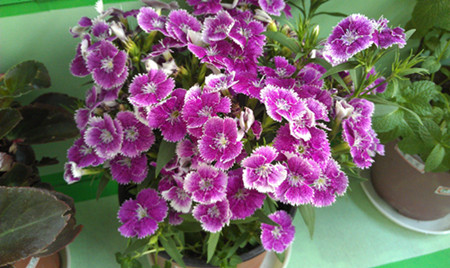
There are many kinds of Dianthus, with more than 300 species in the same genus. Commonly cultivated varieties include Dianthus barbatus, Dianthus chinensis, Dianthus chinensis heddewigii, Dianthus plumarius, dwarf Dianthus, and fringed-petal Dianthus. In addition, there is a variety introduced from Europe called carnation, also known as Dianthus caryophyllus, with the yellow ones being more precious.
How to grow Dianthus
2. Potted care for Dianthus:
The suitable growing temperature for potted Dianthus is 15-20 °C. In winter it should be placed in a greenhouse, with the temperature kept above 12 °C. During the growing period it requires sufficient light, so place it in a sunny spot; in summer, scattered light is preferable, avoiding harsh sun exposure. When the temperature is high, shade it and cool it down. It requires fertile, loose, well-drained loam or sandy loam containing lime. It dislikes waterlogging and likes fertilizer. Apply sufficient base fertilizer, and plant 2-3 plants per pot. When the seedlings grow to 15 cm tall, remove the terminal buds to encourage branching. After that, pay attention to properly removing axillary buds; otherwise, too many branches will disperse nutrients and result in smaller flowers. Properly removing axillary buds concentrates nutrients and can promote larger flowers with brighter colors.
During the growing period, potted Dianthus should be placed in a sunny, well-ventilated place for care. Keep the potting soil moist, and apply a thin, fully decomposed liquid fertilizer about once every 10 days or so. In summer, when there is too much rain, pay attention to drainage and loosening the soil. Before flowering, promptly remove some flower buds in the leaf axils, mainly to ensure the terminal buds bloom. In winter, water less; if the temperature is kept at 5-8 degrees, it will bloom continuously through winter and spring.
3. Propagation of Dianthus: Dianthus is commonly propagated by sowing, cuttings, and division.
How to grow Dianthus
Dianthus is one of China's traditional famous flowers, and many flower lovers want to grow it, but often they want to grow it yet fail to grow it well. So how do you grow Dianthus? This article starts from the most basic points to tell flower lovers how to grow Dianthus. Let's take a look below at what the cultivation methods for Dianthus are really like.1. Basic information about Dianthus:
Dianthus is a perennial herbaceous plant, but it is generally cultivated as an annual or biennial. In the north it is sown in autumn and blooms the following spring. In the south it is sown in spring and blooms in summer and autumn. The plant height is 30-40 cm. Flower colors include purple-red, bright red, pink, purple-red, pure white, red, and variegated. Single flowers have 5 petals or are double, with serrated tips and a slight fragrance. The flowering period is from April to October, concentrated in April to May.
There are many kinds of Dianthus, with more than 300 species in the same genus. Commonly cultivated varieties include Dianthus barbatus, Dianthus chinensis, Dianthus chinensis heddewigii, Dianthus plumarius, dwarf Dianthus, and fringed-petal Dianthus. In addition, there is a variety introduced from Europe called carnation, also known as Dianthus caryophyllus, with the yellow ones being more precious.
2. Potted care for Dianthus:
The suitable growing temperature for potted Dianthus is 15-20 °C. In winter it should be placed in a greenhouse, with the temperature kept above 12 °C. During the growing period it requires sufficient light, so place it in a sunny spot; in summer, scattered light is preferable, avoiding harsh sun exposure. When the temperature is high, shade it and cool it down. It requires fertile, loose, well-drained loam or sandy loam containing lime. It dislikes waterlogging and likes fertilizer. Apply sufficient base fertilizer, and plant 2-3 plants per pot. When the seedlings grow to 15 cm tall, remove the terminal buds to encourage branching. After that, pay attention to properly removing axillary buds; otherwise, too many branches will disperse nutrients and result in smaller flowers. Properly removing axillary buds concentrates nutrients and can promote larger flowers with brighter colors.
During the growing period, potted Dianthus should be placed in a sunny, well-ventilated place for care. Keep the potting soil moist, and apply a thin, fully decomposed liquid fertilizer about once every 10 days or so. In summer, when there is too much rain, pay attention to drainage and loosening the soil. Before flowering, promptly remove some flower buds in the leaf axils, mainly to ensure the terminal buds bloom. In winter, water less; if the temperature is kept at 5-8 degrees, it will bloom continuously through winter and spring.
3. Propagation of Dianthus: Dianthus is commonly propagated by sowing, cuttings, and division.
Dianthus flower meaning and how to grow Dianthus
Dianthus, also known as Luoyang flower and stone pillar flower, is a herbaceous plant in the Caryophyllaceae family, named because its stems have nodes that swell like bamboo. It is one of China's famous flowers, with many varieties. When in full bloom it is brilliant and colorful, and its management and care are also relatively simple, so it is deeply loved by people. So, what is the flower meaning of Dianthus? How do you grow Dianthus? Follow the editor to learn about it below.
1. Dianthus flower meaning
Today, there are many kinds and colors of Dianthus, and different colors have different flower meanings, as follows:
Dianthus flower meaning: pure love, talent, boldness, feminine beauty, etc.
Variegated Dianthus: rejection of love
Red Dianthus: passion, I believe in your love
Deep red Dianthus: ah, my poor heart
Pink Dianthus: a woman's love, passionately loving you
Yellow Dianthus: insult, contempt
White Dianthus: pure admiration, my love is full of vitality, my love endures forever
Lilac Dianthus: boldness, positivity
Dianthus chinensis: enthusiasm, feminine beauty
2. How to grow Dianthus
1. Soil
Dianthus is suitable for growing in clay soil that is well-drained, rich in humus, good at retaining fertilizer, and slightly alkaline. You can mix 6 parts garden soil, 2 parts compost, and 2 parts sandy soil to make the growing medium.
2. Watering
Dianthus is relatively drought-tolerant, but during the rainy season pay attention to loosening the soil and drainage. During the peak growing and flowering season, water promptly; at ordinary times, water less, and it is best to keep the soil moist. Excessive moisture will lead to abnormal development.
3. Temperature
The suitable growing temperature for Dianthus is 15-20 °C. In winter it should be placed in a greenhouse, with the temperature kept above 12 °C, and the air humidity should preferably be kept at around 75%. Appropriately spraying water before flowering to adjust humidity can prevent the buds from splitting open early.
4. Light
Dianthus likes a sunny, well-ventilated climate, so ensure 6-8 hours of light every day. In midsummer, Dianthus is in a semi-dormant state, so at this time be careful to avoid harsh sun exposure.
5. Fertilizing
Dianthus likes fertilizer. Before planting, apply a sufficient amount of baked fertilizer and bone meal. During the growing period, continue to apply liquid fertilizer, generally once every 10 days or so with fully decomposed thin fertilizer water. After harvesting flowers, apply one topdressing.
6. Pest and disease control
Common diseases of Dianthus include: rust, calyx rot, gray mold, bud rot, root rot, etc. Carboxin can be used to prevent rust, and zineb, carbendazim, or captan can also be used for soil treatment before planting to prevent other diseases. When red spider mites or aphids occur, 40% dimethoate emulsifiable concentrate can be diluted and used to kill them.
The above is an introduction to the flower meaning of Dianthus and how to grow Dianthus. In fact, Dianthus is native to northern China, and is now common throughout southern China as well, mostly growing in grasslands and hillside meadows. This flower not only has extremely high ornamental value, but it also has the ability to absorb sulfur dioxide and chlorine gas, so in any place with toxins, more Dianthus can be planted to prevent pollution.