Why won't Phalaenopsis orchids bloom? Common causes and solutions
Phalaenopsis, also known as the moth orchid, originated in the tropical regions of Asia. It is a typical flowering ornamental plant, named for its flowers that closely resemble butterflies, and it is widely loved by many people. The peak blooming period of Phalaenopsis is around the Chinese Lunar New Year, so it is also an important and popular flower for the New Year festival.
Because Phalaenopsis has rather special habits, demanding growing conditions, and a relatively high price, many flower lovers always hesitate to choose it when picking plants. For those who do grow Phalaenopsis, a common question is: why won't Phalaenopsis bloom? What causes Phalaenopsis buds to wither and drop, or the plant not to bloom at all?
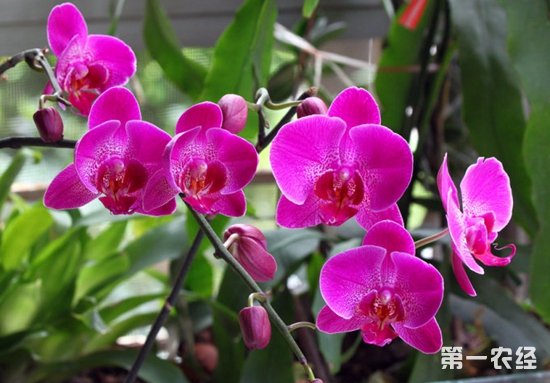
Image: Phalaenopsis
[Expert Answer]
Soil causes:Phalaenopsis prefers acidic soil, with an optimal soil pH of 4.5 to 5.5. Therefore, in day-to-day care, special attention must be paid to maintaining the soil's pH, otherwise alkaline soil will affect the roots' absorption of water and nutrients, leading to poor growth and failure to bloom.
Temperature causes:The suitable growing temperature for Phalaenopsis is 23 to 28 degrees Celsius, and only when this temperature is maintained can it bloom well.
Light causes:When light is too weak, Phalaenopsis will grow abnormally, often producing many leaf buds but few flower buds.
Ventilation causes:If Phalaenopsis is placed in a spot with poor ventilation and air exchange, the plant is prone to disease, especially during the blooming period. The tip of the flower stalk is easily withered, causing buds to turn yellow and dry, which affects blooming; even flowers that have already opened tend to fade early.
Fertilizing causes:Overly concentrated fertilizer easily causes Phalaenopsis buds to drop early. During the vegetative growth stage, nitrogen fertilizer can be applied, but during the reproductive growth stage, nitrogen fertilizer should be stopped and more phosphorus and potassium fertilizer applied, which can promote bud formation and blooming.
Watering causes:Insufficient watering also easily causes leaves to turn yellow and dry, affecting flower bud differentiation and blooming.
[Editor's Summary]
Phalaenopsis is a flowering ornamental plant, and its ornamental value lies mainly in its flowers, but sometimes cultivated Phalaenopsis fails to bloom, and surely many people want to know what the causes are. The editors of First Agricultural Economics have compiled for you the article "Why won't Phalaenopsis bloom? Causes of cultivated Phalaenopsis not blooming in winter and spring," and we hope it is helpful to you.
Why won't Phalaenopsis bloom? 5 causes of failure to bloom
Flower lovers who have already grown Phalaenopsis know that it generally takes about 2 years of careful care before it blooms, but some flower lovers still encounter Phalaenopsis that won't bloom. So why won't Phalaenopsis bloom? Below are 5 causes that lead to Phalaenopsis not blooming.
Analysis of why Phalaenopsis won't bloom 1. Improper wateringDuring normal watering, if water splashes onto the base of the leaves or into the crown at the center of the Phalaenopsis, the accumulated water can cause the leaf base to rot, leading to abnormal growth of the plant and thus affecting blooming. It is recommended to spray the leaf surface when misting Phalaenopsis, to avoid accidentally spraying the growing point. In addition, once the flower buds have formed, stop spraying water on the flowers to avoid bud drop.
2. Too much lightIf the growing environment receives excessively strong light and the water supply is insufficient, both will cause the leaves of Phalaenopsis to wilt and turn yellow and dry. At the same time, it is unfavorable to flower bud differentiation and will directly affect the blooming of Phalaenopsis.
3. Improper fertilizingIf flower lovers apply too much nitrogen while phosphorus and potassium fertilizer is lacking, this will also inhibit flower bud differentiation, resulting in no blooming or few flowers. If the fertilizer concentration is too high, especially when concentrated fertilizer is applied after the buds have formed, the buds easily wither and drop. If alkaline water and fertilizer are used for a long time, it will hinder the roots' absorption of water and nutrients, making it difficult for Phalaenopsis to bloom.
4. Inappropriate temperatureWhen growing Phalaenopsis, if the temperature is not controlled well, it will likewise hinder the plant's normal development and the growth of flower buds, so that the Phalaenopsis cannot bloom. Phalaenopsis is best cultivated in a high-temperature environment; even if flower buds emerge, if the indoor temperature is too low, the buds will turn yellow and dry and drop early, failing to meet the requirements for blooming.
5. Lack of ventilationDuring the blooming period of Phalaenopsis, flower lovers should pay special attention: the environment must be well ventilated. If the air circulation in the environment is poor, the tip of the flower stalk easily turns yellow and withers, and bud drop can also occur. Once the buds have dropped, the Phalaenopsis will naturally fail to bloom.