Six common ways to water flowers - only with proper watering can you grow flowers well
Growing flowers is like being a person - there are no shortcuts. In fact, the so-called flower-growing tips are just some everyday tricks summarized by combining the actual situation around you while learning about flower growing. Flower-growing knowledge and techniques are a very rich field of study. Just watering flowers alone offers many things worth learning. The six common ways to water flowers in flower-growing knowledge and techniques are all things that can be easily done in daily life.
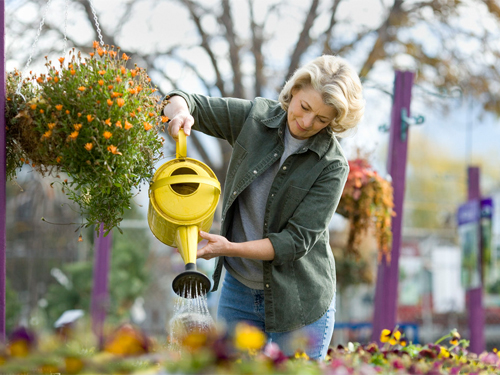
Flower-growing tip one: watering flowers with rice-washing water
For people who do not grow flowers, rice-washing water is completely useless and is poured straight down the drain, but they do not know the benefits of using rice-washing water to water flowers. Regularly using rice-washing water to water flowers such as miilan (Aglaia duperreana) can make their branches and leaves lush and their flowers brightly colored. This flower-growing tip is also the simplest and easiest to carry out.
Flower-growing tip two: watering flowers with warm water
In winter, for some flowers with poor cold resistance, it is best to use 35 degrees Celsius warm water for watering; second best is to use water kept at room temperature for watering in winter. This avoids freezing and damaging the roots of these flowers.
Flower-growing tip three: watering flowers with cooled boiled water
This method is also a relatively commonly used flower-growing tip. In daily life we always habitually pour cooled boiled water into the flowerpot. This can make flowers and trees lush with bright blooms and can promote earlier flowering. If used to water asparagus fern (Wenzhu), it can make its branches and leaves grow horizontally, staying short and dense. Although doing this is good, it must not be done in excess.
Flower-growing tip four: watering flowers with spoiled milk
After milk spoils, add water and use it to water flowers; it is beneficial to the growth of the flowers. But add more water so that it is relatively diluted. Unfermented milk is not suitable for watering flowers, because during fermentation it produces a large amount of heat, which will "burn" the roots (cause root rot). This flower-growing tip is also a less commonly used watering method.
Flower-growing tip five: watering flowers with leftover tea
Tea contains a variety of chemical substances. Using leftover tea to water flowers can add nutrients such as nitrogen to the plants and can also maintain soil moisture. However, this flower-growing tip can only be done in appropriate amounts and at regular intervals, and must not be done arbitrarily.
Flower-growing tip six: the long-term watering method with a plastic bag
Everyone may find this name very strange. Indeed, not only is the name of this method strange, even the way of doing it is unbelievable. It is suitable for use when no one is at home for a long time, such as when going on a business trip or visiting relatives, going away for ten days to half a month. To keep the flowers from withering and dying, this flower-growing tip method is taught to everyone here. Find a plastic bag, fill it with water, then tie the bag opening tightly to prevent water from spilling out, then use a thin needle to poke a small hole in the plastic bag, and place the pierced hole facing downward into the flowerpot, letting water slowly seep into the soil through the small hole to keep the soil moist. Be sure not to make the hole too large, otherwise the consequences are self-evident.
Six common ways to water flowers in flower-growing tips
Growing flowers is like being a person - there are no shortcuts. In fact, the so-called flower-growing tips are just some everyday tricks summarized by combining the actual situation around you while learning about flower growing. Flower-growing tips are a very rich field of study. Just watering flowers alone offers many things worth learning. The six common ways to water flowers in flower-growing tips are all things that can be easily done in daily life.
Flower-growing tip one: watering flowers with rice-washing water
For people who do not grow flowers, rice-washing water is completely useless and is poured straight down the drain, but they do not know the benefits of using rice-washing water to water flowers. Regularly using rice-washing water to water flowers such as miilan (Aglaia duperreana) can make their branches and leaves lush and their flowers brightly colored. This flower-growing tip is also the simplest and easiest to carry out.
Flower-growing tip two: watering flowers with warm water
In winter, for some flowers with poor cold resistance, it is best to use 35°C warm water for watering; second best is to use water kept at room temperature for watering in winter. This avoids freezing and damaging the roots of these flowers.
Flower-growing tip three: watering flowers with cooled boiled water
This method is also a relatively commonly used flower-growing tip. In daily life we always habitually pour cooled boiled water into the flowerpot. This can make flowers and trees lush with bright blooms and can promote earlier flowering. If used to water asparagus fern (Wenzhu), it can make its branches and leaves grow horizontally, staying short and dense. Although doing this is good, it must not be done in excess.
Flower-growing tip four: watering flowers with spoiled milk
After milk spoils, add water and use it to water flowers; it is beneficial to the growth of the flowers. But add more water so that it is relatively diluted. Unfermented milk is not suitable for watering flowers, because during fermentation it produces a large amount of heat, which will "burn" the roots (cause root rot). This flower-growing tip is also a less commonly used watering method.
Flower-growing tip five: watering flowers with leftover tea
Tea contains a variety of chemical substances. Using leftover tea to water flowers can add nutrients such as nitrogen to the plants and can also maintain soil moisture. However, this flower-growing tip can only be done in appropriate amounts and at regular intervals, and must not be done arbitrarily.
Flower-growing tip six: the long-term watering method with a plastic bag
Everyone may find this name very strange. Indeed, not only is the name of this method strange, even the way of doing it is unbelievable. It is suitable for use when no one is at home for a long time, such as when going on a business trip or visiting relatives, going away for ten days to half a month. To keep the flowers from withering and dying, this flower-growing tip is taught to everyone here. Find a plastic bag, fill it with water, then tie the bag opening tightly to prevent water from spilling out, then use a thin needle to poke a small hole in the plastic bag, and place the pierced hole facing downward into the flowerpot, letting water slowly seep into the soil through the small hole to keep the soil moist. Be sure not to make the hole too large, otherwise the consequences are self-evident.
Six common ways to water flowers in flower-growing knowledge and tips
Growing flowers is like being a person - there are no shortcuts. In fact, the so-called flower-growing tips are just some everyday tricks summarized by combining the actual situation around you while learning about flower growing. Flower-growing knowledge and techniques are a very rich field of study. Just watering flowers alone offers many things worth learning. The six common ways to water flowers in flower-growing knowledge and techniques are all things that can be easily done in daily life.
Flower-growing tip one: watering flowers with rice-washing water
For people who do not grow flowers, rice-washing water is completely useless and is poured straight down the drain, but they do not know the benefits of using rice-washing water to water flowers. Regularly using rice-washing water to water flowers such as miilan (Aglaia duperreana) can make their branches and leaves lush and their flowers brightly colored. This flower-growing tip is also the simplest and easiest to carry out.
Flower-growing tip two: watering flowers with warm water
In winter, for some flowers with poor cold resistance, it is best to use 35°C warm water for watering; second best is to use water kept at room temperature for watering in winter. This avoids freezing and damaging the roots of these flowers.
Flower-growing tip three: watering flowers with cooled boiled water
This method is also a relatively commonly used flower-growing tip. In daily life we always habitually pour cooled boiled water into the flowerpot. This can make flowers and trees lush with bright blooms and can promote earlier flowering. If used to water asparagus fern (Wenzhu), it can make its branches and leaves grow horizontally, staying short and dense. Although doing this is good, it must not be done in excess.
Flower-growing tip four: watering flowers with spoiled milk
After milk spoils, add water and use it to water flowers; it is beneficial to the growth of the flowers. But add more water so that it is relatively diluted. Unfermented milk is not suitable for watering flowers, because during fermentation it produces a large amount of heat, which will "burn" the roots (cause root rot). This flower-growing tip is also a less commonly used watering method.
Flower-growing tip five: watering flowers with leftover tea
Tea contains a variety of chemical substances. Using leftover tea to water flowers can add nutrients such as nitrogen to the plants and can also maintain soil moisture. However, this flower-growing tip can only be done in appropriate amounts and at regular intervals, and must not be done arbitrarily.
Flower-growing tip six: the long-term watering method with a plastic bag
Everyone may find this name very strange. Indeed, not only is the name of this method strange, even the way of doing it is unbelievable. It is suitable for use when no one is at home for a long time, such as when going on a business trip or visiting relatives, going away for ten days to half a month. To keep the flowers from withering and dying, this flower-growing tip method is taught to everyone here. Find a plastic bag, fill it with water, then tie the bag opening tightly to prevent water from spilling out, then use a thin needle to poke a small hole in the plastic bag, and place the pierced hole facing downward into the flowerpot, letting water slowly seep into the soil through the small hole to keep the soil moist. Be sure not to make the hole too large, otherwise the consequences are self-evident.