How to Grow Snake Plant in Water? Detailed Guide to Care Methods and Precautions
Snake plant (Sansevieria) originates from tropical Africa and is a desert plant that can endure harsh environments and surprisingly drought conditions. It likes warm temperatures, needs plenty of sunlight, and can also tolerate moderate shade. The suitable temperature is 18°C to 27°C, and growth stops below 13°C. Winter is its dormant period; in well-drained sandy soil, it can survive even when the temperature does not drop below 0°C.
1. Changing the water for water-grown snake plant
Whether water-grown snake plant succeeds depends most critically on changing the water. First, during growth the plant's roots carry out respiration, which continuously consumes oxygen in the water; the oxygen in the water gradually decreases with the snake plant's respiration, and when it decreases to a certain amount, it will affect the snake plant's growth (although oxygen in the water is also replenished from oxygen in the air, the amount is very small).
Second, during growth the roots produce mucus, and too much mucus will affect water quality. Third, when snake plant is grown in water, a certain amount of nutrient solution must be added to the water; apart from the portion of added nutrient elements absorbed by the snake plant, the rest remains in the water, and as the growing time lengthens, when the residual substances reach a certain amount they will also harm the snake plant, so the water of a water-grown snake plant must be changed regularly.
2. Temperature for water-grown snake plant:
The dissolved oxygen content in water is inversely proportional to the air temperature, that is, the higher the air temperature and the higher the water temperature, the less dissolved oxygen in the water; the lower the air temperature and the lower the water temperature, the more dissolved oxygen in the water. The snake plant's consumption of dissolved oxygen in water is directly proportional to temperature, that is, the higher the air temperature and the higher the water temperature, the more vigorous the plant's respiration and the more dissolved oxygen it consumes; the lower the air temperature and the lower the water temperature, the weaker the plant's respiration and the less dissolved oxygen it consumes. In addition, when the air temperature is high, microorganisms reproduce rapidly, which easily causes water quality to deteriorate.
Therefore, when the air temperature is high, water should be changed frequently; when the air temperature is low, the interval between water changes can be longer.
3. Growth of water-grown snake plant:
If the snake plant grows strongly and normally, the interval between water changes can be longer. If the snake plant grows poorly, water should be changed more frequently. Especially at high temperatures or when root rot is caused by overly concentrated fertilizer, besides promptly cutting off the rotten roots, the water must be changed every day, and only after the plant resumes normal growth and sprouts new roots can it return to normal care.
How to Grow Snake Plant in Water, Methods for Growing Snake Plant in Water
How to grow snake plant in water is surely a question often asked by water-growing enthusiasts, because they like this growing method, and it is actually a good growing method, because it further enhances the snake plant's effect on the home environment, and with a few small fish added it becomes even more beautiful beyond description. So how do you grow snake plant in water? Below is an introduction to the methods for growing snake plant in water.
How to Grow Snake Plant in Water
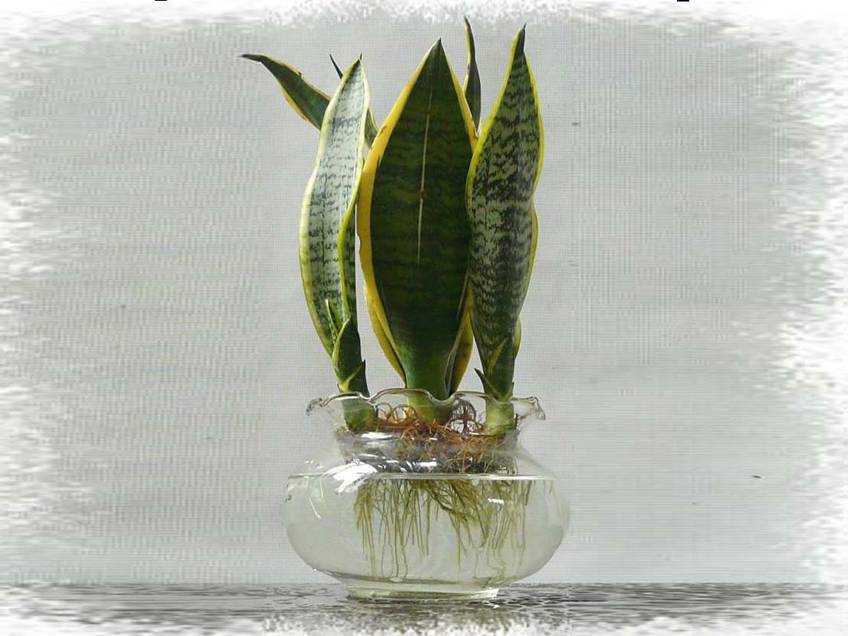
For water-grown snake plant, you can use a soil-grown plant of suitable shape, wash its roots, and then grow it in water. The snake plant's root system is relatively well developed; when washing the roots for water growing, you should cut off 1/3 or 2/3 of the roots, which can promote early new root growth in the snake plant. Then pour clean water into the container, taking care to control the water level well, preferably just enough to submerge the roots, leaving 1/3 of the roots above the water surface. After one month new roots can grow, and once established it can be placed in a darker spot to decorate the environment.
Methods for Growing Snake Plant in Water
Changing the water for water-grown snake plant
Whether water-grown snake plant succeeds depends most critically on changing the water. First, during growth the plant's roots carry out respiration, which continuously consumes oxygen in the water; the oxygen in the water gradually decreases with the snake plant's respiration, and when it decreases to a certain amount, it will affect the snake plant's growth (although oxygen in the water is also replenished from oxygen in the air, the amount is very small).
Second, during growth the roots produce mucus, and too much mucus will affect water quality. Third, when snake plant is grown in water, a certain amount of nutrient solution must be added to the water; apart from the portion of added nutrient elements absorbed by the snake plant, the rest remains in the water, and as the growing time lengthens, when the residual substances reach a certain amount they will also harm the snake plant, so the water of a water-grown snake plant must be changed regularly.
Temperature for water-grown snake plant
The dissolved oxygen content in water is inversely proportional to the air temperature, that is, the higher the air temperature and the higher the water temperature, the less dissolved oxygen in the water; the lower the air temperature and the lower the water temperature, the more dissolved oxygen in the water. The snake plant's consumption of dissolved oxygen in water is directly proportional to temperature, that is, the higher the air temperature and the higher the water temperature, the more vigorous the plant's respiration and the more dissolved oxygen it consumes; the lower the air temperature and the lower the water temperature, the weaker the plant's respiration and the less dissolved oxygen it consumes. In addition, when the air temperature is high, microorganisms reproduce rapidly, which easily causes water quality to deteriorate.
Therefore, when the air temperature is high, water should be changed frequently; when the air temperature is low, the interval between water changes can be longer.
Growth of water-grown snake plant
If the snake plant grows strongly and normally, the interval between water changes can be longer. If the snake plant grows poorly, water should be changed more frequently. Especially at high temperatures or when root rot is caused by overly concentrated fertilizer, besides promptly cutting off the rotten roots, the water must be changed every day, and only after the plant resumes normal growth and sprouts new roots can it return to normal care.
How to Grow Snake Plant in Water
Snake plant (Sansevieria) originates from tropical Africa and is a desert plant that can endure harsh environments and surprisingly drought conditions. It likes warm temperatures, needs plenty of sunlight, and can also tolerate moderate shade. The suitable temperature is 18°C to 27°C, and growth stops below 13°C. Winter is its dormant period; in well-drained sandy soil, it can survive even when the temperature does not drop below 0°C.1. Changing the water for water-grown snake plant
Whether water-grown snake plant succeeds depends most critically on changing the water. First, during growth the plant's roots carry out respiration, which continuously consumes oxygen in the water; the oxygen in the water gradually decreases with the snake plant's respiration, and when it decreases to a certain amount, it will affect the snake plant's growth (although oxygen in the water is also replenished from oxygen in the air, the amount is very small).
Second, during growth the roots produce mucus, and too much mucus will affect water quality. Third, when snake plant is grown in water, a certain amount of nutrient solution must be added to the water; apart from the portion of added nutrient elements absorbed by the snake plant, the rest remains in the water, and as the growing time lengthens, when the residual substances reach a certain amount they will also harm the snake plant, so the water of a water-grown snake plant must be changed regularly.
2. Temperature for water-grown snake plant:
The dissolved oxygen content in water is inversely proportional to the air temperature, that is, the higher the air temperature and the higher the water temperature, the less dissolved oxygen in the water; the lower the air temperature and the lower the water temperature, the more dissolved oxygen in the water. The snake plant's consumption of dissolved oxygen in water is directly proportional to temperature, that is, the higher the air temperature and the higher the water temperature, the more vigorous the plant's respiration and the more dissolved oxygen it consumes; the lower the air temperature and the lower the water temperature, the weaker the plant's respiration and the less dissolved oxygen it consumes. In addition, when the air temperature is high, microorganisms reproduce rapidly, which easily causes water quality to deteriorate.
Therefore, when the air temperature is high, water should be changed frequently; when the air temperature is low, the interval between water changes can be longer.
3. Growth of water-grown snake plant:
If the snake plant grows strongly and normally, the interval between water changes can be longer. If the snake plant grows poorly, water should be changed more frequently. Especially at high temperatures or when root rot is caused by overly concentrated fertilizer, besides promptly cutting off the rotten roots, the water must be changed every day, and only after the plant resumes normal growth and sprouts new roots can it return to normal care.