How to grow a peace lily? Growing methods, precautions and environment are key
We know that the peace lily has many benefits and effects, so more and more people are growing it. However, to grow it well you need to master certain skills. So how do you grow a peace lily so it thrives? Understanding the growing methods and precautions for peace lilies is the key.
How to grow a peace lily
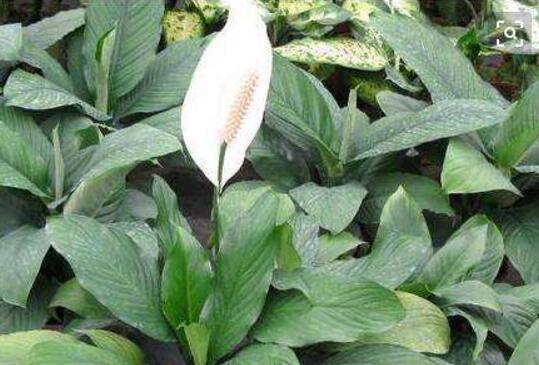
The prerequisite for growing a peace lily well is understanding its growth habits. The peace lily is characterized by liking high temperatures and high humidity, having strong shade tolerance, being very sensitive to temperature, fearing strong light but disliking dark places, and possibly failing to bloom if it is too dark. It likes fertile, well-drained soil. Below, let us look at how to grow a peace lily.
Growing methods and precautions for peace lilies
I. Suitable growing environment for peace lilies
1. Light
The light intensity a peace lily needs is medium. It fears direct strong light and also fears light that is too weak. Light that is too strong causes the leaves to turn yellow, while light that is too weak leads to slow growth. So in spring and winter it needs fairly good light, while in summer and autumn it needs shading to avoid direct sunlight.
2. Temperature
Among the growing methods and precautions for peace lilies, the most suitable temperature for peace lily growth is 22-28 degrees. In summer and autumn the temperature can be kept between 24-30 degrees, and in winter and spring it is best to keep the temperature between 18-21 degrees. When the temperature is below 10 degrees the plant's growth stalls, and frost damage may even occur.
3. Soil
Peace lilies like fertile sandy soil rich in humus, with both good drainage and good aeration. Usually, growing a peace lily uses leaf mold and peat soil mixed with a small amount of perlite. Before this, base fertilizer can be added at the bottom of the pot.
4. Humidity
Peace lilies also like environments with higher humidity, so in summer when the air is dry you can spray water on the leaves to raise the humidity of its environment. In winter, it should be moved to a place with higher humidity. Be sure to avoid cold water causing frost damage to the leaves.
II. Growing methods for peace lilies
1. Potting
Insert the selected plant into the prepared potting soil, then place it in a semi-shaded, ventilated spot. After a period of time it will take root, and once it has resumed normal growth, you can care for it according to the growing methods and precautions for peace lilies.
2. Fertilizing peace lilies
Do not use concentrated fertilizer or raw fertilizer; instead use solid fertilizer, and water once after each fertilizing, or water with dilute liquid fertilizer. On the premise of ensuring the fertilizer contains the needed nutrients, avoid excessive fertilizing that causes harm.
3. Watering
Peace lilies like moist potting soil and have good requirements for water. During the growing period, the principle is to keep the potting soil moist. Depending on the actual situation, water once every 3-4 days, and each watering should soak through, which keeps the leaves tender green.
4. Repotting
Peace lilies can be repotted once every 1-2 years. Repotting prevents the soil from compacting and maintains the soil's aeration and drainage, while also making the soil richer in nutrients. Repotting can also prevent root rot or the appearance of pests and diseases.
5. Pruning
When growing peace lilies, the plant often grows too tall or the roots rot, so pruning is very necessary. It makes the peace lily more attractive while also promoting the growth of new shoots, branches and leaves, and this point is often overlooked in the growing methods and precautions for peace lilies.
III. Precautions for growing peace lilies
1. When watering, be sure to avoid water accumulating in the pot. Roots soaked in water for a long time very easily develop root rot and may also lead to root rot disease, the result of which is yellowing leaves and plant death.
2. Fertilizing should be light and frequent; neither fertilize too much nor go a long time without fertilizing. When fertilizing, loosening the soil is also key, as it helps the fertilizer be fully absorbed.
3. In winter when the temperature is low, attention should be paid to keeping warm. Below 10 degrees, frost damage easily occurs, and it is best to keep the temperature at 13-16 degrees.
4. Peace lilies can survive in a dark environment for more than 30 days, but keeping a peace lily in a dark environment for a long time is harmful and not beneficial to its growth. Not only is growth hindered, but the whole plant is also not attractive enough.
Growing methods and precautions for hydroponic peace lilies
Peace lily, aliases: bract-leaf taro, sail of smooth sailing, white crane taro, a perennial evergreen herbaceous foliage plant of the Araceae family. Plant height 45-60 cm, with short rhizomes, mostly growing in clumps. It likes a warm, humid, semi-shaded environment and avoids direct strong sunlight. It is an excellent foliage plant. In southern regions it can be planted in the ground, while in other regions it is mostly grown in pots for ornamental viewing. The peace lily is an "expert" at suppressing waste gases exhaled by the human body, such as ammonia and acetone. The peace lily likes a warm, humid, semi-shaded environment and avoids direct strong sunlight. It is one of the hydroponic plants very suitable for indoor growing.
Key points of this article
Peace lily: one seedling or several seedlings, glass bottle, hydroponic basket, nutrient solution, small stones (optional)
Prepare a suitable hydroponic bottle, wash it clean, and prepare water that has been left to stand, for use in hydroponics.
Wash the peace lily roots, being careful not to injure the roots. It is best to use tap water that has been left to stand, at a suitable temperature.
And put it into the hydroponic basket.
Place it well and fill with tap water that has been left to stand. Be careful not to expose it to strong sun; place it in a ventilated, cool spot.
Small stones can be placed in the hydroponic basket to secure the roots
Placing small colorful stones in the hydroponic bottle can increase its beauty and can also keep the water from becoming cloudy for a longer time.
Precautions
Change the water regularly. Before new roots grow, it is recommended to change the water that has been left to stand once every three to five days (you may not add nutrient solution at first);
When changing the water, wash away rotten roots;
Use tap water that has been left to stand, at room temperature;
Place it in a ventilated spot with bright sunlight, avoiding direct sunlight;
After new roots grow, you can change the water once every one to two weeks and add a few drops of nutrient solution.
Precautions for growing hydroponic peace lilies
1. The light for hydroponic plants should mainly be scattered light; we do not necessarily have to let it be exposed to the sun.
2. The temperature for hydroponic plants should be well controlled, at about 5° to 25°, and plants can grow within this range.
3. When changing the water, in summer you should change it about once every 7 days, and in winter you should change it about once every 10-15 days.
Above, we have introduced the methods and precautions for hydroponic peace lilies. Actually, in the growing process, the four points to pay attention to are light, water, fertilizer and pests. As long as you master these key elements well, growing peace lilies is very simple. After reading this, have you learned how to grow it?