How do you prune a Camellia sasanqua bonsai? Trim the branches and leaves, work the roots, and set the shape
Camellia sasanqua (Camellia sasanqua) gets its name because its leaves resemble those of the camellia and its flowers resemble plum blossoms. It is a very beautiful flowering plant, and people often train it into bonsai for viewing. However, the beauty of Camellia sasanqua does not come about overnight; it requires careful care and reasonable pruning. So how do you prune Camellia sasanqua? Below are the pruning methods for Camellia sasanqua bonsai. Follow along with the editor to learn more.
1. How to prune camellia: imagination is very important
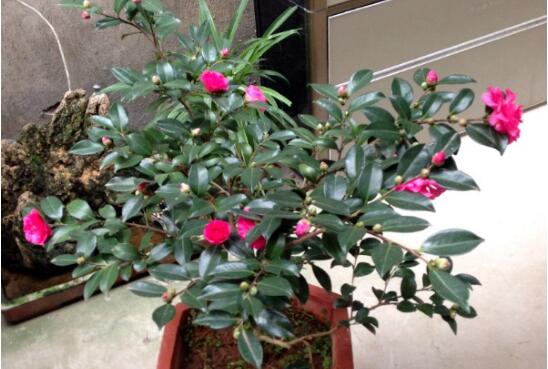
Pruning is a skilled task. Especially when pruning Camellia sasanqua, it not only requires technique but also a rich imagination, so that the Camellia sasanqua bonsai can be pruned well. As for how to prune Camellia sasanqua, generally speaking, three steps are needed: first, trim the branches and leaves; second, work the roots; third, set the shape. Let's continue reading to see exactly how to do it.
2. Pruning methods for Camellia sasanqua bonsai
1. Pruning time
For how to prune camellia, choosing the right time is crucial. Generally speaking, if the goal is to improve the quality and flower quantity of Camellia sasanqua, the best time to prune should be after the flowering period and before the spring buds sprout. The specific time can be chosen in March.
2. Pruning branches
In March, cut off the unnecessary branches of Camellia sasanqua: dense branches, trunk sprouts, inward-growing branches, and so on are all unnecessary branches. You should cut them all off to make the Camellia sasanqua look clean and fresh.
3. Pruning leaves
In the pruning methods for Camellia sasanqua bonsai, besides pruning branches, pruning leaves is also very important. The leaves of Camellia sasanqua should be kept in a state between the leaves that is many but not overcrowded, and few but not sparse. For this, you can appropriately cut away some leaves. By handling the branches, leaves, and small twigs with clever combination, you can achieve a reasonable layout and coordinated proportions.
4. Shaping
In pruning Camellia sasanqua bonsai, besides improving the quality and flower quantity of Camellia sasanqua, the most important thing is of course to prune out a beautiful shape. This requires our imagination: first imagine the shape of the Camellia sasanqua after pruning, then make a sketch, and finally prune according to the sketch.
Simply put, this means adjusting the tree form of the Camellia sasanqua: cut off the outer branches and the branches that make the crown messy, in order to adjust the size of the tree form. In addition, the main trunk should also be cut from the upper part near the node (where the branches fork), so as to maintain the height of the tree or reduce the size of the tree form.
Overall, Camellia sasanqua has relatively strong vitality, so you can prune it with confidence. Of course, when pruning, you also need to combine this with the natural characteristics of different Camellia sasanqua varieties, so that you can prune out a beautiful Camellia sasanqua. That is all the editor has to introduce about the pruning methods for Camellia sasanqua bonsai. I hope it can help everyone.
How do you prune a Camellia sasanqua ball into a bonsai? Pruning methods for Camellia sasanqua bonsai
The purpose of making a Camellia sasanqua bonsai is viewing, and the premise of viewing is being able to give the Camellia sasanqua a good shape, so how to shape it is a very important point. So how do you prune a Camellia sasanqua ball into a bonsai? Today, wed114 wedding website editor brings you the pruning methods for Camellia sasanqua bonsai.
How do you prune a Camellia sasanqua ball into a bonsai
1. Trunk treatment
It is necessary to combine the natural characteristics of different Camellia sasanqua varieties and shape the trunk by methods such as wrapping and twisting, or you can cut off the top shoot to prompt the young buds in the leaf axils to sprout quickly, increasing branching, which helps form a crown and layers. You can also cut off the main trunk and keep the side branches, gradually building up a gnarled crown over the years, but note that the trunk and branches should be symmetrical to each other.
For the straight-trunk style, the trunk should be upright, or the main trunk should be slightly curved, with the base of the main trunk slightly thicker and gradually becoming thinner upward.
For the double-trunk style, it is best for the secondary trunk to emerge near the base of the trunk, and the heights should differ.
For the slanting-trunk style, the trunk should lean, but it must not lie flat. Generally it is kept at about 45°, and the leaning part of the trunk should be more than one-half of the total length. The crown should finally be set upright.
For the curved-trunk style, the trunk's bends should be natural with moderate proportions. Do not bend back and forth on the same plane; there should be well-arranged alternation from front to back.
2. Branch treatment
The length and density of the branches should be coordinated with the height and thickness of the trunk. Overly dense branches can be pruned moderately. Do not let it bloom in the first two to three years, and do not be too impatient during the shaping process.
Because the branches are relatively brittle and hard, especially where they branch, they break very easily, so be especially careful. For a few slender branches, except that water sprouts can be cut off or shortened, generally lead wire should be used for twisting to shorten them. In shaping, it is better to be coarse than fine; processing and shaping year by year is best.
How do you prune a Camellia sasanqua ball into a bonsai
3. Leaf treatment
By handling the branches, leaves, and small twigs with clever combination, you can achieve a reasonable layout and coordinated proportions.
The relationship between the leaves should be handled so that it is many but not overcrowded, and few but not sparse. To coordinate the branches and leaves with the plant, you can appropriately cut away some.
During cultivation, appropriately limit fertilizer and water to make the leaves as small as possible.
4. Root treatment
Root treatment should be combined with the posture of the trunk. For example, for the straight-trunk style, the roots are best slightly exposed; for the curved-trunk style, the roots can be exposed a bit more, and it is best if they are gnarled and intertwined; for the cliff-hanging style, the roots are best exposed on the other side of the downward hang.
Pruning methods for Camellia sasanqua bonsai
Camellia sasanqua bonsai shaping: trunk treatment
It is necessary to combine the natural characteristics of different Camellia sasanqua varieties and shape the trunk by methods such as wrapping and twisting, or you can cut off the top shoot to prompt the young buds in the leaf axils to sprout quickly, increasing branching, which helps form a crown and layers. You can also cut off the main trunk and keep the side branches, gradually building up a gnarled crown over the years, but note that the trunk and branches should be symmetrical to each other.
For the straight-trunk style, the trunk should be upright, or the main trunk should be slightly curved, with the base of the main trunk slightly thicker and gradually becoming thinner upward.
For the double-trunk style, it is best for the secondary trunk to emerge near the base of the trunk, and the heights should differ.
For the slanting-trunk style, the trunk should lean, but it must not lie flat. Generally it is kept at about 45°, and the leaning part of the trunk should be more than one-half of the total length. The crown should finally be set upright.
For the curved-trunk style, the trunk's bends should be natural with moderate proportions. Do not bend back and forth on the same plane; there should be well-arranged alternation from front to back.
Camellia sasanqua bonsai shaping: branch treatment
The length and density of the branches should be coordinated with the height and thickness of the trunk. Overly dense branches can be pruned moderately. Do not let it bloom in the first two to three years, and do not be too impatient during the shaping process.
Because the branches are relatively brittle and hard, especially where they branch, they break very easily, so be especially careful. For a few slender branches, except that water sprouts can be cut off or shortened, generally lead wire should be used for twisting to shorten them. In shaping, it is better to be coarse than fine; processing and shaping year by year is best.
Camellia sasanqua bonsai shaping: leaf treatment
By handling the branches, leaves, and small twigs with clever combination, you can achieve a reasonable layout and coordinated proportions.
The relationship between the leaves should be handled so that it is many but not overcrowded, and few but not sparse. To coordinate the branches and leaves with the plant, you can appropriately cut away some.
During cultivation, appropriately limit fertilizer and water to make the leaves as small as possible.
Camellia sasanqua bonsai shaping: root treatment
Root treatment should be combined with the posture of the trunk. For example, for the straight-trunk style, the roots are best slightly exposed; for the curved-trunk style, the roots can be exposed a bit more, and it is best if they are gnarled and intertwined; for the cliff-hanging style, the roots are best exposed on the other side of the downward hang.