What to do when the leaves of the Radermachera sinica turn yellow? Solve it by shading, repotting and spraying
As a foliage plant, besides its auspicious meaning, the most appreciated part of the Radermachera sinica is its beautiful leaves. If problems appear on the leaves, such as yellowing or falling off, the ornamental value will be seriously affected. So what should be done when the leaves of the Radermachera sinica turn yellow? Below are 6 causes of yellowing leaves in Radermachera sinica summarized by the editor. Come and take a look!
I. What to do when the leaves of the Radermachera sinica turn yellow: find the cause
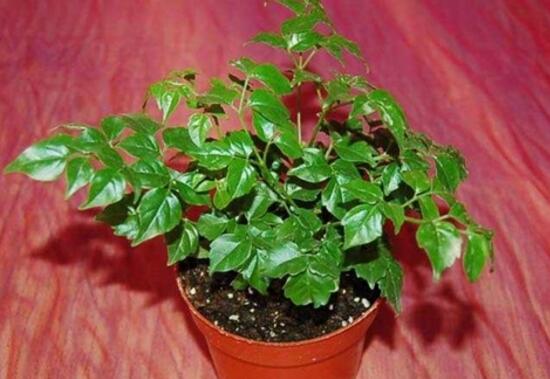
The beauty of the Radermachera sinica is shown in its sturdy, graceful shape and its emerald green leaves. But if you do not follow the proper cultivation methods for Radermachera sinica, it is very prone to yellowing leaves. As for what to do when the leaves of the Radermachera sinica turn yellow, the editor has summarized 5 points and attached solutions. Let us continue reading.
II. Causes of yellowing leaves in Radermachera sinica and solutions
1. Sudden environmental change
As for the causes of yellowing leaves in Radermachera sinica, there are many in general, but the first thing to consider should be environmental factors. In daily life, many flower lovers buy their Radermachera sinica online, which easily involves a large regional span and a sudden, excessive change in environment, causing the plant to fail to adapt and thus develop yellowing leaves.
Solution: At this time, you can communicate with the seller to learn about the growing environment of the Radermachera sinica before it was purchased, and then make corresponding adjustments at home to keep the environment unchanged. Then change it slowly until the plant fully adapts to the current environment. After a period of time, the Radermachera sinica will recover to health.
2. Light too strong or too little
Although the Radermachera sinica likes light, its light requirements are not high; 3 hours per day is enough. Once there is too much light, or the light is too strong, the Radermachera sinica cannot tolerate it and develops yellowing leaves. But if the Radermachera sinica is kept in a dark place for a long time so that it cannot receive light, yellowing leaves also easily occur.
Solution: What to do when the leaves of the Radermachera sinica turn yellow? If the light is too strong, you can move the Radermachera sinica to a ventilated, semi-shaded place and water it appropriately. Wait for the yellowing leaves to gradually fall off and new buds to grow, and then it will be fine. If there is too little light, let it bask in the sun every day, and provide appropriate shade when the light is too strong.
3. Too much watering
The Radermachera sinica likes a moist environment, and we need to water it often, but not too much, otherwise water easily accumulates in the pot, causing the roots and stems of the Radermachera sinica to rot, then gradually affecting the branches and stems, and finally the leaves turn yellow. However, watering should not be too little either, otherwise the leaves cannot absorb water for a long time and will also show yellowing symptoms.
Solution: If the yellowing leaves of the Radermachera sinica are caused by too much watering, you should move it to a ventilated place with light (preferably a balcony) so that the water in the pot evaporates quickly. If it is caused by too little watering, it is very simple: just water appropriately, and the plant will recover to health after a period of time.
4. Air too dry
Besides watering, the cause of yellowing leaves in Radermachera sinica may also be air that is too dry. Especially in autumn and winter and early spring, your Radermachera sinica may inexplicably turn yellow and decline, and this is caused by air that is too dry.
Solution: When you feel the air is dry, you should spray water around the Radermachera sinica and on the leaf surfaces every day to ensure the air humidity is around 70-80%. In spring, summer and autumn, this can be done at 9 a.m. and 3 p.m., and in winter it can be done at noon.
5. Too much fertilizer / too concentrated
After watering, let us talk about fertilizing, which is also one of the causes of yellowing leaves in Radermachera sinica. The Radermachera sinica likes fertilizer, but if too much or too concentrated fertilizer is applied, it will burn the roots and stems, causing the plant's leaves to turn yellow and even die in severe cases.
Solution: When the condition is not serious, you can dilute the agricultural fertilizer by watering. If the situation is serious, there is no other way; we can only change the potting soil, then clean away the rotten root system, and after a period of time the plant will recover to health.
6. Pests and diseases
Besides the above points, pests and diseases are also one of the causes of yellowing leaves in Radermachera sinica. If the Radermachera sinica suffers from leaf spot disease, or is infested by pests such as scale insects, the plant will show yellowing leaves.
Solution: Remove the diseased leaves and spray the relevant agents. As for exactly what to spray, it is introduced in detail in the pest and disease control section for Radermachera sinica, so it will not be discussed further here.
Willow feng shui explained: can willows ward off evil?
By the riverbank, willows droop gently, and when a clear breeze passes, it stirs up little ripples. So then infeng shuiwhat role do willows play? In this issue,plant feng shuiwill take you to learn about the explanation of willow feng shui and see whether willows can really ward off evil. Let us take a look together below.
Willow is the general term for plants of the genus Salix, such as Salix matsudana, Salix chaenomeloides and Salix babylonica. The genus Salix is mostly shrubs, rarely trees, without terminal buds, with sympodial branching, fewer stamens, and insect-pollinated flowers, characteristics that indicate it is more evolved than the genus Populus and the genus Chosenia.
This genus has more than 520 species worldwide, mainly produced in the temperate regions of the Northern Hemisphere, followed by the frigid zone, with very few in the tropics and the Southern Hemisphere, and no wild species in Oceania. China has 257 species, 122 varieties and 33 forms. They are produced in all provinces and regions.
Where willows are planted
I. From the perspective of feng shui: the willow is a yin tree. For a house facing south with its back to the north, corresponding to the five elements, the center of the foundation is earth, the front Vermilion Bird (south) is yang fire (neutralized with a water pool), the rear Black Tortoise (north) is yin water (stabilized with mountain stones), the left Azure Dragon (east) is wood (nourished with mountain ranges and streams), and the right White Tiger (west) is metal (activated with roads). Therefore, planting willows in the front yard best harmonizes yin and yang, while planting them in the back yard adds yin to yin and creates sha.
So there is a saying: plant poplars at the front door, wealth will not last; plant willows at the back door, wealth will not endure. The older generation said: plant willows in front of the house, and mulberries behind it. This is a symbol of a feng shui treasure spot.
As for willows in the back yard: they gather yin energy, easily become spirits, and attract peach blossom.
II. From a scientific perspective: willows are cold-resistant, waterlogging-resistant, and drought-resistant, like wet sites, and like warmth to high temperatures, with sufficient sunlight required. They can absorb urban wastewater, landfill leachate, industrial wastewater (such as the wastewater after spraying logs at timber yards), sewage sludge and sawdust, mainly reducing pollutants and excess nutrients in water and soil through plant uptake.
Therefore, they grow best when planted in the east and south positions. And although they grow even better when planted near drains or pollutants, psychologically speaking the tree will absorb "toxins" and change its "nature".
Legends of willows
It is said that willows can control all kinds of ghosts, so people insert willow branches in doors and gates to drive away evil. During Qingming, China has had the traditional custom of inserting willows to ward off evil since ancient times. The commonly told legend is that ghosts fear willow trees. The origin is that two ghost-catching deities (Shen Tu and Yu Lei), after catching ghosts that harmed the human world, bound them with willow branches and fed them to tigers.
The pronunciation of willow is homophonous with "liu", meaning to keep or retain. Planting it in front of the door means keeping the sick family member from following the Wuchang ghosts away. It also means keeping wealth so that it does not slip away.
What are the effects and functions of morinda root?
Content introduction: Understanding the effects and functions of morinda root and mastering its contraindications can directly affect its value as a medicine. Morinda root may also be called chicken intestine wind, and it is famous for its strong medicinal value. This article introduces the effects and functions of morinda root in detail for you.
[Effects and functions of morinda root]
Nature and flavor: morinda root is sweet and bitter in nature and flavor, and slightly warm.
Meridian entry: when used as medicine, morinda root mainly enters the kidney meridian and liver meridian.
Effects and functions
Morinda root mainly treats symptoms of kidney decline in men. Secondly, it can also treat spermatorrhea in men, thereby achieving a kidney-tonifying effect. It can also be used directly as medicine to strengthen the tendons and bones, restore deficiencies such as listlessness and insufficient yang caused by cold in the body and overwork in men, and is notably effective in treating impotence. Related symptoms such as premature ejaculation, kidney deficiency and cold pain in the lower abdomen will also be alleviated.
For women, when morinda root is used as medicine, it can treat infertility outside the womb and also regulate menstruation, such as early periods, delayed periods and scanty menstruation. Cold pain in the abdomen of women can also be treated with morinda root.
The main documentary records of morinda root are: "Shennong Bencao Jing", "Manual of Common Chinese Herbal Medicines", "Bencao Gangmu", "Bencao Qiuyuan", "Bielu", "Yaoxing Lun", etc. And in medicinal classics it is recorded that the main effects of morinda root can calm the five zang and six fu organs, strengthen blood and qi, and further strengthen the shins and bones, mainly treating pathogenic qi.
Main accompanying prescriptions
1. Impotence with no erection: aimed at men with symptoms such as premature ejaculation and impotence caused by overwork and excessive physical exertion. Directly combine morinda root and raw achyranthes root, then soak them in clear wine, then directly warm and boil before taking.
2. Irregular menstruation: this type of condition mostly affects women, often with cold pain in the lower abdomen, irregular menstrual timing and red and white vaginal discharge. Morinda root can be combined with galangal, tinospora vine and roukui, then all materials are directly ground into powder, warmed and boiled in clear wine, and taken after mixing, or directly decocted into a medicinal soup, taking one dose at noon and one at night each day.
3. Rheumatic bone pain: for waist and bone pain caused by excessively heavy physical labor, affecting daily walking, take appropriate amounts of morinda root, cinnamon heart, dried tangerine peel, eucommia bark and dried ginger, grind them into powder, then add honey to make pills about the size of tongzi, then take them three times a day before meals, and they may be taken with warm wine.
4. Involuntary urination: this symptom mostly applies to men and is often triggered by impotence symptoms. Combine morinda root with equal parts of bitter cardamom and mantis egg-case, then grind them into powder with a wooden stick, steam and boil with an appropriate amount of clear wine, and hand-make them into pills. Take an appropriate amount each day, and take the medicine with warm wine or salt wine.
5. Treating white turbidity: white turbidity applies to women and often affects daily life. Morinda root and dodder seed can be directly decocted, or combined with appropriate amounts of Chinese yam and deer antler velvet. They can be boiled plainly and the soup drunk, or used as ingredients in daily cooking, and then eaten and drunk as soup to relieve the condition.
6. Long-standing cold in the womb: long-standing cold in the womb mostly affects women. Because they cannot pay attention to care during menstruation, contact raw water excessively, or directly do excessive physical labor during menstruation, all of these can lead to the condition of long-standing cold in the womb and make it a lifelong condition. Combine morinda root, evodia fruit and cinnamon, then take with warm wine.
7. Wind-cold waist pain: combine appropriate amounts of morinda root with achyranthes root, cinnamon heart, eucommia bark and notopterygium, with each dosage about 45g, then directly pound into fine powder, or make into honey pills, and the size can be about that of tongzi. It can strengthen the shins and bones, with an obvious effect of dispelling wind-dampness.
8. Treating cold blockage: this symptom mostly causes phenomena such as difficulty walking and knee pain. Morinda root, prepared aconite, achyranthes root after being soaked in wine, and licorice can be directly decocted in appropriate amounts and the soup drunk, or ground and boiled into a paste to make pills and taken daily.
9. Lowering blood pressure: in middle-aged and older people, high blood pressure is a common condition and can also directly affect life and health. Morinda root has an obvious blood pressure-lowering effect. Directly using the rhizome part as medicine and decocting it can lower blood pressure, also calm the nerves, and has a certain diuretic effect.
10. Anti-cancer: morinda root is a precious cultivated medicinal material and contains a special anti-cancer component, crude anthrone crystals. This special component may have certain medicinal value against the currently difficult Ll210 leukemia, with an obvious inhibitory effect, so anti-cancer elements can be extracted from it.
Related discussions
1. According to "Bencao Jingshu", morinda root is a hot-natured plant. When used as medicine, it mainly treats pathogenic qi, can relieve weakness symptoms in the human body, and tonify true primal qi. Secondly, it can also enhance yang qi in the body, warmly nourish the spleen and kidneys, and coordinate yin and yang, so it can become a medicinal plant for men.
2. "Bencao Xinbian" records that morinda root supplements yin water in the human body, so it is used for women to treat symptoms of physical weakness, suitable for conditions of physical deficiency and blood deficiency, and conditions such as irregular menstruation and poor monthly affairs can also be treated with morinda root, fortifying the spleen and opening the appetite.
3. Morinda root was also mentioned in "Bencao Qiuzhen". Morinda root is the best choice for tonifying the kidneys, yet its action is mild, and it can also remove wind-heat, relieve conditions such as wind qi and edema, and is even better when taken to boost qi. When combined with different pharmacy formulas, the effects vary, and it is a Chinese herbal medicinal material.
Summary: the effects and functions of morinda root are introduced above, but the cultivation of morinda root is relatively long. However, when buying it in the daily market, attention should be paid to selection details to avoid picking inferior products, which would affect the medicinal effect.
[More related information] What kind of tea does jasmine tea belong to jasmine tea price potted honeysuckle cultivation techniques what does garden balsam rely on to spread seeds jasmine