How to grow potted chrysanthemums and what to watch out for: they need plenty of light
The chrysanthemum is one of China's ten most famous flowers. It comes in a huge range of varieties and colors, has very high ornamental and medicinal value, and is welcomed and loved by gardeners far and wide. In daily life, many people want to grow chrysanthemums in pots at home, but they don't know how to care for them. For this reason, the editor has carefully put together the growing methods and key points for chrysanthemums, very comprehensive, so anyone who wants to grow them should definitely take a look~
1. How to grow potted chrysanthemums: understand their habits
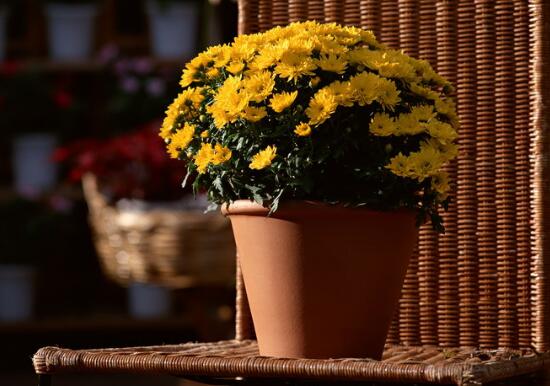
When it comes to how to grow potted chrysanthemums, first we need to understand their growing habits. The chrysanthemum is a short-day plant. It likes a sunny, well-ventilated environment, dislikes scorching sun, tolerates slight shade, and fears waterlogging. Below, the editor will introduce soil, light, water, fertilizing, pruning, and diseases one by one, so let's read on.
2. Chrysanthemum growing methods and key points
1. Soil: loose and fertile
How to grow potted chrysanthemums, first of course is choosing the soil. It is said that chrysanthemums like loose, fertile, well-drained, slightly acidic sandy loam. So the editor recommends a soil mix of 4 parts humus soil, 4 parts garden soil, and 2 parts river sand.
Note: As the chrysanthemum keeps growing, we need to move it from a small pot to a larger one, keeping the soil the same. After 2 to 3 repottings, it can be settled into its final pot in July.
2. Light: under 10 hours
For indoor potted plants, light is one of the more troublesome points, and in chrysanthemum growing methods, light needs even more attention. It is said that the chrysanthemum is a short-day flower, and only forms flower buds and blooms when the daylight period is short. So in general, you need to ensure under 10 hours of light per day, but not too little.
Note: If chrysanthemums get too long a light period, they will only grow stems and leaves, cannot form flower buds, and therefore cannot bloom. So in general, during the vegetative growth stage they need 14.5 hours of sunlight per day, and during the flower bud differentiation stage they need 12 hours of sunlight per day.
3. Temperature: 18-21°C
In chrysanthemum growing methods, adjusting temperature is also very important. It is said that chrysanthemums have strong adaptability and are fairly cold-tolerant. To make them grow well, it is best to keep chrysanthemums in an environment of 18-21°C.
Note: Chrysanthemums like cool conditions. Their growing environment temperature should not exceed 32°C at the highest and should not fall below 10°C at the lowest. Their underground rhizomes generally tolerate a low-temperature limit of -10°C. In addition, the lowest night temperature during the flowering period of chrysanthemums is 17°C, and during the blooming period (middle and late) it can drop to 15-13°C. If you want chrysanthemums to bloom more, you must adjust the temperature.
4. Watering: keep it moist but let it dry out
When growing chrysanthemums, watering is essential, but as long as we remember the principle of "water promptly in drought and drain promptly in waterlogging," it is enough. In spring, when the chrysanthemum seedlings are small, water less; in summer, when the seedlings have grown, water generously; before the Start of Autumn, control water moderately, and after the Start of Autumn but before blooming, increase the amount of watering; in winter, when flower stems basically stop growing, just a light spray is enough.
Note: Around the bud stage of chrysanthemums, you must ensure they have enough water. In addition, you should also note to spray the leaves with water once in the morning and once in the evening each day.
5. Fertilizing: not too much
Having covered watering, let's now talk about fertilizing, which is also something to focus on in chrysanthemum growing methods and key points. In the early stage, chrysanthemums should not be fertilized too much, generally with organic fertilizer as the main type. During the growing season, the amount of fertilizer should be increased, generally applying a thin bone-meal and sauce-residue fertilizer once a week.
Note: Besides applying enough base fertilizer, chrysanthemums should not be given too much or too early topdressing, otherwise it will cause root damage and leaf drop. In addition, remember to water the soil and loosen it promptly after each fertilizing, to help the plant grow and breathe, and to benefit the chrysanthemum's growth even more.
6. Proper pruning
In chrysanthemum growing methods, to make chrysanthemums grow more attractively, we need to prune them properly. During the vigorous seedling stage, many axillary buds will sprout and need to be pinched off promptly to avoid consuming too many nutrients; during the bud stage, side buds at the top can be removed as needed, which lets the main flower become fuller and stronger.
7. Disease control
Brown spot, black spot, ring spot, black rust, brown rust, powdery mildew, and viral diseases are common pests and diseases in chrysanthemum growing. Most pests and diseases occur in unsuitable environments, such as high air humidity, insufficient light, poor ventilation, and large day-night temperature differences. As for what to do when chrysanthemums get sick, there is a detailed introduction in the chrysanthemum pest and disease control article, so we won't say more here.
How to grow potted China asters: growing methods and key points / avoid strong light
The China aster is a fairly common flowering plant in people's daily lives and has high ornamental value, but growing this plant well is not simple, and there are many points to note. So how do you grow potted China asters? What exactly are the growing methods and key points for China asters? Below, the editor will help everyone understand.
1. How to grow potted China asters
If you want to know how to grow potted China asters, first we need to understand their growing environment. They are a light-loving plant but dislike high temperatures, so light needs to be suitable. Besides that, watering, fertilizing, and other aspects also need attention. The details are introduced below in the growing methods and key points for China asters, so let's take a look.
2. China aster growing methods and key points
1. Soil selection
In the process of growing China asters, we first need to choose the soil. This is like laying the foundation when building a house; only by choosing suitable soil can it grow strong and healthy. Generally, we can choose fairly fertile humus soil. This kind of soil has good drainage and lets China asters absorb nutrients better.
2. Temperature management
In the growing methods and key points for China asters, temperature control is also a fairly important part. The suitable temperature for their growth is between 15°C and 25°C. If the temperature is too low or too high, it will have a certain effect on their growth. In winter the temperature must not be lower than 3°C, and in summer it must not be higher than 30°C. If the temperature is too low, it easily freezes and damages the plant; if the temperature is too high, it will delay its flowering time and also affect the number of flowers.
3. Watering requirements
Although the China aster likes a warm and moist environment, because it is a shallow-rooted plant, it is fairly afraid of waterlogging. We must water it in the right amount. If too much water is given and water accumulates, it easily causes root rot. In summer, when the weather is fairly dry, the number of waterings can be appropriately increased, but the amount of water must not be large.
4. Light requirements
In the growing methods and key points for China asters, light is also a point to note. In spring and autumn, if the sunlight is not too strong, we can let them receive light all day. In summer, when the sunlight is strong, it is best to move them indoors to a semi-shaded spot to grow, so the plant is not scorched by strong light, which would cause the leaves to turn yellow.
5. Fertilizing requirements
The China aster is a fertilizer-loving plant, especially during the growing season, when its demand for fertilizer is fairly high. Basically it needs fertilizing once a month. Regular fertilizing lets the plant grow stronger and the flowers bloom more brilliantly.
6. Pest and disease control
In the process of growing China asters, if we are not careful enough, pests and diseases and other problems can easily sneak in. Such problems are extremely harmful to the plant, so once discovered they must be dealt with promptly. For specific treatment methods, you can refer to the article on China aster pest and disease control, which has a detailed introduction.
Summary: After reading the above, I believe everyone has a certain understanding of how to grow potted China asters. That is all the editor has to introduce about China aster growing methods and key points. As long as everyone grows them according to the methods above, your China asters will surely grow strong and healthy.
How to grow potted chrysanthemums: growing methods for potted chrysanthemums
A brief introduction to potted chrysanthemums
The chrysanthemum is a perennial herbaceous plant of the genus Chrysanthemum in the Asteraceae family. Its stems are upright, branched or unbranched, and covered with soft hairs. The leaves are ovate to lanceolate, pinnately lobed or partly lobed, with short petioles, and the undersides of the leaves are covered with short white soft hairs. The flower heads vary in size, with multiple layers of involucral bracts, the outer layer covered with soft hairs on the outside, ligulate flowers in various colors, and tubular flowers yellow.
The habits of potted chrysanthemums
The chrysanthemum is a short-day plant, and under short-day conditions it can bloom earlier. It likes cool conditions and is fairly cold-tolerant. The suitable growing temperature is 18-21°C. Its underground rhizomes are drought-tolerant and it most fears waterlogging. It likes soil that is high-lying, deep, rich in humus, loose and fertile, and well-drained. It can grow in soil from slightly acidic to slightly alkaline.
How to grow potted chrysanthemums
1. Temperature: For potted chrysanthemums, the suitable growing temperature is around 21°C. Ornamental chrysanthemums are also cold-tolerant and can safely overwinter at around 5°C. But they cannot tolerate heat, and when the temperature is above 32°C they will grow slowly.
2. Light: The chrysanthemum is a typical short-day flower, and only when the daily light period is short does it form flower buds and bloom. When the light period is longer, it only grows stems and leaves and cannot form flower buds. In general, during the vegetative growth stage it needs 14.5 hours of sunlight per day, and during the flower bud differentiation stage it needs 12 hours of sunlight per day.
3. Soil: Ornamental chrysanthemums have fairly broad adaptability to soil acidity and alkalinity. They can grow in soil from slightly acidic to slightly alkaline, with a pH between 5.5-7.0. For potted chrysanthemums, suitable potting soil should be chosen, and the potting soil should be loose, fertile, and sandy.
4. Water: Ornamental chrysanthemums have a fairly large demand for water, but they fear waterlogging. Especially during the vegetative growth period, they grow fast and need a lot of water. They easily become short of water. Water frequently. But be careful not to let water accumulate.
5. Fertilizing: When fertilizing, be sure to scatter the fertilizer on top first, then water thoroughly, so the fertilizer can fully seep into the chrysanthemum's root system along with the water. Only then will it be absorbed by the chrysanthemum.
6. Pinching and bud thinning: When the chrysanthemum plant grows to more than 10 cm tall, begin pinching. When pinching, keep only 4-5 leaves at the base of the plant, and remove all the upper leaves. Later, when new branches grow from the leaves and have 5-6 leaves, pinch out the growing tip again, so the plant keeps 4-7 main branches. Branches and buds that grow afterward should be removed promptly.
Summary: Through the content above, we have learned the growing methods and key points for potted chrysanthemums. The cultivation of ornamental chrysanthemums has a long history. They come in many varieties, with rich colors, changeable flower shapes, and countless forms. If you are a flower lover, if you love chrysanthemums, then plant a pot with your own hands.