How to prune a Radermachera sinica? Pinching and heading back are very important, with illustrated guide
Radermachera sinica, an ornamental plant with an auspicious meaning, grows very quickly and will become very lush if you are not careful. To keep the Radermachera sinica looking beautiful, like a person's hair, we need to prune it properly. So how do you prune a Radermachera sinica? So that everyone can grow a beautiful Radermachera sinica, next the editor will bring you an illustrated guide to the pruning methods for Radermachera sinica.
1. How to prune a Radermachera sinica: the method matters
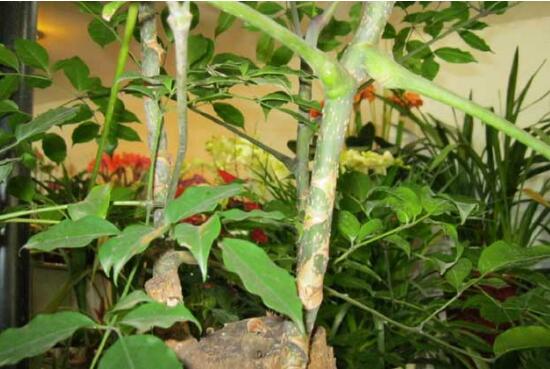
As a flower lover, you should not only know how to grow a Radermachera sinica, but also understand its pruning methods, so you can grow it beautifully! How to make the Radermachera sinica's stems thick: fertilizing is key, and how to prune a Radermachera sinica: the key lies in the method. For this, the editor has summarized four pruning methods: pinching, heading back, thinning, and shaping. Let's continue reading.
2. Illustrated guide to the pruning methods for Radermachera sinica
1. Pinching, for more flowers
For tree-type potted plants, pinching is very important when pruning, and this also applies to Radermachera sinica. Pinching method: cut off the top tip of the main stem, or the tip of a side branch, of the Radermachera sinica with scissors, or simply pinch it off by hand. After doing this, it can prevent the branches from growing excessively, encourage the plant to branch more, and form many flower heads and a beautiful plant shape.
2. Heading back, to control height
How to prune a Radermachera sinica: besides pinching, heading back is also very important. Specific method: cut off the entire upper part of the Radermachera sinica! Heading back is suitable for large Radermachera sinica, because if you grow it at home, you definitely cannot let it grow too tall, so you need to prune the Radermachera sinica by heading it back.
3. Thinning, to promote growth
Thinning is the simplest method among the pruning methods for Radermachera sinica: cut off branches that have grown too dense, or too dense leaves, to improve ventilation and light conditions, so the Radermachera sinica grows more robust and the colors of its flowers and fruits become more vivid. Note: when thinning, follow the direction in which the branches extend, and keep the spacing moderate.
4. Shaping
Besides the above methods, shaping is also one of the pruning methods for Radermachera sinica. It is said that the flowers of Radermachera sinica are upright inflorescences, terminal, and night-blooming. When we prune the Radermachera sinica, we should prune toward the effect we want it to grow into. This is shaping, and it requires us to first simulate the pruning effect in our minds. This method is suitable for experienced flower growers.
Overall, pruning is a technical job. It not only requires skill, but also patience, otherwise cutting here and there, the more you cut the worse it gets, and that would not be good. So to grow a beautiful pot of Radermachera sinica, everyone should master the pruning methods for Radermachera sinica. Finally, wishing everyone can prune out a beautiful Radermachera sinica.
How to prune a Radermachera sinica? The pruning methods for Radermachera sinica
Radermachera sinica is a common indoor green plant. It can not only remove formaldehyde and purify the air, but also has a certain ornamental value. However, when Radermachera sinica grows to a certain extent, its branches and leaves become messy, affecting its ornamental value. At this time, the Radermachera sinica needs proper pruning. So how should Radermachera sinica be pruned? Next, we will introduce the pruning methods for Radermachera sinica:
Image: small Radermachera sinica
1. Pinching
Also called tip removal or topping, it is pinching off or cutting off the top tip of the main stem or side branch of a flowering plant by hand or with scissors, breaking the plant's apical dominance, prompting the lower axillary buds to sprout, inhibiting excessive branch growth, encouraging the plant to branch more, and forming many flower heads and a beautiful plant shape.
2. Heading back
For large flowering plants such as Ficus elastica, Dracaena fragrans, Schefflera arboricola, and Dieffenbachia amoena, the plants are too tall and difficult to grow indoors, so pruning or heading back is needed. Usually before new branches sprout in spring, the entire upper part of the plant is cut off, which is heading back. When heading back, the height at which the main trunk is retained depends on the flower species.
3. Thinning
This includes thinning branches, leaves, buds, flowers, and adventitious buds, etc. When a flowering plant grows too vigorously, causing branches and leaves to be too dense, some of its branches should be thinned in a timely manner, or overly dense leaves should be removed, to improve ventilation and light conditions, so the plant grows more robust and the colors of its flowers and fruits become more vivid.
The above is an introduction to the pruning methods for Radermachera sinica. What needs to be remembered is that when we prune a Radermachera sinica, we should prune toward the effect we want it to grow into, so that we can be more satisfied.
The pruning methods for Radermachera sinica
Radermachera sinica is also known as Radermachera sinica, chili tree, and Radermachera sinica, etc. It is mainly produced in the southern tropical regions of our country and is a plant with high ornamental value. It is often seen in many home and office environments, but many people do not know how to prune Radermachera sinica. Now let's take a look at the pruning methods for Radermachera sinica!
The pruning methods for Radermachera sinica
1. Pinching: also called tip removal or topping, it is pinching off or cutting off the top tip of the main stem or side branch of a flowering plant by hand or with scissors, breaking the plant's apical dominance, prompting the lower axillary buds to sprout, inhibiting excessive branch growth, encouraging the plant to branch more, and forming many flower heads and a beautiful plant shape.
2. Heading back: for large flowering plants such as Ficus elastica, Dracaena fragrans, Schefflera arboricola, and Dieffenbachia amoena, the plants are too tall and difficult to grow indoors, so pruning or heading back is needed. Usually before new branches sprout in spring, the entire upper part of the plant is cut off, which is heading back. When heading back, the height at which the main trunk is retained depends on the flower species.
3. Thinning: this includes thinning branches, leaves, buds, flowers, and adventitious buds, etc. When a flowering plant grows too vigorously, causing branches and leaves to be too dense, some of its branches should be thinned in a timely manner, or overly dense leaves should be removed, to improve ventilation and light conditions, so the plant grows more robust and the colors of its flowers and fruits become more vivid.
The growing conditions for Radermachera sinica
1. Temperature: Radermachera sinica likes a warm and hot environment. The suitable growing temperature is about 20°C. When the temperature is very high (above 28°C), it should be properly shaded with a shed, and the minimum temperature should not be lower than 5°C, to avoid frost damage.
2. Light: generally, Radermachera sinica can be grown in full sun or partial shade. However, for indoor potted Radermachera sinica, place it by a window or on a balcony with sufficient light as much as possible. A long period of dim environment will cause its leaves to drop.
3. Humidity: Radermachera sinica likes moist soil and air conditions. When growing it at home and displaying it indoors, besides keeping the potting soil moist, you should also frequently spray water on the leaves. You can also spray the plant with slightly warm clean water to maintain its fresh and elegant appearance.