How to care for Tradescantia zebrina in winter? Learn four tricks to get it through winter smoothly
Tradescantia zebrina can survive in low temperatures of 8 degrees, but its growth will be stunted, and if it stays in such an environment for a long time, frost damage may occur, so getting Tradescantia zebrina through winter smoothly becomes a problem. So how should Tradescantia zebrina be cared for in winter to be suitable? The editor tells you that caring for Tradescantia zebrina this way in winter can get it through winter smoothly.
How to care for Tradescantia zebrina in winter
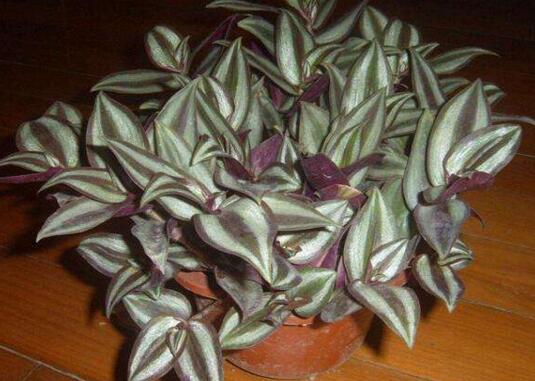
Due to the special climatic conditions of winter, the care methods for Tradescantia zebrina in winter are completely different from other times. Whether it is watering, fertilizing, light or temperature, extra attention is needed, otherwise it is very likely to cause Tradescantia zebrina to dry up or even die in winter. So how to care for Tradescantia zebrina in winter? The answer is as follows.
Care for Tradescantia zebrina this way in winter
1. How often to water Tradescantia zebrina in winter
Temperatures are lower in winter, and Tradescantia zebrina has lower water requirements, so care for Tradescantia zebrina this way in winter: water about once a week, using just half the usual amount, and water again only after the potting soil has dried slightly. For specific methods, you can refer to how to water Tradescantia zebrina.
2. Control the temperature
Temperature is a key factor in the care of Tradescantia zebrina. When the winter temperature is not lower than 8 degrees, Tradescantia zebrina can survive, but if you want it to get through winter more smoothly, it is best to keep the temperature above 10 degrees. You can cover it with a plastic bag or move it to a warm indoor space.
3. Should Tradescantia zebrina be fertilized in winter
Tradescantia zebrina does not need fertilizing in winter. When the temperature is below 14 degrees, the growth of Tradescantia zebrina is very slow, and below 10 degrees growth stalls. Fertilizing will undoubtedly have no effect, and may instead cause fertilizer damage. After spring, you can refer to how to fertilize Tradescantia zebrina for care.
4. Light must be sufficient
Tradescantia zebrina does not like strong light, so care for Tradescantia zebrina this way in winter: grow Tradescantia zebrina in scattered light or sunlight. In the morning when the sunlight is not too strong, Tradescantia zebrina can be placed outdoors, but do not exceed 6 hours.
What to pay attention to for Tradescantia zebrina in winter
1. Avoid direct sun exposure
Although winter sunlight is not as strong as in summer, you should still avoid exposing Tradescantia zebrina to direct sunlight, because at this time Tradescantia zebrina is relatively fragile. Although direct sunlight helps keep it warm, overly strong light may cause the leaves to scorch and turn yellow.
2. Good environmental ventilation
In winter people like to close doors and windows to keep the indoor temperature, and sometimes it can be rather stuffy. If you move Tradescantia zebrina indoors, pay attention to the ventilation of its environment, to avoid stuffiness that leads to pests and diseases.
Care for Tradescantia zebrina this way in winter, and the leaves will be glossy and it will easily fill the pot!
Care methods for Tradescantia zebrina in winter
Choice of placement location
In winter, Tradescantia zebrina should be moved to a brighter indoor spot for placement or hanging, or placed directly in an indoor spot with sunlight for care.
Winter temperature
In winter the room temperature must be kept above 8 degrees for Tradescantia zebrina to get through winter safely. Only above 14 degrees can Tradescantia zebrina resume normal growth.
Notes during the winter dormant period
In winter Tradescantia zebrina enters its dormant period. During dormancy, watering should be reduced. If you still follow the original watering frequency, it will cause the leaves of Tradescantia zebrina to turn yellow in patches or develop root rot. When watering, it is best to do so around 9 a.m. on a sunny day.
Overwintering outdoors
If Tradescantia zebrina overwinters outdoors in winter, carefully wrap the entire plant with plastic film. If it is winter in the north, build a protective layer around it. On days with better sunlight, you can lift the plastic film at noon to let Tradescantia zebrina breathe.
Winter fertilizing
When fertilizing Tradescantia zebrina in winter, you can follow the sequence of fertilizing - watering - watering - fertilizing - watering - watering. The interval is about 7 to 10 days, and the specifics should also be determined by the actual environment in which Tradescantia zebrina is grown.
Air humidity
Winter weather is relatively dry, so you can often spray water on the leaf surface and around Tradescantia zebrina to increase air humidity. If it is Tradescantia zebrina after cuttings, you can spray water twice a day, but do not spray too much each time, as excess will cause the cuttings of Tradescantia zebrina to rot.
It is not recommended to keep Tradescantia zebrina in the bedroom for a long time in winter.
How to grow Setcreasea pallida|How to grow Tradescantia zebrina, the role of Tradescantia zebrina in the home
NO.1 How to grow Tradescantia zebrina, the role of Tradescantia zebrina in the home
Matching Tradescantia zebrina with home decor stylesUsing plants to decorate indoor air is simply the best, but not everyone can handle it easily, as matching can be difficult. Because plants have different shapes, different decor styles require different plants. Which style does Tradescantia zebrina match with in home decor?
Because plants respire vigorously at night, taking in oxygen and releasing carbon dioxide, too many plants should not be placed in the bedroom; the decoration materials of the bathroom, study, living room, and kitchen differ, and the pollutants differ too, so you should choose different quantities of plants with different purification functions according to the environment. When placing Tradescantia zebrina, you must control a certain quantity.
Tradescantia zebrina grows quickly, with branches and leaves creeping and hanging down, and the leaf color is a mix of purple, green, and silver, dazzling to the eye. Grown in pots and placed on tall stands or the tops of cabinets to let it hang naturally, it forms a green curtain, with a very good ornamental effect and a unique artistic mood. It is often used for overall arrangements in homes, courtyards, and other places. Tradescantia zebrina can not only be used for garden beautification, balcony or indoor potted viewing, but also has the functions of clearing heat and detoxifying, cooling blood and stopping bleeding, and promoting urination, and can be used as medicine.
Plants more or less have the effect of freshening the air, and Tradescantia zebrina is no exception. Moreover, Tradescantia zebrina grows vigorously and is a herbaceous foliage plant very suitable for use when the investment is not much while the ground cover greening effect is fast and good. In places covered in large patches of Tradescantia zebrina, the air is also relatively fresher.
Tradescantia zebrina [Tradescantia zebrina] How to grow Tradescantia zebrina, the role of Tradescantia zebrina in the home
Feng shui applications of Tradescantia zebrinaTradescantia zebrina grows quickly, with branches and leaves creeping and hanging down, and the leaf color is a mix of purple, green, and silver, dazzling to the eye. Grown in pots and placed on tall stands or the tops of cabinets to let it hang naturally, it forms a green curtain, with a very good ornamental effect and a unique artistic mood. It is often used for overall arrangements in homes, courtyards, and other places.
Plants more or less have the effect of freshening the air, and Tradescantia zebrina is no exception. Moreover, Tradescantia zebrina grows vigorously and is a herbaceous foliage plant very suitable for use when the investment is not much while the ground cover greening effect is fast and good. In places covered in large patches of Tradescantia zebrina, the air is also relatively fresher.
Tradescantia zebrina is a perennial herb of the Commelinaceae family, also known as variegated bamboo shell vegetable, water bamboo grass, and purple-backed spiderwort. It has the functions of clearing heat and detoxifying, cooling blood and stopping bleeding, and promoting urination. Its main effects include clearing heat and draining dampness, cooling blood and detoxifying, treating swelling, difficult urination, strangury, dysentery, leukorrhea, coughing blood, red swollen painful eyes, sore swollen throat, sores and abscesses, burns and scalds, and venomous snake bites.
Tradescantia zebrina [Tradescantia zebrina] How to grow Tradescantia zebrina, the role of Tradescantia zebrina in the home
The role of Tradescantia zebrina in the homeTradescantia zebrina has strong ornamental value as a small potted plant. It grows quickly and can cover a full pot in 1 year. Its branches and leaves creep and hang down, and the leaf color is a mix of purple, green, and silver, dazzling to the eye. Place it on tall stands or the tops of cabinets to let it hang naturally, or hang it in a pot for viewing. Or arrange it above a windowsill so it hangs down and forms a green curtain. Courtyard cultivation often uses it for overall arrangements. The plant's variegated leaves can sometimes turn into green leaves; at this time, they should be removed promptly to avoid all the leaves of the whole plant turning green. Tradescantia zebrina also has strong medicinal properties, treating coughing blood. Twice a day. For gonorrhea, take before meals, twice a day. Treats leukorrhea, treats chronic dysentery, treats acute conjunctivitis.
Like all green plants, Tradescantia zebrina grows by absorbing sunlight and carbon dioxide for photosynthesis, so Tradescantia zebrina also has a very good air-purifying effect. Because it grows fast and has lush leaves, it only needs conventional cultivation to grow into a large patch. Planted in your own small yard, besides decorating it, it also absorbs a large amount of carbon dioxide and toxic substances, naturally clear and full of spring vitality. Looking out from inside, the green "curtain" not only blocks the dazzling strong light, but also forms a green barrier, shutting out dust, PM2.5, and other particles in the air.
Tradescantia zebrina [Tradescantia zebrina] How to grow Tradescantia zebrina, the role of Tradescantia zebrina in the home
How to grow Tradescantia zebrinaThe cutting medium for Tradescantia zebrina is nutrient soil, river sand, peat soil, or other materials used for cuttings. The branch used for cuttings is called a cutting. Cut the stem into sections 6 cm long, each with more than three leaf nodes; the top shoot can also be used as a cutting. The culture soil should preferably be a mix of 40% leaf mold soil, 40% garden soil, and 20% river sand. During the growth period, keep the potting soil moist, and apply a thin liquid fertilizer or compound chemical fertilizer once every 15 to 20 days. In spring and autumn, it should be grown indoors near a south-facing window; in summer, it should be placed indoors in a well-ventilated spot with bright scattered light. If light is insufficient for a long time, the stems and leaves tend to grow leggy, the internodes become longer, and it blooms little or not at all. It requires relatively high air humidity; if the air is dry, the leaves often dry out easily and the leaf tips scorch. Therefore, during the growing season, attention should be paid to frequently spraying water on the stems and leaves to maintain air humidity. To keep its branches and leaves full, when the stems grow to about 25 cm, they should be pinched to encourage branching; otherwise the branches grow thin and long, affecting the ornamental effect.
The leaf surface of Tradescantia zebrina has two silvery-green shiny stripes flanking the green central part. The leaf surface has irregular pink, green, milky white, and silvery white stripes, the most beautiful and also the hardest to grow. To grow Tradescantia zebrina well, the issues to note are: light, temperature, watering, fertilizing, and propagation.
Tradescantia zebrina [Tradescantia zebrina] How to grow Tradescantia zebrina, the role of Tradescantia zebrina in the home
Introduction to Tradescantia zebrinaTradescantia zebrina, also called hanging bamboo orchid, variegated spiderwort, variegated bamboo vegetable, red lotus, etc. Commelinaceae, Tradescantia genus, Tradescantia zebrina. Native to Mexico. Tradescantia zebrina is a perennial herb. The stems are slightly weak, green, drooping, semi-succulent, branched, and root at the nodes. Oblong, spreading or hanging, about 1 m long, smooth or sparsely hairy. Leaves sessile, elliptic-ovate to oblong, 3 to 6 cm long, 2 cm wide, apex shortly pointed, upper surface purple-green mixed with silvery white, with purple stripes at the middle edges, lower surface purplish red, the top and base of the sheath or the whole sparsely covered with long hairs. Small white flowers are axillary. Flowers clustered within large and small terminal bract-like leaves. Sepals 3, fused into a cylindrical tube, about 5 mm long; corolla tube white, slender, about 1 cm long, lobes 3, rose-colored, about 2.5 mm long, stamens 5, ovary 3-locular. Fruit is a capsule. Flowering period is irregular.
Tradescantia zebrina has weak and brittle stems, creeping on the ground and growing in a trailing manner. Common types include four-colored Tradescantia zebrina: the leaf surface is dark green with red, pink, and white stripes, and the leaf back is purple. Discolored Tradescantia zebrina: the leaf surface is green with two obvious silvery white stripes. Small Tradescantia zebrina: the leaves are small and the plant is shorter than the original species. Purple Tradescantia zebrina: the leaf shape and flowers are basically the same as Tradescantia zebrina. The plant form of purple Tradescantia zebrina is slightly larger than that of four-colored Tradescantia zebrina, and the leaf base is more hairy. The leaf surface is dark green and red wine colored, with no white stripes
Extended: How to grow Tradescantia zebrina / Tradescantia zebrina effects / Tradescantia zebrina effects
Extended: How to grow Tradescantia zebrina / Tradescantia zebrina effects / Tradescantia zebrina effects
NO.2 Care methods for Setcreasea pallida (purple heart)
Species name: Setcreasea pallida. Aliases: purple heart, purple brocade grass.
Scientific name: Setcreasea pallida cv. Purple. Family name: Commelinaceae
Genus name: Setcreasea genus. Distribution: native to Mexico
Habits: likes warmth and moisture, not cold-tolerant, avoid direct sun exposure, likes semi-shade. Has strong adaptability to drought, suitable for fertile, moist soil.
Setcreasea pallida is an annual or biennial herbaceous flower, generally managed extensively, does not need pruning, is shade-tolerant and moisture-tolerant, resistant to pollution, and only needs a little thin cake fertilizer water. Because its stems and leaves are dense, it roots easily at the stem nodes. Setcreasea pallida likes a moist climate environment and requires the relative air humidity of the growing environment to be 60 to 75%. The most suitable growth temperature is 18°C to 30°C. It avoids cold and frost, and the overwintering temperature needs to be kept above 10°C. In winter when the temperature drops below 4°C it enters dormancy, and if the ambient temperature approaches 0°C, it will die from frost damage.
> Summer care points:
1. Strengthen air convection so that the heat inside the plant can be released;
2. Place it in semi-shade, or give it 50% shade;
3. Give it appropriate misting, 2 to 3 times a day.
> Winter care points:
1. Move it indoors to a bright place for care;
2. Outdoors, you can wrap it with film to overwinter, but every two days at noon when the temperature is higher, uncover the film to let it breathe;
> Light management:
Setcreasea pallida fears direct strong light and needs to be cared for in semi-shade, or given 70% shade. If cared for indoors, place it in as bright a place as possible, and every one or two months move it outdoors to semi-shade or shade for one month of care, so that it can accumulate nutrients and restore its growth.
> Fertilizer and water management:
Setcreasea pallida has high fertilizer and water requirements, but it most fears random fertilizing, concentrated fertilizer, and one-sided application of nitrogen, phosphorus, or potassium fertilizer. It requires following the fertilizing (and watering) principle of “apply light fertilizer frequently, small amounts and many times, complete nutrition”:
Spring, summer, and autumn: These two seasons are its peak growth periods. Fertilizer and water management follows the cycle of “Hua Bao”——“Hua Bao”——clear water——“Hua Bao”——“Hua Bao”——clear water (at the very least ensure two times of “Hua Bao” each week). The interval period is about: 1 to 4 days for outdoor care; shorter intervals on sunny days or during high temperatures, longer intervals or no watering on rainy days or during low temperatures; 2 to 6 days for indoor care; shorter intervals on sunny days or during high temperatures, longer intervals or no watering on rainy days or during low temperatures. Try to schedule watering in the morning when the temperature is lower. In summer, water in the morning or evening when the temperature is low, and also frequently mist the plant.
Winter: During the winter dormant period, the main task is to control fertilizer and water well. Fertilizer and water management follows the cycle of “Hua Bao”——clear water——clear water——“Hua Bao”——clear water——clear water, with an interval of about 7 to 10 days; shorter intervals on sunny days or during high temperatures, longer intervals or no watering on rainy days or during low temperatures. Try to schedule watering at noon on sunny days when the temperature is higher.
NO.3 Habits and care methods of Pachyphytum 'Purple Reign'
The habits of Pachyphytum 'Purple Reign' are similar to other Pachyphytum succulents. It is suitable for growing in a sunny, cool, and dry environment. It is drought-tolerant, slightly tolerant of semi-shade, not cold-tolerant, and avoids damp shade and hot, stuffy high temperatures. It requires well-draining soil, preferably a mix of sandy soil and small-particle stones.
Pachyphytum 'Purple Reign' is an artificially cultivated variety of the Pachyphytum genus. With sufficient sunlight, the leaves are closely arranged and the leaves turn slightly purple; with weak light, the leaf centers are light blue-green, the leaves become narrow and long, and the spacing between leaves grows leggy and elongates. Pachyphytum 'Purple Reign' blooms in early summer and can be cross-pollinated.
Pachyphytum 'Purple Reign' has no obvious dormant period and can take full sun. In summer, ventilate and shade it, water 3 to 4 times a month, giving a small amount of water at the edge of the pot to slowly get through midsummer, just maintaining the root system so it will not dry up from excessive dryness. In winter, when the temperature is below 3 degrees, gradually reduce water; below 0 degrees, keep the potting soil dry, and try to keep it no lower than minus 5 degrees. In this way it can overwinter safely. In winter, use as little water as possible, and in early spring give water gradually, otherwise root rot may occur.
Pachyphytum 'Purple Reign' is a relatively easy variety to grow, with no obvious pests or diseases. When there is too much water, or when too much water is given during seasonal changes, the leaves can easily fall off at a light touch. Using less water, or giving water gradually, can help avoid leaf drop as much as possible. As long as the fallen leaves are plump, they can all be leaf-propagated, and they root very easily.
Pachyphytum 'Purple Reign' tends to grow side branches after beheading. If not beheaded and grown continuously, the old stem of the plant will grow very long, and only then begin to branch. For a more beautiful look, it should be beheaded when it is about the right size to sprout side buds, so that the plant becomes clustered and beautiful.
The propagation methods of Pachyphytum 'Purple Reign' mainly include sowing and division, beheading, and leaf cuttings.
NO.4 How to grow Othonna capensis
Othonna capensis is a succulent of the Asteraceae family, Senecio genus. Some flower lovers also call it purple string moon. The care method of Othonna capensis is relatively simple. Its habits are relatively robust, and once the root system is well grown it can drink a lot of water. It can be cared for in full sun and also very much likes a well-ventilated environment.
Othonna capensis likes a warm environment with sufficient sunlight, prefers water, avoids direct strong sun exposure, and is semi-dormant in high summer temperatures. In an open-air environment, the leaves and branches turn purplish red. For newly cut branches, use slightly moist soil. The cutting can be covered with a thin layer of soil, or the branch can be fixed to the soil surface with a paper clip, keeping the potting soil moist, ensuring good ventilation, and not letting the temperature get too low. For watering, just spray the surface soil with a spray bottle, and do not move it around.