How to grow rain lilies (Zephyranthes candida)? Master the cultivation methods and precautions, and make sure there is plenty of light
The rain lily (Zephyranthes candida) is a highly ornamental plant with an inherently elegant, understated character, which is why it is loved by so many people. In fact, people grow rain lilies in many parts of China. How do you grow rain lilies, and what are the cultivation methods and precautions? Let us walk you through them below.
I. How to grow rain lilies
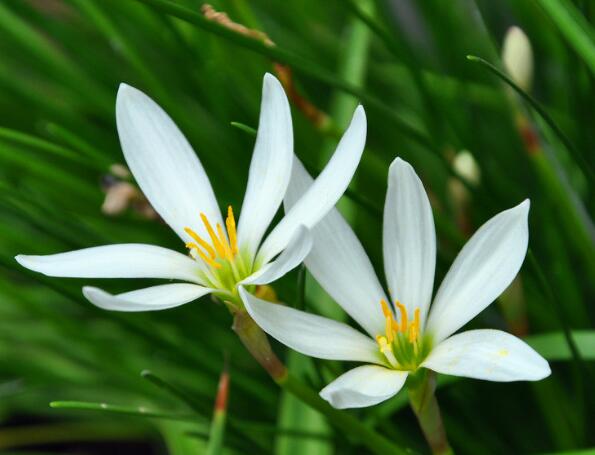
To know how to grow rain lilies, we first need to understand their growing habits. The rain lily is a light-loving plant, so you must keep the light plentiful during cultivation. Of course, light is not the only thing to pay attention to. Below is a detailed explanation of the cultivation methods and precautions for rain lilies, which you can review.
II. Cultivation methods and precautions for rain lilies
1. Soil selection
When growing rain lilies, choosing the soil is the first step and a very important one. Generally, it is best to choose a fairly loose humus soil; this kind of soil drains very well and is very helpful for the rain lily to absorb nutrients, so pay attention to this point.
2. Fertilization requirements
Among the cultivation methods and precautions for rain lilies, fertilizing is an indispensable step. Fertilizer is one of the main nutrients for rain lilies, and they basically need to be fertilized once a month. As for the choice of fertilizer, we can choose liquid fertilizer. When fertilizing, be careful to dilute it with water first, otherwise it can easily burn the plant.
3. Watering requirements
Watering is an indispensable part of growing any plant, and rain lilies are no exception. However, you should not water rain lilies too frequently, otherwise it easily causes waterlogging and root rot. Keeping the soil at a certain level of moisture is enough; the specific frequency depends on the climate.
4. Light requirements
During the cultivation of rain lilies, in spring and autumn when the climate is fairly mild, you can let them receive light all day long. In summer, when the sunlight is too intense, it is best to move them indoors to a semi-shaded spot for growing, so that they can receive light without being scorched. Therefore, among the cultivation methods and precautions for rain lilies, light is one point that requires fairly close attention.
5. Pest and disease control
If you grow rain lilies the wrong way, pests and diseases and other negative situations are very likely to appear. At that point we need to find the cause and deal with it promptly. For treatment methods, you can refer to the article on pest and disease control for rain lilies, which describes them in detail.
Cultivation methods and precautions for Zephyranthes grandiflora: teaching you how to grow Zephyranthes grandiflora
The leaves of Zephyranthes grandiflora are linear, very much like chives, which is why it is called "chive lily" (jiu lan). Its clustered blooms put on a spectacular display under the bright sun and are loved by all who see them. So do you know the cultivation methods and precautions for Zephyranthes grandiflora? Let us take a detailed look below.
Brief introduction to Zephyranthes grandiflora:
Zephyranthes grandiflora, also known as jiu lian and wind-and-rain flower; Latin name: Zephyranthes grandiflora, is a perennial herb in the genus Zephyranthes of the family Amaryllidaceae.
The bulb is ovoid, 2-3 cm in diameter. The basal leaves are usually several in a cluster, linear and flat, and the plant is about 15-30 cm tall, forming clumps as it matures. The leaf blades are linear, very much like chives. The flower stems emerge from the leaf cluster, and the flowers mostly have 6 petals, sometimes 8. The flowers of Zephyranthes grandiflora are relatively large, pink, with the petals slightly curved and drooping; the small Zephyranthes is deep peach-red, and every bulb of a mature plant can bloom. The clustered blooms put on a spectacular display under the bright sun, charming in every way and loved by all who see them. The flowering period of Zephyranthes grandiflora is April-September; the small Zephyranthes flowers in summer, about May-August. It is suitable for planting at the edges of garden flower beds or in pots.
Cultivation methods and precautions for Zephyranthes grandiflora:
How to grow:
Zephyranthes grandiflora can be grown by division or by planting bulbs, and this can be done all year round, though spring is best. Simply dig up the bulbs, plant 3-5 bulbs per spot, and water to keep the moisture appropriate; they take root very easily. When digging up the bulbs, be careful not to damage them. If there are too many leaves and flower stems, cut off the upper part and plant with the intact bulb plus 6-8 cm of leaf. If the bulb has already sprouted flower buds, after dividing, water thoroughly and it can still bloom.
Precautions for growing Zephyranthes grandiflora:
1. Soil: For growing Zephyranthes grandiflora, a fertile sandy loam is best. Plant 3-4 bulbs per hole, and the planting depth should be such that the top of the bulb is slightly exposed above the soil surface. When the clump becomes crowded, you must divide it by force.
2. Fertilizing: For pot cultivation, each year combine bulb division and repotting, changing the soil and applying a base fertilizer. Organic fertilizers such as oil cake, compost, or nitrogen, phosphorus and potassium fertilizers can be used, applied once every 2-3 months. Increasing the proportion of phosphorus and potassium fertilizer can promote bulb enlargement and good flowering.
3. Watering: During the growing period, rain lilies need plenty of water, and the potting soil should be kept moist regularly, but not waterlogged. In dry weather, also spray water on the leaves frequently to increase air humidity, otherwise the leaf tips easily turn yellow and wither.
4. Temperature: The most suitable growing temperature for Zephyranthes grandiflora is 22-30 degrees. After planting, pay attention to watering to maintain humidity. Growth stops when the ambient temperature is below 10°C, and it cannot overwinter safely when frost occurs.
5. Light: Rain lilies love light but also tolerate semi-shade. The growing site should have ample sunlight; in shady spots they do not easily produce offset bulbs and do not easily bloom.
Morphological characteristics of Zephyranthes grandiflora:
Perennial herb. The bulb is ovoid, 2-3 cm in diameter. The basal leaves are usually several in a cluster, linear, flat, 15-30 cm long and 6-8 mm wide. The flower is solitary at the top of the flower stem, with a spathe-like involucre below; the involucral bracts often have a pale purplish-red tinge, 4-5 cm long, with the lower part fused into a tube; the pedicel is 2-3 cm long; the flower is rose-red or pink; the perianth tube is 1-2.5 cm long, with 6 perianth lobes, the lobes obovate, slightly pointed at the tip, 3-6 cm long; 6 stamens, about 2/3-4/5 the length of the perianth, with the anthers attached in a T-shape; the ovary is inferior, 3-loculed, with numerous ovules, the style slender, and the stigma deeply 3-cleft. The capsule is nearly spherical; the seeds are black. Flowering period summer and autumn. [3]
Zephyranthes grandiflora is about 15-30 cm tall, forming clumps as it matures. The leaf blades are linear, very much like chives. The flower stems emerge from the leaf cluster, and the flowers mostly have 6 petals, sometimes 8. The flowers of Zephyranthes grandiflora are relatively large, pink, with the petals slightly curved and drooping, in a deep peach-red, and every bulb of a mature plant can bloom. The clustered blooms put on a spectacular display under the bright sun, charming in every way and loved by all who see them. The flowering period of Zephyranthes grandiflora is April-September; the small Zephyranthes flowers in summer, about May-August. It is suitable for planting at the edges of garden flower beds or in pots. Differences from the common Zephyranthes grandiflora: the flowers are smaller, the color is deeper and more vivid, the petals are fairly stiff and not prone to drooping, and the flower shape holds up very well. Because of soil variation, the variety of Zephyranthes grandiflora can also change; for example, in greenhouses in northern China the leaves are fairly broad and thick, while when grown in California in the United States the leaves are fairly narrow and the fragrance is also fairly strong.
Growing habits of Zephyranthes grandiflora:
It is robust by nature, drought-tolerant and resistant to high temperatures, and easy to cultivate. The suitable growing temperature is 22-30°C, and a fertile sandy loam is best as the growing medium. Rain lilies love light but also tolerate semi-shade. They like a warm environment but are also fairly cold-tolerant. They prefer loam or sandy loam with deep soil, level terrain and good drainage. They like moisture and fear being flooded. They have strong adaptability, strong resistance to pests and diseases, and strong bulb sprouting ability, and are easy to propagate.
Cultivation methods and precautions for Helleborus thibetanus
Chinese scientific name: Hellebore (tie kuai zi)Latin scientific name: Helleborus thibetanus Franch.Other names: hei mao qi, jiu bai bang, jiu long dan, hei er bo, jian chun hua, jiu duo yun, jiu lian dengBinomial name: Helleborus thibetanusKingdom: PlantaePhylum: AngiospermsClass: DicotyledonsSubclass: ArchichlamydeaeOrder: RanunculalesFamily: RanunculaceaeSubfamily: TrollioideaeTribe: HelleboreaeGenus: HelleborusSpecies: Helleborus thibetanusDistribution area: northwestern Sichuan, southern Gansu, southern Shaanxi and northwestern Hubei.Helleborus thibetanus Franch., also known as jiu niu qi, shuang ling cao, xiao shan tao er qi, xiao tao er qi, yuan yang qi, bing liang hua, and hellebore. It is a perennial evergreen herb with a rhizome about 4 mm in diameter, densely covered with fleshy long fibrous roots. The stem is 30-50 cm tall, hairless, branched in the upper part, with 2-3 sheath-like leaves at the base. It is fairly cold-tolerant, likes a semi-shaded environment, and dislikes dry cold. It mainly grows in Sichuan, Gansu, Shaanxi and other places, and has been introduced and cultivated in many areas. It can be used medicinally; its flowering period runs from winter to the following spring, and it has a certain garden ornamental value.1. Morphological characteristics
Perennial evergreen herb, with a rhizome about 4 mm in diameter, densely covered with fleshy long fibrous roots. The stem is 30-50 cm tall, hairless, branched in the upper part, with 2-3 sheath-like leaves at the base. There is 1 (-2) basal leaf, hairless, with a long petiole; the blade is kidney-shaped or pentagonal, 7.5-16 cm long and 14-24 cm wide, pedately tripartite, the middle segment oblanceolate, 1.6-4.5 cm wide, with dense serrations along the margin above the lower part, the lateral segments with short petiolules, fan-shaped, unequally tripartite; the petiole is 20-24 cm long. The stem leaves are nearly sessile, with blades smaller than the basal leaves, the central segment narrowly elliptic, the lateral segments unequally bi- or tripartite. 1-2 flowers are borne at the top of the stem or branches, opening when the basal leaves have just emerged, hairless; the sepals are initially pink, turning green in the fruiting stage, elliptic or narrowly elliptic, (1.1-)1.6-2.3 cm long and (0.5-)1-1.6 cm wide; petals 8-10, pale yellow-green, cylindric-funnel-shaped, with short stalks, 5-6 mm long, slightly bilobed on the ventral side; stamens (4.5-)7-10 mm long, anthers elliptic, about 1 mm long, filaments narrowly linear; carpels 2-3, about 1 cm long, the style nearly as long as the ovary.
The follicle is flat, 1.6-2.8 cm long and 0.9-1.2 cm wide, with transverse veins, the beak about 6 mm long; the seeds are elliptic, flat, 4-5 mm long and about 3 mm wide, smooth, with 1 longitudinal rib. It flowers in April and fruits in May.2. Growing habits
Helleborus thibetanus is cold-tolerant, likes a semi-shaded, moist environment, and dislikes dry cold. It grows wild in shady forests or thickets at altitudes of 1100-3700 m. It mostly grows in sandy loam and brown earth containing fairly much gravel, with medium to low soil fertility, and grows well in cultivated fertile, deep soil. Under full sunlight it can flower earlier. It is a geophyte and enters dormancy after the summer.
3. Distribution range
It grows wild in northwestern Sichuan, southern Gansu, southern Shaanxi and northwestern Hubei.4. Cultivation techniques
Propagation methods
Helleborus thibetanus can be propagated by sowing, division or tissue culture, and division is often the main method.Seed propagation
1. Seed collection and seed treatment
In mid-May, when the seed coat of the follicle turns from green to yellow, harvest the seeds promptly and dry them in the shade. Helleborus thibetanus seeds have a dormant characteristic; after harvesting, they can be sown immediately in summer, or dried and stored until the following spring for sowing.
2. Seedbed preparation and seed treatment
Choose a semi-shaded, moist environment for the seedling site. Spread 3-5 cm of humus soil on the seedbed surface, rake it flat and even, and spray with 0.5% potassium permanganate solution to disinfect. For spring sowing, soak the seeds in 30-50°C warm water for 2-3 d.
3. Sowing technique
Use the drill sowing method. When drill sowing, open shallow furrows 3-5 cm deep on the bed surface, with a row spacing of 15-20 cm, mix with sand and sow evenly, cover with 1-2 cm of humus soil, and press the bed surface after sowing. Whether drill sowing or broadcast sowing, after sowing cover the bed surface or shade it with 50% shade netting, and spray water on the bed surface frequently; keeping the bed surface moist is good for seed germination.
Division propagation
Division propagation can be carried out together with transplanting of seedlings. In summer and autumn, when lifting the seedlings, according to the distribution of buds on the rhizome, cut rhizomes bearing 1-2 buds for planting and cultivation, and they can flower normally the following year.
Management and care
WateringHelleborus thibetanus likes a moist environment, and its leaves are large and soft, so it should be watered more; during the growing season the soil should be kept moist. In spring, as the temperature rises and it enters the vigorous growth period, the amount of watering should gradually increase; watering in early spring is best done before noon. In summer the temperature is high and transpiration is strong, so the amount of watering should be ample, and it is best done in the morning and evening. From late autumn to winter, the soil should be kept appropriately dry, which is good for the dormancy of the underground buds. In the rainy season, pay special attention to drainage.
Topdressing
An ample supply of fertilizer and water is the foundation for its good growth. Topdress three times a year: the first time after sprouting in spring, to promote flower bud differentiation and make the flowers numerous and brightly colored; the second time after flowering, to supplement nutrients and promote stem and leaf growth and seed development; the third time in September and October, to promote the plump growth of the underground rhizome and underground buds and lay the foundation for growth and flowering the following year. Do not topdress during the early spring flowering period, otherwise it will cause flowers and buds to drop; stop fertilizing during the high-temperature period in summer. Each topdressing should be mainly phosphorus and potassium fertilizer. You can apply a 1500-fold urea or ammonium sulfate solution, or a 0.3% potassium dihydrogen phosphate solution. If you are not saving seeds, cut off the spent flowers after flowering to avoid seed set and concentrate nutrients for the growth of the underground parts.
Shading
In early spring, keep the light ample, which is good for flower bud differentiation, flowering and fruiting; in summer, shade appropriately. From the end of April to the end of August, when the sunlight is intense, shade 75% and spray water on the leaves frequently to maintain 70%-80% air humidity. Cultivation experiments have shown that if it is not shaded and kept moist after May, it will cause scorching and withering of the stems and leaves.
Cultivation and weeding
During the growing period, cultivate and weed promptly according to the growth of weeds and the condition of the soil surface, generally 5-6 times per growing season, carried out after watering or rainfall when the soil surface has dried slightly and reached a suitable state for cultivation.
5. Main value
Medicinal value
Pharmacological effects1. Cardiotonic effect
The helleborin proposed in earlier years has a typical digitalis-like cardiotonic effect, and is also fairly irritating to mucous membranes. On the isolated frog heart, calcium ions can enhance its toxicity, while potassium weakens it. The hellebrin proposed later has a cardiotonic potency 20 times that of helleborin. The minimum lethal dose of hellebrin for cats is 0.088 mg/kg (convallatoxin is 0.085 mg/kg), and its partially hydrolyzed preparation, desglucohellebrin, is 0.084 mg/kg, belonging to the most potent cardiac glycosides. Hellebrigenin is 0.98 mg/kg. In the guinea pig heart-lung preparation, the cardiotonic potency of hellebrin is also higher than that of its aglycone, but the therapeutic index is lower. This glycoside has high cumulative properties, is poorly absorbed by the gastrointestinal tract, acts faster than strophanthin G, and its toxicity is close to that of digitoxin. Desglucohellebrin acts faster than its parent compound, with lower toxicity and cumulative properties; in dogs with experimental cardiac insufficiency, it can restore circulatory and electrocardiographic disturbances to normal, and its potency exceeds that of strophanthin K and cymarin.
2. Antitumor effect
Hei er bo can cause necrosis of transplanted tumors in mice, but it is highly toxic to animals. Hellebrin and its aglycone have an inhibitory effect on human epithelial cancer KB cells in vitro, with the former being more potent.
3. Antitumor effect
Experiments show that Helleborus thibetanus polysaccharide at a certain dose increases the weight of the thymus and spleen in tumor-bearing mice, and can significantly raise the levels of cytokines IL-1, TNF α and γ IFN in tumor-bearing mice. Therefore we believe that Helleborus thibetanus polysaccharide may exert its positive immunoregulatory effect by regulating immune cells and immune molecules in tumor-bearing mice, thereby inhibiting tumor cell growth in vivo. And the effective dose of Helleborus thibetanus polysaccharide for its antitumor effect is 1.0 g/kg.d.
4. Other effects
Helleborin can contract arteries and capillaries, but mildly dilates veins. It has little effect on the blood pressure of normal animals; when blood pressure drops due to bleeding, its pressor effect is fairly obvious. On cultured iris epithelial cells and fibroblasts in vitro, low concentrations accelerate their growth, while high concentrations inhibit them and cause degeneration. Hellebrin can counteract convulsions or electric shock induced by pentylenetetrazol. The water extract of hei er bo root has an excitatory effect on the guinea pig uterus, and oral administration to parturient women can also strengthen uterine contractions.Functions and indications
Clears heat and detoxifies, invigorates blood and disperses blood stasis, reduces swelling and relieves pain. Treats cystitis, urethritis, boils and sores, traumatic injuries, and strain injuries.
① "Guizhou Folk Prescription Collection": "Sedative, antitussive, relieves asthma. Treats traumatic injuries, soreness and pain in the lower back."
② "Guiyang Folk Herbs": "Treats rheumatic bone pain and abdominal pain due to qi stagnation."
Usage and dosage
Internal use: decoct in water, 5-10 g; or soak in wine. External use: pound and apply.
Precautions
Within two hours after taking the medicine, avoid hot foods and buckwheat noodles. (Nature and flavor and below from "Shaanxi Chinese Herbal Medicine")
Toxicity
Excessive use of hei er bo can cause inflammation of the gastrointestinal mucosa, severe vomiting, severe diarrhea, dizziness, spasms, convulsions, and death. Fresh roots applied to the toes can cause dermatitis and even blistering.
Supplementary formulas
① To treat traumatic injuries: Helleborus thibetanus, liu ye guo shan long, 3 qian each, and yi kou xue, 2 qian. Soak in half a jin of wine. Take 2 liang of the medicinal wine each time, twice a day. ("Guiyang Folk Herbs")
② To relieve cough and treat soreness and pain in the lower back: Helleborus thibetanus, 2 qian, and honey, 1 liang. Stir-fry the Helleborus thibetanus until yellow, add the honey and steam, and take it all at once. ("Guizhou Folk Prescription Collection")
③ To treat rheumatic pain: Helleborus thibetanus, 3 qian, shi nan teng, 3 qian, and tu er feng, 3 qian. Soak in 4 liang of wine. Take 1 liang each time. ("Guiyang Folk Herbs")
④ To treat abdominal pain from cold qi: Helleborus thibetanus and zhu sha lian in equal parts. Grind into powder. Take 1-2 qian each time, swallowed with wine.
⑤ To treat cough from strain injury: Fine fibrous roots of Helleborus thibetanus, 1 liang, soaked in half a jin of wine. Take 5 qian to 1 liang of the medicinal wine each time, taken regularly.
⑥ To treat asthma: Fibrous roots of Helleborus thibetanus, 5 fen. Grind into powder and swallow with wine.
⑦ To treat blood masses in the abdomen of women: Helleborus thibetanus, 3 qian, hong fu ping, 1 liang, mint, 1 qian, and safflower, 2 qian. Decoct in water for internal use.
⑧ To treat stomach pain: Helleborus thibetanus, da mu jiang zi, qing teng xiang, and guang mu xiang, 2 qian each. Grind into powder. Take 2 qian each time, swallowed with boiled water.
⑨ To treat furuncles and toxic sores: Helleborus thibetanus, chuan xin cao, and xian he cao, 5 qian each, decoct in water and take; separately pound the residue and apply it to the affected area. ("Guizhou Herbal Medicine")
Garden ornamentation
Helleborus thibetanus has a low, compact plant form, dark green leaves, and unusual flowers and leaves. It can be grown as an indoor potted plant, used as a groundcover material for lawns and beautiful landscapes, and can also be potted and used in plantings.Plant arrangement is the use of plant materials combined with other elements in the garden, following the growth patterns and site conditions of garden plants, adopting different compositional approaches to form different garden spaces and create various garden landscapes to meet people's ornamental requirements. The arrangement methods include specimen planting, opposite planting, clump planting, mass planting, and so on.
The arrangement of Helleborus thibetanus must reflect its own biological and ecological characteristics. Because Helleborus thibetanus, which flowers in early spring, likes a shaded, moist environment, it is best to plant them in shaded perennial flower borders, or among deciduous shrubs and beneath deciduous trees, which can add some beautiful color to the monotonous early spring scenery. Besides the early spring season, Helleborus thibetanus planted in clumps with groundcover plants such as narcissus, Lycoris, golden spider lily, rain lily and iris forms a flowering landscape across different seasons, while the distinctive leaf shape of Helleborus thibetanus also forms a sharp contrast with other plants, giving a refreshing feeling.
Scientific research value
Helleborus thibetanus is a monotypic genus endemic to western China, which has important scientific research value for studying the links between the flora of western China and the Eurasian flora, and it has been listed as a third-class protected species in Gansu.6. Identification methods
Microscopic identificationRoot cross-section: cork cells in more than 10 layers, yellow-brown. The cortex is fairly wide, with parenchyma cells elliptic or nearly round, arranged tangentially. The vascular bundles are collateral; the phloem is fairly narrow, the cambium is obvious, the xylem is well developed, the vessels are polygonal, single or in groups, the medullary rays are obvious and arranged radially, with 2-5 rows of cells, and wall pits are visible. Oil cells are scattered in the cortex and phloem. The parenchyma cells of this product contain starch grains.
Powder characteristics
1. Wood fibers 25-30μm in diameter, some with wide cell cavities, some narrower, with distinct pits.
2. Ray cells rectangular, neatly arranged, with beaded thickened walls and distinct pits.
3. Starch grains numerous, round or helmet-shaped, 15μm in diameter. In addition, there are reticulate and bordered-pit vessels.