How to water a Radermachera sinica (China doll)? Twice a day in summer, once in winter
The beauty of the Radermachera sinica is self-evident; its plant shape, leaves, and even flower shape are all superb, which is why many people grow it as a potted plant at home. However, if you want the Radermachera sinica to bloom, proper watering is key. So how do you water a Radermachera sinica? How often should you water it? Below are the watering methods and precautions for the Radermachera sinica; follow along with the editor to learn more.
I. How to water a Radermachera sinica: the method matters
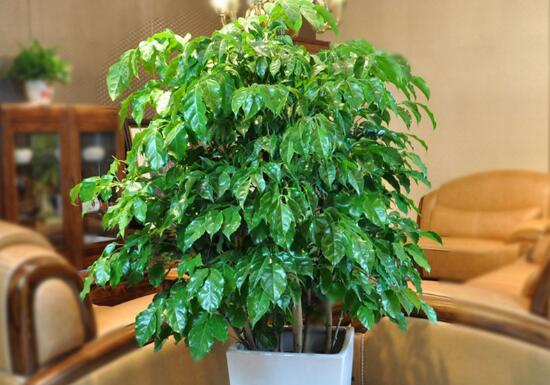
In daily life, not knowing how to water is arguably one of the important reasons many orchid growers fail to grow Radermachera sinica well, and overwatering can cause symptoms such as yellowing leaves and blackened leaves on the Radermachera sinica. So when it comes to how to water a Radermachera sinica, mastering the watering method is crucial.
II. Radermachera sinica watering methods
(1) How to tell when the Radermachera sinica needs watering
Before learning the watering methods for the Radermachera sinica, the editor will first introduce how to judge whether it needs watering. In different environments, the frequency and amount of watering are all different. This requires us to judge for ourselves. Below are 3 methods for judging whether to water the Radermachera sinica, with specific steps as follows:
1. Tap the pot: The simplest way to tell whether the Radermachera sinica needs watering is to tap the pot. Specific method: lightly tap the pot with your finger at the 1/3 point; a relatively crisp sound indicates the soil has plenty of moisture, while a dull sound indicates the pot is dry, and at this point it needs watering.
2. Weigh by hand: If you are sensitive to weight, before watering the Radermachera sinica you can lift the pot and feel its weight. If it feels light, it is time to water. Of course, this weighing method also takes practice, otherwise it is easy to make mistakes.
3. Probe the soil: Besides the two methods above, the simplest and most direct way to judge whether the Radermachera sinica needs watering is to probe the soil. Specific method: growers can insert a finger into the pot soil at the 1/3 point and feel it. If it is moist, do not water; if it is dry, or even too dry for your finger to go in, it is time to water!
(2) Radermachera sinica watering methods
The Radermachera sinica likes a humid environment, and its growth requires sufficient water, so watering is a very important matter. The Radermachera sinica needs different amounts of water in different seasons, so watering requires attention. As for how often to water the Radermachera sinica, it mainly divides into summer and winter, as follows:
1. Water twice a day in summer
The Radermachera sinica itself likes humidity, and combined with the hot summer climate, it needs sufficient watering, and frequent watering. Generally speaking, in summer it should be watered at least twice a day, at noon and in the evening respectively, so as to meet its needs and let it grow healthily, but do not let water accumulate in the soil.
2. Water once a day in winter
How often should you water a Radermachera sinica? Although winter also requires watering and care, because of the low temperature, the Radermachera sinica will go dormant due to the cold. So during the dormant period, do not water too much; watering once after noon is enough, and also spray the plant with warm water, so as to prevent the plant from losing water and drying out, which would hinder growth.
How to water a Radermachera sinica
Radermachera sinica watering methods
The Radermachera sinica is a tree species that likes a humid environment, and its growth requires sufficient water, so watering is a very important matter.
The Radermachera sinica needs different amounts of water in different seasons, so watering requires attention.
First, during the high temperatures of summer, pay attention to the water supply, water more, and ensure the soil does not dry out but stays moist; moreover, in hot weather you should also frequently spray water on the tree, at least three times a day, to ensure the Radermachera sinica's water requirements, promote its growth, but do not let water accumulate in the soil.
For the Radermachera sinica's watering and care in winter, because the temperature is low in winter, the Radermachera sinica is also kept indoors, and the Radermachera sinica will also go dormant due to the low temperature in winter, so during the dormant period do not water too much; watering once after noon is enough, and also spray the plant with warm water, so as to prevent the plant from losing water and drying out, which would hinder growth.
Precautions for watering Radermachera sinica
The Radermachera sinica needs frequent watering, but watering also requires attention to the following issues:
First, pay attention to the watering frequency. Although summer is dry and hot and the Radermachera sinica needs frequent watering, you should still pay attention to the watering frequency: in summer, water about twice a day, with the first watering after noon and another in the evening, but during this period carry out 3 sprays to keep the plant moist. So do not do it too many times a day, and do not water too frequently, otherwise it will cause root rot and lead to the death of the plant.
Second, in winter the watering interval should be once every 2 to 3 days, and note that each watering should only use half a pot, and also note to use warm water for watering and spraying.
In short, ensure a moist growing environment, and also be careful to prevent waterlogging.
How to prune a Radermachera sinica; Radermachera sinica growing methods and precautions
The Radermachera sinica is a foliage plant; the leaf color, luster, and tree shape of the Radermachera sinica determine its ornamental value. So do you know how to prune a Radermachera sinica? Today we will tell you about the Radermachera sinica's growing methods and precautions.
I. Introduction to the Radermachera sinica
Happiness is what we pursue; sometimes it is very abstract, sometimes it is very concrete; it is simple, yet also very complex. And this plant named the Radermachera sinica (China doll) is concrete and pure. Why is it called the "happiness tree"?
1. It is a tropical plant. The Radermachera sinica is also called the bean tree, pepper tree, or mountain bean tree. It has a graceful form, with dancing tree shadows, and small emerald-green leaves; it is a very precious indoor ornamental plant. The Radermachera sinica belongs to the Bignoniaceae family, Radermachera genus, and is a tree, a tropical plant. It is also the representative tree of Hawaii, because people believe it can bring happiness, so many people choose to grow it.
2. It is a medium-sized deciduous tree. The bark of the Radermachera sinica appears light gray, with deep longitudinal fissures. Its opposite mesophylls are ovate-lanceolate, with tailed-acuminate tips. The leaf rachis is about 30 cm, with 2- to 3-pinnate compound leaves. The flowers of the Radermachera sinica are upright inflorescences, terminal, night-opening; the calyx teeth are ovate-lanceolate, and the bracts are linear-lanceolate. The corolla is campanulate-funnelform, white or pale yellow, 6 cm to 8 cm long, with rounded lobes and wrinkles; the capsule is leathery, cylindrical and elongated like a bean, slightly curved, with many grooves.
3. Its living environment. The Radermachera sinica is native to the tropical and subtropical regions of southern China, and by nature likes high temperatures and high humidity and a sunny environment. It tolerates high temperatures, prefers moisture, fears cold, and avoids dryness; for cultivation, use loose, fertile, well-drained loam and sandy loam rich in organic matter. It can be propagated by cuttings, sowing, layering, and other methods. For cultivating the Radermachera sinica, sandy loam is best; it can take full sun or partial shade; the optimum growth temperature is 28°C to 28°C, and it is suitable to carry out one pruning and shaping before spring sprouting. During indoor display, in addition to keeping the pot soil moist, you should also frequently spray the leaf surface with water and place it in a spot with sufficient light.
II. Radermachera sinica growing methods
1. Required temperature
The Radermachera sinica likes a warm and hot environment. The optimum growth temperature is 20°C to 21°C during the day and 18°C to 19°C at night; even in midsummer, try to keep the temperature below 27°C. When the ambient temperature is very high, provide appropriate shade with a shed, and increase the humidity of the environment and leaf surface. During the overwintering period, it is best to maintain a greenhouse temperature of no less than 8°C, and the minimum must not be lower than 5°C, so as to avoid frost damage.
2. Required light
The Radermachera sinica is a light-loving plant, and can also tolerate a little shade. Full sun or partial shade environments are both acceptable. However, the light intensity should preferably not exceed 400001ux; in summer, set up a shed for shading. When potted plants are placed indoors, it is best to place them in front of a window or on a balcony with sufficient light. If placed in a dim indoor spot for a long time, it easily causes leaf drop. When grown as a home potted plant, during the overwintering period you can place it in a higher position in front of a window or balcony, letting it receive more light.
3. Required humidity
The Radermachera sinica likes relatively moist soil and growing environment. Air humidity should generally be maintained between 70% and 80%, and preferably not exceed 85%. If placed at home, you can often spray the plant with slightly warm clean water to maintain its elegant appearance and also increase the environmental humidity.
4. Required substrate
Choose a loose, breathable, well-drained substrate; you can use imported substrate or domestically produced peat soil mixed with perlite and vermiculite, so that the final substrate pH is 5.5-6.0 and the EC value is 1.0-1.5mS cm. Flower pots are generally 15-24cm; the size of the pot used can be determined according to the size of the final cultivated plant. The cultivation method popular in the market now is to grow one or two plants per pot, with each pot's plant height above 70cm.
5. Required fertilizer
The fertilizer required by the Radermachera sinica is N P K Ca Mg=l00 9 87 53 12; the EC value of the fertilizer can be 1.6-1.7 mScm; during the plant's rapid growth period it can be increased to 1.9mS cm
6. Required Radermachera sinica growth regulators
The height of the high-quality Radermachera sinica popular in the market now is generally around 70cm, the crown width around 60cm, the internodes around 1-3cm, and the leaf diameter around 5-7cm, with short petioles, dense leaves, and bright color, giving extremely high ornamental value. To reach this standard, growth regulators must be used; the more commonly used one is paclobutrazol, at a concentration of 550ppm, applied once about every one week; the concentration and frequency used can be adjusted according to the weather and plant growth conditions, ultimately achieving a reasonable and beautiful plant shape.
III. Precautions for growing Radermachera sinica
(1) When the temperature is above 30°C, provide appropriate shading and spraying, or spend the summer in a cool place. In winter, place it on a south-facing balcony with sufficient light; a minimum temperature below 5°C means cold damage, which will cause a large amount of leaf drop. Seedlings are shade-tolerant; provide shading in summer.
(2) The Radermachera sinica likes relatively moist soil and growing environment. Air humidity should generally be maintained between 70% and 80%, and preferably not exceed 85%. If placed at home, you can often spray the plant with slightly warm clean water to maintain its elegant appearance and also increase the environmental humidity.
(3) The Radermachera sinica likes warmth; in the hot season it is best to place the plant in a ventilated spot with plenty of scattered light, and avoid direct strong light to prevent scorching the leaves. In winter, it should be placed in a warm room. The overwintering temperature is best maintained above 10°C; a temperature below 5°C for a long time may cause cold damage and lead to leaf drop, and in severe cases cause the plant to die.
(4) The Radermachera sinica likes light and is also fairly shade-tolerant; seedlings are shade-tolerant and even more so. When caring for potted plants, place them in a spot with plenty of scattered light, so as to avoid the leaves losing luster and turning yellow and falling off due to too much shade.
(5) The Radermachera sinica likes moisture; during the growing period, keep the soil moist, but when new shoots emerge, appropriately control water to prevent the new shoots from growing leggy. In spring, water once every 2 to 3 days; in the high-temperature seasons of summer and autumn, water once every 1 to 2 days; in winter, control water and water once every 7 to 10 days. Watering should be determined in combination with weather, season, and other conditions; in dry and hot seasons, spray the plant daily to retain moisture, so as to prevent the leaves from losing too much water and turning yellow.
How to prune a Radermachera sinica
1. Pinching: also called removing the tip or topping; it is pinching off or cutting off the top shoot of the main stem or side branch of the flowering plant by hand, breaking the plant's apical dominance, promoting the sprouting of the lower axillary buds, inhibiting leggy growth of the branches, prompting the plant to branch more, and forming more flower heads and superior
2. Heading back: For large flowering plants such as the rubber tree, dragon tree, Schefflera arboricola, and Dieffenbachia amoena, the plant becomes too tall and is difficult to cultivate indoors, so pruning or heading back is needed. Usually, before new branches sprout in spring, all the upper part of the plant is cut off, which is heading back. When heading back, the height at which the main trunk is retained depends on the flower species.
3. Thinning: includes thinning branches, leaves, buds, flowers, and adventitious buds, etc. When the flowering plant grows too vigorously, causing the branches and leaves to be too dense, appropriately thin out some of its branches, or remove the overly dense leaves, to improve ventilation and light conditions, so that the flowering plant grows more robustly and the colors of the flowers and fruits are more vivid.