How to grow Hydrangea macrophylla? Cultivation methods and precautions, humidity is key
Hydrangea macrophylla, also known as hydrangea, is a very famous ornamental plant flower nowadays, so the hydrangea we usually see generally appears before us as a garden flower. So how do you grow the beautiful hydrangea? Below, we will introduce the cultivation methods and precautions for hydrangea.
I. How to grow Hydrangea macrophylla: understand its habits
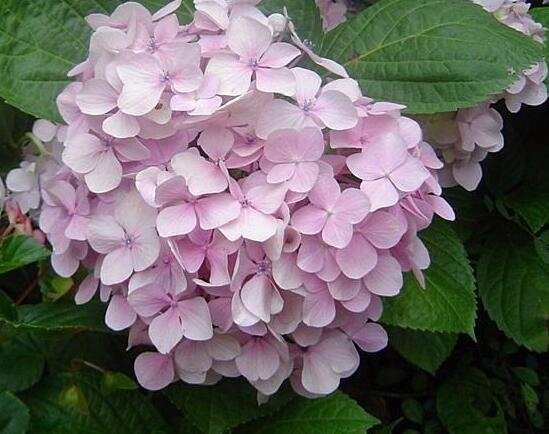
Hydrangea macrophylla resembles a hydrangea ball. It fears drought and waterlogging, cold and heat, and likes fertilizer and moisture. It is a very “delicate flower.” To understand how to grow Hydrangea macrophylla, you must first know its growth habits. Next, the editor will explain them one by one from the aspects of soil, light, watering, fertilizing, and so on. Specifically, they are all in the cultivation methods and precautions for Hydrangea macrophylla. Let us continue reading.
II. Cultivation methods and precautions for Hydrangea macrophylla
1. Choice of soil
How to grow Hydrangea macrophylla? First, of course, is choosing soil. It is understood that Hydrangea macrophylla likes acidic soil rich in humus and with good drainage, which is beneficial to its growth. The editor recommends: use a culture soil mixed from 4 parts leaf mold, 3 parts garden soil, 2 parts river sand, and 1 part cake fertilizer.
Precautions: The acidity and alkalinity of the soil have a very obvious effect on flower color. When the soil is acidic, the flower color is blue; when the soil is alkaline, the flower color is red. Hydrangea is best cultivated in acidic soil (pH 4-4.5 is suitable). In addition, before potting, the selected soil is best disinfected first to avoid the appearance of pests and diseases.
2. Watering
In the cultivation methods for Hydrangea macrophylla, watering is essential. It can ensure soil moisture and relatively high humidity. Its state is different across the four seasons, so the watering frequency and amount are also different and need to be adjusted in time.
Precautions: Water thoroughly each time. The amount of water should not be too large; keeping the soil moist is enough. In the rainy season, pay attention to drainage, otherwise water accumulation can cause root rot. The best watering time is in the morning or evening when the sun is not harsh.
3. Fertilizing
Having discussed watering, let us now look at fertilizing, which is also very important in the cultivation methods for Hydrangea macrophylla. During the growing period, fertilizer can be applied about once every 15 days, mainly thin liquid fertilizer or compound chemical fertilizer. When the temperature is relatively high or relatively low, fertilizing can be reduced or stopped.
Precautions: When fertilizing, avoid splashing liquid fertilizer onto the leaves, otherwise yellow leaves may appear. In addition, attention should be paid to nutritional balance; do not apply only nitrogen fertilizer or only phosphorus and potassium fertilizer, etc.
4. Temperature
The most suitable temperature for the growth of Hydrangea macrophylla is 18-25 degrees. When the temperature is 20 degrees, it can promote flowering. It can safely pass through winter at 5 degrees. Its growth rate is relatively fast in spring, autumn, and summer.
Precautions: When the temperature is below 5 degrees, attention should be paid to keeping it warm. Although it can survive at 5 degrees, being in a low-temperature environment for a long time can easily cause the leaves to dry up.
5. Light
Hydrangea macrophylla has relatively high light requirements and likes an environment with sufficient light. Sufficient light will provide powerful conditions for the plant's photosynthesis, and only then can the flower color be more vivid. It does not like excessively strong light.
Precautions: Never let Hydrangea macrophylla be exposed to the sun for a long time, as that will cause the leaves to wither.
6. Humidity
Hydrangea macrophylla likes an environment with relatively high humidity, so in summer you can spray water on the leaf surface. In spring and autumn, attention should be paid to moisturizing. Keeping humidity above 60% can promote more luxuriant stems and leaves.
Precautions: Among the cultivation methods and precautions for Hydrangea macrophylla, humidity is often easily overlooked. In dry air, it will show yellowing at the leaf tips, and attention should be paid to avoiding this situation.
III. How to grow Hydrangea macrophylla so it looks beautiful
In addition to doing the above six points well, if you want Hydrangea macrophylla to be more beautiful, you must also pay attention to frequent pruning, because yellowing or falling leaves occur during the planting process, and pruning off overly long or withered old branches can promote the growth of new branches and make Hydrangea macrophylla more attractive.
How to grow Hydrangea macrophylla, cultivation methods for Hydrangea macrophylla
Hydrangea macrophylla has large flowers and beautiful colors and is a famous ornamental plant in the Yangtze River basin. In gardens, it can be arranged under sparse tree shade and beside tree-lined paths, or planted in patches on shaded slopes. It is even more suitable for planting as flower hedges and flower borders. If the entire flower ball is cut off and placed in a vase indoors, it is also a superior decorative item. Hanging the flower ball inside a bed canopy feels even more elegant. Today the editor will introduce to you how to grow Hydrangea macrophylla and the cultivation methods for Hydrangea macrophylla.
Hydrangea macrophylla likes warmth and moisture, is not tolerant of drought, and also avoids waterlogging; it likes semi-shaded environments, is not cold-tolerant, and is suitable for growing in fertile, well-drained acidic soil. The pH of the soil has a very obvious effect on the flower color of Hydrangea macrophylla. When the soil is acidic, the flowers are blue; when the soil is alkaline, the flowers are red. Hydrangea macrophylla likes fertilizer. During the growth period, generally apply once every 15 days a fully decomposed thin cake fertilizer solution.
To maintain the acidity of the soil, 1%-3% ferrous sulfate can be added to the fertilizer solution for application. Regular watering with alum fertilizer water can make the plant's branches luxuriant and leaves green; applying 1-2 additional applications of potassium dihydrogen phosphate during the bud stage can make the flowers large and colorful; applying cake fertilizer should avoid the dog days to avoid causing pests and diseases and damaging the root system.
Cultivation methods for Hydrangea macrophylla:
1. Planting
Container and potting soil: Generally choose a planting container with drainage and ventilation. Clay pots and purple clay pots are beneficial to the development and growth of the plant's root system. Hydrangea macrophylla likes fertile, well-drained soil conditions and is not tolerant of barren soil conditions. It can be prepared with garden soil: peat: sand = 4:4:2. An appropriate amount of organic fertilizer can also be added to the nutrient soil.
Planting method: Select strong seedlings and plant them in pots. Before planting, choose a suitable container according to the size of the seedling. First place a tile shard over the drainage hole at the bottom of the container, and fill part of the nutrient soil into the container. Keep as many roots as possible on the seedlings. After placing them in, add soil so that the roots are in close contact with the soil. The soil surface should be level with the pot rim. After watering thoroughly and letting it settle, keep about 5 cm between the soil surface and the pot rim as the watering opening. Newly potted plants should first be placed in a semi-shaded place for a week, avoiding direct sunlight, and then gradually placed in a sunny place for normal management.
2. Fertilizer and water management
Hydrangea macrophylla has large leaves and many branches and leaves, and has a high water demand. During the spring, summer, and autumn growing seasons, water sufficiently to keep the potting soil often moist, but watering should not be excessive to prevent root rot caused by waterlogging. After entering summer, with high temperatures and strong light, combine shading with spraying water multiple times a day on the plant and around it to increase environmental humidity, lower temperature, and reduce water transpiration; in late autumn, gradually reduce the amount of watering so that the branches grow robustly. For overwintering in a greenhouse, watering can be controlled according to the plant's growth condition, and it is better for the potting soil to be slightly dry. After the plant's flower buds differentiate, watering should be gradually reduced.
3. Water amount
Hydrangea macrophylla likes fertilizer. During the growing season, apply fertilizer once every 15 days, and spray 0.3% urea on the leaves once every 15 days. During the bud stage, appropriately increase the application of phosphorus and potassium fertilizers to make the flowers large and brightly colored. Applying ferrous sulfate during the flower bud formation stage makes the flower color blue; applying calcium hydroxide makes the flower color pink.
Potted Hydrangea macrophylla needs to be repotted and have its soil changed once every 1-2 years to replenish nutrients. The best time is before budding in early spring. When repotting and changing soil, remove part of the old soil, trim the root system, and appropriately thin out some old roots, diseased and injured roots, and overly long rootlets. When potting, apply sufficient base fertilizer. After potting, water thoroughly, avoid direct sunlight, and prevent branches and leaves from dehydrating. After a week, gradually place it in a sunny place for normal management and care.
Hydrangea macrophylla avoids cold and in northern regions needs to overwinter indoors. Before the temperature drops to 5, it should be moved indoors, while paying attention to ventilation and light. For indoor overwintering, it is suitable to place it in a room with sufficient sunlight, and the room temperature should be above 5. Watering should be controlled, and the potting soil should preferably be slightly dry, to prevent excessive moisture and the occurrence of root rot.
4. Shaping and pruning
Hydrangea macrophylla grows vigorously and is tolerant of pruning. To make potted Hydrangea macrophylla have a beautiful crown shape, upright plant shape, and more flowers, the plant must be pruned. Prune in time and thin out overly dense branches, diseased and dead branches, overly thin branches, and overlapping branches to promote robust branches and obtain a good plant shape. When the seedlings grow to 10 cm tall, pinch them to promote axillary bud germination, select and retain 4 new branches from the middle and upper parts after germination, and remove the remaining axillary buds. When the new branches grow to 10 cm, pinch them a second time. This can control growth and promote more flowers. After flowering, the old branches of the plant should be cut short, retaining 2?3 buds. After autumn, the tops of new shoots should be cut off to stop plant growth and help overwintering. If potted Hydrangea macrophylla is not pruned, the lower part of the plant is likely to become bare, affecting its ornamental value.
5. Pest control
The main pests and diseases of Hydrangea macrophylla include wilt disease, powdery mildew, leaf spot disease, damping-off disease, sooty mold, rust disease, aphids, whiteflies, scale insects, and mirid bugs.
Measures: Promptly remove fallen dead branches and leaves and diseased leaves, and pay attention to ventilation to reduce disease transmission. For pests, spray with 45% malathion emulsifiable concentrate 1000-fold solution or 40% dimethoate emulsifiable concentrate 1200-fold solution. For diseases, use 50% carbendazim wettable powder 500-fold solution, 50% thiophanate-methyl 800?1000-fold solution, 75% chlorothalonil wettable powder 800?1000-fold solution, 70% mancozeb wettable powder 800-fold solution, 15% triadimefon wettable powder 800-fold solution, and 50% thiram wettable powder 500-fold solution for control, spraying once every 7?10 days for 3?4 consecutive times. Strengthen inspection of pests and diseases in daily management, and handle them promptly when symptoms are found. Scale insects can be controlled by manual assistance. When controlling sooty mold, pay attention to removing pests to prevent repeated outbreaks.
How to grow Hydrangea macrophylla and the cultivation methods for Hydrangea macrophylla are covered here. I believe that after reading this, everyone will have some understanding of how to grow Hydrangea macrophylla and its cultivation methods. I hope the editor's introduction can be helpful to everyone.
How to grow Cymbidium sinense: cultivation methods and precautions for Cymbidium sinense
Cymbidium sinense has a rich fragrance and varied flower colors, with beautiful floral fragrance and color and unique leaf shape. Many friends cannot resist its charm. So when transplanting it into indoor pots, I believe how to grow Cymbidium sinense and its cultivation methods will become issues of concern to many consumers. Below, the editor will combine Cymbidium sinense pictures to explain the cultivation knowledge of Cymbidium sinense.
[Plant profile]
Chinese name: Cymbidium sinense (Chinese orchid)
Scientific name: Cymbidium sinensis Wild
Aliases: Baosui orchid, Rusui orchid, broad-leaf orchid, Baocai orchid, Cuisheng orchid, Fa orchid, Fengcai orchid, Fengsui orchid, Sui orchid
Family: Orchidaceae
Genus: Cymbidium
Origin and distribution: Native to China, Vietnam, and Myanmar. Mainly produced in Yunnan, Sichuan, Guangdong, Guangxi, Hainan, Taiwan, China, Hunan, and Guizhou
Growing environment: Often grows under mountain forests by streams, and is also seen in evergreen broad-leaved forests or in grass clumps under mixed forests.
Morphological characteristics: The pseudobulbs of general traditional cultivated varieties of Cymbidium sinense are elliptical, and the roots are thick and long, some with deer-antler-shaped branching. Leaves are clustered, sword-shaped, with the upper half spreading upward and outward (some upright-leaf types are called qijian, and some semi-drooping-leaf and drooping-leaf types are called ruanjian). Leaves are 50-8Ocm long and 2.7-4.2cm wide, entire or serrate, with a jade-green luster. The flower scape is upright, usually taller than the leaf surface (emerging above the foliage). There are 7-20 flowers, bracts are small, with nectaries at the base (nectar, orchid ointment). Sepals are narrowly lanceolate, light brown with 5 purple veins. Petals are shorter and wider, extending forward, above the column. The column is 1.2-1.6cm long, with 4 pollinia. The lip is 3-lobed, inconspicuous, with the tip drooping and curling backward, with 2 yellow callus ridges. The fruit is narrowly elliptical, 5-6cm long. Inside are hundreds of thousands of embryos.
How to grow Cymbidium sinense?
◆ Growth habits: Cymbidium sinense likes shade and avoids strong light; likes shade and avoids strong light; likes warmth and avoids severe cold; likes moisture and avoids dryness; likes fertilizer and avoids turbidity.
◆ Soil: Cymbidium sinense likes a slightly moist soil environment and should not be subjected to drought. The water used is also best if it is soft water.
◆ Fertilizing: Cymbidium sinense has relatively low fertilizer requirements. Plants can still grow well without base fertilizer. In spring and autumn each year, irrigate the plant once with thin liquid fertilizer. Topdressing should be stopped during the dormant period.
◆ Light: In summer, Cymbidium sinense should be shaded, and the plant should still be ensured appropriate direct sunlight, otherwise the plant will grow poorly and flower poorly. However, ensure that the plant receives sunlight before 10 a.m. every day, and avoid direct sunlight at noon and in the afternoon, otherwise it is not conducive to the plant's normal growth and development.
◆ Environment: Cymbidium sinense by nature likes an environment with air circulation. When ventilating under conditions of relatively low humidity, it is best to spray water at the same time. This helps increase air humidity and prevent leaf tip drying.
◆ Temperature: Cymbidium sinense likes a warm environment and grows well within a temperature range of 16℃-28℃.
◆ Pest control: When receiving too much sunlight in summer, the plant is prone to sunscald. Its symptoms are yellow spots appearing on the leaf surface, then gradually turning black, and in severe cases the entire leaf dries up and dies. The control method is: avoid prolonged direct sunlight and provide timely shading. In balcony cultivation, Cymbidium sinense is prone to root rot and is often attacked by harmful organisms such as scale insects and ants.
How many times does Cymbidium sinense bloom in a year?
Cymbidium sinense and Cymbidium kanran bloom once a year or more. However, the flowering period varies earlier or later depending on temperature. Cymbidium kanran blooms in September, and also from November to December. Cymbidium sinense in Guangdong can bloom around the Spring Festival, while in Zhejiang it blooms together with Cymbidium goeringii.
Cultivation methods and precautions for Cymbidium sinense
[Placement location] Cymbidium sinense can be placed on east-facing, south-facing, and west-facing balconies for management. Among them, cultivation results on east-facing and west-facing balconies are relatively good. On south-facing balconies, avoid places with excessively strong sunlight. Because it is moderate in height, it can be placed on various balconies of different sizes. During its vigorous growth stage, place the plant in a place where it receives at least 1-2 hours of scattered sunlight every day. In summer, the environment should be kept ventilated. Slightly lower temperatures in winter are not a problem.
[Propagation method] Mainly propagated by division, mostly carried out in March each spring. Because the seedlings are directly planted in place, the propagation substrate should preferably be acidic loam containing humus, and the pot used is the planting pot. Use large plants that have already been grown for 3-5 years as propagation material. Do not water for several days before division, because the roots and leaves of the plant are relatively brittle when water is sufficient, and become limp and soft when lacking water, so they are less likely to be damaged and easier to handle. Sowing can also be used for raising seedlings.
[Planting years] Cymbidium sinense is a perennial plant, and its growth is very slow, and the plant is not easy to age. Its best ornamental period can reach 5-7 years after the seedlings are planted in place, or even longer. Without repotting, continuous cultivation should not exceed 2 years.
Types of Cymbidium sinense
Today, in addition to traditional varieties such as Jinzui, Yinbian, Qihei, Baimo, and Huizhou, there are also many new superior varieties on the market, such as Jinzui Cymbidium sinense, Yinbian Cymbidium sinense, Qihei Cymbidium sinense, Qijian Baimo, Shenzhou Qi, Piaoyi, Huaxi Hedie, Huangfei, Shengshi Zhonghua, and so on.
Applications of Cymbidium sinense
Cymbidium sinense has now become one of the relatively popular Chinese orchids in our country. In Taiwan, China, it has entered thousands of households, used to decorate indoor environments and as a major ceremonial potted flower for giving to relatives and friends. Flower branches are also used for flower arrangement appreciation. If Cymbidium sinense is used as the main material, paired with rhododendron, snowbell, callicarpa, Hydrangea macrophylla, and barnyard grass, it can display a vibrant picture.
"Conclusion: Chinese Cymbidium sinense has elegant flower and leaf forms, refined flower posture, and distant delicate fragrance. It enjoys the reputation of 'king of fragrances' and 'gentleman among flowers.' It can be said to have a uniquely charming appeal that no one can resist, and the urge to tempt you to try planting it is also unavoidable.