How to make a Radermachera sinica stem thicker? Learn seven tricks, pinching the top is key
The beauty of the Radermachera sinica lies in its lovely name and in its sturdy plant shape, but once the plant grows thin and tall, it will seriously affect its appearance. So how do you make the stem of a Radermachera sinica thicker? For this, based on the growth habits of the Radermachera sinica, the editor has summarized 7 methods to make it grow sturdy. Next, let's take a look together with the editor.
1. How to make the stem of a Radermachera sinica thicker, there are 7 methods
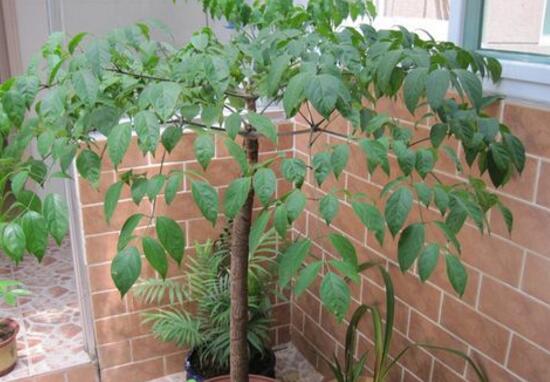
As a beautiful potted plant, a well-grown Radermachera sinica is highly ornamental, but it sometimes tends to grow thin and tall, affecting its appearance. As for how to make the stem of a Radermachera sinica thicker, the editor has summarized 7 points: 1. pinching the top; 2. pruning; 3. watering; 4. fertilizing; 5. repotting; 6. sun exposure; 7. keeping the potting soil moist.
1. Pinching the top
If you want the stem of the Radermachera sinica to grow thick and sturdy, the first thing to do is pinch the top. You can cut off the buds at the top of the Radermachera sinica, so that it has no way to grow upward. In addition, after pinching the top, the Radermachera sinica can also get more nutrients, so that its stem can grow thick.
2. Pruning
In addition to pinching the top, proper pruning will also make the stem of the Radermachera sinica thicker. Specific method: if the side branches of the Radermachera sinica also grow very densely, you can moderately cut off some of them, so that the excess nutrients can be transferred to the stem, and it will naturally grow stronger. As for how to prune, there is a detailed introduction in the pruning methods for Radermachera sinica, so I won't say more here.
3. Watering
How to make the stem of a Radermachera sinica thicker? Watering is a good method. Specific method: often sprinkle some water on the stem of the Radermachera sinica. After doing this, the stem of the Radermachera sinica can stay in a moist state, thereby making it grow stronger.
4. Fertilizing
Having talked about watering, let's talk about fertilizing, which is the main factor in making the stem of the Radermachera sinica grow thick. Specific method: you can add some potassium fertilizer to it, so that the nutrients in the soil increase. Note that the fertilizer must not be too much. After doing this, the stem of the Radermachera sinica has more nutrients to absorb, and growing stronger is only a matter of time.
5. Repotting
How to make the stem of a Radermachera sinica thicker? You can also repot it in a suitable season. When the growing space of the Radermachera sinica becomes larger, its stem can grow rapidly and can become thicker.
6. Sun exposure
The Radermachera sinica likes light, and giving it sufficient light can promote plant growth. So for how to make the stem of a Radermachera sinica thicker, you should often let it get some sun, though of course it cannot be exposed to strong sunlight. In addition, the temperature should be controlled at around 20°C, which is most favorable for its growth and allows it to grow faster and thicker.
7. Keeping the potting soil moist
The Radermachera sinica likes a moist environment, so keeping the potting soil moist is crucial. For this, you can follow the watering methods for Radermachera sinica. Of course, you cannot water too vigorously or too much, otherwise it is easy to rot the roots, so it is best to water it once about every 3 days, so that it can become more thick and sturdy.
Of course, people are flexible while methods are fixed, so you can carry out care according to the actual situation. Overall, as long as you follow the cultivation methods for Radermachera sinica, it will grow very well. Regarding how to make the stem of a Radermachera sinica thicker, the editor has introduced it here, hoping to be of help to everyone.
How to prune a Radermachera sinica, illustrated guide to pruning methods for Radermachera sinica / pinching the heart and cutting the head are very important
Radermachera sinica, an ornamental plant with a beautiful meaning, grows very quickly and will grow very lush if you are not careful. To ensure the beauty of the Radermachera sinica, just like with people's hair, we need to prune it properly. So how do you prune a Radermachera sinica? So that everyone can grow a beautiful Radermachera sinica, next the editor will bring you an illustrated guide to pruning methods for Radermachera sinica.
1. How to prune a Radermachera sinica, the method is very important
As flower lovers, you cannot only know the cultivation methods of Radermachera sinica, you should also understand its pruning methods, so that you can grow it beautifully! How to make the stem of a Radermachera sinica thicker, fertilizing is very important, and how to prune a Radermachera sinica, the key lies in the method. For this, the editor has summarized four pruning methods: pinching the heart, cutting the head, thinning, and shaping. Let's continue reading below.
2. Illustrated guide to pruning methods for Radermachera sinica
1. Pinching the heart, more flowers
For tree-type potted plants, pinching the heart is very important when pruning, and this also applies to the Radermachera sinica. Method of pinching the heart: cut off the top tip at the top of the main stem or side branch of the Radermachera sinica with scissors, or directly pinch it off with your hands. After doing this, it can prevent the branches from growing excessively, encourage the plant to branch more, and form multiple flower heads and a beautiful plant shape.
2. Cutting the head, controlling height
How to prune a Radermachera sinica, besides pinching the heart, cutting the head is also very important. Specific method: cut off the upper part of the Radermachera sinica entirely! Cutting the head is suitable for large Radermachera sinica plants, because if you keep it at home, you certainly cannot let it grow too tall, so you need to prune the Radermachera sinica by cutting the head.
3. Thinning, promoting growth
Thinning, this is the simplest method among the pruning methods for Radermachera sinica: cut off branches that are too dense, or leaves that are too dense, to improve ventilation and light transmission conditions, so that the Radermachera sinica grows stronger and the colors of its flowers and fruits are more vivid. Note: when thinning, follow the direction in which the branches extend, and keep the thinning moderate.
4. Shaping
In addition to the above methods, shaping is also one of the pruning methods for Radermachera sinica. It is understood that the flowers of the Radermachera sinica are upright inflorescences, terminal, and bloom at night. When we prune the Radermachera sinica, we should prune toward the effect we want the Radermachera sinica to grow into. This is shaping, which requires us to first simulate the pruning effect in our minds. This method is suitable for experienced flower lovers.
Overall, pruning is a technical job. It not only requires skill, but also patience, otherwise if you cut here and cut there, the more you cut the worse it gets, and that would not be good. So in order to grow a beautiful pot of Radermachera sinica, everyone should master the pruning methods for Radermachera sinica. Finally, I wish everyone can prune out a beautiful Radermachera sinica.
Methods and tips for growing potted Monstera deliciosa
Monstera deliciosa likes a warm, humid, semi-shaded environment and is not cold-tolerant. It will not be harmed if the indoor temperature is above 10°C. The most suitable growth temperature is around 30°C. It avoids direct sunlight and dryness. It grows well in loose soil rich in humus. Monstera deliciosa can be propagated by layering and cuttings, generally by cuttings.
Cultivation tips: To cultivate Monstera deliciosa, usually in mid-to-late May, cut a relatively large stem from the mother plant. Each cutting should have 2 to 3 stem nodes. With leaves attached, insert the stem section into a pot, 1 plant per pot. The potting soil usually consists of leaf mold, peat soil, and river sand. After potting, water thoroughly and place in a ventilated, semi-shaded place. Keep the potting soil moist frequently. At a temperature of 25-30°C, roots can form in 4-6 weeks, and new shoots can be expected to grow into a new plant in 10 weeks. During the growing period, watering should be sufficient, and the potting soil should be kept moist frequently, but there should be no water accumulation. If water accumulates for a long time, it is easy to cause root rot, and may even lead to the death of the whole plant. In dry and hot weather, in addition to watering, also spray water on the leaves and sprinkle water on the ground several times a day to keep the air humid.
After autumn begins, watering should be gradually reduced. After winter begins, it is better for the potting soil to be slightly on the dry side. In winter, with low temperatures, reduce watering. If watered too much and the potting soil remains too wet for a long time, it is also easy to cause root rot, yellow leaves, and even the death of the whole plant. In winter, every 3 to 5 days it is advisable to spray and wash the leaf surface once with warm water to keep the leaf surface clean and shiny. Every 14 days, apply diluted, fully decomposed soybean cake water, etc. In the peak growing season, in addition to applying liquid fertilizer, also carry out 2 to 3 foliar feedings, using a mixed aqueous solution of 0.1% urea and 0.1% potassium dihydrogen phosphate, to promote thick stems and large leaves, and keep it green all year round.
Except in winter, when oblique light can be seen, keep the room temperature above 10°C and avoid cold wind, otherwise it will cause the leaves to turn yellow and fall off. In other seasons, it should be kept in a shaded place for care, but the room must be bright. Ventilation should be strengthened, otherwise scale insects may occur if the potting soil is too wet. Because Monstera deliciosa grows relatively quickly, it is advisable to repot it into a pot one size larger every spring. When repotting, replace 1/3 with new cultivation soil, add 1 application of fully decomposed compost, and add an appropriate amount of organic fertilizer such as soybean cake and bone meal as a base fertilizer. When repotting, if there are too many or too long aerial roots, they need to be pruned appropriately.