How to water Tradescantia zebrina in the four seasons? Water amount and timing must be distinguished
To make Tradescantia zebrina more beautiful and attractive, understanding its cultivation methods and precautions is key, and among these, watering is a very important part. Watering too little or too much is wrong, so what is the correct way to water Tradescantia zebrina? Let us take a detailed look below.
How to water Tradescantia zebrina
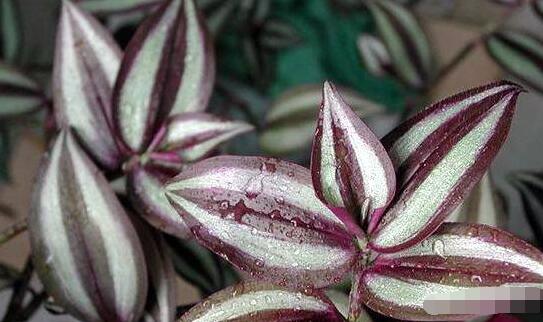
Watering too little is bad for the growth of Tradescantia zebrina, while watering too much can cause root rot and yellow, withered leaves. So what exactly is the best way to water Tradescantia zebrina? Keeping the soil moist and the humidity relatively high is the right approach, and to achieve this, we must start with water quality, watering frequency and water amount.
1. Choosing water quality
Tradescantia zebrina is not strict about soil pH, so acidic water or alkaline water can both be used. It is best to use river water or well water, because these are rich in minerals and beneficial to the plant's growth. Tap water can also be used for watering.
2. How often to water Tradescantia zebrina
Because Tradescantia zebrina grows at different rates in different seasons, and humidity also varies greatly, the watering time differs from season to season. For example, in summer it needs water sprayed on the stems and leaves, while in winter watering must be restricted. The specific watering time changes with the season and climate.
How to water Tradescantia zebrina in the four seasons
Spring: This is the period of vigorous growth. How should Tradescantia zebrina be watered at this time? Water about once every 3 days. If water evaporates quickly, change to watering about once every 2 days. Pay attention to observing the moisture of the soil, and water again once the soil has dried and compacted.
Summer: This is the period of higher temperatures. Water once a day, and at the same time spray water or mist on the stems and leaves to ensure the humidity of the surrounding environment. If water is lost too quickly, water once in the morning and once in the evening.
Autumn: The temperature is comparable to spring, so the watering time is similar to spring, generally watering about once every 3 days. The difference, however, is that the air in autumn is slightly drier, so water needs to be sprayed frequently on the leaf surfaces and around the plant.
Winter: Watering in winter requires extra care, because temperatures are lower in this season. So how should Tradescantia zebrina be watered in winter? The answer is that it is best to let the potting soil be slightly dry, water about once a week depending on conditions, and use half or two-thirds of the usual amount of water.
3. Precautions
1. Do not let water accumulate in the pot
Each time you water, do not use too much water; the main thing is that no water accumulates in the pot. Otherwise, root rot will occur. In mild cases, leaves turn yellow and fall off; in severe cases, root rot disease appears and may even lead to the death of the plant. So do not pour a large amount of water at once just to save effort.
2. Should Tradescantia zebrina be watered until water runs through?
We often say that when watering plants, the main goal should be to water thoroughly, that is, to keep both the upper and lower parts of the soil moist. So should Tradescantia zebrina be watered until water runs through? The answer is yes, it needs thorough watering, so that both the upper and lower parts of the roots can absorb water.
Sunhoo Furniture pays attention to indoor plants
Indoor plants editor CactusCactus (cactus ball) is an excellent flower variety for courtyard greening and beautification. Although they are covered with spines, their appearance is
Cactus
very attractive. They can be processed for medicinal use and eaten, and also have the "special ability" of absorbing electromagnetic radiation and reducing the harm computers cause to human health; spiny cacti have thick, fleshy bodies with high water content and readily absorb and break down electromagnetic field radiation toxins in the surrounding environment, reducing indoor and outdoor pollution and benefiting human health.
Some horticultural experts suggest that places with electromagnetic field radiation, such as televisions, computers and microwave ovens, should also have several pots of cacti placed there. Many large computer placement sites abroad are all filled with cacti of various sizes; this is an advanced scientific measure and may be worth learning from.
Care required: very little water,
Can reduce: electromagnetic radiation [1]
Note
Please do not touch with your hands to avoid puncture wounds. If punctured, do not panic and take appropriate effective measures. [1]
Weeping fig
Weeping fig
Weeping fig can increase the humidity of a room, which is good for our skin. It can also absorb formaldehyde, xylene and ammonia and purify murky air. In addition, the small leaves of weeping fig make it a beautiful decoration in a room, and interior designers often use it to create a cheerful atmosphere.
Light conditions: neutral plant, suitable for planting in semi-shade
Care required: plenty of water, keep the potting soil moist
Can remove: formaldehyde, toluene, xylene, ammonia [1]
Dracaena fragrans
Dracaena fragrans
Its charming appearance and ability to adapt to the dim, dry environment of offices have made it a favorite of interior designers. With just a little care, it can grow for a long time and bring high-quality air. In suppressing harmful substances, few other plants can compare with Dracaena fragrans. Its leaves and roots can absorb xylene, toluene, trichloroethylene, benzene and formaldehyde and break them down into non-toxic substances.
Light conditions: neutral plant, suitable for planting in semi-shade
Care required: keep the potting soil moist, fertilize regularly
Can remove: toluene, xylene, benzene, trichloroethylene, formaldehyde [1]
Golden pothos
Golden pothos
It can "work" in environments where other indoor plants cannot adapt. Through a process similar to photosynthesis, it breaks down toxic substances released from fabrics, walls and smoke into substances of its own. The beautiful heart-shaped leaves of golden pothos have a unique decorative quality, especially when trailing outside a hanging pot. This type of plant is easy to care for and can grow well even in a dark environment, making it the best choice for beginners.
Light conditions: shade-loving plant
Care required: moderate water, trace fertilizer
Can remove: formaldehyde, benzene, carbon monoxide, nicotine [1]
Decoration and beautification
Carrying out greening arrangements according to indoor environmental conditions is not only aimed at individual items or a certain part of a space, but arranges all environmental elements, organizing individual and partial decorations together to achieve an overall beautifying effect. After artistic treatment, indoor greening decoration makes the decorated object more charming in image, color and other main aspects. For example, the rigid, dull forms appearing in indoor architectural structures appear lively after being embellished with branches, leaves and flowers. Color in decoration often influences people's impression of the environment. If there is no natural color of branches, leaves and flowers indoors, then even if the colors of the floor, walls and furniture are beautiful, there is still a lack of vitality. Green leaves and flower branches can also serve as a frame for doors and windows, allowing the scenery outside the window to better enter the room, while unpleasant parts of the indoor or outdoor environment can be screened off by arranged plants. Therefore, the role of indoor foliage plants in indoor greening decoration should not be underestimated. [1]
Improving the environment
People's life, work, study and rest are all inseparable from the environment, and the quality of the environment plays an important role in people's psychology and physiology. In addition to the necessary daily necessities and decorative ornaments, indoor arrangement and decoration cannot lack the breath and appeal of life, so that people can enjoy the beauty of nature and feel comfortable. In addition, the branches and leaves of indoor foliage plants can retain dust, absorb domestic exhaust gases, release and replenish oxygen beneficial to human health, and reduce noise. At the same time, modern architectural decoration mostly uses various coatings harmful to people, while indoor foliage plants have a strong ability to absorb and adsorb such harmful substances, and can reduce man-made environmental pollution.
It can be said that the architectural renovation and arrangement of items and utensils in modern homes only solves "hardware" renovation and decoration, while indoor greening decoration is the "soft decoration" of modern homes, and this "soft decoration" is a necessary supplement to ordinary renovation and arrangement. [1]
Improving space
In indoor environmental beautification, greening decoration can also play a certain role in the construction of space. For example, according to people's living and activity needs, rows of plants can be used to divide indoor space into different areas; climbing vines on trellises can become green screens that separate spaces, while also organically linking different spaces. In addition, if an indoor room has difficult-to-use corners (that is, "dead corners"), suitable indoor foliage plants can be chosen to fill them, making up for the room's sense of emptiness and also playing a decorative role. Using the size and height of the plants themselves can adjust the sense of proportion of the space and fully improve the utilization rate of limited indoor space. [1]
2 Golden pothos editor
Large evergreen climbing plant. It grows in tropical regions, often climbing on rocks and tree trunks in rainforests, and can grow into a huge climbing plant. Its green leaves have yellow patches.
It has strong twining ability and well-developed aerial roots. It can be allowed to climb on a cylinder tied with palm fiber and placed in an entrance hall or hotel, or it can be trained into a trailing form and placed in a study or on a windowsill. It is a flower suitable for indoor placement. In this way, it not only makes full use of space and purifies the air, but also adds a lively, brightly colored green decoration to a rigid cabinet surface, full of vitality and adding a touch of charm to the room. Its flower meaning, "watching over happiness," also increases its ornamental value. [2]
Green purifier. Golden pothos is a relatively common green plant. Its long branches trail and sway gracefully, easily making a space full of vitality. Golden pothos also has an extremely strong air purification function and has the reputation of being a green purifier. Golden pothos can convert formaldehyde into substances such as sugar or amino acids during metabolism, can also break down benzene emitted by copiers and printers, and can also absorb nicotine. Therefore, whether in a living room or an office, it is a great air purifier.
Specific care methods:
1. Light: Place golden pothos in the spot with the best indoor light, or move it to a sealed balcony to sunbathe at noon. At the same time, when temperatures are low, open windows as little as possible, because leaves may be frostbitten in an extremely short time.
2. Temperature: In the north, golden pothos can safely overwinter when the room temperature is above 10°C, and can grow normally when the room temperature is above 20°C.
3. Water: In autumn and winter, the amount of watering should be strictly controlled according to room temperature. Before heating, temperatures are lower, the plant's soil evaporates more slowly, and watering should be reduced, with the amount controlled at 1/4 to 1/2 of the original. Even after heating, watering should not be too frequent. When watering, pour less into the pot and let water seep through the palm fiber. In addition, water should also be sprayed where the aerial roots grow on the palm pole, to reduce insufficient root water uptake caused by excessively fast evaporation. In winter, water that has been left to sit for a day is better for watering; water that is too cold easily damages the roots.
4. Fertilizer: Before winter begins, mainly use liquid inorganic fertilizer for watering and spraying, about once every 15 days. After winter begins, fertilization is mainly foliar spraying, mainly through the stomata on the leaf surface, so that the fertilizer is absorbed through the stomata on the leaf surface, and the fertilizer effect can act directly on the leaf surface. Special fertilizer should be used for foliar fertilizer; ordinary inorganic fertilizer is not easily absorbed by leaf surfaces.
5. Pests and diseases: Golden pothos plants are easily affected by pests and pathogens. Typical pests affecting golden pothos include mealybugs, red spider mites and scale insects. Mealybugs are usually the most common, and can be removed with alcohol insecticide, a cotton swab, or by hand.
Aesthetic principles
Beauty is an important principle of indoor greening decoration. Without a sense of beauty, there is no decoration to speak of. Therefore, it is necessary to follow aesthetic principles, use artistic design, clarify the theme, arrange reasonably, distinguish layers, and coordinate shapes and colors, so as to achieve a fresh and clear artistic effect and naturally connect greening arrangement with decorative art. To embody the artistic beauty of indoor greening decoration, certain forms must be used to achieve reasonable composition, coordinated colors and harmonious forms.
(1) Reasonable composition
Composition is the organization of objects of different shapes and colors into a harmonious landscape according to aesthetic concepts. Greening decoration requires reasonable composition (that is, beauty of composition). Composition is a key issue in decorative work, and two aspects must be noted during decorative arrangement: first, balanced arrangement, to maintain a sense of stability and calm; second, appropriate proportion, to embody a sense of reality and comfort.
Balanced arrangement includes two forms: symmetrical balance and asymmetrical balance. People are used to symmetrical balance when decorating living rooms with greenery, such as placing flowers of the same variety and specification on both sides of a walkway or on both sides of a meeting hall, which appears regular, neat, solemn and serious. Opposite to symmetrical balance is the asymmetrical balance of natural-style indoor greening decoration. For example, place a larger plant on one side of a living room sofa and a shorter plant on the other side, while placing a trailing flower on the flower stand nearby. Although this arrangement is asymmetrical, it gives a sense of coordination; visually the two are considered equal in weight and can still be regarded as balanced. This kind of greening arrangement is relaxed and lively, full of elegant charm.
Appropriate proportion means that the form and specification of plants should match the size and position of the place where they are displayed. For example, a large space can use large plants and large-leaf varieties to help coordinate the plant with the space; a small living room or a coffee table can only display short plants or small potted flowers and trees, which will appear elegant and appropriate.
By mastering the two basic points of balanced arrangement and appropriate proportion, one can purposefully carry out the compositional organization of indoor greening decoration, realize the creation of decorative art, and achieve clear theme, novel composition and reasonable organization, so that indoor foliage plants, though in a small room, can "reveal endless forms and display inexhaustible spring."
(2) Coordinated colors
Color perception is the most popular form of general aesthetic feeling. Color generally includes three basic elements: hue, lightness and chroma. Hue is the color category, that is, the types and names of different colors; lightness refers to the degree of light and dark of a color; chroma is also called saturation, that is, the standard color. Color is a very eye-catching and sensitive factor for human vision and plays a decisive role in the art of indoor greening decoration.
The form of indoor greening decoration should be determined according to the indoor color conditions. For example, when using indoor foliage plants with deep leaf colors or brightly colored flowers for arrangement, the background base color should use light tones or bright tones to highlight the three-dimensional sense of the arrangement; when the room light is insufficient and the base color is darker, it is suitable to choose bright-colored or light green, yellow-white light-colored flowers to achieve the ideal contrasting effect. Displayed flowers should also set off each other with furniture colors. For example, fresh and elegant flowers placed on a counter or desk with a darker base color can increase the brightness of the flower colors and make people feel energized.
In addition, the selection and matching of plant colors in indoor greening decoration should also be adjusted as necessary with seasonal changes and different arrangement purposes.
(3) Harmonious forms
The posture and color form of plants is the first characteristic of indoor greening decoration, and it will give people a deep impression. When carrying out indoor greening decoration, it is necessary, according to the respective posture and color form of various plants, to choose suitable display forms and positions, while also paying attention to coordination with matching flower pots, utensils and ornaments, striving to achieve harmony and suitability. For example, trailing flowers should be placed on high flower stands, cabinets or hung high, allowing them to trail naturally; brightly colored plants should be placed on low stands so that their gorgeous colors can be appreciated; upright, regular plants should be placed in positions where the line of sight is concentrated; in a relatively large central position, full, well-balanced plants can be placed, and if necessary, group arrangements can be used, placing tall plants together with other short varieties to highlight the arrangement effect, and so on. [1]
Practical principles
Indoor greening decoration must meet functional requirements and be practical. This is another important principle of indoor greening decoration. Therefore, according to the nature and functional requirements of the greening arrangement site, and proceeding from reality, can the aesthetic effect and practical effect of greening decoration be highly unified. For example, a study is a place for reading and writing, and should mainly be decorated with clear, elegant green plants to create a peaceful, elegant and quiet environment, so that when people look up during a break in study, green can regulate their eyesight, ease fatigue, and have a calming and pleasing effect. Brightly colored flowers are not suitable there. [1]
Economic principles
In addition to attention to aesthetic principles and practical principles, indoor greening decoration also requires that the greening decoration method be economically feasible and able to be maintained for a long time. When designing and arranging, it is necessary, according to the level of indoor structure, architectural renovation and indoor matching utensils, to select a grade and style that suits the economic level, so that the indoor "soft decoration" and "hard renovation" are coordinated. At the same time, according to the characteristics and uses of the indoor environment, corresponding indoor foliage plants and decorative objects should be selected, so that the decorative effect can be maintained for a relatively long time.
The above three principles are the basic requirements of indoor greening decoration. They are closely connected and must not be biased toward one side. If a decorative design is beautiful and moving, but is not suitable for functional needs or is expensive, it cannot be considered a good decorative design plan. [1]
4 Main forms editor
The method of indoor greening decoration should be determined not only by the form, size, color and ecological habits of plant materials, but also by the size of the indoor space, the strength of light, seasonal changes and atmosphere. Its decorative methods and forms are diverse, mainly including display type, climbing type, hanging type, wall-mounted type, planting type, craft, and mini foliage plant greening decoration, etc. [1]
Display type
The display type is the most commonly used and most ordinary decorative method in indoor greening decoration, including three kinds: point type, line type and sheet type. Among them, the point type is the most common, that is, placing potted plants on tabletops, coffee tables, cabinet corners, windowsills and wall corners, or hanging them high indoors, forming green viewpoints. Line type and sheet type arrange a group of potted plants into a line or organize them into free-style or regular sheet-like patterns, playing a role in organizing indoor space and distinguishing indoor places for different uses, or combining with furniture to play a role in dividing ranges. A sheet-like arrangement composed of several pots or dozens of pots can form a flower bed, produce a group effect, and at the same time highlight the central plant theme.
When using display-type greening decoration, the main consideration should be whether the display method, manner and utensils used meet the decorative requirements. Traditional unglazed pots and glazed ceramic pots are still the main planting utensils. As for metal containers with imitation gold or imitation copper surfaces and glass sleeve pots of various colors, these can coordinate with luxurious Western-style decoration. In short, the surface decoration of the utensils should be determined by the color, texture and decorative tone of the indoor environment. [1]
Climbing type
When certain indoor areas such as halls and dining rooms need to be divided, use climbing plants as partitions, or use fences with a certain bar shape or pattern and then attach climbing plants. The climbing plants and climbing materials should be coordinated in shape, color and other aspects, so as to make the indoor space division reasonable, coordinated and practical. [1]
Hanging type
In a relatively large indoor space, combine with the ceiling and lamps. Hang shade-loving trailing plants of a certain volume in front of windows, in wall corners and beside furniture. This can improve the dry, monotonous feeling caused by the rigid lines of indoor artificial architecture, create a lively three-dimensional beauty of space, and "occupy the sky but not the floor," making full use of space. This kind of decoration should use a kind of metal hanging pot, tool, or plastic hanging pot, so that it is organically combined with the matching materials to achieve an unexpected decorative effect. [1]
Wall-mounted type
The beautification and greening of indoor walls is also very popular among people. Wall-mounted types include wall-hanging and trailing method, wall-hanging placement method, wall-embedded method and window-opening method. In advance, set up locally uneven wall surfaces and wall niches on the wall for placing potted plants; or place flower pots on the floor against the wall, or build planting troughs, and then plant climbing plants so that they grow along the wall surface, forming a local green space indoors; or set up supports on the wall and place flower pots without occupying floor space, to enrich the space. When using this decorative method, the main consideration should be the plant posture and color. Trailing and climbing plant materials are the most commonly used, and other types of plant materials are also often used. [1]
Planting type
This decorative method is mostly used in indoor gardens and indoor halls with ample space. When planting, natural style is mostly used, that is, gathering and scattering depend on each other on the plane, with appropriate density, and making trees, shrubs, herbaceous plants and ground cover plants form layers, paying attention to coordinated matching of posture and color, and appropriately noting the use of the colors of indoor foliage plants to enrich the landscape picture; at the same time, consider combining with rocks and water features to form scenery, simulating natural landscapes and giving people the beauty of returning to nature. [1]
Mini type
This decorative method is extremely popular in Europe, America, Japan and other places. Its basic form comes from flower arrangement techniques, using mini foliage plants planted in different containers, placed or hung in suitable indoor places, or given to others as gifts. The main purpose of this decorative design is to achieve functional greening and beautification, that is, when arranging, it is necessary to consider how indoor foliage plants match the environment, furniture and daily necessities in the living space, so that the decorative plant materials and their environment, ecology and other factors are highly unified. Its application methods mainly include mini hanging pots, mini flower rooms, mini gardens, etc.
(1) Mini hanging pots
Use small trailing or hanging foliage plants for hanging decorative display. This application method has high ornamental value and can still be effectively used even in a narrow space or when there is a lack of planting space.
(2) Mini flower rooms
Plant indoor foliage plants in transparent glass vessels with lids or small mouths. The glass containers used come in many shapes, such as wide-mouth bottles, conical bottles, drum-shaped bottles, etc. Because such containers have small mouths or lids, water is not easy to evaporate and escape, and can be recycled inside the bottle, so moisture-tolerant indoor foliage plants should be chosen. Mini flower rooms are generally mixed plantings of multiple varieties. When selecting and matching plants, plants with similar characteristics should be chosen and planted together as much as possible, so that a more harmonious state can be achieved.
(3) Mini gardens
Mini gardens refer to a decorative method of planting plants in a flat-bottomed water tray container. The containers used are not limited to ceramic products; wooden products or tree fern products can also be used, but when used, plastic sheeting should first be laid at the bottom. In this decorative method, in addition to selecting tall, medium and low plant forms according to the flower arrangement method, and considering similarity of root systems, the choice of leaf shape and leaf color is also very important. At the same time, this kind of decoration is best set off by other decorative objects (such as rocks, dead wood, folk items, ceramic toys or animals, etc.) to improve its artistic value. If it is a child's room, decorative objects that children like can be added; for young people, trendy or interesting items can be chosen for decoration. In short, different choices can be made according to different ages. [1]
5 Plant selection editor
When carrying out indoor greening decoration, of course, the first consideration is some special ecological conditions of the small room.
Indoors is relatively a more enclosed space. In this space, an artificial microclimate environment is created. Its ecological conditions are special, that is, indoor light is weaker than outdoors, and is mostly scattered light or artificial lighting, lacking direct sunlight; room temperature is relatively stable, with smaller temperature differences than outdoors, and may be regulated by heating and air conditioning; indoor air is relatively dry, with humidity lower than outdoors; indoor carbon dioxide concentration is slightly higher than in the atmosphere, and ventilation is relatively poor.
As plant materials for indoor greening decoration, in addition to some flowering and bonsai plants, a large number of indoor foliage plants are used. This is determined by the ecological characteristics of the environment and the characteristics of indoor foliage plants. Therefore, understanding the ornamental qualities and ecological habits of these plant materials is very important. At the same time, both aspects must be taken into account so that aesthetics and ecology can be unified.
The ornamental qualities of plant materials include natural attributes and social attributes, but in most cases they mainly depend on the formal factors of natural attributes, and the formal beauty, shape, color, posture, etc. formed thereby. For example, indoor foliage plants are unique for their emerald green and unusual leaves, or their large size, or their mottled, colorful patterns; vines and trailing plants delight the eye with their graceful and unrestrained lines and charming appearance; cut flowers make the interior shine with their bright, vivid colors; bonsai are simple and elegant, full of charm. If plant materials are classified from the perspective of formal aesthetics, then they can be divided into the following types.
Foliage plants
This type of plant has the charm of natural wildness, and in a very refined and luxurious environment, it can instead reflect natural beauty. Such as Philodendron bipinnatifidum, Alocasia, Alpinia zerumbet variegata, Rhapis excelsa, ferns, Dracaena fragrans, Yucca elephantipes, etc.
This type of plant can create direct sensory recognition. Because color is one of the most sensitive factors for people, it can reflect changes in people's emotions, making people calm or excited. A large number of colorful foliage plants and flowering plants are rich in color and all belong to this type.
The leaves of this type of plant can appear in a certain neat and regular arrangement, thus showing patterned beauty. Such as Schefflera, Pachira aquatica, Phoenix roebelenii, Schefflera octophylla, Guzmania, Monstera deliciosa, etc.
This type of plant has a certain graceful form or peculiar shape, expressed as a kind of aesthetic attribute, and is favored by people. Such as Philodendron panduriforme, Dypsis lutescens, clustering Chamaedorea, Monstera deliciosa, Epipremnum pinnatum, Codiaeum variegatum, etc.
This type of plant shows a beautiful posture and beauty of line changes because its stems and leaves hang down naturally and unrestrainedly. Such as Chlorophytum comosum, Tradescantia zebrina, Hedera helix, Cissus alata, Asparagus setaceus, etc.
This type of plant can rely on its aerial roots, tendrils and suckers, etc., to twine and attach to decorative objects, cleverly combining with the attached object to form an overall whole of different forms. Such as golden pothos, Philodendron scandens, Hedera helix, Platycerium bifurcatum, etc.
Only when the above-mentioned indoor foliage plants with various forms of beauty are coordinated in form with indoor decoration and the entire architectural environment can they produce a good decorative effect.
If the content factors of the social attributes of ornamentation are taken into account, then attention often needs to be paid to decorative style and tone. For example, when various binary indoor foliage plants are used in indoor decoration, only in a specific indoor architectural environment can they be full of fresh, free and elegant artistic charm, achieving both retention of traditional natural style and a certain abstract and patterned beauty of modern art. Another example is that bonsai can show their connotation, the artistic characteristics and decorative effects of Chinese traditional culture and aesthetic taste, only in Chinese-style indoor decoration, or against the backdrop of mahogany stands, curio shelves and traditional Chinese calligraphy and painting. When a certain plant needs to be used as the decorative theme of a certain building's indoor layout or room, the best and simplest method is to use plants that reflect the theme, thereby giving the aesthetic content of a certain social attribute stronger artistic appeal and expressive power. [1]
6 Main places editor
The space on which people depend for survival greatly affects the quality of life and work, so the greening decoration of living rooms is attracting more and more attention. Because the functions of indoor environments differ, the plants selected and the decorative methods and ways used during greening decoration also differ. [1]
Entrance hall
The entrance hall is the entry point of a home, including corridors and passageways. The decoration of the entrance hall should give people a first impression and feeling, whether luxurious and romantic, orderly and dignified, or elegant and simple, all of which can be sensed from the decoration of the entrance hall.
The entrance hall space of a home is often relatively narrow, sometimes just a corridor or passageway. It is the necessary passage to the living room, and most of the time the light is rather dim. For the greenery decoration here, plants with a neat form or those that climb in columnar shapes are mostly chosen, such as Brazilian iron, Aspidistra, and golden pothos; hanging plants such as spider plants and ferns are also often used in a suspended form, which can save space and enliven the atmosphere. In short, the plants selected for greenery decoration here should preferably have fine leaf shapes and soft stems and branches, to soften the line of sight in the space.[1]
Living room
The living room is the main place for daily life, the center of family activities, and also the main place for receiving guests, so it has multiple functions and is the focus of greenery decoration for the entire home. To some extent, the degree of decoration in the living room can show the owner's identity, status, and interests. The greenery decoration of the living room should reflect a hospitable and joyful atmosphere. Plant arrangement should highlight the key points and avoid clutter, striving for beauty, generosity, and dignity, while also paying attention to coordination with the style of the furniture and the color of the walls. If a luxurious and imposing style is desired, plants with larger leaves and taller forms such as Malabar chestnut, Brazilian iron, and green giant can be chosen as the main plants, or vines such as areca palm, weeping fig, golden pothos, and emerald gem can be used as the main scenery; if an elegant and antique style is desired, tree-stump bonsai can be chosen as the main scenery. However, no matter which plant is used as the main scenery, a small pot of brightly colored, petite foliage plants such as ornamental bromeliads, peacock prayer plants, and flamingo flowers must be placed on the coffee table, flower stand, or windowsill near the sofa; if necessary, fresh flowers or seasonal flowers can also be placed on the table. This combination not only highlights the theme of the living room layout but also keeps the room evergreen throughout the four seasons and full of vitality.[1]
Study
The study is a place for reading, writing, and sometimes also for receiving guests. The greenery decoration of the study should be bright, fresh, and elegant, thus creating a quiet, peaceful, and graceful environment, so that people feel tranquil and calm upon entering and can concentrate. Therefore, the plant arrangement in the study should not be too eye-catching, but should choose plants with non-dazzling colors and relatively ordinary forms, reflecting a restrained style. Generally, a pot of light and elegant asparagus fern or green plants such as net-veined grass or arrowhead plant can be placed on the desk to adjust eyesight and relieve fatigue; hanging plants with drooping forms, such as golden pothos, heartleaf philodendron, English ivy, and inch plant, can be chosen and hung in the corner, or allowed to trail down from the top of a bookcase; a climbing plant such as fiddle-leaf philodendron, golden pothos, or heartleaf philodendron can also be placed in a suitable position, like a coiled dragon soaring into the air, giving people the passion to strive upward and exert themselves.[1]
Bedroom
The main function of the bedroom is sleep and rest. About 1/3 of a person's life is spent sleeping, so the arrangement and decoration of the bedroom are also very important.
The plant arrangement in the bedroom should revolve around the function of rest, and plant decoration should be used to create an atmosphere that can soothe the nerves, relieve fatigue, and relax people. At the same time, because there is more furniture in the bedroom and the space seems crowded, it is better to choose small, light green plants. Matching bonsai should also not have bright colors or strange shapes. Asparagus fern, monstera, and ferns can be placed on the desk or stands. If space permits, plants with neat forms such as heartleaf philodendron, Brazilian iron, and umbrella tree can also be placed on the floor. In addition, plants can also be selected according to the age and personality of the occupants.[1]
Dining room
The dining room is a place for family members or guests to dine or gather. When decorating, the theme should be sweetness and cleanliness, and brightly colored indoor foliage plants can be appropriately placed. At the same time, fully consider saving space and focus on three-dimensional decoration. In principle, the selected plants should be small in form. For example, several petite, green indoor foliage plants can be displayed on a multi-tiered flower stand (such as ornamental bromeliads, baby rubber plant, monstera, lily turf, peacock prayer plant, asparagus fern, and clearweed), or a clearly shaped indoor foliage plant such as golden pothos, Malabar chestnut, or Dutch iron can be placed in the corner. In this way, people can feel refreshed and their appetite can be increased.[1]
7 Potted plant care editor
As people's quality of study, work, and living environment continues to improve and increase, more and more people like to place potted plants indoors. But how should potted plants be maintained in daily care after being brought indoors? Not many people know much about the care of indoor potted plants. Here is a brief introduction to some care knowledge for indoor potted plants for reference:[1]
Do not water excessively
Because indoor potted plants are placed in cool or slightly sunny positions, watering potted plants too much will make the potting soil waterlogged and cause the roots of the potted plants to suffocate and rot, with leaves turning yellow and falling off. Therefore, watering indoor potted plants should adhere to the principle of "water when dry, and water thoroughly when watering," and do not water in small amounts or water too much.[1]
Apply fertilizer in appropriate amounts
If potted plants are not fertilized for a long time or are under-fertilized, it will cause yellowing of the leaves; if too much fertilizer is applied, the potted plants cannot absorb it and the root system is burned, and they cannot absorb water, which will also cause the leaves to turn yellow and fall. Usually, for indoor potted plants, apply a dilute fertilizer once in late spring, and apply a dilute fertilizer once every other week in summer and autumn. Do not apply too much concentrated fertilizer. If too much fertilizer is applied, more watering can dilute it and wash away some of the nutrients in the soil. When fertilizer is lacking, the potting soil may become compacted, and the potted plant leaves may turn yellow and the branches may become slender, yellow, and tender. At this time, fertilizer should be applied immediately, and effects can be seen within a week.[1]
Moderate light
Light should be determined according to the growth characteristics of the potted plants, and there should not be too much or too little light. Some sun-loving potted plants, such as pomegranate, rhododendron, and Chinese rose, if placed in a place with too weak light for a long time, will gradually weaken, with thin and yellow leaves, and will not bloom or will bloom less.[1]
Pest control
The common pests and diseases of indoor potted plants are mainly aphids, red spiders, and leaf spot disease caused by infection with fungi and other viruses. Their harm lies in easily causing local necrosis of the leaves of potted plants or withering of the leaf surface, and even the whole plant becoming yellow and withered. Therefore, for indoor potted plants, it is necessary to pay more attention to water, fertilizer, and light management, maintain indoor ventilation, and spray pesticides in time for prevention.[1]
8 Cultivation and maintenance management editor
With the continuous development of urban construction, the greenhouse effect produced by buildings is very obvious, and people increasingly like to grow plants indoors to regulate the air and improve the home environment. Due to the particularity of indoor environmental conditions, plant maintenance and management are accordingly more unique.[1]
1. "Light adaptation" of indoor plants:
Indoor light is low. When plants are suddenly moved from a high-light outdoor environment to a low-light indoor environment, they often cannot adapt and die. The degree to which plants adapt to low-light conditions is related to variety, their own size, growth vigor, and tree age, and is also affected by external factors such as fertilization and temperature. It usually takes 6 weeks to 6 months, or even longer. Small potted plants require a shorter time, while large potted plants require a longer time. Under normal circumstances, plants in the light adaptation stage should have their fertilizer application reduced as much as possible, and temperature increases should be controlled. Shade-loving foliage plants are under shading conditions from the beginning of propagation to the completion of growth, so they adapt well to low-light indoor environments and have a long lifespan.[1]
2. Cultivation containers and cultivation methods:
Among the plants used for indoor greenery, apart from those planted directly in the ground, the vast majority are planted in various containers such as pots, bowls, boxes, cases, baskets, and troughs. Because containers differ in appearance, color, and texture, they often become part of indoor furnishing art. When choosing containers, first meet the growth requirements of the plants, with enough volume to accommodate normal root growth and development, and also have good breathability and drainage, and be sturdy and durable. Fixed containers should have a drainage system installed during building construction. For movable containers, a tray should be placed underneath to avoid staining the indoor floor.[1]
3. Indoor plants have four cultivation methods: soil culture, medium culture, water culture, and epiphytic culture.
Soil culture mainly uses garden soil, peat soil, leaf mold, sand, etc. mixed into loose, fertile potting soil. Materials for medium culture include ceramic gravel, perlite, vermiculite, pumice, sawdust, peanut shells, peat, sand, etc. Suitable plants include dwarf umbrella tree, monstera, etc. Water culture mainly refers to plants grown in water, such as: narcissus, lucky bamboo, etc.
The common local epiphytic culture is the use of rotten wood, rocks (mainly referring to ornamental stones) and other supports to cultivate plants such as ferns and orchids. In the daily management of epiphytic cultivated plants, just pay attention to spraying water to maintain moisture.[1]
4. Maintenance and management of indoor plants
Because indoor plants have low light and relatively slow physiological activity, the amount of watering is greatly lower than that of outdoor plants. Therefore, it is better to water less than to overwater. Grasp the principle of "water only when dry, and water thoroughly when watering," generally once every 3---7 days, and water appropriately more during the spring and summer growing seasons. However, medium culture and water culture are different. The nutrients needed by the plants are obtained from liquid fertilizer, so change the water every 7---10 days to supplement nutrients. Before fertilizing container-grown plants, water first to moisten the potting soil, then apply decomposed organic fertilizer or foliar topdressing, and grasp the principle of "apply lightly and frequently." Fertilize foliage plants and summer-flowering plants in summer and early autumn, and fertilize winter-flowering plants in late autumn and spring. Before fertilizing, loosen the soil first.
In addition, indoor plants should have their leaves cleaned regularly to make the leaf surface smooth and bright, so they can use more carbon dioxide and release oxygen.