What to Do When Radermachera sinica Leaves Curl and Droop? Start with Light, Fertilizer and Watering
Radermachera sinica (China doll), a plant with a beautiful meaning, a sturdy shape and emerald-green leaves, is very suitable for indoor growing and is welcomed and loved by a great many flower lovers. But during the growing process, as soon as we are a little careless, the China doll may develop curled leaves or even drooping ones, so what should be done when Radermachera sinica leaves curl and droop? Here are several causes and solutions, come and take a look!
I. When Radermachera sinica Leaves Curl and Droop, Find the Cause
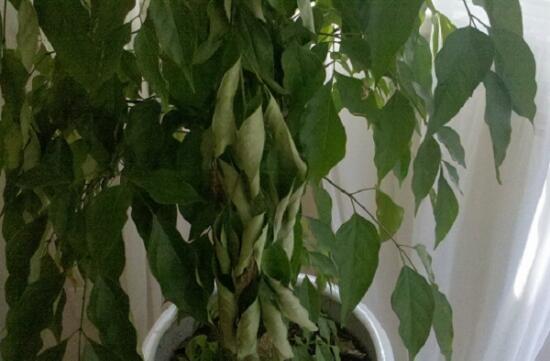
When growing a China doll at home, many flower lovers may run into some problems, such as curled and drooping leaves, yellowing leaves, or leaves that fall off at a touch. At such times do not be too anxious; finding the cause of these symptoms is the most important thing. Below are 6 causes and treatments for curled and drooping Radermachera sinica leaves that the editor has put together; let us read on.
II. Causes of Curled and Drooping Radermachera sinica Leaves and Solutions
1. Not adapting to a new environment
Because of a change in living environment, curled and drooping Radermachera sinica leaves appear; this situation generally occurs with flower lovers who bought their China doll online. A China doll bought online is very likely to have travelled a large geographic distance, and too great a sudden change in environment will make it unable to adapt, thus producing the symptoms of curled and drooping leaves.
Solution: At this point you can communicate with the seller to learn about the growing environment the China doll had before purchase, and then make corresponding adjustments at home to keep the environment unchanged. After that, change it slowly until the plant has fully adapted to the current environment; after a period of time, the China doll will recover its health. In short, when growing a China doll, do not change its growing environment all at once.
2. Poor ventilation
Growing a China doll indoors has one very big drawback, namely very poor ventilation. And once the China doll is placed in an unventilated spot for a long time, the plant's growth will be affected, producing curled and drooping leaves.
Solution: What should be done when Radermachera sinica leaves curl and droop? At this point we need to open the windows often for ventilation. In winter, also choose a warm midday and move it outdoors to sunbathe, to prevent the plant from suffering cold damage.
3. Too little watering
In the growing methods for Radermachera sinica, we once said that the China doll likes a humid environment, so if we water it too little, the plant cannot absorb enough water. And when the leaves transpire, they consume a large amount of water; with insufficient water at this time, the leaves will curl.
Solution: If the curled and drooping Radermachera sinica leaves are caused by too little watering, it is very easy to solve - just replenish water in time, but do not water too much; keeping the potting soil moist is enough.
4. Too much watering
Radermachera sinica needs plenty of water, so watering cannot be too little, but it also cannot be too much! Once you water the China doll too much, it easily causes waterlogging in the pot, which damages the plant's root system. The result is that the China doll's growth is restricted, and the leaves are affected first: yellowing, blackening, curling, drooping and other symptoms will all appear.
Solution: What should be done when Radermachera sinica leaves curl and droop? If it is caused by too much watering, you should move it to a ventilated spot with light (a balcony is best) so the water in the pot evaporates quickly; or, more directly, change the potting soil so the China doll becomes fresh and clean again.
5. Insufficient light
Besides the points above, lack of light is also one of the causes of curled and drooping Radermachera sinica leaves. Although the China doll can tolerate shade, it cannot endure long periods of darkness; once light is insufficient, its leaves will show symptoms of curling and drooping.
Solution: For Radermachera sinica to grow normally, it must have plenty of sunlight. If indoor light is too weak, you can move the China doll to a sunny spot every few days to receive light.
6. Too much fertilizer
Radermachera sinica likes fertilizer, and to make it grow well, appropriate fertilizing is very important. But we cannot fertilize too much or too often, as this easily leads to excess nutrients in the potting soil, and excess nutrients can also cause curled leaves.
Solution: When the condition is not serious, you can dilute the fertilizer by watering; if the situation is serious, there is no other way - we can only change the potting soil, and after a period of time the plant will recover its health.
That is all the editor has to say about curled and drooping Radermachera sinica leaves. I believe that if you run into a similar situation again, you will know what to do! Overall, the China doll is still fairly easy to grow, but it is best to grow it according to the requirements and not be too careless; do these two things and your China doll will grow very beautifully.
How to Grow a Potted Radermachera sinica and What to Do When Its Leaves Turn Yellow
Radermachera sinica is also called chili tree, mountain bean tree, bean tree and so on. It is a small tree of the genus Radermachera in the family Bignoniaceae, often made into small and medium-sized potted plants that can be placed on balconies, in bedrooms, entrance halls and other places. Its leaves are dense and emerald green, full of vitality and vigor, and it can serve as an ornamental plant that boosts prosperity, bringing people an auspicious meaning of happiness. Now let us take a look at how to grow a potted Radermachera sinica!
The Growth Habits of Radermachera sinica
Radermachera sinica is native to Taiwan, China, Guangdong, Hainan, Guangxi, Guizhou, Yunnan and other places, and is also distributed in India, the Philippines, Bhutan and other countries. It likes a high-temperature, humid environment with plenty of sunlight, tolerates high temperatures, fears cold, prefers moisture and dislikes dryness. It grows in valleys or open sparse forests on flat ground. For cultivation, loose, fertile loam and sandy loam that drain well and are rich in organic matter should be used.
Propagation Methods for Radermachera sinica
1. Sowing: At the end of December, when the capsules are close to splitting and the seeds are fully ripe, Radermachera sinica's long strip-shaped capsules can be harvested. After drying, shake out the winged seeds, rub them and winnow away the membranous wing fragments, then store them dry until sowing the following spring. Usually between March and April, first soak them for 3 to 4 hours, take them out and spread them to air briefly, then mix them with sandy soil and broadcast them on a prepared seedling bed, cover lightly with a thin layer of soil, cover with film to keep moist, and remove the film once the seeds sprout, then build a light shade frame for shading.
2. Cuttings: Between March and April, when the ambient temperature reaches about 15°C, cut 1- to 2-year-old woody branches about 15 cm to 20 cm long, remove all leaves, and make the bottom cut preferably 0.5 cm below a node. Insert them into a sandy loam seedling bed, with the cutting buried about 1/3 to 1/2 of its length. During the period when the bottom cut is healing and rooting, spray water to keep the seedling bed moist. Only after a sound root system has grown can they be transplanted into pots with a soil ball.
3. Layering: Between March and April, Radermachera sinica can be ring-barked below a node on a 2-year-old strong branch or stem, with the bark removal width generally 2 to 3 times the diameter of the layered stem. Below the ring-barked wound, tie a piece of 15×20 cm plastic film, and tie it against a thick main trunk to prevent it from drooping and being broken by wind. By late autumn, after a fairly sound root system has grown at the ring-barked wound, cut it away from the parent plant and plant it separately in a pot.
How to Grow a Potted Radermachera sinica?
1. Soil: When Radermachera sinica is growing, soil is equally important. Choose a loose, breathable, well-draining and nutrient-rich soil, usually prepared with garden soil : leaf mold : decomposed organic fertilizer : river sand = 5:3:1:1. Keep loosening the soil once a month during the growing season to ensure the root area is always in a well-aerated state. If waterlogging is found in the pot, drain it as soon as possible, and after the potting soil has dried out, repot and change the soil.
2. Temperature: Radermachera sinica likes a warm, humid environment, and temperature is most important. Keep the daytime temperature between 19-21°C and the nighttime temperature between 18-20°C. In the hot midsummer, try to keep the temperature below 27°C. When the ambient temperature is very high, provide appropriate shade with a frame. In winter, the temperature must not be lower than 8°C and the humidity must not be less than 5 degrees, otherwise below this temperature it will suffer cold damage.
3. Humidity: Radermachera sinica prefers moisture in both its soil environment and its indoor environment; keep indoor humidity between 70-80%. In large banquet halls where humidity cannot be controlled, spray the leaf surfaces once each in the morning and evening. If humidity is too low or it stays in a dry environment for a long time, the leaves will curl and turn yellow, affecting its ornamental value.
4. Light: Light is very important for Radermachera sinica; it likes to grow in a semi-shady environment. In the north it is generally grown indoors, so there is no problem of direct sunlight. What it does fear is being placed in a dark spot for a long time, where neither direct light nor scattered light can reach; after a long time, it will certainly drop leaves. So in winter it should be placed on a balcony or in front of a sunny window to get enough light.
5. Watering: A potted Radermachera sinica should be watered once every 3 to 4 days in summer, but this also depends on the individual situation. In winter, indoors in the north, the China doll almost stops growing, and watering should be controlled so that the potting soil is simply not dry. When you water, water it thoroughly; if you do not water, do not pour a single drop into the pot. This is the principle, please remember it.
6. Pruning: The purpose of growing Radermachera sinica is for ornament and to complement the indoor environment. If the tree shape grows misshapen, it will not be attractive, so prune it carefully. Generally you can prune following the China doll's natural growth direction, or prune it into a mushroom shape or a round mound shape, and at the same time cut off some old and yellow leaves.
7. Fertilizing: Besides requiring an appropriate amount of decomposed cake fertilizer and 3% multi-element compound fertilizer in the growing medium, a potted Radermachera sinica should also be given topdressing continuously. During the growing season, apply a quick-acting liquid fertilizer once a month, usually decomposed cake fertilizer water. For a small number of household potted plants, or for large potted specimens displayed in public places for a long time, a small amount of multi-element slow-release compound fertilizer granules can be buried regularly, or a mixed solution of 0.2% urea plus 0.1% potassium dihydrogen phosphate can be applied.
8. Pests and diseases: Pests on Radermachera sinica generally include scale insects, mites and aphids. Use Jiebisiding, methidathion, Manjing, tetradifon, phosmet, omethoate and Decis to kill the pests. As long as you ventilate and change the air frequently, pests generally will not appear. Radermachera sinica's disease resistance is still quite strong, and diseases usually rarely occur.
What to Do When Radermachera sinica Leaves Turn Yellow?
1. Metabolism: Radermachera sinica is metabolizing all the time as it grows, so there will be the phenomenon of old leaves dying and turning yellow. Simply cut off the yellow leaves; no special care is needed.
2. Caused by having no roots: If the China doll was just bought, it may be because it has no roots. You can deal with it according to the actual situation: return it, or keep it quietly so it can sprout new roots.
3. Sudden environmental change: If the temperature, humidity and light change too greatly all at once, or if repotting damaged the roots and it needs to recover, causing yellow leaves, you can take measures to reduce the degree of environmental change and wait for the China doll to adapt.
4. Improper watering: If you water too much, root respiration is blocked or the roots even rot, affecting absorption and causing a large number of yellow leaves. At this point pay attention to watering; do not wait until the soil is completely dry before watering, water thoroughly when you do, and do not keep the frequency fixed for a long time.
5. Dry air: If poor indoor ventilation leads to dryness, the leaf tips will wither and turn yellow. At this point you can increase indoor ventilation and also spray water appropriately to raise indoor humidity.
6. Insufficient light: If it is caused by the plant's environment being too dark and light being insufficient. At this point you can give the China doll plenty of sunlight, but avoid scorching sun exposure.
7. Too much fertilizer: Whether the amount of fertilizer was too large, whether the organic fertilizer used was decomposed, and so on. At this point you can flush the potting soil with water to dilute the fertility, but be careful not to cause waterlogging.
Propagation Techniques and Key Planting and Care Points for Radermachera sinica
Radermachera sinica is an ornamental plant often seen in many home and office environments, but many people do not know how to grow it. Radermachera sinica likes a high-temperature, humid environment with plenty of sunlight. It tolerates high temperatures, fears cold, prefers moisture and dislikes dryness. It grows in valleys or open sparse forests on flat ground. For cultivation, loose, fertile loam and sandy loam that drain well and are rich in organic matter should be used.
Propagation Techniques for Radermachera sinica
1. Sowing: At the end of December, when the capsules are close to splitting and the seeds are fully ripe, harvest the long strip-shaped capsules. After drying, shake out the winged seeds, rub them and winnow away the membranous wing fragments, then store them dry until sowing the following spring. You can also soak them for 2 to 3 hours, mix them into damp sand, spread them thinly in a large plastic basin in a shed, keep the seeds and sand moist, check often to prevent mold, and sow them in the ground after the seeds sprout. For dry-stored seeds, between March and April, first soak them for 3 to 4 hours, take them out and spread them to air briefly, then mix them with sandy soil and broadcast them on a prepared seedling bed, cover lightly with a thin layer of soil, cover with film to keep moist, and remove the film once the seeds sprout, then build a light shade frame for shading. For sale.
2. Cuttings: Between March and April, when the ambient temperature reaches about 15°C, cut 1- to 2-year-old woody branches about 15 cm to 20 cm long, remove all leaves, and make the bottom cut preferably 0.5 cm below a node. Insert them into a sandy loam seedling bed, with the cutting buried about 1/3 to 1/2 of its length. During the period when the bottom cut is healing and rooting, spray water to keep the seedling bed moist. Only after a sound root system has grown can they be transplanted into pots with a soil ball; it is best to plant 2 to 3 together so they take shape early and can be sold.
3. Layering. Between March and April, on a 2-year-old strong branch or stem, ring-bark below a node, with the bark removal width generally 2 to 3 times the diameter of the layered stem. Below the ring-barked wound, tie a piece of 15 cm × 20 cm plastic film. Water opening, and tie it against a thick main trunk to prevent it from drooping and being broken by wind. By late autumn, after a fairly sound root system has grown at the ring-barked wound, cut it away from the parent plant and plant it separately in a pot.
Growing Methods for Radermachera sinica
1. Temperature: Radermachera sinica likes a warm, hot environment, with an optimum growing temperature of 20°C to 30°C. During the intense heat of midsummer, when the ambient temperature reaches above 30°C, provide appropriate shade with a frame, increase spraying of the environment and leaf surfaces, or move it to a ventilated, cool spot with light shade to spend the summer. When late autumn arrives and the ambient temperature drops to about 10°C, it should be moved into a shed in time. During overwintering, it is best to maintain a shed temperature of no lower than 8°C, and at the very lowest no lower than 5°C, to avoid cold damage to the leaves or leaf drop. For household potted plants, it can be moved into a room with air conditioning or an electric heater to ensure the room temperature is no lower than 8°C, so it can pass the winter safely. Note: In winter, keep the shed temperature for growing Radermachera sinica no lower than 8°C, otherwise cold damage easily occurs, and even the whole plant may die.
2. Light: Radermachera sinica is a light-loving plant, and can also tolerate shade somewhat; full sun and semi-shady environments are both acceptable. Its seedlings are relatively shade-tolerant, and in summer a frame should be set up for shading. Potted plants should, during indoor display, be placed in front of a sunny window or indoors. If it is placed in a dim indoor spot for a long time, it easily drops leaves. For household potted plants, during overwintering it can be placed in front of a window or in a higher position in front of a balcony so it receives as much light as possible.
3. Water: Growing Radermachera sinica requires a relatively moist soil and display environment. During the seedling stage, keep the seedling bed moist; in the hot, dry season after summer begins, pay even more attention to water supply. For a potted Radermachera sinica, to keep it from growing too tall, you can appropriately control watering when new shoots emerge in spring, keeping the potting soil simply moist. For potted plants displayed indoors, besides keeping the potting soil moist, in hot seasons you should also spray the plant 2 to 3 times a day. For plants placed outdoors for care in summer and autumn, be sure to increase spraying of the plant and the surrounding micro-environment to create a cool, humid and suitable environment for it. For plants placed indoors in winter, since indoor temperatures are generally below 10°C and the plant enters dormancy, do not water too much, to avoid waterlogging and root rot. Every 2 to 3 days, around midday on a fine day, spray the plant once with slightly warm clean water to maintain its fresh appearance and also increase environmental humidity. In addition, Radermachera sinica can also be grown hydroponically.
4. Soil: For a potted Radermachera sinica, use a loose, fertile growing medium that drains and breathes well and is rich in organic matter. It is usually prepared by mixing 5 parts garden soil, 3 parts leaf mold, 1 part decomposed organic fertilizer and 1 part river sand. Loosen the soil once a month during the growing season to ensure the root area is always in a well-aerated state. In the plum rain season, for potted plants placed in the open, check the potting soil promptly after every heavy rain; if waterlogging is found in the pot, drain it as soon as possible, and after the potting soil has dried out, repot and change the soil. Generally, for small and medium household potted plants, repot once a year in early April when they are brought out, to meet their soil fertility requirements for a full year of growth.
5. Fertilizer: Besides requiring an appropriate amount of decomposed cake fertilizer and 3% multi-element compound fertilizer in the growing medium, a potted Radermachera sinica should also be given topdressing continuously. During the growing season, apply a quick-acting liquid fertilizer once a month, usually decomposed cake fertilizer water. For a small number of household potted plants, or for large potted specimens displayed in public places for a long time, a small amount of multi-element slow-release compound fertilizer granules can be buried regularly, or a mixed solution of 0.2% urea plus 0.1% potassium dihydrogen phosphate can be applied. For potted plants in northern regions, after mid-autumn apply 0.3% potassium dihydrogen phosphate solution 2 to 3 times in a row to increase the plant's cold resistance and help it overwinter safely. When the summer temperature is above 32°C, or after the temperature falls below 12°C in late autumn and early winter, topdressing should be stopped.
Pest and Disease Control for Radermachera sinica
1. Leaf spot: In a high-temperature, high-humidity environment with poor ventilation, its leaves are prone to leaf spot infection. Control method: Whether indoors or outdoors, strengthen ventilation and light penetration, avoid water standing on leaf surfaces for long periods, and reduce the possibility of leaf spot occurring. If a small number of diseased leaves are found, remove and burn them in time, and regularly spray 50% carbendazim wettable powder at 600 times dilution, once every half month, for 3 to 4 times in a row. For household potted plants, spots appearing on a small number of leaves of an individual plant can be treated by applying Daktarin cream ointment.
2. Scale insects: Under conditions of high temperature, high humidity and poor ventilation, especially when kept in a shed for a long time in autumn and winter, scale insects easily appear on its stems and leaves. Control method: Strengthen ventilation and light penetration, and pay attention to controlling environmental humidity. If a small number of live insects are found, wipe them off promptly with a damp cloth, or remove them by sticking them with transparent tape. For commercial cultivation, during the peak hatching period of the nymphs, spray with 25% buprofezin wettable powder at 1500 times dilution.
3. Mites: The main damage symptoms are new leaves wrinkling and curling, and the leaf surface being uneven. They generally occur from June to September; high temperature and dryness favor mass outbreaks of this pest, while under relatively humid conditions the pest occurs less. Mainly use acaricides such as Manjing, tetradifon and hexythiazox.
4. Aphids: One of the most common aphids is the green peach aphid. Symptoms include wrinkled and deformed leaves, usually with glistening honeydew spots. Aphids can be seen with the naked eye. Control method: Spray with phosmet, omethoate, Decis and so on.
Well, that is all on how to grow Radermachera sinica. If you pay attention to soil, humidity and light in daily care, the China doll is very easy to keep alive and very easy to grow; care for it attentively and it will become even more beautiful.
What to Do When Radermachera sinica Leaves Turn Yellow?
Flower lovers buy a China doll at the flower market; when they buy it the leaves are all glossy green and it feels great, but a few days later they find yellow leaves at the bottom, with a trend of getting worse and worse; or after taking it home they repot it, and at first it is still fine, but after some time, starting from the bottom, the leaves turn yellow and fall, and even the small twigs fall off at a touch. What on earth causes the leaves to turn yellow? Broadly, the causes include but are not limited to the following:
1. The China doll may have no roots; when the seller sold it, it had just been sawed off and put into the pot (flowers bought from itinerant vendors are easily like this);
2. Most flowers and plants bought back from the flower market will behave like this, because of a sudden environmental change: the temperature, humidity and light at home differ greatly from the care environment in the greenhouse, or repotting damaged the roots and it needs to recover, and this causes the leaves to turn yellow;
3. A large amount of leaf drop in Radermachera sinica may be related to watering, because if the plant's soil is too dry, the root system will be damaged to some degree; watering heavily at this point suffocates the already damaged roots, respiration is blocked, the root system is further damaged, absorption is affected, and a large amount of leaf drop results.
4. Caused by poor ventilation, the leaf tips wither and turn yellow; caused by dry indoor air. You can spray clean water on the leaves 2 to 3 times a day, which can effectively prevent the leaf tips of newly sprouted leaves from withering and turning yellow.
5. It may be caused by the plant's environment being too dark and light being insufficient. You can place it in a relatively bright spot, and when the temperature is below 20°C it also needs a full-sun environment;
6. Whether the amount of fertilizer was too large, whether the organic fertilizer used was decomposed, and so on.