How to water and fertilize cockscomb? Water when the soil is dry, and apply light fertilizer frequently.
Cockscomb is a fairly common flower in people's daily lives and has high ornamental value. However, if you want it to be ornamental, you cannot be careless at all during the cultivation of cockscomb, especially when it comes to watering and fertilizing. How do you water and fertilize cockscomb? Below, the editor will walk everyone through it.
I. How to water cockscomb
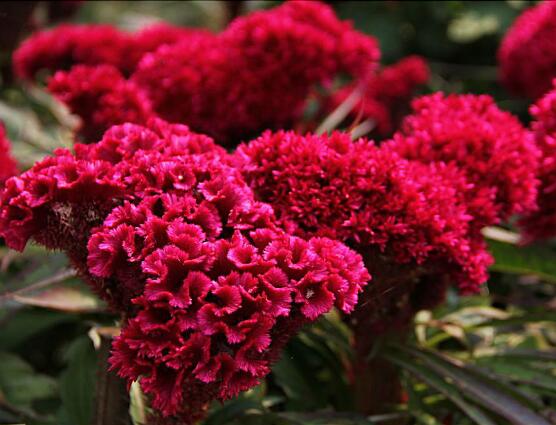
1. Watering method
As for how to water cockscomb, the method is actually very simple. First, we can prepare a spray bottle and then spray water onto the soil. Generally, keeping the soil at a certain level of moisture is enough. Do not cause waterlogging, otherwise root rot is very likely to occur. When watering, just follow the principle of watering when the soil is dry.
2. Precautions for watering
When watering cockscomb, it is best not to use a watering can, because the water poured this way is not very even, and it is also not easy to control the amount of water, making it very easy to cause waterlogging. Of course, if you feel your control is good, using a watering can is also fine. In addition, everyone can adjust the watering frequency according to the climate conditions; there is no fixed frequency.
II. How to fertilize cockscomb
1. Fertilizer selection
Fertilizer is a relatively important nutrient in the growth process of cockscomb, and special attention is also needed when choosing fertilizer. Generally, we can choose flower fertilizer. This kind of fertilizer is more suitable for absorption by flowers and plants and can make cockscomb grow more vigorously.
2. Fertilization method
As for how to fertilize cockscomb, it is actually fairly simple as long as you find the right method. First, when planting, we can apply a little base fertilizer to the soil. Then, after it enters the growth period, it basically needs flower fertilizer about once every 10 days. Before flowering, sufficient fertilizer is even more necessary, because flowering consumes a large amount of nutrients from cockscomb. Everyone should pay attention to this point.
3. Precautions for fertilizing
There are still some points to note when fertilizing cockscomb. Before fertilizing, the fertilizer must first be diluted with water so that cockscomb can absorb it. If it is not diluted, it is very easy to burn the plant. When fertilizing, be sure to keep in mind the four words: apply light fertilizer frequently.
How to grow cockscomb, cockscomb cultivation methods and precautions / control the amount of watering
Cockscomb is a brightly colored flower. This plant originally grew in tropical regions and was later introduced to our country. Today it can be seen in many regions of our country. So how do you grow cockscomb? What are the cultivation methods and precautions for cockscomb? Below, the editor will walk everyone through it.
I. How to grow cockscomb
If you want to know how to grow cockscomb, first we need to understand its growth habits. Cockscomb prefers a warm environment, so light is very important during cultivation. In addition, watering, fertilizing and other aspects also need special attention. Below are the cultivation methods and precautions for cockscomb for everyone to learn about.
II. Cockscomb cultivation methods and precautions
1. Soil requirements
In terms of soil, cockscomb does not have very high requirements, but different soils still have some effect on its growth. Generally, it is best to choose soil with good drainage, as this will be more conducive to its growth. If the soil is too sticky, it will affect its growth progress. Everyone can pay attention to this point.
2. Fertilization management
Among the cultivation methods and precautions for cockscomb, fertilization is a relatively important item, because fertilizer is one of the main nutrients for cockscomb. Therefore, after cockscomb has taken shape, it needs to be fertilized once every 10 days. For fertilizer, a compound liquid fertilizer can generally be chosen. Before fertilizing, it is best to dilute it with water first, as this makes it easier to absorb.
3. Watering management
When cultivating cockscomb, water is indispensable, but the amount of watering needs to be controlled. If too much is watered, root rot is likely to occur, and if too little is watered, the leaves are likely to turn yellow. So this degree must be grasped well. Generally, water until the soil has a certain level of moisture, then wait until the soil dries out before watering again. This frequency depends on the situation.
4. Light management
Cockscomb is a plant that relatively likes light, but it is not tolerant of strong light. When the weather in spring and autumn is more suitable, we can let it receive light all day. In summer, when sunlight is too strong, shading is needed, otherwise its leaves are very likely to turn yellow. Therefore, among the cultivation methods and precautions for cockscomb, light is a very important part.
5. Temperature control
This plant, cockscomb, is not very strong in cold resistance or drought tolerance, so the environmental temperature must be well controlled during cultivation. The most suitable temperature for cockscomb growth is between 18-28°C. Everyone can control this during cultivation.
6. Pest and disease control
When caring for cockscomb, if the above methods are not followed, pests and diseases are very likely to occur. This situation will seriously affect the growth of cockscomb, and in severe cases may even cause cockscomb to wither and die. Therefore, when this situation occurs, it must be dealt with promptly. As for the treatment methods, everyone can refer to the article on pest and disease control for cockscomb. The editor will not introduce too much here.
Cockscomb Flower Cockscomb Flower Illustrated Guide: How to grow cockscomb / How to propagate cockscomb
Cockscomb Flower ProfileCockscomb Flower
Cockscomb cultivation methods and precautions, introduction to cockscomb
Cockscomb is native to Africa, tropical America and India, and is an annual herbaceous plant. It likes sufficient sunlight, heat and humidity, and is not tolerant of frost. It is not tolerant of barren soil and likes loose, fertile and well-drained soil. It is widely cultivated around the world.
Morphological characteristics of cockscomb
Cockscomb is an annual herb, with a plant height of 40-100 cm. The stem is upright and stout, and the leaves are alternate, long ovate or ovate-lanceolate. The spike-like inflorescence is terminal, fan-shaped, kidney-shaped, oblate-spherical, etc. Its natural flowering period is summer and autumn until the first frost. It is commonly propagated by seeds. During the growth period, it likes high temperature, full light and dry air. It is relatively drought-tolerant but not cold-tolerant, and has strong reproductive capacity. It is harvested when the flowers are in full bloom in autumn and dried in the sun. The leaves are ovate-lanceolate to lanceolate, with entire margins. The inflorescences are terminal and axillary, flat and cockscomb-shaped. The flowers are white, pale yellow, golden yellow, pale red, fiery red, purplish red, brownish red, orange red, etc. The utricle is ovate, and the seeds are black and glossy.
The stem of cockscomb is red or greenish-white; the leaves are alternate and petiolate, and the leaves have many colors such as deep red, emerald green, yellow-green, red-green, etc.; the flowers are clustered at the top, shaped like a cockscomb, flat, thick and soft, and appear on the plant in the shape of an inverted broom. The flower colors are also rich and varied, including purple, orange-yellow, white, red-yellow mixed, etc. The seeds are tiny, purple-black, and hidden within the fluff of the flower crown. Cockscomb plants come in three types: tall, medium and dwarf. The dwarf type is only 30 cm tall, while the tall type can reach 2 m. In 2009, Wang Jinzhang, a resident of Shahekou District, Dalian, grew one 2.4 m tall.
Cockscomb has a spike inflorescence, mostly flat and fleshy, shaped like a cockscomb. It is 8-25 cm long, 5-20 cm wide, and up to 40 cm in maximum diameter. The upper edge is broad, wrinkled, and densely covered with linear scales, while the lower end gradually narrows and often retains a flat stem. The surface is red, purplish red or yellowish white; below the middle, many small flowers are densely born, and the persistent bracts and perianth segments of each flower are membranous. The fruit dehisces by a lid, and the seeds are flat, round and kidney-shaped, black, and glossy. It is light in body, flexible in texture, odorless, and mild in taste.
The flowering period of cockscomb is relatively long, and it can bloom from July to December.
Growth habits of cockscomb
It likes a warm and dry climate, fears drought, likes sunlight, and is not tolerant of waterlogging, but it is not strict about soil requirements. It can generally be planted in ordinary soil courtyards. It is a new way to develop courtyard economies at present, and people of insight may wish to give it a try. It does not need to be too good; as long as it is sown in the soil, it will do.
Cockscomb cultivation techniques and key cultivation points
1. Planting
In spring, when the seedlings grow 2-4 leaves, plant them into pots. When planting, they should be planted slightly deeper, leaving only the cotyledons on the soil surface, and the potting soil should be kept slightly dry to induce the inflorescence to appear earlier. After the inflorescence appears, change to a 16 cm pot. Before repotting, water thoroughly. If you want to obtain an especially large flower head, you can change to a 23 cm pot, while also paying attention to matching the flowerpot. Small pots are for planting dwarf varieties, and large pots are for planting tall varieties such as plumosa cockscomb. For dwarf, many-branched varieties, pinching should be carried out after planting to promote branching; while upright, branchable varieties do not need pinching.
2. Light and temperature
It likes warmth and avoids cold. During the growth period, it needs sufficient light, and at least 4 hours of light must be guaranteed every day. The suitable growth temperature is 18-28°C. When the temperature is low, growth is slow, and after winter begins, the plants die.
3. Fertilization and watering
The potting soil should be fertile, made by mixing half fertile loam and half rotted stable manure. During the growth period, it must be watered appropriately, but the potting soil should not be too wet; moist and slightly dry is preferable. Prevent excessive vegetative growth that causes no flowering or delayed flowering. In the later growth stage, apply phosphorus fertilizer and expose it to more sunlight, which can promote robust growth and larger inflorescences. At the seed maturation stage, fertilizer and water should be applied sparingly to help the seeds mature and to keep the flower color deep and vivid for a longer time.
Cultivation related
Cockscomb likes sunlight, tolerates poor soil, fears waterlogging, and is not cold-tolerant. It grows well under high-temperature and dry climate conditions. Under normal circumstances, it does not need watering or fertilizing. Cockscomb can be used as a potted ornamental flower. When potting, generally do not use seedling pots for raising; instead, during the flowering period, select plants from field-grown cockscomb for potting. When potting, plant them slightly deeper so that the leaves are close to the potting soil surface. When transplanting, do not let the root ball break apart. After planting, water thoroughly, and start fertilizing after 7 days, applying liquid fertilizer once every half month. Before the inflorescence forms, the potting soil should be kept somewhat dry to help the inflorescence develop. After the flower buds form, liquid fertilizer can be applied once every 7-10 days, with appropriate watering.
If you want the cockscomb plant to be sturdy, with a large, thick and brightly colored flower crown, you can move it to a larger pot after the inflorescence forms, but be careful not to let the root ball break apart during transplanting, because its root system is extremely weak; otherwise, it is not easy to survive.
Cockscomb is cross-pollinated, and varieties easily hybridize and mutate. Therefore, varieties kept for seed should be isolated during the flowering period. When keeping seeds, seeds from the lower part of the inflorescence should be collected, which can preserve the characteristics of the variety.
Cockscomb cultivation methods and planting tips
[Suitable germination temperature]: 20-30°C Sowing period: autumn, spring
[Suitable growth temperature]: 10-30°C Flowering period: from July to December.
[Seedling raising]: Sow the seeds in culture soil and keep the soil moist. They sprout in about 6-8 days. After thinning the seedlings, transplant when they have 4-5 true leaves. Transplant carefully and do not break the taproot.
[Planting]: The cultivation soil should be culture soil with good drainage. This plant is heat-tolerant and needs sufficient sunlight. The spacing between plants in flower beds is 15CM. Both the seedling stage and the growth stage require nutrient fertilizers, such as organic fertilizer, compound fertilizer or flower fertilizer, all of which are suitable.
Propagation methods of cockscomb
Cockscomb is propagated by sowing, carried out in April-May, preferably when the temperature is 20-25 degrees. Before sowing, some cake fertilizer, stable manure or compost can be applied in the seedbed as base fertilizer. When sowing, mix some fine soil into the seeds for broadcasting, because cockscomb seeds are tiny; covering with 2-3 mm of soil is enough, and it should not be deep. Before sowing, keep the soil in the seedbed moist. After sowing, spray a little water with a fine-nozzle watering can, then shade the seedbed, and do not water within two weeks. Generally, seedlings emerge in 7-10 days. When the seedlings grow 3-4 true leaves, thin them once, removing some weak and overly dense seedlings. When the seedlings are 5-6 cm tall, they should be transplanted and planted out with root soil.
1. Seed propagation method: around Qingming (because it is outdoors, preferably after there is no frost), choose a good plot, apply sufficient base fertilizer, plow finely and harrow evenly, level and make beds, evenly scatter the seeds on the bed surface, cover the seeds lightly with fine soil, firm the soil and water thoroughly, and keep the land moist; generally at a temperature of 15-20 degrees, seedlings can emerge in 10-15 days.
2. For summer sowing after Mangzhong, sow at a row spacing of 30 cm. When the seedlings are 6 cm tall, thin them at a plant spacing of 20 cm. The thinned seedlings can be transplanted to other fields, and after transplanting they must be watered. During the seedling stage, weeds must be removed and the soil loosened, and when it is not too dry, water as little as possible. When the seedlings are 30 cm tall, apply a topdressing once. After the rows close, appropriately remove some old leaves. When flowering and heading, if the weather is dry, water appropriately, and strictly prevent waterlogging in low-lying areas during the rainy season. After heading, the flower buds in the leaf axils of the lower part can be removed to help nutrients concentrate on the growth of the main spike at the top.
3. Of course, it can also be grown in a greenhouse, as long as attention is paid to humidity and temperature; but if plants grown in a greenhouse are to be taken outside, after they sprout and grow four leaves, they must be taken outside at night to harden off, that is, to let them learn to adapt to the cold environment, otherwise they will grow thin, long and delicate and soon die.
Variety classification of cockscomb
According to differences in inflorescence morphology, cockscomb varieties can be divided into broom cockscomb, face cockscomb, mandarin duck cockscomb, tassel cockscomb, etc.
Harvesting and processing: Harvest when the flowers are in full bloom in autumn and dry in the sun.
Appearance classification of cockscomb
One, spherical flower type: the kind whose flower crown is especially compact and spherical, called "Kurume cockscomb," is very common in both flower bed and cut flower cultivation. Two, feathery flower type: the flower shape is feather-like, and the flower crown resembles a flame, with bright colors; whether cultivated in flower beds or used as cut flowers, it is very pleasing. Three, lance-shaped flower type: the flower crown resembles a conical shape like a fir tree, and the flower spikes are short and compact. There are tall varieties especially suitable for cut flowers and medium varieties suitable for flower beds.
Origin and habits of cockscomb
Cockscomb Celosia cristata L. is native to Africa, tropical America and India, and is widely cultivated around the world. It is an annual herbaceous plant. It likes sufficient sunlight, heat and humidity, and is not tolerant of frost. It is not tolerant of barren soil and likes loose, fertile and well-drained soil. The flowering period is summer and autumn until the first frost.
Cockscomb is divided into red and white types. Although they belong to the same genus, due to different medicinal properties, each has its own uses, and red cockscomb is mainly circulated on the market. Those with large flowers, bright color and short stalks are considered of good quality.
Distribution areas of cockscomb
It is mainly distributed in Anhui, Beijing, Fujian, Gansu, Guangdong, Guangxi, Guizhou, Hainan, Hebei, Heilongjiang, Henan, Hong Kong, China, Hubei, Hunan, Jiangsu, Jiangxi, Jilin, Liaoning, Inner Mongolia, Ningxia, Qinghai, Shaanxi, Shandong, Shanxi, Sichuan, Taiwan, China, **, Tibet, Yunnan and Zhejiang.
Edible value of cockscomb
As a delicacy, cockscomb is comprehensive in nutrition and unique in flavor, and can be called a wonderful flower in the world of food. Various cockscomb delicacies such as Huayu chicken, red oil cockscomb, cockscomb steamed pork, cockscomb bean cake, cockscomb seed glutinous rice cake, etc., each have their own characteristics, and all are delicious and memorable.
Flower language of cockscomb
Cockscomb flower language: sincere love. Loves to dress up, arrogant. Loves beauty, affected. Undying. I crane my neck and wait.
Because cockscomb withstands wind and defies frost, with its flower posture not diminishing and its flower color not fading, it is regarded as a symbol of love that never fades or unchanging love. In Europe and America, the first flower given to a lover was the fiery red cockscomb, implying sincere love.
Flower horoscope: the guardian flower of Virgo, it will increase your desire to love dressing up and give off a neat and clean charm.
Cockscomb pictures