How to grow the happy tree (Radermachera sinica) in pots and the points to note: do not water too much
The happy tree is probably familiar to everyone. It has a sturdy, handsome form and emerald-green leaves, and it is a plant with an auspicious meaning, often grown in pots at home and much loved by flower lovers. In daily life, many people want to grow a happy tree, but most of them do not know how to grow a potted happy tree. For this, the editor has carefully compiled the growing methods and points to note for the happy tree. Anyone who wants to grow one should definitely take a look~
1. How to grow a potted happy tree: create the right environment
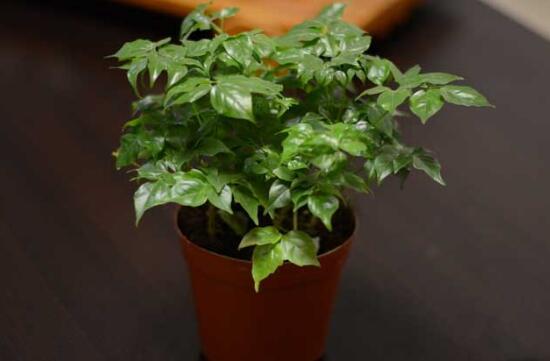
The happy tree not only has a good name, but can also absorb formaldehyde, so many people grow it in pots at home. As for how to grow the happy tree, we need to create the most favorable environment for it according to its growth habits. For this, the editor will discuss soil, light, watering and fertilizing one by one. For the specifics, let us continue reading.
2. Growing methods and points to note for the potted happy tree
1. Soil: loose and fertile
How to grow a potted happy tree? First, of course, is choosing the soil. It is understood that the happy tree likes loose and fertile soil that drains well and is rich in humus. However, to avoid the soil becoming compacted, many flower lovers now add perlite or vermiculite to the soil.
The editor recommends this soil: garden soil, leaf mold, decomposed organic fertilizer and river sand mixed in a ratio of 5:3:1:1.
2. Light: sufficient is enough
In the growing methods for the happy tree, light is needless to say indispensable. It is understood that the happy tree likes light, but it can also tolerate shade, and both full sun and semi-shade environments are fine. So to grow a happy tree, we just need to ensure it has sufficient light and avoid direct strong light in summer.
Points to note: In daily life, the happy tree is often grown indoors in pots; just place it in a spot with light. But do not keep the happy tree in a dark place for a long time. Once it receives neither direct light nor diffused light, that is bad. Over time, the happy tree will show symptoms of leaf drop.
3. Watering: once every 3-4 days
The happy tree likes a moist environment, so it has relatively high water requirements. In summer, a potted happy tree should be watered once every 3-4 days, but this also depends on the individual situation. Specifically, follow the principle of "do not water if not dry; when you water, water thoroughly."
Points to note: In spring, the happy tree is in the process of budding and putting out new shoots, so you should appropriately control water to avoid leggy branches. During the growing season, give the happy tree sufficient water, but it is not easy to tolerate waterlogging, which causes poor plant growth.
4. Humidity: 70-80%
How to grow the happy tree? Besides watering, humidity is also very important. Because the happy tree likes a moist environment, while watering, when the air is dry you should also spray water on it to maintain 70-80% air humidity. Note that in winter, we should reduce the frequency of spraying.
5. Fertilizing: stop at high and low temperatures
Having discussed watering, let us now talk about fertilizing, which is also very important in the growing methods for the happy tree. During the growing season, to keep the happy tree's branches strong and leaves glossy, apply a nitrogen-based fertilizer once every half month. In winter, to enhance the plant's resistance to low temperatures, spray a 5000-fold solution of monopotassium phosphate once every half month.
Points to note: During the growing season, nitrogen fertilizer should not be applied too much, otherwise the leaf stalks and internodes become longer and the plant shape becomes loose. In addition, when the summer temperature is above 32°C or the winter temperature is below 12°C, stop fertilizing. Because at these temperatures the plant grows slowly and has a poor ability to take up fertilizer, which easily causes fertilizer damage.
6. Temperature: 22-28°C
The happy tree likes a warm environment and is not cold-tolerant. The suitable growing temperature is 22-28°C. When autumn comes and the temperature drops to around 10°C, the plant must be moved indoors to a warm place for care.
Points to note: In summer, when the temperature exceeds 30°C, spray water on the leaves as much as possible to lower the temperature, or move it to a ventilated, cool place with tree shade to spend the summer. In winter, the temperature is best kept at 8°C, and must not fall below 5°C, so that the happy tree can overwinter safely.
3. Points to note when growing the happy tree
In the growing methods for the money tree above, several points needing attention have already been mentioned, and I believe everyone should remember them. However, besides those mentioned above, there are still a few points that flower lovers need to note, as follows:
1. Pruning
The happy tree has a beautiful plant shape, but as a foliage plant grown at home, pruning is indispensable. However, when pruning the happy tree, generally no heavy pruning is needed; simply cut off dead branches and diseased or weak branches at any time.
2. Pest and disease control
Growing indoors is not the same as outdoors, and a potted happy tree is easily attacked by pests and diseases. Among the diseases, the main one is leaf spot, which is easily infected under high temperature and high humidity. The main pest is scale insects. For what to do specifically, there is a detailed introduction in the pest and disease control for the happy tree, so I will not say more here.
3. How to grow the happy tree so it thrives
In the process of growing the happy tree, many people actually grow it according to the requirements, but after all, we are not professionals, and often have no time to care for it, so problems arise. So how to grow the happy tree so it thrives? Very simple: if everyone follows the above requirements and does everything properly, it will naturally grow very vigorously, and vice versa.
How to grow a hydroponic happy tree: growing methods and points to note for the hydroponic happy tree
In daily life, when talking about indoor plants with nice-sounding names, everyone thinks of the happy tree, the money tree, the fortune tree and so on. Theoretically, any plant can be grown hydroponically, and this is also true for the happy tree. So how to grow a hydroponic happy tree? The following is the editor's carefully compiled growing methods and points to note for the hydroponic happy tree. Come in and take a look!
1. How to grow a hydroponic happy tree: nutrient solution is key
Growing a happy tree indoors, besides being attractive, the most important thing is cleanliness. Speaking of this, everyone thinks of hydroponics, such as a hydroponic happy tree. As for how to grow a hydroponic happy tree, compared with a potted happy tree, you only need to dissolve the nutrients it needs in water and the plant can grow normally. Let us take a look below at the growing methods and points to note for the hydroponic happy tree!
2. Growing methods and points to note for the hydroponic happy tree
Materials: glass container, plastic seedling-holding grid, clean water, nutrient solution
1. Choosing the plant
To grow a hydroponic happy tree, you need to choose a suitable happy tree. For this, the editor recommends: a small happy tree, and one that is robust and thriving, with no pests or diseases.
2. Washing the roots
How to grow a hydroponic happy tree? After choosing the plant, begin washing the roots. Take the small happy tree out of the flower pot, remove all the soil from the roots, then wash the plant's root system clean; you can wash it several times.
Points to note: The happy tree's roots are fragile, so when washing the roots be sure to take care not to damage them. For this, you can use carbendazim or a similar medicine to sterilize once, to prevent root rot in the happy tree.
3. Starting hydroponics
With the above preparations done, the hydroponic happy tree can begin. Pass the small happy tree's roots through the prepared hydroponic glass container, preferably with the included plastic seedling-holding grid. Then fill the container with 2/3 clean water, and immerse 1/3 of the roots in the water.
4. Changing the water
Regarding the growing methods for the hydroponic happy tree, after completing the above steps, the most important thing is changing the water. For a hydroponic happy tree, you must change the water once a week until enough new roots grow.
Points to note: When changing the water, wash the container clean and replace it with specially prepared nutrient solution, also filling two-thirds of the volume, and regularly renew the nutrient solution. In addition, when the temperature is high in summer, stop adding nutrient solution to prevent root rot.
5. Light
The happy tree likes light, and although it is hydroponic, it still needs light. Although the happy tree is shade-tolerant, sufficient light can make its leaves greener and its growth more vigorous. Note: the light must not be too strong, otherwise it easily causes the happy tree's leaves to turn yellow.
Overall, the hydroponic happy tree is still quite simple. You just need to pay attention to disinfection, then change the water in time and ensure nutrients. Regarding the growing methods and points to note for the hydroponic happy tree, the editor will introduce them here. If you like growing the happy tree cleanly and are not afraid of trouble, the editor recommends that you try growing it hydroponically~
How to grow the happy tree_ growing methods and points to note for the happy tree
Content summary: The happy tree is a type of small tree, relatively suitable for indoor pot cultivation, and can reach a maximum height of 10 m. The happy tree is also known by other names such as shancaidou, doujiaomu and dachaoyang. It is mostly distributed in tropical regions of China such as Guangdong and Taiwan, China. It likes sunlight and tolerates high temperatures when growing, but must absolutely avoid dryness; it needs frequent watering. Suitable soils are sandy soil and organic soil. Wild happy trees mostly grow in valleys at an altitude of 300 m or above, and they themselves have very high medicinal value. This article explains the planting methods for the happy tree and the points to note when growing it.
[Morphological characteristics of the happy tree]
The happy tree is a small tree, and its height can reach more than 10 m. Its leaves are divided into leaf stalks and leaf axes, and their shape is ovate, while the leaf axis can reach more than 30 cm in length. Small leaves, described as lanceolate, are more than 4 cm long and more than 2 cm wide. The happy tree's leaf tips are relatively pointed, and the surface is green, smooth and glossy, with no impurities. The happy tree's calyx is white and contains white milky sap, and the style is exposed, about 12 mm long. The corolla is bell-shaped and funnelform, and the corolla color is white. The happy tree fruits every year in October, and ripens in December.
[Planting methods for the happy tree: sowing]
First, in December, pick the ripe happy tree fruits. At this time the fruits are in a split state, which indicates they are at the mature stage. After picking, dry them in the sun, take out the seeds released from the fruits and keep them, remove the surface membrane, and store them dry. When sowing in early spring, first soak them in clean water for about two hours, then place them in a plastic bottle in a shed. Before long, the happy tree seeds will germinate. Then cover the surface with a thin layer of soil and add plastic film; the seedlings will break through the film on their own and sprout and grow.
[Planting methods for the happy tree: cuttings]
The best time for cuttings is March each year. At this time, when the temperature reaches about 15°C, take out the branches prepared last year, about 15 cm long. Remove all the leaves from the branches, and the best position for the lower cut is about 0.5 cm below a branch node. Then insert them into sandy soil, with the best depth being one-third of the spike length. Then spray water to moisten the seedbed, and in about half a month they will survive and take shape.
[Planting methods for the happy tree: propagation]
In early spring, on a happy tree at least about two years old, cut off a growing branch or stem. Using ring barking as the main method, then bind a piece of plastic film about 15 cm around the wrapped surface, and tie it to the tree trunk. This can effectively prevent the branch from breaking due to wind. In autumn, the roots will have grown completely, and at this time cut it away from the main trunk and plant it in a pot.
[Points to note when growing the happy tree: temperature]
The temperature management for growing the happy tree should be 20°C-30°C, but for direct sunlight temperature on the happy tree, once it exceeds 30°C, it needs to be sheltered with a shade canopy, or you can directly water it and move it to a cool place. When the temperature drops to 10°C, it should also be moved indoors for management. If the temperature is below 5°C, the leaves will be directly harmed. The best growing environment is indoors. The happy tree is a light-loving plant, so full sun can be the main approach. Seedlings are more shade-tolerant. For household potted plants, it can be placed on a balcony, where the light effect is better.
[Points to note when growing the happy tree: watering and fertilizing]
A potted happy tree should be kept in a relatively moist soil environment. It generally sprouts in spring, and at this time it can be watered appropriately; you only need to keep the soil moist. For an indoor potted happy tree, in high-temperature weather you can spray water 2-3 times. In winter, when the temperature is lower, the happy tree enters dormancy, and at this time watering can be spaced 2-3 days apart. When planting the happy tree, an appropriate amount of multi-element compound fertilizer can be added, and during this period fertilizer should be added appropriately, with the fertilizing time being once a month; cake fertilizer water can be chosen. For indoor potted happy trees, urea can be applied, and in autumn and winter topdress with monopotassium phosphate solution, which can help the happy tree improve its cold resistance.
[More related information] Growing methods for Chinese rose Growing methods for umbrella papyrus Growing methods for grape hyacinth Cultivation of Rosa xanthina Hyacinth pictures