Is peace lily better in water culture or soil culture? The water culture method makes it more ornamental
Can peace lily be grown in water?
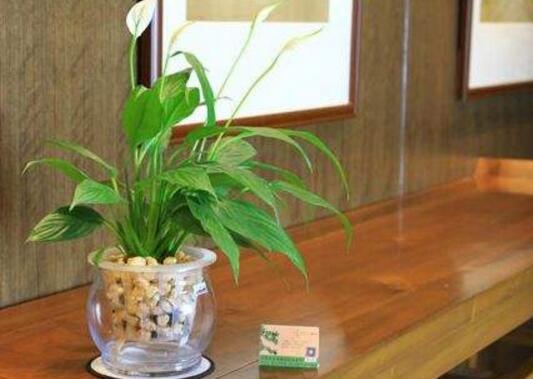
Peace lilies can indeed be grown in water, and water culture can bring out the effects and benefits of the peace lily to the fullest. It not only has the function of foliage viewing and flower appreciation, but also features easy care and elegant style, so it is often used by many people.
Peace lily water culture method
1. Select a plant and remove it from the pot
Choose a robustly growing peace lily plant, then remove the plant from its pot. When doing so, take care to clean off all the soil from the roots, rinse them with clean water, and trim away old and rotten roots, which prevents these roots from competing for nutrients.
2. Fix the plant in place
Fix the selected plant in a planting basket, then secure it on the prepared container. If you choose a smaller plant, you can use a container with a relatively narrow mouth, and you can add some stones at the bottom of the container to make it more attractive.
3. Add water and nutrient solution
After fixing the plant in place, you can add water and nutrient solution to the container. The water level should mainly cover 1/3 to 1/2 of the roots; do not let the roots be completely submerged in water. While adding water, you can add nutrient solution; you can buy a nutrient solution specially for water culture at a flower shop.
Notes: The peace lily water culture method is very simple, but note that in later care you should change the water frequently, generally once every 3-4 days. Do not add too much nutrient solution, and pay attention to root rot; if it is too severe, trimming is needed.
Is peace lily better in water culture or soil culture?
1. From the ornamental perspective (water culture is more ornamental)
The biggest feature of water culture is that you can see the roots growing, and it is also very convenient to care for, with a more elegant style. If you grow peace lilies mainly for ornament, then the answer to the question of whether peace lilies are better in water culture or soil culture is naturally that water culture is better.
2. From the growth perspective (soil culture is more conducive to growth)
The biggest advantage of soil culture is that the microorganisms and nutrient elements contained in the soil are more balanced. In the botanical field, roots in soil are in a dark environment, and their growth and development are more rapid, so there is no doubt that soil culture is more conducive to the growth of peace lilies.
Are peace lilies better in water culture or soil culture? How to safely overwinter water-cultured peace lilies
I believe many friends are familiar with peace lilies, but perhaps everyone is not clear about it. So are peace lilies better in water culture or soil culture, and what to do if the leaves of water-cultured peace lilies turn yellow? Below, the editor will take everyone to have a look!
1. Are peace lilies better in water culture or soil culture?
For beautifying the indoor environment, water-cultured peace lilies are the simplest and most environmentally friendly cultivation method. It can ensure that the plant roots are white and clean and attractive, and the overall ornamental value of the plant is also greatly improved.
For the growth of the peace lily itself, soil-cultured peace lilies are somewhat better than water-cultured ones. This is because the nutrients in soil are more complete and also rich in many trace elements, which can promote the growth of the peace lily root system, while water-cultured peace lilies are not easily able to meet the conditions, and it is also difficult to make peace lilies bloom.
2. What to do if the leaves of water-cultured peace lilies turn yellow
First, promptly cut off the yellowed leaves.
Next, find the factors causing the leaves to turn yellow. Generally speaking, factors such as frequently changing the water for peace lilies, applying too much fertilizer, insufficient light, and too low temperature can all cause leaves to turn yellow. Dear readers should take targeted measures according to the actual situation and correct improper care methods.
3. How to safely overwinter water-cultured peace lilies
1. Control the temperature. The growth temperature for water-cultured peace lilies is 5°C-30°C, and they can grow normally within this range, so the winter room temperature must not be lower than 5°C.
2. Ensure light. Light decreases in winter, but peace lilies do not necessarily have to be exposed to the sun. Dear readers, placing the peace lily in a location with ample scattered light can also ensure its healthy growth.
3. Change the water correctly. In winter, change the water once every 10-15 days. While changing the water, add a few drops of nutrient solution specially for water-cultured flowers to the pot, which helps the peace lily absorb nutrients.
How to grow water-cultured peace lilies: cultivation methods for water-cultured peace lilies
The peace lily is also called bracteate taro, sail of success, lily intent, and so on. It is a perennial herbaceous plant of the genus Spathiphyllum in the Araceae family, with emerald green leaves and a white spathe. It is very fresh and elegant, has good ornamental value, and can filter indoor exhaust gases. It also has a certain purifying effect on ammonia, acetone, benzene, and formaldehyde. Now let us take a look at the cultivation methods for water-cultured peace lilies!
Growth habits of peace lilies
Peace lilies prefer a high-temperature, humid, and semi-shaded environment. They are relatively sensitive to humidity and afraid of strong sunlight exposure. In summer, provide 60-70% shade, but long-term insufficient light makes it difficult for them to bloom. The soil is best as fertile loam rich in humus. The suitable growth temperature is 22-28°C, from March to September it is 24-30°C, and from September to the following March it is 18-21°C. The winter temperature should not be lower than 14°C. When the temperature is below 10°C, plant growth is hindered and the leaves are prone to cold damage. During storage and transportation of peace lilies, the temperature is controlled at 13-16°C, with relative humidity of 80-90%, and they can tolerate a dark environment for 30 days.
Propagation methods for peace lilies
1. Division: Division propagation of peace lilies is best carried out in May-June. Lift the whole plant out of the pot, cut the rhizome apart from the base of the clump, with at least 4 leaves per clump, and after separate planting place them in a semi-shaded area to recover.
2. Sowing: After peace lilies bloom, seeds can be obtained through artificial pollination. After collecting the seeds, they must be sown immediately. The germination temperature is 30°C, and they germinate 10-15 days after sowing. If the temperature is too low during germination, the seeds are prone to rotting.
3. Tissue culture: Using young inflorescences and lateral buds of peace lilies as explants, after disinfection they are inoculated on MS medium supplemented with 10 mg/L 6-benzylaminopurine and 2 mg/L indoleacetic acid. After 40-45 days, callus tissue and adventitious buds grow. Then the adventitious buds are transferred to MS medium supplemented with 2 mg/L indoleacetic acid, and roots are induced in 30-40 days, becoming complete plants.
How to grow water-cultured peace lilies?
1. Container: Water-cultured peace lilies are usually placed at home, so of course you should choose a very nice and beautiful container. The specific choice depends on personal preference.
2. Temperature: The optimal growth temperature for peace lilies is 20-28°C, so when growing water-cultured peace lilies indoors, pay attention to controlling the room temperature well.
3. Light: The light for water-cultured peace lilies should mainly be scattered light. They do not necessarily have to be exposed to the sun, and direct sunlight should be avoided as much as possible in summer.
4. Changing water: For water-cultured peace lilies, change the water about once every 7 days in summer and about once every 10-15 days in winter. Add a few drops of nutrient solution specially for water-cultured flowers.
5. Fertilizing: In daily care of water-cultured peace lilies, spray the leaf surfaces with clean water to keep them moist. It is best to spray foliar fertilizer once a week.
Notes on water-cultured peace lilies
1. Peace lilies need relatively good light in winter and early spring, and should not be kept in shade. When the light gradually becomes stronger, gradually provide shade. If they are enjoyed in a shaded place, they must not be placed directly in the sun for exposure, otherwise they will show discomfort due to the drastic change in environment, manifested as wilting, yellow leaves, or even death.
2. Peace lilies need relatively high growing humidity. If the air is too dry, it will cause the leaves to wilt. This can be solved by increasing spraying or sprinkling water on the ground of the environment. Covering with a transparent plastic bag is also acceptable, but when the light is relatively good, ventilate slightly or open a hole at the upper end of the plastic bag for ventilation, otherwise the temperature inside the bag will rise sharply.
3. To prevent the leaves of peace lilies from drying out, in daily care spray the leaf surfaces with clean water to keep them moist. It is best to spray foliar fertilizer once a week, which can both provide nutrients to the leaves and increase leaf gloss, and in winter can also achieve the purpose of resisting low temperatures. Use nutrient solution for foliage plants. At the bud stage, the leaf surfaces need to be sprayed 2 to 3 times with 0.3% potassium dihydrogen phosphate solution, which can promote flowering.
4. If peace lilies are harmed by harmful mites, the leaves will show adverse symptoms such as wilting, faded gloss, and yellowing and withering. Acaricides specific to mites can be sprayed for control, such as dicofol, hexythiazox, pyridaben, and so on. Common bacterial leaf spot, brown spot, and anthracnose harm the leaves, and 50% carbendazim wettable powder 500-fold solution can be sprayed.