When Does the Hosta Bloom? Flowering Period Care for Hosta / Blooms from July to September, a 3-month flowering period
Hosta is a flower native to Asia, generally distributed in China and Japan. This flower has very high ornamental value, and its flower color is also very elegant. So when does the hosta bloom? What is needed for hosta care during the flowering period? Below, the editor will walk everyone through it.
I. When Does the Hosta Bloom
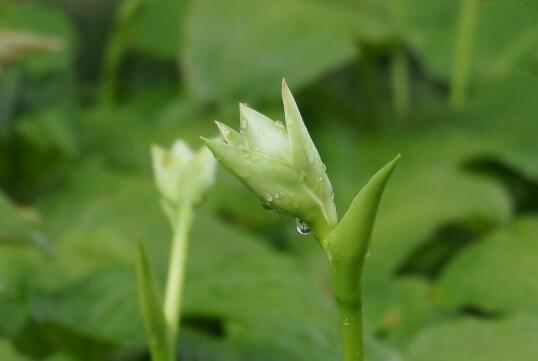
Regarding when the hosta blooms, if planted at the beginning of the year, it generally blooms around early July each year, with the flowering period from July to September, lasting three months. The hosta's flowering period is relatively long among flowering plants, but if you want to maintain such a long flowering period, then care during the flowering period cannot be neglected at all. Improper care during the flowering period will cause the hosta to wither early. The specific care methods for the flowering period are given below, so let's continue reading.
II. Care for Hosta During the Flowering Period
1. Fertilization Management
Hosta consumes a large amount of nutrients when blooming, so sufficient fertilizer must be applied before flowering, so that the flowers will bloom more luxuriantly. After entering the hosta's flowering period, we also need to fertilize once a month. Before fertilizing, be sure to dilute it first, so that the hosta can absorb it better.
2. Humidity Control
Hosta is a shade-loving plant that likes to grow in moist environments, so when caring for the hosta during its flowering period, it is best to grow it in a place with higher humidity, so that its flowers will bloom more delicately and beautifully.
3. Watering Management
After entering the hosta's flowering period, its water requirements are not as high as during the growing period, but it still needs regular watering. When watering, remember not to water too much. If too much watering causes waterlogging, it can easily lead to root rot. Everyone should pay attention to this point.
4. Avoid Exposure to Strong Sunlight
The hosta's flowering period is from July to September each year, and this period is also when sunlight is strongest in the year, so shading work must be done well. It is best to move it indoors to a semi-shaded place for growing, to avoid the flowers withering early due to excessive sunlight.
5. Watch Out for Pests and Diseases
The hosta's flowering period is a season with a high incidence of pests and diseases, so special attention must be paid during this period. If pests or diseases are contracted, they must be dealt with promptly. If the matter drags on, it can easily lead to the death of the plant. For specific treatment methods, everyone can refer to the article on pest and disease control for hosta. The editor will not introduce them in too much detail here.
Care Based on the Hosta's Habits
The hosta is named for its white flowers, whose shape resembles a woman's hair ornament——a hairpin made of jade, hence the name. It is also called white jade hairpin, jade hairpin stick, and jade spring stick. Its flowers resemble white cranes, so it is also called white crane flower and white crane immortal.
Hosta is a perennial herbaceous plant of the genus Hosta in the lily family. Its rhizome is thick and large, and the leaves grow in clusters from the base. Many long leaf stalks extend from the base of the plant, and each leaf stalk bears a single plump, fresh green heart-shaped leaf. The leaves can reach 30 cm long and 15 cm wide, appearing lush and verdant, so green it seems about to drip. The terminal raceme is tubular and funnel-shaped, with a tube 13 cm long, pure white as jade. In early summer, several flower stems protrude from the cluster of emerald leaves, bearing more than a dozen elegant flowers in succession. The petals are generally single, though there are also double-flowered forms. Slightly opening in four directions, with yellow stamens and filaments, it gives off waves of delicate fragrance, sweet and captivating. It blooms at night. The capsule is triangular-cylindrical, and after the flowers fade it forms black seeds.
Hosta prefers cool, moist conditions, is not tolerant of much sunlight, and is relatively cold-hardy.
The planting site for hosta must be chosen in a place without direct sunlight. In winter, the upper withered leaves should be cut off, and the roots covered with fine soil to prevent freezing. Potted hosta can be placed indoors in a spot without sunlight during its winter dormancy, with a temperature of 2°C-3°C being suitable, and the potting soil should be kept moist, but the potting soil must not contain too much water, to prevent rot. After moving it outdoors in April of the following year, it is still best to choose a shaded place for care. At this time, if the plant is not lacking fertilizer, applying a thin liquid fertilizer once a month is enough; if it is lacking fertilizer, one additional application can be made.
How to Grow Hosta, Cultivation Methods for Hosta
The fragrance of hosta is comparable to that of orange jasmine, filling the nose, and even from several li away one can detect the faint floral scent of hosta. Recently, many friends have asked about cultivation methods for hosta, so today the editor will explain them for everyone.
Understanding the Hosta's Habits:
As a perennial herbaceous flower with fibrous roots, the hosta's rhizome is very stout and is also egg-shaped heart-shaped or oval. Its scape is 40-80 cm tall, bearing several to more than a dozen flowers; the outer bracts of the flowers are ovate or lanceolate, 2.5-7 cm long and 1-1.5 cm wide; the inner bracts are very small; the flowers are solitary or in clusters of 2-3, 10-13 cm long, white, fragrant; the pedicel is about 1 cm long; the stamens are nearly equal to or slightly shorter than the perianth, with the base attached to the perianth tube for about 15-20 mm. The capsule is cylindrical, with three ridges, about 6 cm long and about 1 cm in diameter. The flowering and fruiting period is from August to October. Hosta likes to live in cool, moist environments, is cold-tolerant, and grows even better in deep, well-drained sandy soil.
Cultivation Methods for Hosta:
Hosta is generally propagated by sowing and division. The division method for hosta needs to be carried out in spring or autumn after the leaves turn yellow and wither, then remove the soil around the hosta's roots, and cut the underground stem apart. Note that the root system should be retained as much as possible, as this helps survival; the sowing method for hosta requires collecting seeds in autumn, drying the seeds, and sowing in March-April of the following year. Hosta seedlings grown by sowing grow relatively slowly, so they need extra care. By the second year, the hosta's growth rate will increase a great deal, and by the third year it can bloom. During the sowing process of hosta, fertilization should preferably use base fertilizer, which is more beneficial to the hosta's growth and development.
Hosta seedlings are small and grow very slowly, and mostly do not produce seeds. Only the white-flowered plants produce bean-shaped black seeds in a relatively cool climate. Hosta prefers cool, moist conditions and is not tolerant of much sunlight; otherwise the leaf color will change from green to yellow-white, and the leaves will go from thick to thin or develop scorched edges. This flower is relatively cold-hardy. If propagating in large quantities, a larger shade shed can first be built to shade it, so as to ensure the safe growth of the seedlings.
The planting site for hosta must be chosen in a shaded place without direct sunlight. In winter, the upper withered leaves should be cut off. The roots should be covered with fine soil to prevent freezing. Potted hosta can be placed indoors in a spot without sunlight during its winter dormancy, with a temperature of 2-3 degrees being suitable, and the potting soil should be kept moist. But note: the potting soil must not contain too much water, to prevent rot. After moving it outdoors in April of the following year, it is still best to choose a shaded place for care. At this time, depending on whether it is lacking fertilizer, if it is not lacking fertilizer, applying a thin liquid fertilizer once a month is enough; if it is lacking fertilizer, one additional application can be made.
For hosta propagation, the division method is the most suitable. For open-field cultivation, the plant can be dug up in April, and the mother plant divided into 3-5 plants from the roots, then planted separately in the ground. Before planting, first choose a plot facing away from the sun, plow and rake the soil loose, mix in decomposed compost or barnyard manure and mix thoroughly with the soil, rake it level, and then make raised beds. Then plant the plants, with a plant spacing and row spacing of 30×40 cm. After planting, water (do not water too much, and in the rainy season attention should also be paid to drainage); in summer, special attention must be paid to avoiding the hot sun or providing shade. During the growing period, apply decomposed thin fertilizer 2-3 times. It can then grow robustly and vigorously, and bloom in late summer and early autumn.
Although hosta has no brightly colored flowers, it is pure white and quiet, glistening silver, and set off against its emerald green leaves, it appears elegant, simple, dignified, and noble in mood, with a different kind of refined charm. Through the above introduction, everyone must have gained some understanding of hosta cultivation methods. Friends who want to grow hosta should hurry.