How do you care for potted hydrangeas? Growing methods and precautions, they need little light
Hydrangea, anyone who has seen it should be deeply impressed. It is dignified and elegant, with large and beautiful flowers and rich colors, and is deeply loved by flower lovers. In daily life, many people want to grow hydrangeas in pots at home, but they do not know how to care for hydrangeas. For this reason, the editor has carefully compiled the growing methods and precautions for hydrangeas. They are very comprehensive, and anyone who wants to grow them should definitely take a look~
1. How to care for potted hydrangeas: understand their habits
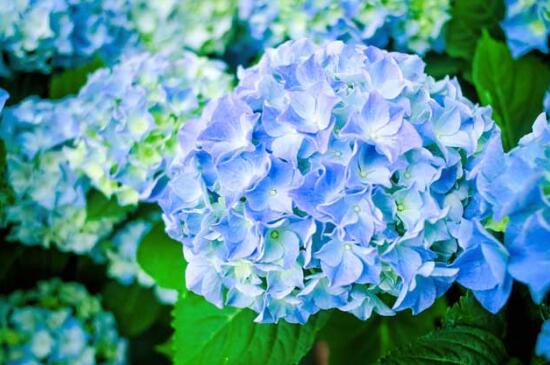
Regarding how to care for potted hydrangeas, we need to create the best growing environment according to their growth habits. For this reason, the editor will bring you the growing methods and precautions for hydrangeas from the aspects of soil, light, temperature, water, fertilizing, pruning, and so on. Let's continue reading.
2. Growing methods and precautions for hydrangeas
1. Soil, slightly acidic
How to care for potted hydrangeas? First of all, of course, is choosing the soil. It is understood that hydrangeas like soil with high nutrient content and strong air permeability, so the editor recommends everyone use: a growing medium mixed from 4 parts leaf mold, 3 parts garden soil, 2 parts river sand, and 1 part cake fertilizer.
Precautions: Hydrangeas like acidic soil. We cannot grow them in alkaline soil, otherwise the plants will grow poorly, resulting in the symptom of yellowing hydrangea leaves.
2. Light, cannot be too much
In the growing methods for hydrangeas, light is something everyone must pay attention to, because they like shade and do not like sun, so they cannot be placed in the sun like other flowers. In spring, move them outdoors to a semi-shaded place for care; in summer, provide appropriate shading; in autumn, as the light gradually weakens, hydrangeas can be placed in a bright place; in winter, place them in a sunny spot indoors.
Precautions: In summer, outdoor light is strong, so everyone should move hydrangeas to a well-ventilated and cool place to prevent sunscald on the leaves. In addition, in autumn, hydrangeas should be given a bit more light, which can promote flower bud differentiation and prepare them for blooming.
3. Temperature, 18-28°C
According to the hydrangea's habit of liking warmth, everyone had best grow it in an environment of 18-28°C. In addition, hydrangeas are not cold-tolerant, so in winter you must pay attention to keeping them warm and raise the temperature above 5°C to prevent them from frost damage.
Precautions: During the flower bud differentiation stage, hydrangeas need to be kept at 5-7°C for 6-8 weeks, after which the temperature should be raised to 20°C, which can promote flowering. After hydrangeas bloom, the temperature should be maintained at 16°C, which can extend the viewing period of the flowers.
4. Watering, light and frequent watering
How to care for hydrangeas? Watering is very crucial. It is understood that hydrangeas like a humid environment, but they are also afraid of waterlogging. So we should water hydrangeas frequently, but not too much at one time. In spring, water frequently to keep the potting soil moist; in summer, increase the amount of watering; in autumn, appropriately reduce watering; in winter, reduce watering again.
Precautions: Besides watering, from May to August, because the weather is dry, everyone also needs to spray water on the leaves once. But hydrangeas have fleshy roots, so watering should not be excessive, otherwise it can easily cause root rot in hydrangeas.
5. Fertilizing, once every 15 days
After talking about watering, let's talk about fertilizing, which is also very important in the growing methods for hydrangeas. Hydrangeas like fertilizer. During the growing period, a thin cake fertilizer solution should be applied once about every 15 days; during the bud stage, 1-2 additional applications of 0.5% superphosphate soaking solution are also needed, which can promote larger flowers and brighter colors.
3. Precautions for growing hydrangeas
Although there are already quite a few precautions in the hydrangea growing methods above, to grow hydrangeas well, there are still many places that flower lovers need to pay attention to. In simple terms, there are also the following two points in the precautions for growing hydrangeas:
1. Prune in time
The beauty of hydrangeas is unquestionable, but to achieve this effect, they still need proper pruning: pinch during the growing period, and to promote the growth of side branches, cut them short before winter arrives, which is more conducive to overwintering.
2. Repotting
Besides pruning, in the precautions for growing hydrangeas, repotting is also something everyone needs to pay attention to. Hydrangeas should be repotted once every 1-2 years in early spring, replacing with new growing soil. When repotting, remove some old soil and rotten roots, and combine repotting with pruning.
How to care for hydrangeas, growing methods and precautions for hydrangeas
How to care for hydrangeas? Hydrangea flowers resemble hydrangea balls. Hydrangeas are sensitive to drought, waterlogging, cold, and heat, and like fertilizer and moisture. They are a very delicate flower, and many people quite like this flower. Let us learn about the growing methods and precautions for hydrangeas:
We must first understand the growth habits of hydrangeas in order to master the growing methods for hydrangeas in a targeted way.
Hydrangea is native to the Yangtze River Basin of our country, and by nature likes warm, humid, and semi-shaded environments. It is afraid of both drought and waterlogging, and is not cold-tolerant. In cold regions, the aboveground part dies in winter and only sprouts new shoots again the following spring. Hydrangeas like fertile, moist, well-drained light loam and have strong adaptability. The acidity or alkalinity of the soil has a relatively large effect on the flower color of hydrangeas; in acidic soil they are mostly blue, and in alkaline soil they are mostly red.
Growing methods for hydrangeas:
1. The suitable growth temperature for hydrangeas is 18-28°C, and the winter temperature should not be lower than 5°C. Flower bud differentiation requires maintaining conditions of 5-7°C for 6-8 weeks. 20°C can promote flowering, and if 16°C can be maintained after flowering, the flowering period can be extended.
2. Hydrangea is a short-day plant. With more than 10 hours of darkness treatment each day, flower buds form in about 45-50 days.
3. Potted hydrangeas commonly use 15-20 cm pots. After budding in spring, water fully to ensure the leaves do not wither. June-July is the flowering period for hydrangeas, and fertilizer and water should be sufficient, with fertilizing once every half month.
4. Usually when cultivating hydrangeas, avoid direct sunlight, and 60-70% shading is ideal. When summer light is too strong, appropriate shading can extend the flower viewing period. After flowering, remove the flower stems, which can encourage new branches to grow.
5. The potting soil for hydrangeas should be kept moist, but watering should not be excessive. Especially in the rainy season, pay attention to drainage to prevent root rot caused by waterlogging. In winter, slightly dry conditions are better; if it is too humid, the leaves easily rot. Repot once every spring and prune appropriately to maintain a beautiful plant shape.
6. The main diseases of hydrangeas include wilt disease, powdery mildew, and leaf spot disease. Spray 600 times dilution of 65% zineb wettable powder for prevention and control. Pests include aphids and mirids, which can be killed by spraying 1500 times dilution of 40% omethoate emulsifiable concentrate.
When growing hydrangeas, pay attention to appropriate watering. After the Beginning of Spring, hydrangeas must be given rain, dew, and sunlight, and watered in the morning and evening.
Because of their cute appearance and ease of planting, hydrangeas are liked and grown by everyone. At present, growing hydrangeas has become a major trend, so quickly master the methods for growing hydrangeas.
How to care for hydrangeas? Growing methods and precautions for hydrangeas
Hydrangea, also called eight-immortal flower, has large and beautiful flowers and diverse colors, with extremely high ornamental value, and is a rare treasure among potted flowers. So, how should hydrangeas (eight-immortal flowers) be grown? Next, I will introduce the growing methods and precautions for hydrangeas.
Image: Hydrangea (eight-immortal flower)
1. Growing methods for hydrangeas
1. Soil
In early spring, move the small hydrangea seedlings into pots. Before that, the flower soil should be prepared well.
There are three methods: (1) mix leaf mold, garden soil, river sand, and cake fertilizer in a 4:3:2:1 ratio; (2) mix compost soil, sandy soil, and cake fertilizer in a 4:5:1 ratio; (3) mix leaf mold, sandy soil (or furnace ash residue), and cake fertilizer in a 6:3:1 ratio.
2. Fertilization management
Hydrangeas like fertilizer. During the growing period, apply cake fertilizer once about every 15 days. During the bud stage, topdress 1-2 times, mainly with superphosphate soaking solution, to promote larger flowers and brighter colors.
Of course, fertilizing also has another important function: adjusting the soil. Hydrangeas like acidic soil, but the water at home is neutral, and long-term watering will reduce soil acidity. So when fertilizing, ferrous sulfate can be appropriately added to make it into alum fertilizer for irrigation, increasing the acidity of the soil.
3. Watering management
Hydrangea leaves are thick and the flowers are large and gorgeous, so they need a lot of water. But eight-immortal flower has fleshy roots, and water cannot accumulate in the pot, as it easily causes root rot. Let's look at the watering requirements for eight-immortal flower at different stages: (1) In spring and summer, water frequently to keep the potting soil moist, especially during the high-temperature period of midsummer, water once in the morning and once in the evening, and pay attention to appropriate shading at noon; (2) From May to August, besides watering, also spray water on the leaves; (3) After September, as the weather gradually cools, reduce the amount of water to promote sturdy branches and promote dormancy. In winter dormancy, reduce watering (if you can avoid watering, then do not water), and keep the potting soil slightly moist.
4. Light requirements
Hydrangeas like shade and do not like sun. When moved outdoors in spring, they should be placed in a semi-shaded place for care. In midsummer, place the plants in a well-ventilated shaded place to prevent sunburn. After September, as the light gradually weakens, place the plants in a bright place to promote flower bud differentiation!
5. Temperature requirements
The most suitable temperature for hydrangea growth is 18-28°C, and in winter it cannot be lower than 5°C. After flower bud differentiation, place them in a 5-7°C environment for 6-8 weeks, and they can bloom. After flowering, raise the temperature and keep it stable at around 16°C, which can extend the flowering period. During the flowering period, the temperature cannot be too high, as it easily causes the flowers to fade.
Image: Hydrangea (eight-immortal flower)
2. Precautions for growing hydrangeas
Hydrangeas like acidic soil and are not tolerant of barren conditions. In alkaline soil they grow poorly, with yellowing branches and leaves. Flower color is also affected by soil acidity and alkalinity.
In early October, move the plants indoors for care, appropriately control water, and keep the temperature at 5°C to promote dormancy. Before moving indoors, remove some leaves to avoid leaf rot and infection by pathogens.
During the growing period, usually pinch the tops twice to promote branching. After flowering, cut the old branches short to control plant height. Before winter arrives, cut the plants short again, which is beneficial for overwintering.
The above is an introduction to the growing methods and precautions for hydrangeas. Hydrangeas are famous ornamental flowers. Only hydrangeas that have been carefully cared for can bloom with splendid flowers.