How to fertilize Datura flowers? Fertilizing precautions: Do not touch, do not eat
Among flowering plants, Datura is one of the more resilient species, but if you want it to grow better and stronger, fertilizing is essential. So how do you fertilize Datura flowers? Below, the editor will walk you through it.
1. How to fertilize Datura flowers
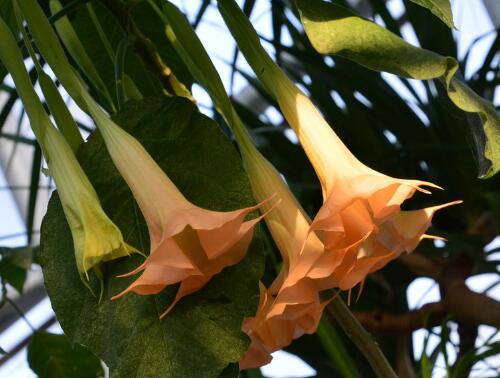
Regarding the question of how to fertilize Datura flowers, there are actually many points to pay attention to, and during the growth process of Datura, the fertilizer requirements differ at each stage. The specific details are described in detail below. Let's continue reading.
1. Fertilizing seedlings
During the seedling stage of Datura, you can choose to apply some potassium fertilizer and nitrogen fertilizer. This can speed up the growth rate of the seedlings and also make the roots thicker and stronger, laying a good foundation for Datura to enter its growth period.
2. Fertilizing during the growth period
Fertilizer is a relatively important nutrient during the growth process of Datura, especially during its growth period, when the demand is even greater. Generally, we need to fertilize once every 7-10 days, which is more beneficial for later flowering.
3. Fertilizing during the flowering and fruiting period
Datura is a plant with a very long flowering period, basically in bloom for half the year. Everyone knows that the flowering period consumes the most nutrients, so fertilizer must be replenished in time. Only when nutrients are sufficient will its flowers bloom more vividly, and the flowering period will last longer.
2. Precautions for fertilizing Datura flowers
1. Do not touch
When fertilizing Datura normally, be sure not to touch it, because basically the entire Datura plant is toxic to some degree, so everyone must pay attention to this point to avoid unnecessary trouble.
2. Do not eat
Here the editor also wants to remind everyone that if there are children or pets at home, it is best not to place Datura indoors. Otherwise, if it is accidentally eaten, it can easily cause some adverse reactions. Everyone must remember this point.
How to grow Datura. Datura cultivation methods
Datura mostly grows wild in fields, along riverbanks, on hillsides, and other places. Because Datura has large flowers and bright red colors, it has also begun to be grown in pots. So how do you grow Datura? Next, Xiao Qi will share the cultivation methods for Datura.
1. How to grow Datura
Datura has strong adaptability. It likes warm, humid, sunny environments and fears waterlogging. It is not very strict about soil requirements. It can generally be grown in ordinary soil, but soil rich in humus and lime is best. Seeds germinate easily. The suitable germination temperature is around 15°C, and the germination rate is about 40%. From emergence to flowering takes about 60 days. After frost, the aboveground part withers. When the temperature is below 2°C, the whole plant dies. The annual growth period is about 200 days.
Datura is generally propagated by seeds. In early April, open holes 3 cm deep in the seedbed at a plant spacing of 60 cm x 50 cm, sow the seeds, 5-6 seeds per hole, cover with 1 cm of soil, press lightly, and keep moist. The seeding rate is about 1 kg per mu. If raising seedlings for transplanting, late May is suitable for transplanting and setting out. Datura is a wild upright woody annual herb in the Solanaceae family. In low-latitude areas, it can grow into a subshrub. Plant height is generally between 50 cm and 200 cm, and the root has already become woody. Datura has alternate single leaves, with the upper ones appearing opposite. The leaf blades are ovate or broadly ovate, with pointed tips, asymmetrical bases on both sides, and entire or lobed, wavy-serrated margins.
2. Datura cultivation methods
1. Planting: Datura is relatively easy to plant. Simply sow it in fertile, well-drained soil.
2. Fertilizing: For potted Datura, you can scatter decomposed chicken manure or barnyard manure around the edge of the pot as a base fertilizer. It generally buds and blooms in June. If fertilizing and watering are appropriate, it can produce more flowers and continuously produce new blooms without fading.
3. Watering: As the temperature rises, Datura should be watered gradually more, keeping the soil moist, but not too dry or too wet, otherwise the leaves will turn yellow and fall off. In winter, reduce the frequency of watering; just avoid letting it get too dry.
4. Temperature and light: Except during midsummer when the temperature is high and sunlight is intense, when the flowerpot should be placed in a semi-shaded spot, Datura should be given sufficient light at other times, and apply liquid manure once every 7-10 days. Before winter arrives, move it indoors to a sunny spot and keep the room temperature above 5°C. If it is below 4°C, it will cause yellow leaves or leaf drop.
5. Pruning: After Datura is brought out in spring, dead branches should be pruned away. If the potted plant is too tall or has bare lower stems, it will affect the ornamental value, so it must be properly shortened to encourage new branch growth and renew the plant.
6. Propagation: Datura is generally propagated by sowing, but can also be propagated by cuttings. When the seeds mature in winter, clean and dry the seeds from the capsules and keep them for sowing in March-April of the following year. During the germination period, cover with some straw and other materials to provide shade and moisture. They generally take root and grow smoothly. After the seedlings grow larger, divide and set them out, and most will grow quickly.
The above isDatura cultivation methodsintroduced, hoping it will be helpful to everyone. Datura is toxic, so during cultivation, be sure to place it somewhere children cannot reach.
Lycoris radiata Lycoris radiata Lycoris radiata illustrated guide: How to grow Lycoris radiata / How to propagate Lycoris radiata
Lycoris radiata profileLycoris radiata Lycoris radiata
Lycoris radiata cultivation methods and precautions. Introduction to Lycoris radiata
Lycoris radiata (scientific name Lycoris radiata, English: red spider lily), also known as red-flowered Lycoris, dragon claw flower, shanwudu, commonly known as laoyasuan, red spider lily, likelisi, etc., with the elegant name Manjusaka (from Sanskrit Ma?jusaka); the species epithet radiata means "radiating."
Red spider lily is a bulb plant. The bulb's appearance is somewhat like that of narcissus, and the flower grows from the top of a bare stem. This flower has a special scent, somewhat like garlic. Lycoris radiata is a self-pollinating plant. Its capsules dehisce along the back, and it has many seeds. It generally reproduces once every 3-4 years by bulbs. Because the flower and leaves never have the chance to meet, yet cherish each other for life, it is named red spider lily. Because it can reduce swelling, kill insects, treat lymph node tuberculosis, boils and sores, rheumatic joint pain, snake bites, edema, eliminate maggots, kill rats, prevent plagues, and more, it is also called the guardian deity of health, also known as shehua or sheli. Red spider lily should specifically refer to red-flowered Lycoris, and red-flowered Lycoris is also called dragon claw flower.
Morphological characteristics of Lycoris radiata
Lycoris radiata, also known as red spider lily, also known as red-flowered Lycoris, is a type of Lycoris and is the blood-red red spider lily. Perennial herbaceous plant; underground there is a spherical bulb covered with a dark brown membranous tunic. Leaves are strap-shaped and relatively narrow, dark green, emerging from the base, appearing in late autumn and withering in early summer. Flowering period is late summer to early autumn, approximately from July to September. The flower stem is 30-60 cm long, usually with 4-6 flowers arranged in an umbel, borne at the top of the flower stem. Petals are oblanceolate, the perianth is red (there are also white-flowered varieties), spreading backward and curling, with wrinkled wavy edges, and the perianth tube is extremely short; stamens and style protrude, the flower shape is relatively small, with a circumference of more than 6 cm.
The flower is like a dragon's claw. It has a bulb shaped like an onion; leaves grow in clusters, slender with pointed tips, resembling garlic leaves, fleshy, strap-shaped, blue-green with a white bloom; the flower scape is solitary, with a terminal umbel. At the turn of summer and autumn, the flower stem breaks through the soil, and a terminal umbel bears 5 to 7 flowers, brilliantly red and unusual (besides red, there are also white varieties), with petals rolled backward like dragon claws. It first blooms and then grows leaves. In winter the leaves do not fall, and in summer the leaves fall and it goes dormant. Lycoris radiata is a self-pollinating plant. Its capsules dehisce along the back, and it has many seeds. It generally reproduces once every 3-4 years by bulbs. Because the flower and leaves cannot meet, Lycoris radiata is also called the "heartless and faithless" flower. When the flower blooms, no leaves can be seen; when there are leaves, no flower can be seen. Flower and leaf never meet, forever missing each other. This flower often grows in stone crevices in the wild and on graves, so some people say it is "the flower on the road to the underworld."
Lycoris radiata is a self-pollinating plant. Its capsules dehisce along the back, and it has many seeds. It generally reproduces once every 3-4 years by bulbs. Because of the characteristic that the flower and leaves cannot meet, it is called red spider lily. Because it can reduce swelling, kill insects, treat lymph node tuberculosis, boils and sores, rheumatic joint pain, snake bites, edema, eliminate maggots, kill rats, prevent plagues, and more, it is also called the guardian deity of health, also known as shezihua or sheli.
[Scientific name] red spider lily (Lycorisradiata), also known as red-flowered Lycoris, white-flowered Lycoris. The word Lycoris comes from the name of the sea goddess in Greek mythology, while radiata means radiating, used to describe the flower's appearance.
[Family and genus] Amaryllidaceae (AMARYLLIDACEAE), genus Lycoris. The characteristic of Lycoris species is that they first send up the flower scape (peduncle) and bloom, then produce leaves at the end of flowering or after the flowers fade; there are also other types that first produce leaves, and after the leaves wither, send up the scape and bloom, so when Lycoris flowers bloom, no leaves can be seen.
[Flowering time] The three days around the spring equinox are called spring equinox week, and the three days around the autumn equinox are called autumn equinox week. Red spider lily blooms during the autumn equinox week period, very punctually, which is why it is called red spider lily.
Ecological habits of Lycoris radiata
Wild varieties grow in gloomy, damp places, and their growing sites are red soil, so they have strong cold resistance and like shade. The high-temperature limit they can tolerate is a daily average temperature of 24°C; they like moisture and are also drought-tolerant, accustomed to slightly acidic soil, with loose, fertile humus soil being best. They have the habit of summer dormancy.
Red-flowered Lycoris likes sunny, humid environments, but can also tolerate semi-shade and dry environments. It is slightly cold-tolerant and quite vigorous, and has no strict requirements for soil. If the soil is fertile and well-drained, the flowers will be especially abundant. In addition, Lycoris radiata likes to grow in cemeteries, so it is also called the dead man's flower.
Flowering period: three days before the autumn equinox.
In spring it is a bulb, in summer it grows leaves, in autumn it stands up and blooms, and in winter the leaves slowly retreat again, cycling in this way. And the flower and leaves never meet, which also carries the meaning of a tragic love that can never reunite.
Distribution range of Lycoris radiata
Lycoris radiata is native to the middle and lower reaches of the Yangtze River and parts of the southwest. It is widely distributed throughout East Asia, and is also found in Vietnam, Malaysia, and various places in East Asia. China had records of it as early as the Song Dynasty, and it was also called wuyicao and dragon claw flower. Although it has strong ornamental value, its rhizome is toxic and must not be eaten casually.
The current varieties in Japan are presumed to have been transported from China to northern Kyushu more than two thousand years ago.
Major ornamental destinations for Lycoris radiata mainly include Dali and Lijiang in Yunnan, Taroko in Taiwan, China, Hidaka in Japan, and Jiangsu and other places.
Landscape uses of Lycoris radiata
Because Lycoris radiata often blooms near cemeteries, is bright red like blood, and its flowering period is close to the autumn equinox (a Japanese festival), and because its leaves fall when the flowers bloom and the flowers fall when the leaves grow, never meeting, in Japanese legend this flower has taken on an ominous color of death and separation. It is relatively often used at funerals and is also called the flower of death. However, in China there is no such saying; instead, because of its vivid color, Lycoris radiata has become a common festive flower.
This flower is mostly used for planting in villa gardens. Generally, hundreds or thousands are planted together, and they bloom in large numbers in autumn, with an excellent landscape effect. In addition, because the rhizome of Lycoris radiata is very similar to that of narcissus, some unscrupulous flower sellers use it to pass off as narcissus for sale, so when buying flowers, you must carefully distinguish them.
Medicinal or dietary value of Lycoris radiata
The medical information and health dietary information on Huahua Network is for reference only and cannot be used as a basis for diagnosis or medical treatment. Any health issues should be consulted with professional medical staff, and treatment of any disease should follow a doctor's advice.
Ultimate flower-protecting mission: Love yourself, start from reality, and strictly follow a doctor's advice. Toward illness, do not be careless, do not delay, do not give up hope; face it bravely, use love to warm the silent world, and use your heart to care for the flower field within.
The medical content on Huahua Network is for reference only and cannot be regarded as professional advice. Any health issues should be consulted with professional medical staff.
Medicinal information (1)
[Chinese name] Lycoris radiata, cockroach flower
[Pinyin] Shisuan
[English name] Stonegarlic, Shorttube Lycoris, Short Tube Lycoris, Red Spider Lily, Spider Lily
[Latin scientific name] Lycoris radiate (L. Herit.) Herb.
[Family and genus classification] Amaryllidaceae, genus Lycoris
[Plant morphology] Perennial herb. Bulb broadly elliptic or nearly spherical, covered outside with a purple-brown bulb tunic, usually 1.4-4 cm in diameter. Leaves clustered, narrowly strap-shaped or linear, 14-40 cm long, 0.4-2 cm wide, fleshy, blunt at the tip, with a distinct midrib, blue-green above and powdery green below, entire. The flower stem emerges before the leaves, solid, 25-60 cm tall, with an umbel bearing 4-7 flowers; involucral bracts 2, membranous, brown, lanceolate, about 3.5 cm long; flowers bisexual, usually red, or with white edges, unscented; there is a short tube below the perianth, with the upper 6 lobes arranged in 2 rows, narrowly oblanceolate, about 2-4.5 cm long and 3-7 mm wide, recurved backward; perianth tube green, about 3-7 mm long; stamens and pistil protruding beyond the perianth; stamens 6, about twice as long as the perianth lobes; ovary inferior, 3-loculed, style slender and very long, stigma capitate and very small. Capsule dehiscent along the back, seeds numerous. Flowering period August-October. Fruiting period October-November.
[Habitat and distribution] Grows in shaded, damp places in mountainous areas or by roadsides and forest edges. Distributed in Henan, Shaanxi, and various places in East China, South China, and Southwest China. The medicinal material is produced in most parts of the country.
[Medicinal part] The bulb is used as medicine. Chinese medicine name: Lycoris radiata.
[Harvesting and processing] Harvest after autumn. Wash the large ones and dry them in the shade; keep the small ones for seed. Wild products can be dug in all four seasons, used fresh or washed, sun-dried, and set aside.
[Main components] Mainly contains alkaloids, such as homolycorine, lycorine, lycoramine, and others.
[Pharmacological effects] Sedative, antipyretic, analgesic, blood pressure-lowering, anti-inflammatory, emetic, anti-tumor, antiviral.
[Nature, flavor, and functions] Pungent and sweet, warm. Toxic. Dissolves phlegm, disperses nodules, detoxifies, induces vomiting.
[Indications and usage] Throat wind, pleural and abdominal fluid retention, food poisoning, sore swollen throat, traumatic injuries, stubborn tinea, snake bites, burns and scalds, ru'e, carbuncles and swollen toxins, boils, phlegm nodules and scrofula, etc. Oral use: decoct in water, dosage 1.5-3 g, or pound to extract juice; external use in appropriate amount, pound to extract juice and apply, or pound and apply. Prohibited for pregnant women and those with deficiency without excess pathogen; prohibited for application on broken skin.
1. Food poisoning, phlegm obstruction: Fresh Lycoris radiata five fen to one qian, decoct and take to induce vomiting. (Shanghai Common Chinese Herbal Medicine Manual)
2. Phlegm-fire and acute qi: Cockroach flower root, washed, roasted dry and ground into powder, mixed with sugar, take one qian with wine. (Gangmu Shiyi)
3. Double or single throat moth: Pound laoyasuan to extract juice, mix with raw white liquor and take, recover after vomiting. (Shenyi Shiquan Jing)
Medicinal uses
According to records in traditional Chinese medicine classics, the bulb of red-flowered Lycoris is warm in nature, pungent and bitter in taste, and toxic. As medicine, it has the effects of inducing vomiting, dissolving phlegm, reducing swelling, relieving pain, and detoxifying. Although Lycoris radiata has strong ornamental value, its rhizome is toxic. The bulb contains the alkaloid lycorine toxin, and if eaten by mistake, it may cause poisoning. Mild cases may involve vomiting and diarrhea, while severe cases may cause central nervous system paralysis and endanger life.
According to pharmacological research, the main medicinal components of the red-flowered Lycoris bulb are various lycorine alkaloids and galanthamine. Lycorine and its derivatives have certain anti-cancer activity, and can also be anti-inflammatory, antipyretic, sedative, and emetic, and also have therapeutic effects on amoebic dysentery. Galanthamine is a reversible cholinesterase inhibitor, used for paralysis caused by central paralysis diseases such as poliomyelitis, and for myasthenia gravis. At present, these components can already be extracted on a commercial scale, and use has begun abroad. Chinese experts are also carrying out in-depth research to develop drugs to benefit humanity.
Main applications
Although red spider lily has strong ornamental value, its rhizome is toxic. The bulb contains the alkaloid lycorine toxin, which can cause symptoms such as vomiting and spasms and has a clear effect on the central nervous system. It must not be eaten casually, but it can be used for sedation, inhibition of drug metabolism, and anti-cancer effects. Although toxic, the bulb can be eaten after processing and is also used as a medicinal material. "Galanthamine" extracted from the rhizome of Lycoris radiata can be used to treat polio. Use has begun abroad, and Chinese experts are also conducting in-depth research.
Medicinal bulb of red spider lily: contains various alkaloids, such as lycorine, lycoramine, galanthamine, and others. It has wind-dispelling, swelling-reducing, detoxifying, and anti-cancer effects. Used to treat gastric cancer, esophageal cancer, and liver cancer, and has been tried in the treatment of lung cancer, ovarian cancer, cervical cancer, and lymphoma.
Cultivation techniques of Lycoris radiata. Horticultural cultivation
Red-flowered Lycoris is a common ornamental garden plant in East Asia. In winter, admire its leaves; in autumn, admire its flowers. Generally, it is best to divide and plant the bulbs after flowering. When planting, apply sufficient base fertilizer, cover the bulb with soil, and water thoroughly.
Growth and cultivation
Red spider lily is extremely easy to cultivate. Generally, it is best to divide and plant the bulbs after flowering. When planting, apply sufficient base fertilizer, cover the bulb with soil, and water thoroughly. The black flower bulbs of Lycoris radiata are extremely easy to keep alive; keep them moist and they will not die for a year.
Remove the small bulbs around the main bulb for propagation. Trim off the residual roots of the main bulb, sun-dry for two days, and plant once the wounds are dry. When covering with soil, make the top of the bulb emerge above the soil surface. For potted cultivation, choose large bulbs that have grown for 3 years and can bloom (diameter above 7 cm). You can plant one bulb per pot, or plant 3-4 bulbs in a large pot. Plant shallowly so that 1/3-1/2 of the bulb sits above the soil surface. After potting, water once, just enough to make the soil slightly moist. Water again after new leaves emerge. Apply liquid fertilizer once every half month. When the leaves thicken and mature in autumn, stop watering.
Between February and March, after sprouting, repot or replace the potting soil. The culture soil can be made by mixing 2 parts peat, 2 parts garden soil, and 1 part perlite, while adding a small amount of base fertilizer. Water less during summer dormancy, and keep the potting soil moist frequently in spring and autumn. During the growing season, apply diluted cake fertilizer water once every half month. Lycoris radiata likes semi-shade; avoid direct sunlight in summer, and maintain it in a semi-shaded place in spring and autumn. During overwintering, strictly control watering and stop fertilizing. Post-flowering handling and pest and disease control: after Lycoris radiata blooms, the flower scape should be cut off to reduce nutrient loss.
Requirements for the cultivation environment: The planting depth should not be too deep; it is best if the top of the bulb is just buried at the soil surface. The soil should be well-drained sandy soil or loose culture soil, slightly acidic. Apply an appropriate amount of base fertilizer when planting and water thoroughly after planting; during the vegetative growth period, water frequently to keep the soil moist, but do not let water accumulate, to prevent the bulb from rotting. From 20 days before flowering to the flowering period, an appropriate amount of water must be supplied to achieve neat and uniform flowering, and the flowers are easier to maintain.
Planting and cultivation
Planting: Can be cultivated in open fields, in greenhouse pots, in frames, or hydroponically.
Potted cultivation: Red spider lily likes scattered light and does not like strong light, so the light should not be too strong. Red spider lily generally has no special requirements for soil. But after all, it is a southern flower, so the soil should be acidic, somewhat sandy, and breathable and permeable. Red spider lily has ornamental value above ground all year round: leaves without flowers, flowers without leaves.
Lycoris radiata has strong adaptability, and the bulb has a dormant phenomenon. In the north, potted ornamental cultivation is needed. Lycoris radiata planted at the end of May should also be able to bloom. Suitable time for cultivation in the north: plant in spring (April-May). Most varieties like a warm climate. The maximum temperature should not exceed 30°C, and the average temperature over ten days should be 24°C, suitable for Lycoris radiata growth. Ten days after sowing, the root system grows vigorously, and leaves successively emerge above ground. In winter, when the daily average temperature is above 8°C and the minimum temperature reaches 1°C, it does not affect Lycoris radiata growth. Do not water too much, otherwise the rhizome will rot.
Disease control of Lycoris radiata
1. Tobacco cutworm, mainly with larvae damaging leaves, flower buds, and fruits, gnawing leaf tissue and boring into flower scapes and seeds. It generally causes damage from late spring to November. It can be controlled with 5% fipronil suspension concentrate at 2500 times dilution, or Wanling at 1000 times dilution.
2. Lycoris noctuid moth. In plants invaded by its larvae, the leaves are usually hollowed out, and it can directly bore into and feed on the inside of the bulb. The damaged areas usually leave large amounts of green or brown fecal pellets. Frequently check the undersides of leaves for neatly arranged eggs and remove them immediately when found. For control, combine with winter or early spring plowing to dig out overwintering pupae and reduce the pest population base; when it occurs, spray with Lorsban at 1500 times dilution or phoxim emulsifiable concentrate at 800 times dilution. Choose to spray in the morning or evening when the larvae come out to activity, for a relatively good control effect.
3. Thrips, red all over, mainly suck nutrients at the leaf emergence area of the bulb, causing leaf chlorosis, especially found in greater numbers after the fruit matures. It can be controlled by alternating sprays of 25% imidacloprid at 3000 times dilution and 70% Admire at 6000-10000 times dilution.
4. White grubs. Once found, promptly use drugs such as phoxim or trichlorfon for control.
Lycoris radiata is managed extensively. Common diseases include anthracnose and bacterial soft rot. Before planting the bulbs, soak them in 0.3% copper sulfate solution for 30 minutes, wash with water, dry, and then plant. Spray 50% carbendazim wettable powder at 500 times dilution once every half month for control. In the early stage of disease, spray 50% benomyl at 2500 times dilution.
Difference between Lycoris radiata and Lycoris alba. Lycoris alba
Lycoris alba: white red spider lily
Lycoris radiata: red red spider lily
The above two both belong to red spider lily, with different colors. Both belong to the Amaryllidaceae family, genus Lycoris.
(Mohu Mandarava means: originally meaning a flower in heaven, the great white lotus, one of the four auspicious flowers sent down from heaven. Mandarava (man da ra ge) is the Sanskrit (māndārava). It refers to flowers with beautiful color and fragrance sent down from heaven when the Buddha appears; those who see them feel joy in their hearts. It is a different flower from Manjusaka.
Datura (Datura flower)
Note: Datura is not Mandarava, and red Datura is also not Manjusaka! Datura belongs to the Solanaceae family, genus Datura, and is completely different from the above two.
Japanese: The alias of Chousen asagao is Datura flower.
Scientific name: Datura metel
Family name: SOLANACEAE (Solanaceae)
Genus name: Datura
Species name: metel
Chinese: Datura
English: Hindu datura
Its place of origin is tropical Asia. It was introduced to Japan through China during the Edo period and cultivated as a medicinal herb. Its toxicity is stronger than that of red spider lily, and in ancient times there were many records of it being used as an anesthetic. Datura leaves are also effective for asthma (zensoku), which was previously of concern on the forum.
Datura flower is a wild upright woody herb in the Solanaceae family, while Lycoris radiata is a plant in the Amaryllidaceae family, genus Lycoris. The two are plants of different families and genera.
Buddhist scriptures say that the Datura flower is a flower that blooms in heaven, white and soft. Those who see this flower have their evil removed.
And "Maha Manjusaka" originally means a flower in heaven, the great red flower, one of the four auspicious flowers sent down from heaven.
What we generally call Datura flower is white, while Manjusaka is red.
Strictly speaking, from the original meaning, Manjusaka is only an alias for red spider lily. Manjusaka cannot be said to be exactly red spider lily, and Datura flower cannot be said to be exactly Chousen asagao. However, they are commonly used interchangeably in reverse, and this has been the case for a long time. When buying flowers, the flower shop also knows: Manjusaka = red spider lily; Datura flower = Chousen asagao.
[Main distribution]It is found in every province and autonomous region of China; it is widespread across all the major continents of the world.
[Alternative names]Mandala, Manda, Manzha, Manda, Drunken-heart flower, Dog walnut, Yangjinhua, Maple eggplant flower, Ten-thousand peach blossom, Yangjinhua, Big trumpet flower, Mountain eggplant, and others.
Misconceptions
Belief
(1) Red datura = Manjusaka
(2) Mandarava = Datura
Analysis
(1) Red datura is one of the colors of datura. Red datura is not Manjusaka. Manjusaka belongs to the Amaryllidaceae family, while datura belongs to the Solanaceae family, genus Datura. Manjusaka, also known as the flower of the other shore, is generally believed to be the welcoming flower that grows on the banks of the Sanzu River. Its fragrance is said to be magical, able to awaken memories of one's former life. (2) Mandarava and datura are two different flowers. Mandarava refers to the white flower of the other shore, that is, the white-flowered Lycoris, while datura comes in many colors and belongs to the Solanaceae family.
The colors of the flower of the other shore are divided into blood-red and white; yellow and peach-red ones are Lycoris, and there is no purple, blue or black. (Generally, blue ones are Photoshop images.)
The cultural background of Manjusaka: Manjusaka in the Buddhist scriptures
After the Buddha had finished expounding this sutra, he sat cross-legged and entered the samadhi of the meaning of immeasurable meanings, his body and mind unmoving. At that moment, heavenly flowers rained down in profusion, with four kinds of flowers: the heavens rained Mandarava flowers, Maha-mandarava flowers, Manjusaka flowers, and Maha-manjusaka flowers. And they scattered over the Buddha and over the great assembly. -- "Lotus Sutra, Volume One." It also says:
--What is a Mandarava flower?
--A white round flower, just like the flower of the wind eggplant.
--What is a Manjusaka flower?
--A red cluster flower. -- "Resolution of Doubts on the Lotus Sutra"
Manjusaka and Mandarava are flowers of the heavenly realm depicted in the Buddhist scriptures. Manjusaka, Maha-manjusaka, Mandarava, Maha-mandarava, Pundarika, Maha-pundarika and so on -- these appellations originate from Sanskrit Buddhist scriptures and were once recorded in the "Mahayana Lotus Sutra of the Wonderful Dharma." "Maha" means great; the Sanskrit pronunciation of Mahayana is "Mahayana," and "yana" means carrying. "Hua" in ancient Chinese means flower. These words appear in ancient Sanskrit Buddhist scriptures and refer to flowers on the earth.
Culture
Because Lycoris often thrives near graveyards, its color is bright red like blood, and its flowering period is close to the autumn equinox (a Japanese festival day), it was associated in Japan with Manjusaka, the welcoming flower in the Lotus Sutra, or the flower of the other shore. In addition, Lycoris sheds its leaves when the flower blooms, and grows leaves when the flower fades, so they never meet; therefore, in Japanese legend this flower took on an ominous color of death and separation, and is relatively often used at funerals.
In addition, because the leaves are not seen when this flower blooms, and the flower cannot be seen when there are leaves, this flower carries a sense of loneliness.
"The flower of the other shore blooms on the other shore; only the flower is seen, not the leaf."
"Flower and leaf, life after life, can never meet."
However, in Chinese tradition there is no such saying; on the contrary, Lycoris has become a common festive flower because of its brilliant colors. Korea calls this flower "Sangsahwa" (mutual longing flower). It is generally believed that Manjusaka is the welcoming flower growing on the banks of the Sanzu River. Its fragrance is said to be magical, able to awaken the memories of the dead from their former lives. The three days around the spring equinox are called the spring other shore, and the three days around the autumn equinox are called the autumn other shore; these are days for visiting graves. The flower of the other shore blooms during the autumn other shore period, very punctually, and that is why it is called the flower of the other shore.
The flower of the other shore is the flower that blooms on the road to the Yellow Springs. There it blooms in great masses, and seen from afar it looks like a carpet spread of blood. Because its red is like fire, it is also called the "road lit by fire." It is also the only scenery and color on this long road to the Yellow Springs, and people step along the guidance of this flower toward the prison of the underworld, separated from the world of the living...
In addition, the Japanese singer Momoe Yamaguchi also has a song named "Manjusaka," and the late Hong Kong, China singer Anita Mui also performed a Cantonese adapted version of this song.
Records
The earliest record of the flower of the other shore appears in Volume 19 of "Youyang Zazu" by Duan Chengshi of the Tang Dynasty: "Golden Lamp, also called Nine Forms; its flower and leaf do not meet; people of vulgar households plant it; another name is Unrighteous Grass. Heli, its root is like a taro corm, with twelve wandering shoots around it; they depend on one another to grow, yet are in fact not connected, being linked by qi; one name is Solitary Shaker, one name is Departing Mother. It is said that what people eat is thus collectively called Red Arrow."
The flower of the other shore is also the rain-flower auspicious sign among the six auspicious signs spoken of in the Lotus Sutra, produced by the heavens raining four kinds of flowers. "Lotus Sutra, Introductory Chapter" says: "After the Buddha had finished expounding this sutra, he sat cross-legged and entered the samadhi of the meaning of immeasurable meanings, his body and mind unmoving. At that moment the heavens rained Mandarava flowers, Maha-mandarava flowers, Manjusaka flowers, and Maha-manjusaka flowers, and they scattered over the Buddha and over the great assembly." The translators rendered them in order as white flower, great white flower, red flower, and great red flower. Guangzhai's " Commentary on the Meaning of the Lotus Sutra," Volume Two, says: "Maha-manjusaka is translated as great red cluster flower."
The Lotus Sutra asks in verse: "Manjushri, O guide, for what reason does the white curl between your brows send forth a great light that shines everywhere, raining Mandarava and Manjusaka flowers, with sandalwood fragrance pleasing the minds of the multitude? The flower of the other shore -- because of this cause, the land is all adorned and pure, and this world trembles in six ways. Then the four assemblies all rejoiced, their bodies and minds delighted, attaining what they had never had."
Origin legends
"Maha-manjusaka" originally means a flower of the heavens, a great red flower, one of the four flowers of auspicious heavenly signs. Buddhist scriptures also say that Manjusaka (Manjusaka) is a flower that blooms in the heavens, white and soft; those who see this flower have their evil removed of itself. In Buddhist language, Tu Mi is the last flower to bloom in the flowering season; when Tu Mi blooms, the flowering season is over, leaving only the flower of the other shore that blooms in forgotten former lives. Because it blooms at the time of the "autumn other shore," it is called the "flower of the other shore."
[Related legend 1]
Legend says that long, long ago, the edges of the city were covered with great expanses of the flower of the other shore -- that is, Manjusaka. Guarding the flower of the other shore were two spirits: one was the flower spirit named Manju, and one was the leaf spirit named Saka. They had guarded the flower of the other shore for thousands of years, yet were never able to see each other with their own eyes... because when the flower blooms, the leaves cannot be seen; and when there are leaves, the flower cannot be seen. Between flower and leaf, they could never meet, forever missing each other. Yet they missed each other madly and were deeply tormented by this pain. Finally one day, they decided to violate the god's rule and secretly meet once.
That year, the bright red flowers of Manjusaka, set off by striking green, bloomed with exceptional, bewitching beauty. But the god blamed them for this matter. Manju and Saka were cast into reincarnation and cursed never to be together, suffering tribulations in the human world life after life. From then on, Manjusaka was also called the flower of the other shore, meaning a flower that blooms in the heavenly kingdom; its shape is like palms praying toward heaven, but it never again appeared in the city... From then on, this flower bloomed only on the road to the Yellow Springs. Each time Manju and Saka were reincarnated, on the road to the Yellow Springs they could smell the fragrance of the flower of the other shore and remember their former selves, and then vow never to be parted again, yet fall once more into the cursed cycle of reincarnation.
This flower is truly beautiful, with an incomparable lingering splendor and a poisonous, burning aesthetic; it seems almost alive. Yet it is very desolate, and feels very similar to the epiphyllum; both are flowers that have never received blessings. Just as certain feelings are unblessed, even though they too are beautiful.
The flower of the other shore is too beautiful; it has the bewitching splendor of blood-like setting sun, and also the pure beauty of snow-white, but after looking at it an inexplicable desolation rises in the heart. It feels very much like the poppy, bearing too much unfair blame and lacking too many sincere blessings! Manjusaka, also known as the flower of the other shore.
[Related legend 2]
Once upon a time, an incomparably ugly ghost fell in love with a beautiful girl, but precisely because he was ugly, the girl did not love him. Out of love, he could only imprison the girl. Later, a warrior came; he rescued the girl and fell in love with her, and at the same time the warrior killed the ghost with his sword. The ghost's blood splashed into the wild grass, and from then on a flower of alternating red and black bloomed gorgeously there. The name of this flower is "the flower of the other shore." From then on, the flower of the other shore bloomed in a place in hell called "the River of Forgetfulness," the place where the dead forget the loves of this life and turn to be reborn into the next...
Love is probably like this too: merely because two people love differently, much must be sacrificed and much must be forgotten. Thus the flower of the other shore became an envoy of love from the darkness, because it witnessed a black death.
[Related legend 3]
The flower of the other shore, the tenderness of demons. In legend, it is a flower that voluntarily threw itself into hell and was sent back by the demons, yet still lingered on the road to the Yellow Springs. The demons could not bear it, and so agreed to let it bloom on this road, giving guidance and comfort to the souls leaving the human realm.
It is said that the flower of the other shore blooms only in the Yellow Springs, and is generally believed to be the welcoming flower that blooms only on the banks of the Sanzu River in the underworld and on the far shore of the River of Forgetfulness. The flower of the other shore is as brilliantly red as blood, covering the road to hell, and has flowers without leaves; it is the only flower of the underworld. The fragrance of the flower of the other shore is said to be magical, able to awaken the memories of the dead from their former lives. On the road to the Yellow Springs these flowers bloom in great masses; seen from afar they look like a carpet spread of blood, and because their red is like fire they are also called the "road lit by fire," and they are the only scenery and color on this long road to the Yellow Springs. When the soul crosses the River of Forgetfulness, it forgets all that came before; everything once known remains on the other shore, and the departed step along the guidance of this flower toward the prison of the underworld.
[Related legend 4]
Manjusaka, also known as the flower of the other shore. It is generally believed to be the welcoming flower growing on the banks of the Sanzu River. Its fragrance is said to be magical, able to awaken the memories of the dead from their former lives. The flower of the other shore blooms on the other shore, falls into the Yellow Springs, is lush without showing leaves, grows green leaves without producing flowers; flower and leaf never see each other, yet in life after life they remember each other forever. It is said that this flower blooms only in the Yellow Springs and is the only scenery on the road to the Yellow Springs.
Manjusaka comes from the Lotus Sutra: its original name is Maha-mandarava Manjusaka, meaning a red flower blooming in the heavenly realm. It is also called the flower of the other shore, the flower of the ends of the earth, and the flower of abandoned children. It blooms in the seventh lunar month, and its flower language is "sorrowful memories."
[Related legend 5]
"The flower of the other shore is the flower that blooms on the other shore; every blossom opens at the boundary between dawn and first light. The feeling contained in the flower of the other shore is not a heartbeat that can be touched, but a love far away at the ends of the earth; what it represents is only desolation and sorrow."
"The flower of the other shore is also called Manjusaka. It is the flower that blooms on the far shore of the River of Forgetfulness in the underworld, as brilliantly red as blood, with flowers but no leaves. When the soul crosses the River of Forgetfulness, it forgets all that came before; everything once known remains on the other shore, blooming into a bewitching flower. One day we too will die in this land, and everything will, like Manjusaka, be buried on the road to the other shore, buried in this soil." "No matter how beautiful the flower, in the end it only blooms on the other shore, and the result it obtains is only to be buried in this gravel."
"Buried in this gravel? Actually not. It seems the result is only this, but in reality? Just like the land before our eyes, even in the rain, it shines. The reason is not that the flower itself shines, but more that the souls buried in the soil are shining. The gravel we choose should be valuable; even if the result is the same, both are death, a valuable death is meaningful." -- Excerpted from "The Monk's Sixteen Strokes of Coordinates"
Origin of the flower's name
Manjusaka in the Buddhist scriptures
The flower of the other shore belongs to the Amaryllidaceae family (Lycoris Herb), and the genus name is the name of the female sea goddess in Greek mythology. Because Lycoris species have the characteristic of first sending up a scape (peduncle) and blooming, then producing leaves at the end of flowering or after the flowers fade; and some other species first produce leaves, then after the leaves wither send up a scape and bloom. Therefore, when the flower of the other shore blooms, no leaves can be seen, and when there are leaves, no flower can be seen; flower and leaf never meet, yet cherish each other life after life. Hence the saying, "The flower of the other shore blooms on the other shore; only the flower is seen, not the leaf; life after life they miss each other." In spring it is a bulb, in summer it grows leaves, in autumn it stands up and blooms, and in winter the leaves slowly retreat again. It carries the meaning of a tragic love that can never meet.
The name Manjusaka comes from Sanskrit and originally means a flower of the heavens, a great red flower, one of the four flowers of auspicious heavenly signs. Buddhist scriptures also say that Manjusaka (Manjusaka) is a flower that blooms in the heavens, white and soft; those who see this flower have their evil removed of itself. In Buddhist language, Tu Mi is the last flower to bloom in the flowering season; when Tu Mi blooms, the flowering season is over, leaving only the flower that blooms in forgotten former lives.
"At that time the World-Honored One, surrounded by the four assemblies, was honored, respected, praised and revered; for the bodhisattvas he expounded the Mahayana sutra called the Teaching of Immeasurable Meanings, the bodhisattva teaching protected in the Buddha's mind. After the Buddha had finished expounding this sutra, he sat cross-legged and entered the samadhi of the meaning of immeasurable meanings, his body and mind unmoving. At that moment, heavenly flowers rained down in profusion, with four kinds of flowers: the heavens rained Mandarava flowers, Maha-mandarava flowers, Manjusaka flowers, and Maha-manjusaka flowers. And they scattered over the Buddha and over the great assembly." -- "Lotus Sutra, Volume One"
"Resolution of Doubts on the Lotus Sutra" also says:
What is a Mandarava flower?
A white round flower, just like the flower of the wind eggplant.
What is a Manjusaka flower?
A red cluster flower.
Manjusaka and Mandarava are flowers of the heavenly realm depicted in the Buddhist scriptures.
Manjusaka, Maha-manjusaka, Mandarava, Maha-mandarava, Pundarika, Maha-pundarika and so on -- these appellations originate from Sanskrit Buddhist scriptures and were once recorded in the "Mahayana Lotus Sutra of the Wonderful Dharma." "Maha" means great; the Sanskrit pronunciation of Mahayana is "Mahayana," and "yana" means carrying. "Hua" in ancient Chinese means flower. These words appear in ancient Sanskrit Buddhist scriptures and refer to flowers on the earth. In the West, she was born from the mingled blood of gods and demons.
According to the "Foguang Dictionary," Manjusa, in Sanskrit manjusaka, in Pali manjusaka. It is also translated as Soft Flower, White Round Flower, Wish-fulfilling Flower, Threshold Flower, and Manjusa Color Flower. The larger of its flowers is called Maha-manjusaka. Manjusaka is one of the four kinds of heavenly flowers, a flower name of the heavenly realm. Its flowers are fresh white and soft; the heavens may cause this flower to fall at will to adorn the place where the Dharma is preached, and those who see it can cut off evil karma.
Also, Volume One of the "Record of the Meaning of the Lotus Sutra" by Fayun of the Liang Dynasty of the Southern Dynasties records that Manjusaka is translated as red cluster flower.
Other alternative names
Two-life flower, Dragon claw flower, Old crow garlic, Manjusaka (stonegarlic), Cockroach flower, Flower of the other shore, A thunderclap on flat ground, Never meeting in life or death, Stove chicken flower, Dead-person flower (shibito bana), Ghost flower (yuurei bana), Hell flower (jigoku bana), Heavenly canopy flower (tengai bana), Razor flower (kamisori bana), Abandoned-child flower (sutego bana), Ghost bride flower, Earthworm flower, and others.
Related legends
1. It is said that after death a person first comes to the Gate of Ghosts, and after passing the Gate of Ghosts enters a road called the Road to the Yellow Springs. On the road bloom great expanses of the flower of the other shore; seen from afar, it looks like a carpet spread of blood. Because its flowers are red like fire, the Road to the Yellow Springs is also called the road lit by fire.
The flower of the other shore is the flower that blooms on the road to the Yellow Springs. Because flower and leaf bloom in two different seasons, when the flower blooms no leaf can be seen, and when there are leaves no flower can be seen; flower and leaf never meet, forever missing each other. It is also the only scenery and color on this long road to the Yellow Springs. People step along the guidance of this flower toward the prison of the underworld. After passing that road to the Yellow Springs covered with the flower of the other shore, one reaches the River of Forgetfulness. The water of the River of Forgetfulness is blood-yellow, and within it are all the lonely ghosts and wild spirits who cannot be reborn... Beside the River of Forgetfulness there is a Three-Life Stone; the characters on the stone are bright red as blood, and four characters are carved on it: "Reach the other shore early." You can carve on the stone the name of the person you love most in this life and the person you want to wait for in the next.
On the River of Forgetfulness there is a single bridge called the Bridge of Helplessness. At the end of the Bridge of Helplessness there is a Home-Viewing Terrace; the Home-Viewing Terrace is the place to look back one last time at one's hometown and loved ones. Before forgetting all memories of this life, before being reborn and becoming another person, you can here take one last look at your loves and hatreds, your haunting dreams, the person you love most in this life, the person you still want to wait for in the next.
Beside the Home-Viewing Terrace there is a Meng Po, holding a bucket of Meng Po's soup. Everyone must walk onto the Bridge of Helplessness, and Meng Po asks whether you will drink a bowl of Meng Po's soup. Meng Po's soup is brewed from the water of the River of Forgetfulness, also called the water of forgetting love; once drunk, you forget this life and this world. A lifetime's loves and hatreds, a lifetime's ups and downs and gains and losses, will all be forgotten cleanly with this bowl of Meng Po's soup. The people you cared about in this life and the people you hated in this life will all become strangers in the next life, meeting without recognition... Not everyone is willing to drink Meng Po's soup. Because in this life, there will always be loved ones one does not want to forget. In order to meet the one you love most in this life again in the next, you may refuse to drink Meng Po's soup, but then you must jump into the River of Forgetfulness, endure every torment, and wait a thousand years before you can be reborn. But during those thousand years, though you endure every torment in the river, you can only watch helplessly as your beloved crosses the bridge again and again but cannot meet them. After a thousand years, he (she) no longer remembers you, and you may no longer be his (her) beloved...
We were once old spirits on the Three-Life Stone, companions for a thousand years, having seen all the mortal ties of the world, joys and sorrows, partings and reunions, death and rebirth. That day, the Buddha said you must enter the red dust. I asked the Buddha about our marriage fate. The Buddha closed his eyes: "In one life you shall have only one encounter." I asked the Buddha: A thousand turnings of the head in the past life earn one passing by in this life. A thousand passings by in the past life earn one meeting in this life. A thousand meetings in the past life earn one acquaintance in this life. A thousand acquaintances in the past life earn one mutual understanding in this life. A thousand mutual understandings in the past life earn one mutual love in this life. But is it true? The Buddha smiled and said nothing.
I fell on the far shore of the River of Forgetfulness, born on the banks of the Sanzu River; this place is gloomy and bleak. There is only a bridge, and on the bridge an old person who year after year guards a pot of soup. All kinds of people pass by me, walk onto that bridge, drink the soup in that bowl, and hurriedly walk down the bridge. When some people pass, I hear lingering sobs and vows for life after life. I am moved to pity, but the old person on the bridge seems to hear nothing, still calmly ladling the soup and giving it to those who come onto the bridge. As time passed, I learned that this bridge is called the Bridge of Helplessness, and this old person is called Meng Po. I asked Meng Po, what is that sound? Meng Po said, that is unforgettable love, unforgettable hate, the most useless of vows in the human world. It turned out that the soup in Meng Po's bowl is called Meng Po's soup, and can make one forget the past life. Those who come onto the bridge drink it and forget all the grievances, loves and sorrows of this world, then wait for the next reincarnation.
I asked Meng Po, will he also forget me? Meng Po said nothing. I asked Meng Po, when will I bloom? Meng Po said, when the time to bloom comes, you will bloom. I longed for the flower to bloom, longed to display the most beautiful face, longed for the one meeting with him in a lifetime. Meng Po looked at me, sighed, and said, it is almost the autumn other shore again! I was puzzled. Then I learned that the three days around the spring equinox are called the spring other shore, and the three days around the autumn equinox are called the autumn other shore; these are days for visiting graves. When the autumn other shore first came, I was astonished to find myself blooming with white flowers, like frost, like snow, covering the whole bank of the Sanzu River. Meng Po said, with the flower of the other shore, this welcoming road to the Yellow Springs is no longer lonely. Flower of the other shore? Is she talking about me? No, I am called Manju, not Other Shore. Year after year, I bloomed punctually at every autumn other shore, patch after patch. He finally came, at a time before I had time to bloom, hurrying here. He hurried past me; I desperately called him, Saka! Saka! He seemed to have entirely lost his hearing, and hurried past like this, so that I could not even touch the corner of his black gown. I wept.
Meng Po said coldly, he is not called Saka! No, he is my Saka, the Saka on the Three-Life Stone. When tears could no longer flow, I began to stay silent. Every autumn other shore, I still silently bloomed, seeing off one departing soul after another. For a thousand years, I watched him hurry past me, without stopping, without even a glance at me. Another thousand years began and ended amid blooming and falling; he changed his bearing and walked onto the Bridge of Helplessness, lifted Meng Po's soup. My tears flowed and flowed, my heart broke and broke; I called to him: Saka, I am your Manju, do you not remember?!
Finally, at one autumn other shore, when I bloomed with white flowers, he came, covered in the dust of travel, his face full of weariness, and came to my side. I had thought he would again hurriedly pass, hurriedly drink the Meng Po's soup that made him forget me farther and farther. However, when he passed by me, he unexpectedly slowed his steps and turned his head to glance at me. Just that one look, and the dried-up tears in my heart gushed out again like spring water; just that one look, and the grief accumulated over thousands of years in my heart turned into tears; just that one look, and all manner of hidden resentment scattered like clouds. That autumn other shore, I bloomed with exceptional freshness and purity. Then came thousands more years of waiting, thousands of years of meeting once a year. Each time he turned his head for a look, it opened a deep scar in my heart, year after year... I do not remember how many thousands of years of encounter this was when he suddenly stopped before me, murmuring to himself, as if we had met before, as if we had met before...
I was astonished; my heart shattered completely in that moment. The white flower, in that instant, turned miserably red, like fire, like tu, like blood... He retreated onto the bridge as if startled, and Meng Po's soup spilled from the bowl in his trembling hand... From then on, at the autumn other shore, the River of Forgetfulness was filled with blood-colored flowers, dazzling, gorgeous and strange. He came again when the flowers bloomed, lingering by my side, lingering, and at the moment he stepped onto the bridgehead, he unexpectedly turned his head, murmuring, Manju? Manju? I had no tears left. Meng Po gave a long sigh; this was the only sigh I had heard in nearly ten thousand years.
He crouched down, kissed my face, and said softly, Manju, I will not forget you again; I want you to stay by my side. I looked at him in a daze; did he not remember that the Buddha said we would meet only once in a lifetime? He looked at me smiling, unruffled, picked a flower and hid it in his sleeve, and walked onto the bridge. I saw him smile at me as he slowly drank the soup. A strange smile flickered across Meng Po's face. The Buddha said we had defied heaven's will, and from then on would never meet through all eternity. Yet he was smiling, smiling very contentedly. So he transformed into the leaf on my stem; the leaf falls only then can the flower bloom, and when the flower blooms the leaf has already fallen. He said, we do not want to meet only once in a lifetime, we do not want to forget each other as strangers. This is our keeping each other company through all eternity, never parting again, never forgetting again! Thus the Buddhist scriptures say: The flower of the other shore blooms for a thousand years and falls for a thousand years; flower and leaf never meet. Love is not governed by cause and effect; fate determines life and death. Thus the flower of the other shore has another name in Buddhist language: Manjusaka.
2. The flower of the other shore -- the only flower of the underworld in legend, also called the soul-guiding flower
The flower of the other shore is the flower that blooms on the road to the Yellow Springs,
There it blooms in great masses; seen from afar it looks like a carpet spread of blood, and because its red is like fire it is also called the "road lit by fire." It is also the only scenery and color on this long road to the Yellow Springs. People step along the guidance of this flower toward the prison of the underworld.
3. It is said that long ago there were two people named Bi and An, and heaven decreed that the two of them could never meet. They cherished each other and admired each other; finally one day, disregarding heaven's rule, they secretly met. As the saying goes, hearts connected understand each other at a single touch; after meeting, Bi found that An was a woman as beautiful as a flower, and An likewise found that Bi was a handsome and elegant young man. They felt like old friends at first meeting, love arose in their hearts, they formed a union of a hundred years, and decided to stay together forever life after life.
The result was destined, because they violated the heavenly laws, this love was ultimately mercilessly strangled. The heavenly court sent down punishment and laid upon them an extremely vicious curse: since they had disregarded the heavenly laws to meet in secret, they were made into the flower and the leaf of one plant. But this flower was exceedingly strange: when there is a flower, no leaf is seen; when a leaf grows, no flower is seen; life after life, flower and leaf miss each other.
It is said that after countless reincarnations, one day the Buddha came here and saw a plant on the ground with extraordinary bearing, bewitchingly red like fire. The Buddha came before it and looked carefully, and with one glance saw the secret within. The Buddha was neither sad nor angry; he suddenly threw back his head and laughed three times, reached out and pulled the flower from the ground. The Buddha placed the flower in his hand and said with emotion: "In former lives you longed for each other but could not meet; after countless reincarnations, you loved each other but could not stay together. So-called unions and partings are merely the arising and ceasing of karma. You bear the heavenly court's curse, which makes your fate end yet you do not scatter, your karma cease yet you do not part. I cannot help you undo this vicious curse, so I will take you to that other shore and let you bloom all over the fields there."
On the way to the other shore, the Buddha passed the Sanzu River in the underworld, and his clothes were accidentally wet by the river water. There the red flower the Buddha was carrying was placed, and when the Buddha reached the other shore, opened the cloth-wrapped flower and looked again, he found that the fiery red flower had turned pure white. The Buddha pondered for a moment, then laughed greatly and said: Great joy is not as good as great sorrow; remembering is not as good as forgetting. Right and wrong -- how can they be divided? Good flower, good flower! The Buddha planted this flower on the other shore and called it Mandarava, and because it was on the other shore, also called it the flower of the other shore.
But the Buddha did not know that on the Sanzu River, the flower whose color had been washed away by the river water dripped all its red into the river, wailing ceaselessly day and night, moving all who heard it to sorrow. Ksitigarbha Bodhisattva, whose supernatural powers were extraordinary, learned that Mandarava had already been born, so he came to the riverside, took out a seed and threw it into the river. Before long, a flower redder and more brilliant than before grew from the water. Ksitigarbha took it in his hand and sighed: "You have escaped and gone, attaining great freedom. Why leave this boundless hatred in the hell that is already a boundless sea of suffering? I will make you a welcoming envoy, guiding them toward reincarnation. Just remember this one color of yours. The other shore already has Mandarava, so I will call you Manjusaka."
From then on, there were two completely different kinds of flower of the other shore in the world: one growing on the other shore, one growing by the Sanzu River. Life after life, forever gazing at each other.
The flower language of Manjusaka
Chinese flower language: "Graceful and pure," representing beauty and charm.
Japanese flower language: "Sorrowful memories."
Korean flower language: "Mutual longing." It also has the meaning of "separation, heartbreak, inauspiciousness, the beauty of death."
Among them, the flower languages of the red flower of the other shore (Manjusaka) and the white flower of the other shore (Mandarava) are both different.
Manjusaka: endless love, the omen of death, the call of hell.
Mandarava: endless longing, desperate love, a letter from heaven.
In China, the flower of the other shore is called Golden Lamp, Red Arrow or Unrighteous Grass. It has the meaning of "separation, heartbreak, inauspiciousness, the beauty of death."
Among the people, the three days around the spring equinox are called the spring other shore, and the three days around the autumn equinox are called the autumn other shore. These are days for visiting graves. The flower of the other shore blooms during the autumn other shore period, very punctually, and that is why it is called the flower of the other shore. The places where it grows are mostly field paths, riverside walkways and graveyards; once autumn comes, it blooms with strange, heavily colored flowers close to blood-red. Whole patches of the flower of the other shore look strikingly crimson, like fire, like blood, like tu. There is also a saying that the flower of the other shore and the poppy are both flowers symbolizing Scorpio among the twelve zodiac constellations.
The flower of the other shore is also the Japanese translation of Golden Lamp, because the flower of the other shore is poisonous and eating it causes death by poisoning. (Symptoms such as vomiting appear.) Therefore in Japan, the flower of the other shore is also called "dead-person flower," "hell flower," and "ghost flower."
The beauty of Manjusaka is the ominous beauty of the strange, disaster, death and separation,
Striking crimson, like fire, like blood.
The flower of the other shore,
Blooms for a thousand years
Falls for a thousand years,
Flower and leaf never meet.
Love is not governed by cause and effect; fate determines life and death,
Forever knowing and understanding each other yet unable to love.
On the other shore unreachable in this life,
Unloading all memories,
Becoming a flower in the Yellow Springs.
Blooms for a thousand years,
Falls for a thousand years.
The soul-guiding flower -- the flower of the other shore
The flower of the other shore, the tenderness of demons. In legend, it is a flower that voluntarily threw itself into hell and was sent back by the demons, yet still lingered on the road to the Yellow Springs. The demons could not bear it, and so agreed to let it bloom on this road, giving guidance and comfort to the souls leaving the human realm.
This flower has a name, Manjusaka; the red flower is also called the flower of the other shore, also known as Red Spider Lily. People say, "Grass does not see the flower, the flower does not see the grass." In Japan it is called マンジュシャゲ, pronounced Manjusaka, and its flower language is "separation / heartbreak / inauspiciousness." Its place of origin is precisely China and Japan, with the most in Japan.
Among the people, the three days around the spring equinox are called the spring other shore, and the three days around the autumn equinox are called the autumn other shore. These are days for visiting graves. The flower of the other shore blooms during the autumn other shore period, very punctually, and that is why it is called the flower of the other shore.
"The Flower of the Other Shore," a representative work from Faye Wong's peak period.
The long prelude in the song, blurry and bewitching, is the despair of heartbreak, cruel yet beautiful.
The lyrics written by Lin Xi are very simple, yet very deep.
The flower of the other shore is a waiting with no other shore, the sorrowful waiting of a woman pretending to be happy.
Even if the sky darkens and her hair turns white, she must still light the torch to guide him home,
As long as he knows she is still waiting for him. This other shore is in fact a distance that can never be reached...
"Buddhist Scriptures"
The beauty of Manjusaka is the ominous beauty of the strange, disaster, death and separation. Perhaps because its deep, brilliant red color makes people think of blood, or perhaps because its bulb contains a potent poison, in ordinary literary works its image is usually associated with concepts such as "madness and bloodshed." In the encounter chapter of "Flame Mirage," "True Brilliant Echo," written by Mizuna Kuwabara, at the moment Kagetora commits suicide, he sees the spurting fresh blood like blooming clusters of the flower of the other shore.
Hell
Red mandarava flower - manjusaka, also known as the flower of the other shore. It is generally believed to be the guiding flower that grows along the Sanzu River. It mostly grows in field paths, riverside walkways and cemeteries, so it is also called the dead man's flower. Once autumn arrives, it blooms with eerie, intensely vivid flowers that are nearly red-black; a whole expanse of the flower of the other shore looks shockingly crimson, like fire, like blood, like blazing flames.
The flower of the other shore is the flower that blooms on the road to the underworld, where it blooms in great masses; seen from afar it looks like a carpet spread of blood, and because its red is like fire it is also called the "road lit by fire," and people tread upon the guidance of these flowers toward the prison of the dark underworld.
The flower of the other shore is the only scenery on the road to the underworld.
The name manjusaka comes from the Sanskrit "mahamanjusaka," originally meaning a flower in heaven, white and soft; those who see this flower have their evil removed. In Buddhist terms, tumi is the last flower to bloom in the flowering season; when tumi blooms, the flowering time is over, and all that remains is the flower of the other shore that blooms in forgotten past lives.
"The flower of the other shore blooms for a thousand years and falls for a thousand years; flower and leaf never meet. Love is not bound by cause and effect; fate determines life and death."
In the eyes of some people, manjusaka has an incomparable, lingering beauty and a poison-like aesthetic, very desolate, much like the night-blooming cereus; both are flowers that have never received blessings. Just as certain feelings receive no blessings, even though they too are beautiful.
The flower of the other shore is too beautiful; after seeing it, an inexplicable sorrow surges in the heart. It feels very much like the poppy, bearing too much unfair blame and lacking too many sincere blessings...
The flower and the leaf never meeting is like a fate destined to be missed. Those clusters of seemingly bewitching fiery red instead make people feel the breath of death; a perfect appearance cannot conceal a bleak soul...
What it guards is forever only one missed encounter after another, staying with each other, knowing each other, yet never seeing each other. Even if sorrowful, it is also the witness to the existence of the most sincere love...
When even the flowers of the other shore shed tears, sorrow must already have flooded into a sea; who then will still care about those tears of the past, and who will still look back at that past beauty.
The white flower of the other shore is called mandarava, and the red one is called manjusaka.
Manjusaka: sorrowful memories, mutual longing, graceful purity, separation, the beauty of death, the sorrow of never being able to meet, endless love, the omen of death, the call of hell.
(Mandarava: endless longing, hopeless love, a letter from heaven.)
Manjusaka images