How to grow Fatsia japonica? Cultivation methods and precautions in suitable environments
Because Fatsia japonica has so many uses and benefits, more and more people are growing it. But to keep its leaves large and emerald green year after year, you still need to master the right methods. So how do you grow Fatsia japonica? Here we introduce the cultivation methods and precautions for Fatsia japonica.
How to grow Fatsia japonica
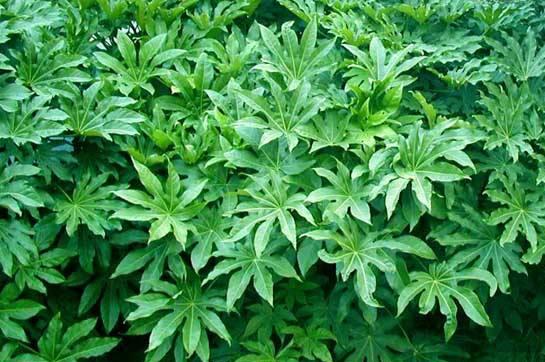
Let's first look at the growing habits of Fatsia japonica. It likes warm and humid environments, has strong shade tolerance but weak drought tolerance; it dislikes high heat or cold weather; it likes fertile sandy soil; and it has average requirements for light. So how do you grow Fatsia japonica? Below are the detailed methods.
Cultivation methods and precautions for Fatsia japonica
I. Suitable soil conditions for growing Fatsia japonica
1. Good air permeability
The better the air permeability of the soil, the more fully the roots and stems can breathe. Therefore, when choosing soil for Fatsia japonica, humus-rich sandy soil is best.
2. Good drainage
The soil used for planting must have good drainage, so that when watering, the water can cover all the soil and allow all the roots to absorb moisture evenly.
3. Neutral or slightly acidic soil
In the cultivation methods and precautions for Fatsia japonica, you should choose neutral or slightly acidic soil. Alkaline soils such as clay loam, fine sandy soil and saline-alkali soil are not suitable for growing Fatsia japonica.
II. Suitable temperature for Fatsia japonica
In terms of temperature, the most suitable temperature for Fatsia japonica growth is 10-25 degrees, so a daytime temperature of around 18 degrees and a nighttime temperature of around 12 degrees is more suitable.
Precautions: High temperatures can make the leaves of Fatsia japonica thinner and droop, so during sustained high summer heat, take cooling measures; when the temperature is below 7 degrees, growth may be hindered, so try to keep the ambient temperature above 7 degrees.
III. Light requirements for Fatsia japonica
Light is the key factor in whether the leaves stay emerald green. So in terms of light, how do you grow Fatsia japonica? The answer is to ensure sufficient light while keeping it in a semi-shaded environment, with a sunlight intensity of 50-60%.
Precautions: Direct sunlight can cause sunscald, so shade it in summer; long-term lack of light will cause the leaves to become small, so to keep the leaves attractive, do not place Fatsia japonica in a dark environment lacking light.
IV. Watering and fertilizing
1. Watering
Watering needs to be adjusted according to climate and growth stage, with the principle of keeping the soil moist. In summer or during high temperatures, spray or mist the leaves to raise the surrounding air humidity.
2. Fertilizing
During the vigorous growth period, that is, from April to October, apply light fertilizer frequently, about once every 2 weeks. Liquid fertilizer is mainly used, and fertilizing can stop after the temperature drops to 10 degrees.
Precautions: In winter, both watering and fertilizing should be reduced. Each watering should soak through, avoiding a situation where the soil is only moist on the surface but dry and compacted inside. In the cultivation methods and precautions for Fatsia japonica, this is closely related to the soil conditions.
V. Loosening the soil and repotting
1. Loosening the soil
Regularly loosening the soil for Fatsia japonica can improve air permeability, prevent the soil from becoming compacted, and help with the absorption of fertilizer and water.
2. Repotting
Repot once every 1-2 years, depending on the soil condition and the plant's growth rate. Repotting is generally done in April-May. You can use 2 parts humus soil or peat soil plus 1 part river sand or perlite, or you can grow it in fine sand, which is beneficial to the growth of Fatsia japonica.
Precautions: When loosening the soil and repotting, try to avoid damaging the roots. You can cut off some old and rotten roots, but do not dig into the main stem when removing the plant from the pot, otherwise diseases are likely to occur.
How does Fatsia japonica propagate? Propagation methods for Fatsia japonica / division is the simplest
Fatsia japonica is a relatively easy plant to keep alive, but before planting it, we should also understand how it propagates. So how do you propagate Fatsia japonica in a more scientific way? Today we will take a detailed look at three propagation methods for Fatsia japonica.
How does Fatsia japonica propagate
Fatsia japonica is an evergreen shrub or small tree. Its height can reach 5 m, and it is one of the potted plants that people love. So how does Fatsia japonica propagate? The answer is that sowing, division and cuttings are all possible, and you can choose the corresponding method according to your conditions.
Propagation methods for Fatsia japonica
I. How to sow Fatsia japonica
1. Which month to sow
If you use sowing to propagate Fatsia japonica, first of all the time is generally chosen in April-May. However, seeds should be collected in late April. After collection, wash them clean with water. The germination rate is generally around 26.3%. If the seeds are dried in the shade, the germination rate can increase to more than 60%.
2. Sowing
Evenly scatter the selected seeds on the growing medium, then cover with about 3 cm of potting soil and keep the soil slightly moist.
3. Transplanting
After sowing, it generally takes 1 month to germinate and emerge. At this time, weed promptly and keep the soil moist. After the seedlings grow 4 leaves, that is, 3-4 months after sowing, transplant them with a mud ball to another place.
II. Cutting propagation of Fatsia japonica
1. When to take cuttings
Among the propagation methods for Fatsia japonica, cuttings are a relatively common one. The time is generally chosen in April or August, when the temperature is moderate and suitable for the growth of new shoots.
2. Specific method
Choose healthy branches that have already grown for two years, then cut them into 13-15 cm long cuttings. Note that the cut should be slanted. Insert the cuttings diagonally into a sand bed, then cover with plastic film to protect them, and manage them in a cool place.
3. Transplanting
After cuttings are taken, they will take root and sprout within one month. During this process, pay attention to spraying water to keep them moist and remove weeds promptly. After 2-3 weeks of growth, they can be transplanted. Note that they should be transplanted with soil.
III. Division method for Fatsia japonica
1. Time for division
Usually, if grown in a greenhouse, division can be done all year round, but if grown at home, the best time for division is April-May, and it can be combined with repotting. Among the propagation methods for Fatsia japonica, division has the highest survival rate.
2. How to divide
Take the plant out of the pot by gently patting around the pot, then tip the plant out of the pot, cut off poorly growing and rotten roots, then wash off the soil, divide the plant into 3-4 plants, and plant them separately into prepared potting soil.
3. Later care
After division, no fertilizing is needed, but a small amount of water can be given. After 3 weeks of growth, normal care can be carried out according to the cultivation methods and precautions for Fatsia japonica, including watering, light, temperature and so on, all of which must be well controlled.
How to prune Fatsia japonica, how to sow Fatsia japonica
Flower Bonsai Network introduction: Today Flower Bonsai Network brings you an article on how to prune Fatsia japonica and how to sow Fatsia japonica. Let's take a look!
The leaves of Fatsia japonica are like little green palms, tender and emerald green, growing in panicles. So how should Fatsia japonica be effectively pruned?
Pruning steps for Fatsia japonica
The first pruning step for Fatsia japonica is to control the pruning height, which can help you prune more perfectly, because Fatsia japonica is easy to grow and its growth form has its own shape, but a little pruning will certainly make it more beautiful. When pruning, cut off the upper part at the branch forks to promote the growth of new shoots, so that it grows into a natural tree shape, beautiful and elegant.
Second, prune away diseased and damaged branches, buds, stems and so on, to keep its appearance emerald green and ensure the healthy growth of other branches, buds and stems.
The final step is to cut off old leaves, because aging leaves will wither, affecting the overall appearance and also consuming part of the nutrients, so pruning them away is the best method. If Fatsia japonica grows relatively dense and lush, in order to make its growth even, you can also cut off overlapping leaves.
Pruning and care for Fatsia japonica
After pruning Fatsia japonica is completed, proper handling and care should be carried out
Remove the pruned branches and leaves from the potting soil, then throw them into the trash can.
Then use a spray bottle to spray water on the pruned Fatsia japonica. First, it keeps the plant moist; second, it cleans the leaf areas dirtied by pruning, ensuring the plant stays fresh and bright.
After pruning, fertilize, because removing some branches and leaves also takes away some nutrients, so nutrients need to be replenished. Apply thin liquid fertilizer to promote rapid and normal growth.
All right, we have told you the pruning knowledge for Fatsia japonica. If you need to prune, you might as well follow the steps we told you. We wish your Fatsia japonica vigor and vitality.
How to sow Fatsia japonica
Fatsia japonica is an evergreen shrub, mostly used for ornamental garden planting and also for indoor ornamental cultivation. So how do you sow Fatsia japonica? Come, let's take a look together!
Sowing methods for Fatsia japonica
One of the propagation methods for Fatsia japonica is sowing. First, the sowing time should be in late April. Choose harmless, disease-free, healthy and plump seeds, then wash the seeds clean with water and sow them into the soil. You can sow them immediately after collection, but because the seeds contain a lot of moisture, oxygen will enter the seeds after planting, causing the seeds to become moldy, so the germination rate of sowing immediately after collection is not high.
Another method can help the seeds germinate and grow well. Air-dry the collected seeds, place them in the refrigerator for cold storage, and sow them in the spring of the following year.
Next, Fatsia japonica sowing generally uses broadcasting. Smooth and compact the surface of the seedbed, then dig a 3 cm deep trench and drop the seeds in, then cover the seeds with fine soil sifted through a sieve.
Finally, within one month after sowing, they will germinate. At this time, pay attention to weeding and watering to ensure the soil stays moist.
Sowing management for Fatsia japonica
After sowing Fatsia japonica, reasonable management and care should be carried out
First, ensure the temperature of the sowing growth environment. It should be warm and moderate. You can cover the seedbed with plastic film to keep it warm and moist.
Second, after sowing, water promptly. If the soil is not dry, do not water. If you find the soil is dry, water immediately to ensure the soil remains moist at all times.
Finally, after the sown seedlings emerge, pay attention to shading. You can use black shade netting or reed curtains for shading. During shading, also pay attention to ventilation. On rainy days, uncover the shading material for ventilation.
Thin out the seedlings, because as the seedlings grow, they will take up each other's space. In order to have enough growing space, thinning is necessary.
All right, we have told you how to sow Fatsia japonica. Try it quickly!