When Does Calendula Bloom? Sow in August and It Will Bloom in Winter
Calendula, a highly ornamental flower with a chrysanthemum-like shape and vivid colors, is deeply loved by gardening enthusiasts. In daily life, many people grow calendula, and what they look forward to most is its blooming. So when does calendula bloom? Many gardening enthusiasts want calendula to bloom in winter - can calendula bloom in winter? Let us answer these questions for you.
I. When Does Calendula Bloom? April
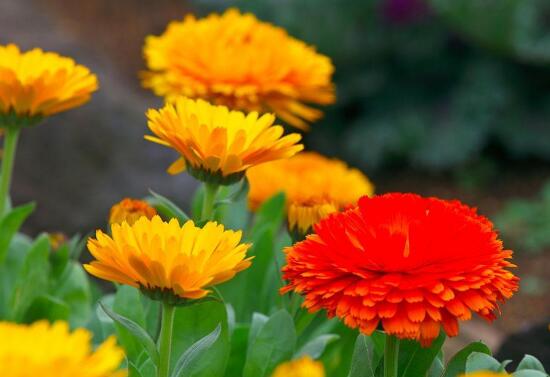
A flower's blooming time is closely related to its variety and care. So generally speaking, when does calendula bloom? If cared for strictly according to calendula growing methods, it can bloom as early as April, or as late as June. Its attractive leaves and delicate flowers make people fall in love at first sight.
II. Calendula Blooming Period: 6 Months
Under normal circumstances, the calendula blooming period is quite long. It can bloom as early as April and as late as October, so the blooming period is 6 months. In other words, calendula can bloom from early summer to late autumn. So can calendula bloom in winter? Our answer is yes, but we need to do a few things.
III. Can Calendula Bloom in Winter? Yes
Normally, calendula blooms in summer and autumn, and cannot bloom in winter. But no matter how difficult something is, people can always find a way. The method is simple: achieve it through sowing, by sowing in late August. As for how to sow, this is covered in detail in the calendula propagation methods, so we won't go into it here.
IV. Precautions During the Calendula Blooming Period
When calendula is blooming, you shouldn't just admire it and forget important care. Otherwise, no matter how beautiful the flowers are, they will wither quickly. So to make the calendula blooming period last longer, you should pay attention to the following points:
1. Temperature
Only when calendula is at the most suitable temperature will its blooming quality be good. For calendula, the most suitable temperature range for blooming is between 15-25°C. It's worth mentioning that controlling the temperature can also make calendula bloom earlier.
2. Light
During the calendula blooming period, light is very important. Generally, at least four to five hours of light per day should be ensured. There's no need to worry about light intensity, because even direct sunlight will not harm calendula.
3. Fertilizing
Blooming consumes a large amount of nutrients, so proper fertilizing is very important. Although you don't need to pay much attention to fertilizer normally, you can't ignore it during the calendula blooming period, because blooming consumes a great deal of nutrients and needs to be supplemented artificially. Fertilizer choice: you can use rice water, which is also a flower fertilizer with extremely high nutritional value. It is both economical and non-polluting.
How to Propagate Calendula: Two Propagation Methods for Calendula / Sow in Autumn and It Blooms in Winter
Calendula, also called pot marigold, belongs to the Asteraceae family. It is a flower with a beautiful shape and vivid colors, deeply loved by gardening enthusiasts. In daily life, as more and more people grow calendula, mass propagation is imperative. So how do you propagate calendula? In general, there are two propagation methods for calendula: cuttings and sowing. Let us introduce the specific operations in detail.
I. How to Propagate Calendula: Cuttings / Sowing
As a beautiful flower that can be grown indoors, calendula's propagation methods are no different from those of other plants. It mainly relies on cutting propagation; and because calendula produces seeds after blooming, it can also be propagated by sowing. So how do you propagate calendula? Let's continue reading for the specific operations.
II. Two Propagation Methods for Calendula
(1) Cutting Propagation of Calendula
The commonly used propagation methods for calendula are sowing and cuttings, among which cuttings are relatively easier and have a better survival rate. However, when propagating by cuttings, you need to pay attention to three aspects: the cuttings, the cutting soil, and post-cutting management. Next, let's take a look at how to propagate a pot of calendula by cuttings!
1. Choosing Cuttings
In the cutting propagation of calendula, the first thing to do is naturally to select cuttings. Once they are chosen well, more than half of the entire propagation process can be considered successful. You can combine this with pruning (pinching), cutting off thicker, pest-free top shoots as cuttings.
2. Cutting Soil
According to calendula growing methods, the soil for calendula cuttings should be materials such as nutrient soil, river sand, or peat soil. Ordinary gardening enthusiasts propagating at home, due to limited conditions, can use slightly coarser sand, but rinse it with clean water before use to avoid containing pathogens.
3. Starting the Cuttings
After completing the above preparatory work, the rest is simple. Just insert the cuttings directly into the prepared soil, and then do a good job of care.
4. Post-Cutting Management
After the cuttings are done, you need sufficient humidity, spraying water 1-3 times a day. During the care process, block out 50%-80% of sunlight, and after the roots grow out, move them to a shaded area.
Note: You should keep the indoor temperature at 18-25°C. If it is below 18°C, the branches will have difficulty sprouting and will grow slowly; above 25°C is also not good, as the cut ends of the cuttings will easily rot, and the higher the temperature, the greater the degree of rot.
(2) Sowing Propagation of Calendula
Calendula produces seeds after blooming. Try to choose larger, fresh, plump and intact seeds for sowing. Specific operation: evenly scatter the seeds on the soil, then cover with a layer of soil about 3 mm thick. Keep the temperature at 20-30°C, and they will germinate in 7-10 days. When the sprouts reach a certain height, they can be transplanted or planted out.
PS: In winter, keep the temperature above 10°C, otherwise the plant will suffer cold damage and calendula leaves will turn yellow. Then provide normal care, keep the soil slightly moist, and fertilize normally. It's worth mentioning that if sown in autumn, calendula can be made to bloom in winter.
In general, calendula can be propagated by either cuttings or sowing, but the method most suitable for the broad community of gardening enthusiasts is still cuttings. So gardening enthusiasts who want to turn one pot of calendula into many pots at home should quickly try it themselves - even beginners have a very high chance of success! That's all for the introduction to calendula propagation methods. We hope it can be of help to everyone.
What Is the Calendula Flower Meaning? What Is the Reason Calendula Symbolizes Sorrow / Flower Meaning: Sorrow
In the complete collection of flower meanings, different flowers have different meanings. Because they carry people's emotions, they are either beautiful or sad, fully displaying the many facets of human life. As a beautiful flower, calendula is stunningly lovely, and it naturally has its own flower meaning too. So what is the calendula flower meaning? What is the reason calendula symbolizes sorrow? Let us answer these questions for you.
I. What Is the Calendula Flower Meaning? Jealousy / Despair
Beautiful flowers always have their own unique flower meanings, and although calendula is beautiful, its flower meaning is not. For thousands of years, because people have placed many emotions on calendula, today's calendula flower meaning has formed: jealousy, reluctance to part, the pain of separation, despair, reserve, darkness, terror, gloomy and tragic behavior, and so on.
Calendula Flower Meanings in Different Regions
1. Europe and America: Calendula, also known as pot marigold, is native to southern Europe and the Mediterranean coast. In Europe and America, the calendula flower meaning is sadness, separation, and sorrow.
2. Greece: Calendula has existed for a very long time. In Greek mythology, the calendula flower meaning is the pain of separation, infatuation, and so on. Although just hearing the flower meaning feels painful, it is precisely because of its beauty that people are intoxicated by it and thus reminded of those sad matters.
II. What Is the Reason Calendula Symbolizes Sorrow
Regarding this question, it is actually very simple. As mentioned earlier, in Europe and America, the calendula flower meaning is: despair, reserve, darkness, terror, separation, and sorrow. It is precisely because of these flower meanings that calendula is considered by most people to symbolize sorrow.
III. Who Is Calendula Suitable to Give To
Different flowers symbolize different meanings, so you should be careful when giving flowers to avoid mistakes and unnecessary misunderstandings. Calendula has different meanings on different occasions, so you must pay attention in daily life. If you want to give calendula, you can look at the suitable recipients below.
1. Giving to a Gentleman
Although the calendula flower meaning includes jealousy and reluctance to part, it also symbolizes noble sentiment and is a symbol of a gentleman. So if you think someone is upright, generous, and responsible, calendula is very suitable for them.
2. Birthday Flower
According to our research, the calendula is a birthday flower. For people born on August 24 and November 7, you can give them calendula.
3. Giving to Newlyweds
Calendula has a long blooming period, and when sown in autumn it can bloom in winter, so it carries the meaning of endurance. It is often used in wedding decorations to bless newlyweds to bathe in love forever. So if any friend is getting married, you can give calendula.
4. Giving to the Bereaved
When relatives or friends encounter misfortune, give calendula to express: I deeply sympathize with your grief; during Qingming Festival, place a bunch of calendula in front of the grave to express mourning; at a memorial service, offer calendula, meaning that the dead cannot come back to life, please restrain your grief.
IV. The Legend of Calendula
Having discussed the calendula flower meaning, let's now look at the legend of calendula. According to legend, calendula blooms on the first day of each month, and the Virgin Mary's birthday is on the first day of the month, so people regard calendula as the Virgin Mary's birthday flower. If you look at the English name of calendula, you will find that it evolved from "the first day of the month."