How to Propagate Pink Rain Lily? Detailed Propagation Methods
There are usually two propagation methods for pink rain lily: seed sowing and division. Below is a detailed introduction to the specific operation methods for gardening enthusiasts:
Seed Sowing Method
Seed collection: The seeds of pink rain lily generally mature in September-October. Because the flowering period is long, the seed collection time is also not concentrated. When the fruit skin changes from green to black, select plump and well-filled seeds and harvest them promptly, otherwise the fruit will split open and once the seeds fall off they are difficult to collect. After the fruits are collected, they should be dried in the sun promptly. After the fruit skin splits open, thresh promptly and remove debris to obtain pure seeds.
Seed storage: Because the seeds of pink rain lily are relatively small and have low moisture content, once fully dried, simply place the processed seeds into a kraft paper bag for storage to prevent mold and rot.
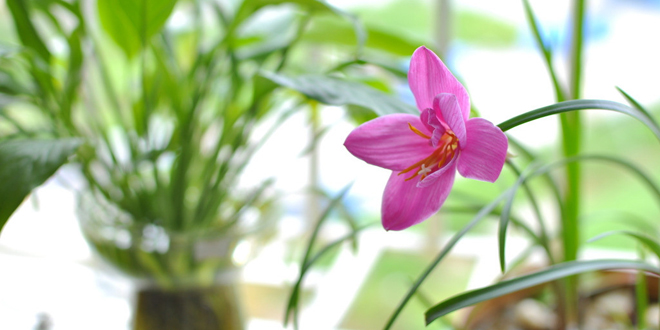
Introduction to Pink Rain Lily
Pink rain lily is a perennial bulbous herb of the genus Zephyranthes in the Amaryllidaceae family. It is also called pink rain lily, chive lily, chive orchid, rain flower, and so on. It is native to Mexico and is now widely cultivated around the world. It is suitable for planting in clumps in flower beds, flower borders, and lawns, and can also be potted for indoor viewing. It is a semi-shade groundcover flower widely used in landscaping. The flowers of pink rain lily are pink in color, very bright and vivid. In landscaping, it is suitable for embellishing flower beds, flower borders, and lawn edges, or can be planted in patches, all of which look very beautiful. It can also be potted for indoor viewing. In addition, pink rain lily has important medicinal value. The dried whole plant and bulbs are used as medicine, and it has the functions of dispersing heat and detoxifying, activating blood and cooling blood.
1. Growth Habits
Pink rain lily prefers warmth, humidity, and sufficient sunlight. It also tolerates semi-shade, drought, and high temperatures. It is suitable for well-drained, humus-rich sandy loam soil.
2. Morphological Characteristics
Pink rain lily is also called rain flower and chive lily. It is a perennial herb of the genus Zephyranthes in the Amaryllidaceae family. Native to Mexico.
Perennial bulbous herb. The tunicate bulb is ovate, with a light brown outer skin and a short neck. There are 5-6 basal leaves, nearly linear, flat, slightly fleshy, bright green, 20-30 cm long. The flower scape emerges from the leaf cluster, bearing a single terminal flower, pink, funnel-shaped, with a perianth tube about 2 cm long, lobes obovate with obtuse tips, and the flowers are relatively large. Capsule nearly spherical. Seeds flat, black.
Pink rain lily has a low-growing clump, flat leaves, and abundant flowers. The flower scapes emerge from the leaf cluster, with many terminal flowers. When planted in patches, it presents a expanse of rose red when blooming, very beautiful. Therefore, it is a very good flowering groundcover plant. The flowering period is relatively long, from June to September, blooming in summer and autumn, and it can bloom 2-3 times a year.
How to Grow Pink Rain Lily
1. Propagation Methods
Generally, the mixed sand broadcast sowing method is used. Mix seeds and fine sand at a ratio of 1:2, then evenly scatter on the prepared bed surface. After sowing the seeds, cover with prepared fine soil, with a thickness that just covers the seeds. Then cover with straw curtains to raise ground temperature, maintain soil moisture, prevent weed growth and soil compaction, and also protect the seeds from being washed out during watering. After the straw curtains are placed, spray water immediately. When spraying, try to spray in a mist form. The first watering must be thorough.
2. Cultivation
Pink rain lily grows robustly and is simple to maintain and manage. When planted in the ground in landscaping, choose a sunny, warm, and wind-sheltered location. Apply 3-4 top dressings during the growing and flowering period, and it will have lush leaves and abundant flowers. When cultivated in the open field in the middle and lower reaches of the Yangtze River, after heavy frost in severe winter, the old leaves wither, but the bulbs can remain in the ground to overwinter and bloom as usual the next year. Pink rain lily has a low-growing clump and abundant flowers, with a flowering period from June to September.
For potted soil, mix 2 parts loam, 1 part leaf mold and peat, add a small amount of fine sand, and add a small amount of bone meal and decomposed compost. During the growing period, there must be sufficient sunlight and water. After a batch of flowers withers, suspend watering for 7-8 weeks, then resume watering. With such alternating dry and wet periods, it can bloom 2-3 times a year.
Spray water at appropriate times according to weather conditions and soil moisture. With careful management, seedlings emerge about 2 weeks after sowing, with an emergence rate of over 95%. When the seedlings are about 1 cm tall, remove the straw curtains.
3. Management
After the seedlings of pink rain lily emerge, they enter the seedling management stage. At this time, carefully observe the growth of the seedlings. When the seedlings grow to 7-10 cm tall, apply 1 round of urea along with watering, then apply 1 more round of urea after another 2 weeks. After 1 month of growth, the seedlings form underground bulbs about 0.15 cm in diameter, with 2-4 basal leaves. After another month or more of growth and management, when the seedlings reach over 20 cm in height, they can be lifted from the nursery and planted out.
For planting pink rain lily, direct planting in the ground is best. Direct planting in the ground not only allows the root system of pink rain lily to spread out, but also enables it to fully absorb underground water. If bag planting, black cup-shaped plastic bags are the best choice. Pink rain lily grows and reproduces quickly, and management is relatively extensive. Pests and diseases of pink rain lily occur rarely. Water thoroughly in time when dry, and apply fertilizer 1-2 times during the growing season, and it will grow luxuriantly and bloom abundantly.
4. Pest and Disease Control
The main disease is leaf blight, which can be controlled by spraying 65% zineb wettable powder at 600 times dilution. Pests include diamondback moth and thrips that damage the flowers, which can be controlled by spraying 2.5% deltamethrin emulsifiable concentrate at 4000 times dilution.
Cultivation Methods for Pink Rain Lily
Pink rain lily is a perennial bulbous herb of the genus Zephyranthes in the Amaryllidaceae family. It is also called pink rain lily, chive lily, chive orchid, rain flower, and so on. It is native to Mexico and is now widely cultivated around the world. It is suitable for planting in clumps in flower beds, flower borders, and lawns, and can also be potted for indoor viewing. It is a semi-shade groundcover flower widely used in landscaping.[Habits]
Prefers warmth, humidity, and sufficient sunlight. It also tolerates semi-shade and moisture. Tolerates semi-shade and moisture. Cold hardiness is somewhat poor. It is suitable for well-drained, humus-rich sandy loam soil.
[Cultivation]
Pink rain lily grows robustly and is simple to maintain and manage. When planted in the ground in landscaping, choose a sunny, warm, and wind-sheltered location. Apply 3-4 top dressings during the growing and flowering period, and it will have lush leaves and abundant flowers. When cultivated in the open field in the middle and lower reaches of the Yangtze River, after heavy frost in severe winter, the old leaves wither, but the bulbs can remain in the ground to overwinter and bloom as usual the next year. Pink rain lily has a low-growing clump and abundant flowers, with a flowering period from June to September.
For potted soil, mix 2 parts loam, 1 part leaf mold and peat, add a small amount of fine sand, and add a small amount of bone meal and decomposed compost. During the growing period, there must be sufficient sunlight and water. After a batch of flowers withers, suspend watering for 7-8 weeks, then resume watering. With such alternating dry and wet periods, it can bloom 2-3 times a year.
[Pests and Diseases]
The main disease is leaf blight, which can be controlled by spraying 65% zineb wettable powder at 600 times dilution. Pests include diamondback moth and thrips that damage the flowers, which can be controlled by spraying 2.5% deltamethrin emulsifiable concentrate at 4000 times dilution.
[Propagation]
Bulb division is commonly used for propagation. The bulbs have strong dividing ability; one mature bulb can produce more than ten small bulbs from the basal plate. In spring, dig up the old plants, separate the small bulbs and plant them. Plant 2-3 per hole. The planting depth should be such that the bulbs are not exposed above the soil. After one division, propagate again after 2-3 years.