How to Propagate Columbine? Introduction to Common Propagation Methods
Columbine prefers a cool climate and dislikes high temperatures and exposure to the sun in summer; it grows best in sandy loam soil. It is robust and cold-hardy, and prefers sandy loam that is rich in humus, moist and well-drained. It is propagated by division or by seed; seed propagation can be carried out in both spring and autumn.
Before planting, sufficient base fertilizer should be applied. As the northern regions are relatively dry in spring, water 4~5 times a month (adjust the number of waterings according to the dryness of the potting soil in your environment), and in summer provide appropriate shade, or plant it in a semi-shaded spot where it grows even more vigorously; it dislikes waterlogging, so drain promptly after rain. Guard strictly against lodging, and at the same time strengthen pruning to improve ventilation and light penetration.
When the seedlings reach a certain height (about 40 cm), pinch out the growing tips promptly to control the height of the plant; after winter sets in, apply sufficient base fertilizer, and in the northern regions also water thoroughly against freezing and mound soil around the base of the plant to improve its ability to survive the winter.
Columbine is mostly propagated by seeding or by division.
Sow in spring and autumn; seedlings from seed can bloom in about 2 years. Plants established from seedlings need to be renewed once every 3 to 4 years. It is cold-hardy and vigorous, and prefers moist, well-drained sandy loam. It grows even better in partial shade. Division is best done in early spring before sprouting or after leaf fall. Seeds are best sown in pots immediately after they mature.
Seed propagation: sow the seeds sparsely; before germination, cover the sowing pot with glass to keep the soil moist and provide shade. Seedlings emerge after 1 month. Seedlings from seed bloom the following year. Superior varieties are usually propagated by division, carried out in March to April or August to September, but autumn is preferable. Seedlings can be planted out at about 10 cm, with a spacing of 30 to 40 cm between plants and rows. Apply a top dressing once before flowering. Shade is needed in summer. In cold regions, a little cover is needed in winter. After 3 years the plants tend to decline, so divide them promptly to promote renewal.
Division propagation: fertilizing and soil preparation are the same as above. Plant in spring and autumn: in spring from January to April, in autumn from August to December, with a plant and row spacing of 10×13.2 cm, cover with 1.6 cm of soil, water thoroughly to settle the roots, and keep the soil moist during the growing period. During the vigorous growth period, apply a small amount of urea as a top dressing, using 5 kg of urea per mu diluted in water and poured on, to promote growth. Seed propagation: seeds can be sown from January to April in spring and from June to December in autumn.
Apply sufficient base fertilizer, rake the soil fine and level it, prepare the seedbed, water thoroughly, and spread the seeds evenly over the seedbed surface, covering with a sand-loam-manure mix just until the seeds are no longer visible. Keep the bed surface moist; excessive moisture will cause the seeds to rot. Seedlings emerge in 140 days. If covered with plastic film, seedlings emerge in 60 days. After emergence, ventilate to harden the seedlings; when the seedlings are 6.6 cm tall, transplant them to the field, digging and planting them as you go, with a plant and row spacing of 10×13.2 cm, and apply a top dressing after they take root.
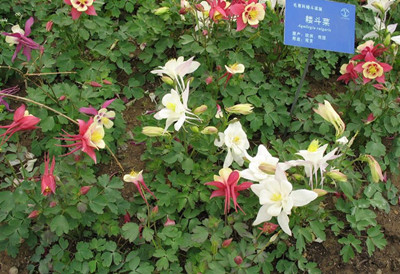
How to Grow Columbine
Choosing Potting Soil
To grow columbine in a pot, choose a slightly larger flower pot and put soil in it; it can be well-drained sandy soil, or leaf mold rich in humus, and a little base fertilizer should be added to the soil.
Light and Temperature
Columbine likes a cool growing environment and is very cold-hardy, but it is not heat-tolerant; during the growing period, give the plant plenty of light so that it can grow healthily. The most suitable growing temperature for columbine is generally 15°C-35°C, and appropriate light must be ensured. In summer, high temperatures and strong light occur, so provide the plant with appropriate shade, or place it in a cool, ventilated and semi-shaded environment for growing.
Watering
Columbine has relatively high water requirements; during the vigorous growth period, make sure to give it plenty of water. You can decide the number of waterings and the amount of water according to how dry the potting soil is, but note that there should be no water accumulating in the pot; if there is, drain it promptly, otherwise the plant's roots may rot.
Fertilizing
For columbine, a fertilizer of medium strength is sufficient, generally applied once a week, but the fertilizer concentration should not be too high, otherwise it will burn the plant. Note that once the plant enters autumn, fertilizing should stop. Also, before the plant blooms, apply some phosphorus and potassium fertilizer to ensure the plant's flowers bloom more brilliantly.
The above is an introduction to how to grow columbine. Below, let's look at what needs attention when growing columbine.
How to Grow Columbine
Columbine belongs to the genus Aquilegia in the family Ranunculaceae (Ranuncuaceae); it is a perennial herbaceous plant native to Europe and North America. Columbine is robust, cold-hardy, and prefers fertile, moist, humus-rich, well-drained soil. It requires relatively high air humidity and should be cared for under semi-shaded conditions in summer.Columbine is generally propagated by seeding and division, carried out in March to April or August to September. Direct-sown plants bloom the following year. Seedlings can be planted out at about 10 cm, with a spacing of 30 to 40 cm between plants and rows. Apply a top dressing once before flowering. Shade is needed in summer. In cold regions, a little cover is needed in winter. After 3 years the plants tend to decline, so divide them promptly to promote renewal.