How to Grow Impatiens? Detailed Cultivation and Care Methods
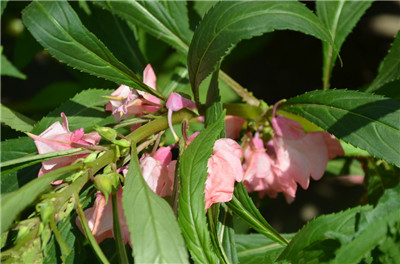
Impatiens, also known as henna, nail-dyeing flower, little peach red, and so on. Because its flower head, wings, tail, and feet all curve upward like a phoenix, it is also called golden phoenix flower. Impatiens belongs to the Balsaminaceae family and is an annual herbaceous flower, native to China and India.
Chinese scientific name: Impatiens Alternative names: Golden phoenix flower, good daughter flower, henna
Latin scientific name: impatiens balsamina Class: Dicotyledoneae
Order: Ericales Family: Balsaminaceae
Genus: Impatiens Distribution area: China and India
> Habits of Impatiens
Impatiens likes sunlight, fears moisture, tolerates heat but not cold, and is suitable for growing in loose, fertile, slightly acidic soil, but also tolerates poor soil. Impatiens has strong adaptability, transplants easily and survives, and grows rapidly.
During the growing season, water once a day; in hot summer, water twice a day; pay attention to drainage on rainy days. In short, do not let the potting soil dry out or become waterlogged.
Impatiens has strong vitality and good adaptability, and generally rarely suffers from pests and diseases. If powdery mildew appears due to high temperature and high humidity, spray 50% thiophanate-methyl wettable powder at 800 times dilution for control. If leaf spot disease occurs, use 50% carbendazim wettable powder at 500 times dilution for control. The main pest of Impatiens is the red hawk moth, whose larvae chew on Impatiens leaves. If this pest is found, it can be caught and eliminated by hand. Impatiens propagation prefers sunny terrain and loose, fertile soil, and it can also grow in relatively poor soil.
> Propagation of Impatiens
Impatiens is propagated by seeds. Sow from March to September, with sowing in April being most suitable. Before sowing, water the seedbed thoroughly to keep it moist. Impatiens seeds are relatively small, so do not water immediately after sowing to avoid washing the seeds away. Then cover with a thin layer of soil about 3-4 mm, pay attention to shading, and seedlings can emerge after about 10 days. When the seedlings grow 2-3 leaves, start transplanting. Transplanting is not particular about timing, and later gradually plant in the ground or pots for cultivation. It can also be germinated in a greenhouse, but before planting it permanently outdoors, thinning must first be carried out at night.
The growing period of Impatiens is from April to September. After the seeds are sown in pots, they generally germinate and grow leaves in about a week. When they grow to about 8 cm, keep 1-3 plants per pot. When they grow to 20-30 cm, pinch off the growing tips. After planting in the ground, top the main stem of the plant to enhance its branching ability and make the plant shape full. After 5 leaves, apply a thin, decomposed human manure or urine once every half month, and apply phosphate fertilizer and plant ash once before and after budding.
After the flowers bloom, cut off the flower base so that it does not set seed, and the flowers will bloom more profusely; remove flowers at the base at any time, which will encourage the tops of each branch to bloom successively, but it is prone to variation. It can bloom in early to mid-June, and the flowering period can last more than two months.
Cultivation and Care Methods for Impatiens
Impatiens, also known as henna, nail-dyeing flower, little peach red, and so on. Because its flower head, wings, tail, and feet all curve upward like a phoenix, it is also called golden phoenix flower. Impatiens belongs to the Balsaminaceae family and is an annual herbaceous flower, native to China and India.Chinese scientific name: Impatiens Alternative names: Golden phoenix flower, good daughter flower, henna
Latin scientific name: IMPATIENS BALSAMINA Class: Dicotyledoneae
Order: Ericales Family: Balsaminaceae
Genus: Impatiens Distribution area: China and India
> Habits of Impatiens
Impatiens likes sunlight, fears moisture, tolerates heat but not cold, and is suitable for growing in loose, fertile, slightly acidic soil, but also tolerates poor soil. Impatiens has strong adaptability, transplants easily and survives, and grows rapidly.
During the growing season, water once a day; in hot summer, water twice a day; pay attention to drainage on rainy days. In short, do not let the potting soil dry out or become waterlogged.
Impatiens has strong vitality and good adaptability, and generally rarely suffers from pests and diseases. If powdery mildew appears due to high temperature and high humidity, spray 50% thiophanate-methyl wettable powder at 800 times dilution for control. If leaf spot disease occurs, use 50% carbendazim wettable powder at 500 times dilution for control. The main pest of Impatiens is the red hawk moth, whose larvae chew on Impatiens leaves. If this pest is found, it can be caught and eliminated by hand. Impatiens propagation prefers sunny terrain and loose, fertile soil, and it can also grow in relatively poor soil.
> Propagation of Impatiens
Impatiens is propagated by seeds. Sow from March to September, with sowing in April being most suitable. Before sowing, water the seedbed thoroughly to keep it moist. Impatiens seeds are relatively small, so do not water immediately after sowing to avoid washing the seeds away. Then cover with a thin layer of soil about 3-4 mm, pay attention to shading, and seedlings can emerge after about 10 days. When the seedlings grow 2-3 leaves, start transplanting. Transplanting is not particular about timing, and later gradually plant in the ground or pots for cultivation. It can also be germinated in a greenhouse, but before planting it permanently outdoors, thinning must first be carried out at night.
The growing period of Impatiens is from April to September. After the seeds are sown in pots, they generally germinate and grow leaves in about a week. When they grow to about 8 cm, keep 1-3 plants per pot. When they grow to 20-30 cm, pinch off the growing tips. After planting in the ground, top the main stem of the plant to enhance its branching ability and make the plant shape full. After 5 leaves, apply a thin, decomposed human manure or urine once every half month, and apply phosphate fertilizer and plant ash once before and after budding.
After the flowers bloom, cut off the flower base so that it does not set seed, and the flowers will bloom more profusely; remove flowers at the base at any time, which will encourage the tops of each branch to bloom successively, but it is prone to variation. It can bloom in early to mid-June, and the flowering period can last more than two months.
Cultivation Methods for Impatiens and Precautions for Growing Impatiens
Impatiens is also called henna, little peach red, Impatiens stem, and so on. It is understood that Impatiens is a herbaceous flower in the Balsaminaceae family. Impatiens is native to China and India, and was later widely cultivated in courtyards across China, making it a relatively common ornamental flower. So how do you cultivate Impatiens, and what are the growing methods and precautions? Let us introduce them to you below.I. Cultivation Methods for Impatiens1. Planting: Generally sow in spring from March to April. It can be sown in a seedbed or directly in a courtyard flower bed.
2. Light and temperature: Impatiens likes light and tolerates shade. It needs at least 4 hours of scattered sunlight per day. In summer, provide shade; in winter, move it into a greenhouse to prevent freezing.
3. Watering and fertilizing: After planting in the ground, water promptly and fertilize frequently, and take special care not to let the soil alternate between dry and wet. In summer, never water wilted plants under the blazing sun. Especially during the flowering period, they must not suffer drought, otherwise the flowers will easily drop.
4. Flowering period control: If you want to delay the flowering period, sow in early July. You can also use the method of pinching off the growing tips and at the same time remove early-opening flowers and buds, so that the plant continues to expand, and apply fertilizer once every 15-20 days. After September, more flower buds will form, so that they bloom on National Day. At the same time, pay attention to disease prevention and control.II. Pest and Disease Control of Impatiens
1. Impatiens powdery mildew
Symptoms: This disease mainly occurs on leaves and tender shoots. It generally begins in June, and after July the leaf surface is covered with a white powdery layer. Subsequently, small yellow granules form in the white powdery layer, and the color gradually deepens, finally becoming dark brown.
2. Impatiens brown spot disease
Impatiens brown spot disease, also known as Impatiens leaf spot disease, occurs in both northern and southern parts of China.
Symptoms: The disease mainly occurs on leaves. Leaf spots are initially light yellowish-brown small dots, then expand into circular or oval shapes, after which the center becomes light brown and the edges brown, with indistinct concentric rings. On severely affected leaves, the spots join together, causing the leaves to become withered and yellow, until the plant dies.
3. Impatiens damping-off disease
Symptoms: The pathogen mainly infects the root and stem base, causing the affected area to turn black or become constricted. When moist, white mold-like growth appears on it. After the plant is infected, leaves wilt and dry out within a few days, then the entire plant dies.III. Precautions for Growing Impatiens
Impatiens has a well-developed root system and transplants easily and survives. When planted in the open ground, it has low soil requirements, but when potted or growing valuable varieties, sufficient base fertilizer should be applied, and during the growing period apply a thin liquid fertilizer once about every half month. After the plant buds, spray 1-2 times with 0.1% potassium dihydrogen phosphate, which can make the flowers larger and more colorful and prolong flowering. Impatiens is relatively drought-tolerant and grows robustly in slightly moist but on the dry side soil. During the mixed seedling stage, water can be appropriately controlled to promote new root growth, thus laying a good foundation for the plant's later growth. Summer drought often easily causes leaf drop followed by wilting, so pay attention to timely watering. After the plant buds, appropriately increase the amount of watering, so the flowers open more quickly and vividly. In the rainy season, pay attention to timely drainage. In damp, shady, or poorly ventilated places, it is prone to powdery mildew, or snails may eat the leaves, so timely measures should be taken for control. For flower bed planting, pinch off the growing tips at the appropriate time. Generally, when the plant height reaches 20-25 cm, top it to encourage more side branches, so as to make the plant shape full. Afterward, when the main stem and the base of side branches bloom, promptly remove the flowers until the plant forms a clump of branches. At this time, the tops of all side branches can bloom at the same time, thereby increasing ornamental value. If you do not plan to save seeds, promptly cut off the remaining flowers after they fade so they do not set seed, and the flowers will bloom even more profusely. In addition, pay attention to timely seed collection. Because Impatiens capsules crack easily after ripening and can eject seeds far away, causing seed loss, seed collection is best done in the morning.The above is how to grow Impatiens, along with the growing methods and precautions. After planting and blooming, you can also use the flowers to wrap nails for dyeing, and it will have a very good effect.