How to grow cyclamen? A detailed guide to home care methods
Because of its graceful flower posture, unusual flower shape, bright colors and captivating fragrance, cyclamen is very popular among consumers. People often like to place a pot of cyclamen in the living room, as it carries the beautiful meaning of "immortals arriving gracefully." Home care of cyclamen should pay attention to the following aspects:
1. Growing medium: cyclamen fears waterlogging, so the medium needs to be loose, breathable, well-draining, slightly acidic soil. Generally, a mixed medium of peat and perlite is used for cultivation. A mix of leaf mold and furnace slag ash can also be used. When planting, the medium must be properly disinfected and sterilized to prevent damping-off, root rot and other diseases.
2. Temperature: cyclamen likes a warm environment and is not tolerant of high temperatures or severe cold. The maximum temperature must not exceed 30°C, otherwise it will enter a dormant state; high temperatures around 35°C easily cause rot and death. In winter, it is best kept between 10-20°C. Below 5°C, growth is inhibited, leaves curl, and flowers open poorly with dull colors. In summer, place it in a humid, ventilated spot, keep the potting soil somewhat dry, and let it fully dormant through the summer.
3. Humidity: cyclamen likes a humid environment and is not tolerant of dryness. During the growing period, humidity needs to be maintained between 60-70%, which can make the leaves dark green and glossy. In winter, it must not be placed where it is directly exposed to heating or air conditioning, to prevent wilting and drying out from wind. When misting, avoid the flowers to prevent them from fading prematurely. The water temperature should be close to room temperature.
4. Light: during the growing period, cyclamen needs sufficient light for flowering to last and for the colors to be vivid. Placing it in semi-shade is only suitable for brief enjoyment, and shaded environments must be avoided, otherwise both leaf color and flower color will fade, the plant will weaken, and in severe cases it will be difficult to recover, until it declines and dies.
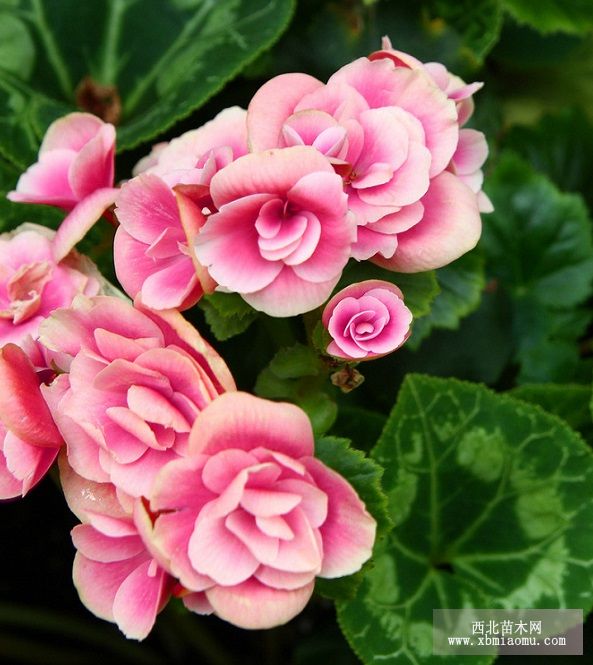
It is best to buy tubers from August to September. Choose tubers with a diameter of more than 4 cm and plump central leaf buds and flower buds. If buying potted flowers, you can buy from November to February. Choose potted plants with robust growth, green and thick leaves, clear patterns, no wrinkles, no curled edges, more than 10 unfolded leaves, and many flower buds at the top of the corm (with rounded papilla-shaped tips).
Basic habits
It likes a cool, warm and humid environment. Temperature: the suitable growth temperature is 10-20°C; below 5°C growth is slow, at 0°C frost damage occurs, and above 30°C growth stops and it enters a dormant state. Light: it likes light, and below 28°C it should get as much sun as possible. Water: keep the potting soil moist but not too wet, to prevent root rot. Soil: it likes loose, fertile neutral soil, pH 6—7. Fertilizer: nitrogen fertilizer must not be excessive. You can use special cyclamen fertilizer sold on the market and follow the instructions. You can also use compound fertilizer granules with nitrogen:phosphorus:potassium = 20:20:20 together with a potassium dihydrogen phosphate foliar fertilizer.
Cultivation points:
November to March: cyclamen flowering period. Potted flowers should be placed in front of a south-facing window or within 1 meter in front of a south-facing enclosed balcony where they can receive light. Keep the room temperature above 10°C, keep the potting soil moist, and water once every half month with 1% potassium dihydrogen phosphate foliar fertilizer to keep it flowering continuously. In rooms without heating facilities, pay attention to protection from low temperatures and cold wind; you can cover the whole pot with a transparent plastic bag and place it in a warm, bright spot. When the temperature is high at noon, open the plastic bag for ventilation. It can bloom from February to March.
April to May: the flowering period is coming to an end, so remove faded flowers early and gradually move it outdoors into sunlight. Water once a week with 1% compound fertilizer solution. New leaves will quickly grow, old leaves will fall off, and the corm will also enlarge. If aphids appear, brush them off with a water-dipped brush or cotton swab; if leaves are found shriveled and yellowing, bury 1-2 grams of carbofuran along the edge of the pot to kill root-knot nematodes.
June: water and fertilizer management is the same as in May. When the temperature is high, place it in a shaded spot. Some potted flowers lose their leaves after flowering and enter dormancy until September. At this time, place them in a cool, ventilated spot, keep the potting soil slightly moist, and do not fertilize.
July to August: the north enters the high-temperature season, so control water and stop fertilizing. Plants that have not gone dormant should be placed on an east- or north-facing balcony, exposed to the sun for more than an hour every morning, or placed under tree shade. At this time, new leaf buds and flower buds will grow at the top of the corm. If rot disease (gray mold) occurs, spray and drench with a 1000-fold dilution of 75% chlorothalonil wettable powder.
September: dormant corms begin to sprout. Old plants more than two years old can have their potting soil changed, and newly purchased tubers are also planted at this time. When planting, first place 2-3 cm of charcoal slag, ceramsite or coarse gravel at the bottom of the pot, then add growing soil. Old plants should be planted with the soil ball intact. After planting, the pot surface should be higher in the center and lower around the edges, with the corm exposed 1/2 above the soil. Water thoroughly the next day and keep it in a shaded spot for care. After new buds grow, light can be increased.
October: it enters a period of vigorous growth and should be placed in sunlight for care. Water once a week with 1% compound fertilizer solution, and spray once with 1% potassium dihydrogen phosphate foliar fertilizer. Move it indoors before Frost's Descent, and it can bloom in November.
Propagation
Generally propagated by sowing. The soil must be sterilized before sowing, and after sowing until emergence it must be kept away from light. Emergence takes more than a month, and seedlings grow slowly, taking more than a year to bloom. It is best to directly buy potted flowers from reputable flower merchants, which can save a lot of trouble during planting.
Objective evaluation
Advantages: beautiful flowers; long flowering period. Disadvantages: sensitive to heat; potting soil must not be too wet (slightly dry is better); does not like heavy fertilizer.
An introduction to home potted cyclamen care and management methods, techniques, and precautions
Cyclamen is a common herbaceous flower. It can be grown not only in water but also in soil, has extremely high ornamental value and a certain decorative effect, and is deeply loved by many flower lovers. So, do you know what the home potted cyclamen care and management methods are? Today, the editor will introduce them to you in detail.
1. Seed selection: carefully select seeds, choosing plump, glossy brown seeds free of pests and diseases. Soak seeds harvested in the same year for a full day and night in a mixture of 50 ppm GA3 (gibberellin) and 500 ppm thiophanate-methyl or chlorothalonil, then drain off the water, rinse clean in clear water, and drain away surface moisture. Then sow. Compared with seeds that were not soaked, they bloom about 10 days earlier.
2. Potting soil: cyclamen requires fertile, well-draining, slightly acidic soil. If the soil is not managed for a long time or is managed unscientifically, cyclamen will grow poorly, bloom less, have dull colors, and lose or reduce its ornamental value. For potting, loose and fertile nutrient soil is best. Apply an organic fertilizer such as decomposed dilute human and livestock manure once every 10 days or so; after buds appear, apply two additional doses of 0.1% potassium dihydrogen sulfate.
3. Temperature: the most suitable growth temperature is around 15°C. The suitable temperature for growth and flower bud differentiation is 15-20°C, with humidity 70%-75%; in winter during the flowering period, the temperature must not be lower than 10°C. If the temperature is too low, the flower colors become dull and the flowers easily fall; if the summer temperature reaches 28-30°C, the plant goes dormant. When the temperature rises above 30°C, cyclamen leaves will turn yellow and fall off, and the flowers will fade with no ornamental value. If it reaches above 35°C, the tuber readily rots. At this time, place the plant on a well-ventilated north-facing balcony, under the eaves, in a corridor, or in a rain-sheltered shade shed, stop fertilizing, control watering, and keep the potting soil moist. If it stays dry for a long time, the root system will shrivel and die, and the corm will shrink, lose water and die.
4. Watering: when cyclamen enters dormancy in summer, reduce watering of the dormant corm. After potting up and repotting in autumn, water thoroughly and gradually increase fertilizer and water, keeping the soil moist. In winter, reduce the amount of water. When watering, do not let water touch the flower buds or young leaves, to avoid rot and affect flowering. Watering is best done between 10:00 and 12:00 in the morning, and the water temperature and medium temperature should be as close as possible.
5. Fertilizing: cyclamen is also a fertilizer-loving plant. First, start with the soil: use fertile sandy loam with more humus in the pot, change the potting soil once a year, and apply 2% potassium dihydrogen phosphate once each in spring and autumn every year. Avoid high-nitrogen fertilizers, which can make it bloom 15-20 days earlier. During the growing period, fertilizer should generally be applied lightly and often, and liquid fertilizer must be fully decomposed and fermented. Fertilizing should be done on sunny days. Stop or reduce fertilizing from June to August. After late August, as the weather gradually cools, growth becomes increasingly vigorous, and fertilizer can be applied once every 7-10 days, with more phosphorus- and potassium-containing fertilizer to promote lush flowering later. When fertilizing, be careful to prevent the fertilizer solution from covering the top of the corm, to avoid causing rot.
6. Pest and disease control: cyclamen has more diseases than pests. Common ones in home care are: ① Gray mold. The main symptom is water-soaked small spots 1-2 mm in diameter at the diseased area, which gradually expand and become brown rot. When the petiole or flower stalk is infected, the leaves or flowers bend and break, and the diseased area has a gray mold layer that later becomes earthy yellow. The cause is excessively high humidity and poor ventilation. For control: first, ventilate promptly to reduce air humidity; second, promptly remove diseased leaves to reduce sources of infection; third, spray broad-spectrum fungicides such as zineb and carbendazim. ② Soft rot. It is mostly caused by bacterial infection, and the diseased area appears soft and rotten, mostly occurring on the corm. It is mainly caused by incomplete or absent sterilization of the medium, and easily occurs under high temperature or high humidity. For control, spray agricultural streptomycin or carbendazim, etc.
7. Propagation of cyclamen: cyclamen is generally propagated by sowing, and it can germinate 40 to 50 days after sowing. When transplanting, add a small amount of organic fertilizer to the soil, and when planting, expose the top of the corm above the soil. With careful cultivation, it can bloom by late December. Its flowers bloom more and more profusely and can continue until the end of April. After flowering, leaves begin to fall in June. At this time, reduce watering, and by July it completely enters dormancy. If it has a good summer dormancy, the flowers will bloom luxuriantly and brilliantly in winter.
8. Light: extend the light conditions. Cyclamen likes sunlight, and extending the light duration can promote earlier flowering. Therefore, cyclamen should be placed in a sunny spot for care.??
9. Hormone treatment: when the young buds of cyclamen appear, lightly spray them with 1 mg/kg gibberellin, 1-3 times a day, which can advance flowering by more than 15 days.
The above is all the content I have learned today about crabapple. I hope flower lovers will find this article helpful after reading it. To learn more about crabapple, please continue to follow Duorou Huapu, and we will provide you with more related knowledge.