What to do when marigold leaves turn yellow? Pay attention to shading and other care matters
Marigold is a flower with high ornamental value, and it can be seen in many gardens in our country. However, if this plant shows yellowing leaves, it will still affect its overall beauty. What should be done when marigold leaves turn yellow? Below, the editor will help everyone learn about it.
What to do when marigold leaves turn yellow
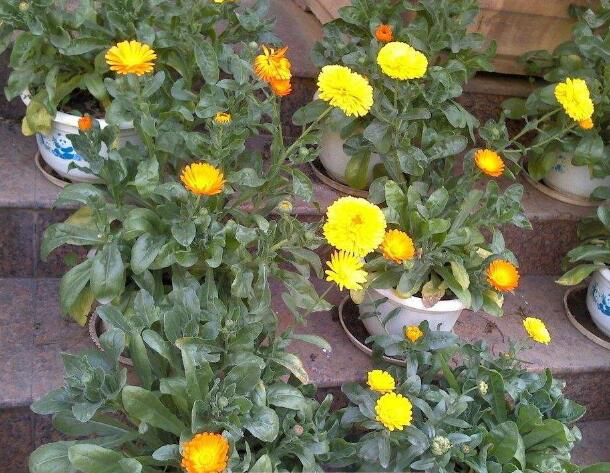
If you want to know what to do when marigold leaves turn yellow, first we need to know what causes it. There are many reasons for this phenomenon. For example, insufficient watering, long-term exposure to strong sunlight, and so on can all cause marigold leaves to turn yellow. The detailed causes and solutions are below. Let us learn about them together.
1. Soil problems
In the process of growing marigolds, the choice of soil is very important. If soil with very high stickiness is chosen to grow marigolds, it will make it difficult for them to absorb nutrients, thus causing insufficient nutrients and the phenomenon of yellowing leaves.
Notes: As for soil, it is best to choose sandy soil with relatively high looseness. This kind of soil has high drainage and air permeability, allowing marigolds to absorb nutrients better and thus grow vigorously.
2. Insufficient watering
Water is a relatively important nutrient in the process of plant growth, and marigolds are no exception. If too little water is given, marigold leaves will turn yellow because of insufficient nutrients. At this time, we need to increase the watering frequency.
Notes: When watering marigolds, the amount of water in each season is different. For the specific watering frequency and watering methods, everyone can refer to the article on how to water marigolds, which has detailed introductions.
3. Long-term exposure to strong sunlight
Marigold is a light-loving plant and needs sufficient light during growth, but this also depends on the situation. If it is still placed outside to receive direct sunlight when the summer sun is too strong, it is very easy to burn the plant and cause marigold leaves to turn yellow.
Notes: In spring and autumn, the climate is relatively suitable, and we can let marigolds receive light all day. However, summer is the season with the strongest sunlight of the year. At this time, we need to provide shading. It is best to move marigolds indoors to a semi-shaded place for growing. This way, they can not only receive light, but also not turn yellow because the light is too strong.
4. Pests and diseases appear
When growing marigolds, if care is improper, pests and diseases are very likely to appear. This phenomenon is also one of the main reasons for marigold leaves turning yellow, so everyone must be careful when growing them.
Notes: When pests and diseases appear, they must be dealt with in time. If the matter is dragged out, it will not only be a problem of yellowing leaves, but will also cause the whole plant to wither and die. When this phenomenon occurs, we can refer to the article on pest and disease control for marigolds, which includes control methods for various pests and diseases. Everyone can learn about it.
What to do when marigolds have insects, pest and disease control for marigolds / 3 insect pests, 2 diseases
In the process of growing marigolds, what people fear most is pests and diseases. This phenomenon will not only make marigold leaves turn yellow, but will also gradually make them wither. So what should be done when marigolds have insects? What also needs to be done for pest and disease control in marigolds? Below, the editor will help everyone learn about it.
I. What to do when marigolds have insects / spray with pesticides
If you want to know what to do when marigolds have insects, first we need to understand what kind of insects they are, so that we can deal with them in a targeted way. The most direct method when handling this situation is to use pesticides for spraying, but the pesticides used for each kind of pest or disease are different. This point is introduced in detail below. Let us continue reading.
II. Pest and disease control for marigolds
Insect pests of marigolds
1. Slug moth pest
The appearance of this pest, the slug moth, is similar to a moth, but its size is relatively small. This pest mainly feeds on marigold leaves and will gradually eat away at the leaves, causing many holes to appear in marigold leaves, greatly affecting their beauty. In severe cases, it will even cause marigolds to become bare stems.
Control method: When controlling this pest, the slug moth, we can choose to use a 1500-fold dilution of 2.5% fenvalerate emulsifiable concentrate for direct spraying.
2. Scale insect pest
In pest and disease control for marigolds, scale insects are a relatively common pest. This pest mainly harms marigold leaves. It will gradually suck the sap from the leaves, causing the plant to turn yellow and drop leaves because of nutrient loss.
Control method: For this pest, we must control it in the early stage. If the matter is dragged out, it will cause great loss to the plant. When handling it, we can use a 2000-fold dilution of 10% imidacloprid wettable powder for spraying.
3. Aphid pest
Aphids are a pest that appears on many plants, and marigolds are no exception. This pest mainly harms the branches and leaves of marigolds. It will gradually suck the sap from them, causing marigolds to wither and die because of massive nutrient loss.
Control method: When handling this pest, aphids, we must promptly use a 2000-fold dilution of 10% imidacloprid wettable powder for spraying.
Diseases of marigolds
1. Powdery mildew disease
In pest and disease control for marigolds, powdery mildew is a relatively common disease. When this disease occurs, some powdery mold layers appear on marigold leaves and will gradually spread to the whole leaf, making marigolds unable to carry out photosynthesis, thus causing premature aging and other phenomena.
Control method: When controlling this disease, we can use 80% sulfur at 400-fold plus 72% benalaxyl-cymoxanil at 600-fold spray to spray the plant.
2. Black spot disease
Black spot disease has a very broad scope of damage. At the earliest stage, many purplish-brown disease spots appear on the leaves. As time goes on, the disease spots gradually spread to the whole plant, and the color of the disease spots gradually turns black, finally causing the plant to rot and die.
Control method: When controlling this disease, we can use thiophanate-methyl to spray diseased plants. Generally, spray once every 7-12 days, and after 2-3 times it can basically recover.
What to do when pothos leaves turn yellow, and what methods are there?
Pothos is originally an evergreen foliage potted plant that purifies the environment. It not only has great effects and functions, but is also very easy to grow; it is deeply loved by many consumers. But many pothos growers also encounter the most common and most troublesome problem after buying it and growing it at home for a period of time——pothos leaves have turned yellow! Watching their beloved pothos turn yellow day by day, the owners feel distressed, anxious, and helpless. So what causes pothos to turn yellow? And what should be done? We have to find a way to save it! Below we will find ways to solve this troublesome problem together!
I. Analyze the causes of yellowing leaves
Generally speaking, what can cause pothos leaves to turn yellow is nothing more than several aspects such as water, sunlight, temperature, nutrition (fertilizer), and so on. It may also be other reasons, but the probability is very, very small, almost none. Below, the editor has provided some of the main causes and symptoms that can make pothos leaves turn yellow. Dear readers can compare them with your own pothos symptoms to find the cause, so that the problem of yellowing leaves can be better solved!
[Improper watering, leaf surface turns yellow]
Improper watering often appears in new owners growing pothos for the first time. Because they care too much, as if their pothos cannot drink enough water, they keep pushing water into it. As a result, the poor pothos leaves slowly become dull yellow and lusterless, and even more pitifully, the roots slowly rot. The tips of newly grown leaves also shrink and stop growing; or they simply do not give it water at all, causing the leaf tips and edges of the pothos to begin to wither, dry out, and even turn yellow and fall off.
[Insufficient light, new leaves tend to be yellow]
If pothos is placed for a long time in a corner where it cannot get sunlight and cannot be properly ventilated, it cannot be prompted to carry out photosynthesis and absorb oxygen. Because of the lack of chlorophyll, it will easily turn yellow, and even new leaves will show yellowing symptoms.
[Too much light, leaves become withered and yellow]
Pothos is a plant that prefers shade. Direct strong light is simply a fatal killer for it. It will quickly wilt and wither or turn yellow and fall off. In particular, the part facing the sun will not only develop yellow spots, but in more severe cases will directly dry out.
[Improper fertilization, roots and leaves turn yellow or fall off]
Fertilization, like watering, stresses suitability and proper handling. Too much will cause excess nutrients, increase concentration, and then accumulate, thus causing pothos leaves to become enlarged and lusterless. In mild cases they turn yellow, and in severe cases they fall off. Conversely, if too little, the leaf color of pothos will gradually become lighter, showing light green or yellow patches, and slowly from bottom to top, the leaves at the base begin to turn yellow and fall off.
[Temperature changes]
The temperatures in summer and winter are different, so attention should also be paid to dry heat, because dry heat can also cause green leaves to turn yellow.
[Adaptation to the environment]
When first starting to grow pothos, pothos needs about 30 days to adapt to the new environment. During this period, a few old leaves will show signs of yellowing, but this is all a very normal phenomenon. It is the running-in period between pothos and the environment. At this time, we do not need to be too anxious to take measures. After a period of time, pothos will naturally return to normal and gradually become vigorous.
II. Solutions
According to the analysis of the causes of yellowing, after finding the cause of yellowing, then target the main cause and solve it one-to-one with appropriate adjustments. This not only saves our time, but also allows us to quickly give the correct solution. First, we carry out one-to-one treatment according to the condition.
[Improper watering]
If watered too much, we should stop watering in time and loosen the soil appropriately, adding soil so that it is no longer so moist, or directly change the soil and replant. Conversely, if watered too little, water it in time, paying attention to proceeding step by step and not watering too much at once.
[Insufficient or excessive light]
If the light is too strong, at this time we need to place the pothos in a cool place with some light and water it appropriately. If the light is too dim, we need to place the pothos in a cool place where the light is sufficiently abundant. Take timely light supplementation measures.
[Improper fertilization]
If it is found that the cause of yellowing leaves is excessive fertilization, then at this time reduce the number of fertilizations or the amount of fertilizer as much as possible, and use the method of watering with clean water to dilute the fertilizer in the soil so that its concentration is lowered. The fertilizer can also be reduced by flushing. If it is because too little fertilizer was applied, then increase the number of fertilizations as much as possible and supplement enough fertilizer and nutrients for the pothos in time. If it is really too severe, consider whether to replace the potting soil.
[Other methods]
Pothos is also a plant with very strong reproductive capacity. When necessary, we can also use cuttings propagation. We only need to take one leaf bud on a stem node and plant it, and it can quickly grow normally. So when pothos turns severely yellow, remove its root position, pick off the yellow leaves, and replant it by cuttings. In addition, when dry heat is caused by temperature changes, it is necessary to open windows for ventilation and water more to ensure nutrition. In short, there are many solutions; adopt different methods according to different situations.
[Related links] The role of cactus hyacinth pictures hyacinth growing methods marigold planting frangipani pictures