What to do when zinnia leaves turn yellow? Control watering, loosen the soil, and spray pesticides to prevent and control pests and diseases
Zinnia, a highly ornamental plant with a long flowering period and rich colors, is grown in pots at home by many flower lovers. However, in the process of growing zinnias, many beginners encounter yellowing leaves, which affects the ornamental value. So what should be done when zinnia leaves turn yellow? On this, the editor has summarized 4 causes of zinnia leaves turning yellow. Flower lovers with problems should come and take a look!
1. What to do when zinnia leaves turn yellow: find the cause
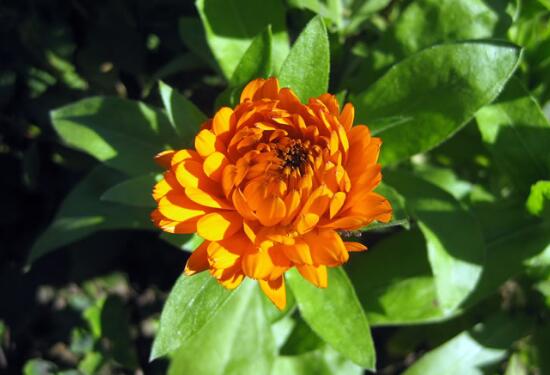
In daily life, many people grow zinnias, but perhaps most are beginners, and many of them do not follow the proper zinnia cultivation methods, so various problems often appear, including yellowing leaves. As for what to do when zinnia leaves turn yellow, the editor has summarized 4 points and attached solutions. Let us continue reading.
2. Causes of zinnia leaves turning yellow and solutions
1. Sudden environmental change
There are actually many causes of zinnia leaves turning yellow, but the first thing everyone should consider is environmental factors. The reason is that many flower lovers buy their zinnias online, and the geographical span may be large, so the zinnia cannot adapt for a while, resulting in yellowing leaves.
Solution: At this time, you can communicate with the seller to understand the growing environment of the zinnia before purchase, then create the same environment at home, and afterward change it slowly until the plant fully adapts to the current environment. After a period of time, the zinnia will recover its health.
2. Too much watering
Zinnias are not afraid of strong direct sunlight and need sufficient light, so water is lost very quickly and they need to be watered frequently. However, many flower lovers tend to overwater, causing waterlogging in the potting soil, which leads to root rot and thus symptoms of yellow leaves.
Solution: What to do when zinnia leaves turn yellow? At this time, you should move the potted plant into a ventilated spot under strong sunlight so that the water evaporates quickly, or simply replace the potting soil directly. In daily care, it is best to water only after the soil dries, and water only when it is dry, to avoid the appearance of yellow leaves.
3. Soil compaction
Zinnias have high water requirements. If the soil is compacted, water cannot penetrate into the soil layer, so the plant roots cannot absorb water and nutrients. Without water and nutrients, the leaves will naturally show symptoms of yellowing.
Solution: At this time, we need to loosen the soil. Specific method: use a soil-loosening tool to insert into the potting soil near the edge of the pot, and gently shake the potting soil so that cracks appear in it. Then water appropriately, and after a period of time, the leaves can recover.
4. Pest and disease damage
In addition to the above points, some pests and diseases can also easily cause leaf curling. At this time, we can observe the leaves. If it is caused by insect pests, insecticides can be used to kill the insects. If it is caused by bacteria, antibiotic drugs can be used to treat the disease. As for the specific drugs to use, they are introduced in detail in the pest and disease control section for zinnias, so they will not be discussed further here.
How to grow zinnias: zinnia cultivation methods and precautions / pinching is very important
Zinnia, a very beautiful herbaceous plant with a long flowering period, rich colors, and very easy care, is therefore welcomed and loved by many flower lovers. In daily life, many flower lovers grow zinnias in pots at home, but many of them do not know how to grow zinnias. For this, the editor has carefully compiled the cultivation methods and precautions for zinnias. They are very comprehensive. Friends who want to grow them should definitely take a look~
1. How to grow zinnias: understand their habits
Indoor cultivation is not like growing in the wild; everything needs to be created by yourself. So for how to grow zinnias, we need to create the best growing environment according to their growth habits. For this, the editor will bring you the cultivation methods and precautions for zinnias from aspects such as soil, light, temperature, water, fertilization, and pruning. Let us continue reading.
2. Zinnia cultivation methods and precautions
1. Soil
For how to grow potted zinnias, the first thing is naturally choosing soil. Because zinnias have strong vitality and good adaptability, they do not have high requirements for soil. But if you want to grow zinnias well, it is best to use soil mixed with leaf mold, perlite, and river soil. Of course, ordinary soil is also acceptable; you can just fertilize later.
Precautions: Zinnias like a moist environment and need frequent watering, so the soil must be loose and well-drained. Otherwise, it is easy for water to accumulate, or it becomes difficult for zinnia roots to absorb water, thereby causing poor plant growth.
2. Light
In zinnia cultivation methods, light is indispensable, but we do not need to worry about light at all, because zinnias can directly receive direct sunlight and can simply be exposed to the sun all day. Of course, there is no need to shade them; maintaining sufficient light is necessary.
Precautions: Zinnias need sufficient light. If you find that the spaces between the plant's leaves are large, this indicates that the light is insufficient and etiolation has appeared. At this time, we should supplement light for the zinnia.
3. Temperature
It is understood that zinnias like warmth and sunlight, and are not tolerant of severe summer heat or severe cold. Therefore, in the process of growing zinnias, we must pay attention to adjusting the temperature at any time.
Precautions: To grow zinnias well, we need to control the temperature. During the day, keep the temperature at 18-20°C; at night, maintain it at 15-16°C. It is worth mentioning that in summer, zinnias grow very rapidly.
4. Watering
For how to grow zinnias, watering is very critical. Because zinnias need sufficient light and are not afraid of strong direct sunlight, under such conditions, the water in the potting soil is lost very quickly, so we need to water them frequently. If it is summer, we can water the zinnias every day.
Precautions: Zinnias have high water demand, so watering cannot be too little, but it also cannot be too much, otherwise it easily affects plant growth and causes zinnia leaves to turn yellow. As for how to control the amount of watering, it is introduced in detail in the zinnia watering methods, so it will not be discussed further here.
5. Fertilization
After watering, let us talk about fertilization. When growing zinnias in pots at home, we need to fertilize them at the right time. Generally, fertilizing once every 1.5 months is enough. As for the fertilizer, compound fertilizer can be chosen.
Precautions: When fertilizing, first melt the fertilizer with an appropriate amount of water, then pour it into the potting soil, to avoid the fertilization concentration being too high and causing root rot. In addition, when fertilizing, avoid the leaves to prevent burning them.
3. Precautions for growing zinnias
Although there are already quite a few precautions in the zinnia cultivation methods above, to grow zinnias well, there are still many points that flower lovers need to pay attention to. In simple terms, the precautions for growing zinnias also include the following two points:
1. Pruning - pinching
In the process of growing zinnias, there is one point everyone must pay attention to, and that is pinching, because if zinnias are not pinched, it will cause the symptom of few flowers. As for how to pinch zinnias, it is introduced in detail earlier, so it will not be discussed further here.
2. Pests and diseases
Growing zinnias indoors in pots inevitably leads to pest and disease problems. It is understood that common diseases of zinnias include white star disease, black spot disease, and mosaic disease. These diseases all appear on the leaves and seriously affect the ornamental value of the plant. Therefore, when pests or diseases are found, pesticide spraying should be carried out immediately. As for what pesticide to spray, it is introduced in detail in the pest and disease control section for zinnias, so it will not be discussed further here.
Pest and disease control for dahlias
Dahlia is also called dahlia chrysanthemum, tianzhu peony, tiao peony, sweet potato flower, dali flower, passionflower, and foreign chrysanthemum. It is a perennial herb in the Asteraceae family. The colors of dahlias are brilliant and varied, including red, yellow, orange, purple, white, and so on, and are very attractive. Dahlias adapt to different climates and soil types across the country, have few pests and diseases, are easy to manage, and are best propagated. However, they are often harmed by the following pests and diseases:Dahlia mosaic disease
Symptoms After the leaves are damaged, spots appear, and along both sides of the leaf veins there is browning and greening, with semi-transparent "vein clearing" appearing. Pale yellow patches appear on diseased leaves, the leaves wrinkle, growth stagnates, and the plant becomes stunted. Plants grown from virus-carrying roots rarely reach normal height.
Pathogen Dahlia Mosaic Virus. The virus particles are regular icosahedrons and are transmitted by aphids and leafhoppers, and can also be transmitted through grafting. This virus can also infect zinnias, snake's eye chrysanthemum, coreopsis, and petunias. In addition, Cucumber Mosaic Virus (CMV), Tobacco Necrosis Virus (TSV), and Tomato Spotted Wilt Virus (TSWV) can also cause viral disease in dahlias.
Control methods
1. The tuberous roots or sprouted shoots of diseased plants cannot be used as propagation material.
2. Observe carefully and promptly pull out and burn diseased plants.
3. Spray 50% malathion 1000x solution, or 40% dimethoate 1500x solution, or 25% carbaryl 800x solution to control virus-transmitting pests.
Dahlia gray mold
Symptoms The flower parts are easily damaged and turn brown, then soft rot occurs. In severe cases, the flower buds cannot open, and gray mold-like material (the pathogen's fruiting bodies) grows on them. Therefore, gray mold is also called flower rot. When it occurs on leaves, large spots ranging from nearly circular to irregular appear. The spots often occur at the leaf margins, are light brown to brown, sometimes show concentric rings, and are water-soaked; when humidity is high, gray mold grows. Stem spots are brown, sometimes show concentric rings, and are water-soaked; when humidity is high, gray mold grows. Stem spots are brown and irregular in shape. In severe cases, the stem softens and breaks, making this a major disease of dahlias.
Pathogen Botrytis cinerea Pers., belonging to the Deuteromycotina. The conidiophores are slender and branched, sometimes nearly forked near the top. Single-celled, oval conidia are produced on short stalks. It usually produces black, irregular sclerotia.
Transmission route The pathogen mainly overwinters as sclerotia with diseased plant residues. Under suitable conditions, the sclerotia grow conidiophores and produce conidia, causing secondary infection. The conidiophores produced on the lesions produce conidia, causing primary infection. The conidia produced on the lesions are spread by wind and rain, causing reinfection. Damage is severe in rainy seasons, and the pathogen has a wide host range.
Control methods
1. Because Botrytis cinerea is both parasitic and saprophytic, promptly cut off diseased flowers and leaves and bury them deeply.
2. Practice crop rotation. Or replace with new pathogen-free soil.
3. Strengthen cultivation management and avoid planting too densely to facilitate ventilation and light penetration. When watering, do not pour water over the plants, so as to avoid splashing droplets spreading the pathogen. After rain, pay attention to draining accumulated water.
Dahlia powdery mildew
Symptoms Dahlia powdery mildew harms leaves, young buds, flower stalks, and flower buds. A layer of white powdery material, namely conidia, is produced on the surface of the diseased parts. Several small lesions on the leaves can connect into large lesions. After being damaged, the plant becomes stunted, and the leaf surface becomes uneven or curled, with young shoot development deformed. After flower buds are damaged, they cannot bloom or only produce deformed flowers. In severe cases, the leaves can dry up, and even the whole plant can die. In autumn and winter, gray mycelium and a few small black dots are produced. The small black dots are cleistothecia.
Pathogen Erysiphe polygoni DC., belonging to the Ascomycetes, Erysiphales. The mycelium grows on both the upper and lower surfaces of the leaves.
Transmission route It overwinters as mycelium. The following year, when the temperature rises to 18°C-25°C, the mycelium begins to grow and produces large amounts of conidia, which germinate under suitable environmental conditions and grow hyphae, producing haustoria to absorb nutrients from the tissue. High temperature and high humidity favor disease occurrence.
Control methods
1. Cut off and destroy diseased plants.
2. During the disease season, spray with 15% triadimefon wettable powder 1500x solution, or 70% thiophanate-methyl wettable powder 700x solution, or 50% carbendazim wettable powder 500x solution for control
Dahlia bacterial wilt
Symptoms After the roots and tuberous roots are infected by the pathogen, they turn brown and rot. The aboveground leaves wilt, droop, and die. When the diseased roots and stems are cut crosswise, the xylem is yellow-brown, and bacterial ooze overflows.
Pathogen Pseudomonas solanacearum E.F. Smith.
Transmission route The pathogen can live saprophytically in diseased plant residues or soil, and under high-temperature, high-humidity environmental conditions it multiplies in large numbers, invading the host through wounds when it encounters one. When transplanting in hot, rainy seasons, if the soil or fertilizer carries bacterial wilt pathogen, disease is most likely to occur.
Control methods
1. Cultivate disease-free seedlings and avoid selecting propagation material from diseased areas.
2. Do not use soil where this disease has occurred for planting. Strengthen seedling management and avoid causing wounds. Water appropriately, and prevent irrigation water from diseased areas from flowing to healthy plants. When diseased plants are found, they should be pulled out and burned.
3. Improve the soil: spread 100-150 kg of slaked lime per mu, apply sufficient decomposed farmyard manure, and turn and level the soil so that the soil is fertile, loose, and slightly alkaline, in order to inhibit pathogen reproduction and enhance plant resistance.
4. Chemical control:
1) Promptly remove and burn diseased plants, pour 2% formaldehyde solution or 20% lime water into each hole for disinfection, or spread lime powder.
2) In the early stage of disease, spray with streptomycin 4000x solution, or 30% DT (copper diammonium succinate) wettable powder 500x solution, 70% DTM wettable powder 500-600x solution, or 77% copper hydroxide wettable powder 500x solution. Spray once every 7-10 days, for 3-4 consecutive times.
3) The above agents can also be used to drench roots, with 0.5 kg of solution per plant, combined with spraying, once every 7-8 days, for 3-4 consecutive times.
Dahlia dark leaf spot
Symptoms Circular or semicircular dark green concentric-ringed lesions occur on the leaf surface and leaf margins. The lesions later turn dark brown, with a gray-green center. Small black dots are scattered on the surface of the lesions. When the disease is severe, the leaves wilt and droop.
Pathogen Phyllosticta dahliaecola Brunaud., called dahlia leaf spot fungus, belonging to the Deuteromycotina fungi.
Transmission route It overwinters as pycnidia with diseased residues on the soil surface. The following year, conidia are released and germinate, producing germ tubes that invade the host. Later, pycnidia and conidia are produced on the diseased parts and spread by wind and rain, causing reinfection. A temperature of 21°C favors its occurrence or epidemic.
Control methods
1. After harvest, thoroughly remove diseased residues and burn them in a concentrated way or plow the land deeply to reduce the primary infection source.
2. In the early stage of disease, spray 75% chlorothalonil wettable powder 500x solution, 40% sulfur-carbendazim suspension 500-600x solution, 50% mixed sulfur suspension 500x solution, 1:1:200 Bordeaux mixture, 77% copper hydroxide wettable powder 500x solution, or 50% copper diammonium succinate (DT) wettable powder 400-500x solution, once every about 10 days, for 1 or 2 treatments.
Dahlia flower blight
Symptoms The corolla is affected. The upper parts of the petals become light brown, with circular or nearly circular spots appearing, which then expand on the petals. The petals wither from the affected area and gradually turn brown and die. When the outer corolla is affected, it spreads to the inner corolla, causing the rotten petals to droop.
Disease conditions The pathogen can grow at 5-25°C, with 20-25°C being most suitable for growth. Disease is severe in autumn with frequent rain and on large double-flowered varieties.
Pathogen Itersonilia perplexans Derx, belonging to the fungi Deuteromycotina, Hyphomycetales, Itersonilia, flower blight Itersonilia. The mycelium of the pathogen easily forms clamp connections, and some mycelial cells form sterigmata bearing asymmetrical, colorless blastospores that are forcibly discharged. The pathogen surviving on diseased flower residues is the source of infection for the disease.
Control methods Can refer to chrysanthemum black spot disease. Dahlia southern blight
Symptoms Wet rot occurs at the base of the plant, initially brown-black, and later white silky mycelium is produced and forms sclerotia the size of rapeseeds.
Pathogen Sclerotium rolfsii Sacc., belonging to the Deuteromycotina. The mycelium is white, loose or gathered into linear strands closely attached to the substrate, forming sclerotia. The sclerotia are small (0.5-1.0 mm in diameter) and neat, initially white, later turning yellow-brown, with a gray-white interior.
Transmission route The pathogen survives for many years as mycelium and sclerotia in soil and plant residues, infecting the host from the root crown. The pathogen has a wide host range. Iris, orchid, peony, pyrethrum, peach, pear, and others are also often infected, causing damping-off, root rot, basal rot, and fruit rot.
Control methods
1. Pull out diseased plants, collect the sclerotia in the soil and burn them, spread lime in the diseased holes, or fill them with toxic soil made by mixing 70% quintozene powder with new soil at 100 times for disinfection.
2. In the early stage of disease, drench the stem base of diseased plants with 50% thiophanate wettable powder 500x solution or 50% carbendazim wettable powder 500x solution, and drench again after 7-10 days.
Willow swift moth
Willow swift moth, also known as Oriental swift moth, belongs to the Lepidoptera, Hepialidae.
Distribution and damage It is distributed in Heilongjiang, Jilin, Liaoning, the former Soviet Union, Japan, and other places. It damages many kinds of flowers and trees.
Damage symptoms Larvae bore into branches and trunks. The borehole entrance often appears as a sunken ring and is covered with wood shavings stuck together by silk, forming a wood shaving packet.
Morphological characteristics Adult Body length 35-44 mm, wingspan 66-70 mm. Body powdery brown to tea brown. Antennae short, thread-like. The anterior margin of the forewing has ring-shaped markings, with 1 dark, slightly greenish, angular marking in the center, and 2 broad brown diagonal bands on the outer edge of the marking. Hindwings narrow and small, abdomen large. Egg Spherical, diameter 0.6-0.7 mm, black, slightly glossy. Larva Dark brown, thorax and abdomen dirty white, cylindrical, body with yellow-brown tubercles, mature larva body length 44-57 mm.
Life history and habits In Liaoning, mostly 1 generation per year, a few 2 years per generation, overwintering as eggs on the ground or as larvae at the base. The following spring, hatching begins in mid-May. In early June, they move to fruit trees, forest trees, weeds, and other stems to feed. In early August, pupation begins; by late September, pupation ends. In late August, they emerge as adults. The peak emergence period is mid-September, with the last seen in mid-October. After emergence, adults mate and lay eggs. They overwinter as eggs. Some larvae that hatch later, or larvae whose development is delayed by other disturbances, overwinter as larvae. The following year, they begin to emerge as adults in mid-July and lay eggs soon after, completing 1 generation in 2 years. Adults mostly emerge from 16:00-18:00. During the day, adults mostly hang motionless on tree trunks, undergrowth, or weeds, and only begin flying, mating, and laying eggs after sunset. Adults are photophobic. After mating, they lay eggs immediately. There is no fixed place for egg laying. Most, with trembling of both wings, lay eggs one by one; some lay eggs while mating; most lay eggs without mating. The number of eggs laid by females ranges from several hundred to several thousand.
Control methods
1. Cut off seedlings and branches carrying wood shaving packets.
2. Chemical control: From late May to early June, when young larvae are active on the ground, spray 50% parathion 1000x solution on the ground. When middle-instar larvae move into the trunk, drip 50% dichlorvos 10x solution into the insect holes.
Short-winged rice grasshopper
Rice grasshoppers, commonly known as grasshoppers, are widely distributed. The flowers they harm include impatiens, cockscomb, scarlet sage, pansy, snapdragon, globe amaranth, calendula, zinnia, daisy, chrysanthemum, coneflower, Chinese rose, jasmine, hibiscus, dahlia, gardenia, and so on.
Damage symptoms Early-instar nymphs like to gather and feed on leaves. Damaged leaves appear net-like, and later they disperse to feed, causing leaf notches and holes. In severe cases, only the main veins remain on the entire leaf.
Morphological characteristics Adult Body length 21-31 mm, light green to brown and light yellow. Head protruding forward. Hind legs well developed as jumping legs. Forewings green. Hindwings red at the base and green at the tip. Egg Egg masses are sealed on the outside with yellow-brown secretions. Individual eggs are milky white and oval. Nymph Initially light green with white spots, resembling the adult, wingless, with only wing buds. Life history and habits This insect has 2 generations per year in the Yangtze River basin and other areas. It overwinters as eggs in the soil. The following year in May-June, the eggs hatch. In early July, the first-generation adults begin to lay eggs. Mid-to-late July is the peak egg-laying period. Second-generation nymphs begin hatching in late July, and mid-to-early August is the peak hatching period. From mid-to-late September to early October, second-generation adults begin to lay eggs, and late October to early November is the peak egg-laying period.
Control methods
1. When early-instar nymphs are concentrated and causing damage, manually capture and kill them.
2. Spray 50% fenitrothion emulsion 1000x solution, or 25% phosmet 1000x solution.