Marigold Fertilizing Methods and Precautions: Dilute Before Fertilizing
Among the effects and benefits of marigolds, their ornamental value is the most familiar to people. However, if you want them to be ornamental, the care process must be careful, and fertilizing is especially important. Fertilizer is the main nutrient during the growth of marigolds, and sufficient fertilizer is needed for marigolds to bloom brilliantly. So how do you fertilize marigolds? Below, the editor will walk you through it.
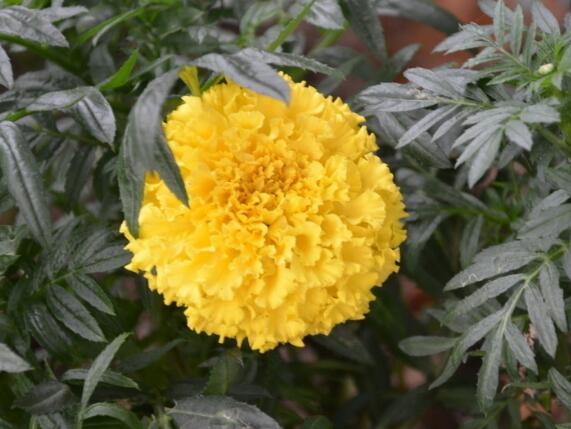
I. How to Fertilize Marigolds
As for how to fertilize marigolds, each period is actually different, and there are many points to pay attention to. The choice of fertilizer must be correct. Second, marigolds have different fertilizer needs at different periods. The details are explained below, so let's continue reading.
1. Fertilizer Selection
When fertilizing marigolds, first we need to understand fertilizer selection for each period. When sowing, we need to apply a little organic fertilizer in the potting soil, which will help marigold seeds germinate. During the growth period, nitrogen fertilizer is needed, which can make them grow more robustly.
2. Fertilizing at the Seedling Stage
As for how to fertilize marigolds at the seedling stage, the ratio is very important, and fertilization must be even; otherwise, fertilizer deficiency is very likely to appear later. When fertilizing marigolds at the seedling stage, base fertilizer should be applied deeply.
3. Fertilizing at the Growth Stage
As for how to fertilize marigolds at the growth stage, we need to remember to apply thin fertilizer frequently. The growth stage is the period when marigolds need nutrients the most. Sufficient fertilizer can make them grow quickly. During this period, liquid fertilizer basically needs to be applied once a month.
4. Fertilizing at the Flowering Stage
As for how to fertilize marigolds at the flowering stage, the timing of fertilization is the key point. It is best to choose to fertilize in the evening. If marigolds are grown on a large area, the soil needs to be turned for fertilization, which allows marigolds to absorb it better.
II. Precautions for Fertilizing Marigolds
The text above told everyone how to fertilize marigolds at different stages. Next, let everyone understand what to pay attention to when fertilizing. First, when fertilizing, it must not be applied to the plant itself, as this will burn the plant. Generally, applying it to the soil is enough. Second, before fertilizing, the fertilizer must first be diluted with water, so that marigolds can absorb it better.
How to Fertilize Marigolds, and What Fertilizer to Apply?
Marigold, also known as stinking roger, is an annual herbaceous plant in the Asteraceae family. Marigolds are often sown in spring. Because their flowers are large and the flowering period is long, they are often used for flowerbed landscaping. Marigolds can also be used as home decorations, creating a romantic and charming home style. Today, the editor will share with everyone how to fertilize marigolds and what fertilizer to apply.
Marigold Fertilizing Methods:
1. Marigolds do not have strict soil requirements. A soil with deep soil layers, loose texture, and good drainage and aeration should be chosen. Fertilization should adopt the method of small amounts applied multiple times.
2. For marigolds, foliar topdressing is carried out when the flowers are in full bloom. The best spraying time is after 6 p.m.
What Fertilizer to Apply to Marigolds:
When fertilizing marigolds, pay attention to the combined use of nitrogen, phosphorus, and potassium. Today, the editor will recommend a relatively easy-to-use fertilizer - Chenfeng Biological Flower Special Fertilizer. The fertilizer has relatively complete nutrients, is good for soil aeration, has long fertilizer efficiency, and improves the soil. When using Chenfeng Flower Organic Fertilizer, it can be diluted with water and poured, or shallowly buried around the marigold plant while avoiding the roots and stems, which will give better fertilizer efficiency.
That is all for sharing marigold fertilizing methods with everyone. The editor once again reminds everyone to fertilize scientifically and pay attention to preventing fertilizer damage.
Control Methods for Marigold Damping-Off Disease
The scientific name of marigold damping-off disease is Pythium aphanidermatum (Kds.) Fitzp. This disease occurs commonly in marigold production and causes serious damage. It is one of the important flower diseases.
Symptoms
This disease is a type of seedling disease. Before emergence, it causes seed rot; after emergence, the roots or stem base become infected, producing water-soaked lesions, yellow-brown constriction, and seedling wilting and damping-off. In high-humidity environments, white cottony growth appears on the diseased parts and soil surface. The disease course is short and onset is rapid.
Pathogen
The pathogen is called a Pythium oomycete. The hyphae are colorless and non-septate. The asexual state produces sporangia. The sporangia are swollen and tubular, branched or unbranched, and produce vesicles. Multiple zoospores are produced inside the vesicles. The zoospores are kidney-shaped, 12—17×5-6 (um), with 2 lateral flagella. The sexual state produces oospores, which are spherical and suspended inside the oogonium.
Disease Characteristics
The pathogen overwinters in the soil as oospores. Under moist conditions, it produces zoospores. The zoospores germinate to produce germ tubes. When dry, the oospores germinate directly to produce germ tubes. The pathogen enters directly from the seedling base or through wounds via germ tubes for primary infection. After onset, it again produces sporangia. The sporangia germinate to produce zoospores, which spread and germinate into germ tubes for secondary infection. Damping-off disease is prone to occur under conditions of 12—23°C and high humidity. After sowing, because the temperature is often not high, host resistance is affected, while the pathogen has a relatively broad suitable temperature range, so the disease is relatively likely to occur. In spring and summer, excessive rain, poor ditch drainage, water accumulation in the nursery, and overly wet seedbeds can all cause the pathogen to spread in the soil, making damping-off disease likely to occur.
Control Methods
(1) Strengthen cultivation management, fertilize and irrigate reasonably, improve seedling resistance, regulate ventilation and light transmission, pay attention to drainage measures during the rainy season, drain promptly after rain, maintain appropriate temperature and humidity, and ensure the seedling field is not waterlogged, so as to facilitate loose and well-aerated nursery soil. Remove weeds, thin seedlings, and remove diseased seedlings in a timely manner. Reduce the occurrence of the pathogen.
(2) When the seedbed is too wet, 50—75 kg of sifted plant ash or burnt soil ash can be spread per mu, serving a dual purpose.
(3) Chemical control: During the tender seedling stage, 20 kg of lime powder can be mixed evenly with 80 kg of plant ash and spread at 100—150 kg per mu. After that, spray once every 7—10 days with 0.5% Bordeaux mixture. After onset, spray with Dexon, Topsin, or chlorothalonil diluted 500—800 times for control, once every 10 days, spraying 2—3 times consecutively.