How to grow wintersweet (Chimonanthus praecox)? Seven tips to master the growing methods and precautions
Most plants grow branches and leaves first and then bloom, but wintersweet is different: it blooms first and then grows leaves, and it can safely overwinter even at -15°C. So how do you grow wintersweet to look its best? Today let's take a look at the growing methods and precautions for wintersweet.
How to grow wintersweet
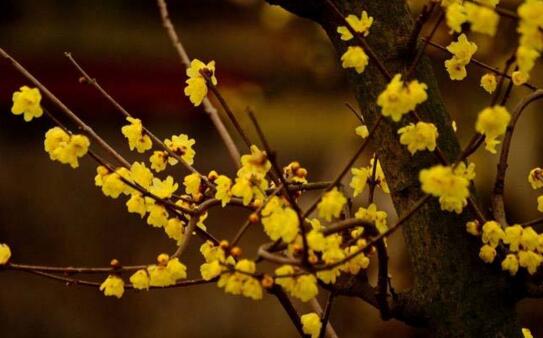
Before learning how to grow wintersweet, you can first look at its growth habits. Wintersweet has extremely strong adaptability; it is both cold-resistant and drought-resistant, likes sunny places, fears waterlogging, and also has strong shade tolerance. It can be planted in the open ground in both the north and the south, and it is a plant that blooms in winter.
Growing methods and precautions for wintersweet
1. Temperature
Although wintersweet can safely overwinter at low temperatures, the temperature suitable for its growth is 16-23°C, and the lowest temperature should not fall below -10°C. In addition, wintersweet is also highly resistant to extreme heat and can keep growing at 40°C.
Precautions: When the temperature stays below -10°C for a long time, the flowers may be frostbitten, so try to avoid temperatures that are too low. Also, although it can grow when the temperature is too high, growth is relatively slow, so be careful that the temperature does not get too high.
2. Soil
Wintersweet has low requirements for soil, but it is best to use loose, fertile sandy loam rich in humus. In the growing methods and precautions for wintersweet, good soil conditions can make wintersweet grow better and bloom more.
Precautions: No matter what kind of soil you choose, you need to ensure there are no pathogens or insect eggs in the soil, otherwise pests and diseases are very likely to occur. The way to reduce insect eggs is to sun the soil.
3. Light
Wintersweet likes sunlight, but it also has a certain shade tolerance, so during cultivation you should maintain sufficient light and let it receive as much sunlight as possible. If it is grown indoors, supplementary lighting measures should be used, such as indirect light and so on.
Precautions: During the flowering period or the growing period, wintersweet must receive enough light. Avoid a lack of light, which can lead to slow growth, few flowers, or even growth without flowering.
4. Fertilizing
In the growing methods and precautions for wintersweet, fertilizing is very important, as it can help wintersweet grow better. Generally, a dilute liquid fertilizer should be applied once a month. In September-October, additional fertilizer should be applied to promote flower bud differentiation. Stop fertilizing once the branches grow to more than 20 cm.
Precautions: Unlike other plants, wintersweet should be fertilized mainly with phosphorus and potassium fertilizers, and nitrogen fertilizer should be applied sparingly. The general ratio of phosphorus, potassium and nitrogen is 2:1:0.5, which ensures the flowers are large and numerous and the fragrance is stronger.
5. Watering
Wintersweet is a plant with strong drought resistance that fears waterlogging, so when watering you must follow the principle of not watering until the soil is dry. Check the soil condition before watering; if it is completely dry top and bottom, then it should be watered.
Precautions: No matter when you water, be careful not to let waterlogging occur. You can place broken tile pieces at the bottom of the pot to help standing water drain out smoothly.
6. Pruning
If you want wintersweet to bloom more, you need to pay attention to pruning during cultivation, as it can promote the growth of more strong flowering branches. Cut off dead branches, overly dense branches, crossing branches and diseased or pest-infested branches, and leave 2 to 3 pairs of buds at the base of one-year-old branches.
Precautions: Try to avoid pruning before the flowers open, and prune promptly after the flowers fade, which can avoid loss of nutrients and also keep wintersweet blooming continuously.
7. Pests and diseases
Wintersweet has strong cold resistance, so it has fewer opportunities for disease, but more insect pests. For example, aphids, scale insects, slug moths, leaf-rolling moths and so on all harm the branches, leaves and flowers of wintersweet, so timely control is needed.
Precautions: Pests and diseases need prevention and treatment. Before they appear, correct care and a good environment can reduce the probability of occurrence. When pests and diseases do appear, chemical control is generally needed.
Growing methods for several common flowers
Growing methods for several common flowers
1. Butterfly flower (Iris japonica)
Butterfly flower is a perennial herb in the genus Iris of the family Iridaceae. It is distributed in almost all provinces and regions of the country, and also in Japan.
The rhizome is relatively thin and weak, shallow in the ground, creeping, yellow-brown. The leaves are sword-shaped, dark green and glossy. The flower stalk rises above the leaves, and the flowers are numerous, arranged in a terminal, long and sparse raceme. There are 3 style branches, dark purple, enlarged into petal-like form, rolled back and covering the anthers. The flowering period is April-May. The common flower color of this species is light purple or light blue. It is suitable for naturalistic planting, and is also suitable for flower borders, flower beds and as cut flower material.
Ecological habits: It prefers shady and moist places and has strong adaptability and cold resistance. When cultivated in the open ground in the middle and lower reaches of the Yangtze River, the above-ground stems and leaves do not completely wither when overwintering. It requires acidic soil and grows well in a moist, fertile and sunny environment.
Propagation: Mainly by division, generally once every 2-3 years. Division is best done after flowering or in autumn, which is beneficial for full plant growth and flower bud differentiation. Dig out the rhizome and divide it, planting each section with 1-2 buds. For seed propagation, germination occurs 4-6 weeks after sowing, and it takes 2-3 years after sowing to bloom.
Cultivation and pests and diseases: Sufficient base fertilizer should be applied before planting. After planting, the rhizome should be pressed firmly, and it is better to plant shallowly rather than deeply. In early spring, remove the remaining leaves to help new buds sprout. During the vigorous growth period, water fully, and fertilize 1-2 times a month to produce abundant flowers and lush leaves. During the flowering period, keep the soil moist, but avoid waterlogging. After flowering, apply a topdressing once, mainly phosphorus and potassium fertilizer, which is beneficial to rhizome development. After the flowers fade and the rhizome is dormant, keep the soil dry. Common leaf blight and bacterial soft rot are mostly caused by the larvae of the iris borer and can be controlled by spraying with 40% omethoate emulsifiable concentrate at 1000 times dilution. During the growth period, there are also slugs and snails causing damage; spray with 3% lime water in the evening.
Planting some flowers and trees around a farmhouse improves the environment and beautifies life. With clever arrangement, the courtyard becomes a feast for the eyes.
Plant one or two osmanthus or wintersweet trees alone or in pairs in the courtyard; this is a traditional Chinese garden arrangement. In the shady, damp spots by the wall, plant shade-tolerant flowers such as iris (commonly known as butterfly flower) and begonia, which will grow well without fine management. For potted flowers on the balcony, small choices like Milan and Chinese rose are more suitable. On the sunny side, sun-loving flowers such as chrysanthemums and scarlet sage can be planted; ample sunlight will help them grow better. On the roof, cacti and Sansevieria will still grow well even without care for a long time. In places that need shade, you might as well plant a few grapevines, morning glories or Boston ivy by the window or along the fence. Even indoors, you can place a few pots of shade-tolerant asparagus fern and orchids on the desk or tea table, which will make the farmhouse courtyard colorful and full of life!
2. Cineraria
Cineraria is a perennial herbaceous plant of the family Asteraceae, densely covered with soft hairs all over. The leaves are in whorls of three, forming a triangle, and the leaves resemble cucumber leaves, hence the name cineraria. Its flower colors are gorgeous and rich, including the blue flowers rarely seen indoors; and the flowering period is long, about 6 months, making it an ideal potted flower for holidays such as New Year's Day, Spring Festival and May 1st Labor Day, and a representative flower of winter and spring. But growing cineraria potted flowers with a good plant shape, beautiful leaf color and long flowering period is not easy. You must master the following key technical measures in cineraria cultivation.
Sowing time: Generally mid-August is chosen. Cineraria likes a cool climate and cannot tolerate hot, high temperatures. The moderate growing temperature is 15°C-20°C. The sowing box should be placed under a shade shed or under the shade of a tree. If sowing in beds, a shade shed must be built above the bed soil to reduce the radiant heat of the sun.
Seedling moisture control: This is mainly done by spraying water mist to lower the temperature of the seedbed and supply water to the seedlings. The principle of spraying is that moistening is enough; the seedbed soil should not be too dry, nor too wet. If too dry, wilted seedlings are difficult to revive; if too wet, plus the seedlings being in a high-temperature period, they are very prone to damping-off, resulting in a low seedling survival rate.
Preparation of growing soil: Cineraria likes sandy soil rich in humus and well drained, with a pH of 6.5-7.5 being more suitable. When preparing the growing soil for sowing, note that unpolluted leaf mold or plant ash, pure loess and fine sand should be mixed at 3:1:1, then sieved, and no fertilizer should be added. Growing soil prepared this way is beneficial for seed germination and growth. Overly sticky growing soil cannot withstand drying; once it cracks slightly, it will break the fine roots of the seedlings, causing seedling death and reducing the survival rate. The growing soil after pricking out can be the same as that used for sowing, to harden the seedlings. For the growing soil used when potting up, evenly add bean cake, bone meal or superphosphate as base fertilizer, or use barnyard manure, burnt soil ash, garden soil, rapeseed cake and fine sand mixed at a ratio of 3:2:2:1:1 to ensure sufficient nutrient supply for the plants. Barnyard manure must be composted, rotted and sun-dried; rapeseed cake must be crushed, fully stirred and mixed, then sieved before it can be used as growing soil for final planting.
Pay attention to temperature control: Cineraria likes a cool climate, avoids cold in winter and high temperatures in summer. Therefore, in winter it should be grown in a greenhouse, generally maintaining above 10°C and often keeping the room temperature around 15°C for good growth. In summer, place the sowing box under a shade shed, or make sowing beds under the shade shed, and water before 10:00 a.m. or after 5:00 p.m., which is more suitable. Never water at noon, so that the seedlings can smoothly pass through the high-temperature period.
Pay attention to humidity control in winter: Cineraria has relatively high humidity requirements in order to grow well. How to keep humidity moderate in winter is the key to successfully growing cineraria. If it is too dry, the leaves of cineraria are often in a wilted state, which is not good for leaf growth, easily turns the leaves yellow, and also easily leads to spider mites and aphids. If watered too much and indoor humidity is too high, the roots, main stems and leaves are prone to rot, and aphids are also likely to appear; if the room temperature is too high and ventilation is poor, diseases are likely to occur.
3. Corn poppy
Corn poppy, also known as Lichunhua and Manyuanchun, is an annual or biennial herbaceous flower of the genus Papaver in the family Papaveraceae. The plant height is 30 to 90 cm. The stem is slender, and the branches are thin and weak. The leaves are alternate, with irregular pinnate divisions and serrations; the whole plant has sparse hairs and milky sap. The flowers are solitary at the top of the branches, with long pedicels. The flower buds droop and then straighten when the flowers open. Most horticultural cultivars are double-flowered. The flower colors of corn poppy are extremely rich and gorgeous, including vermilion, dark purple, bright pink, snow white, tricolor and so on. The flowers last only 1 to 2 days before falling, but the buds are numerous and open successively. The flowering period is May to June. The capsule is spherical, the fruit ripening period is July, and the seeds are very small.
Corn poppy is native to Asia and Europe, and is also distributed in North America. It is cold-resistant and suitable for sufficient light and a cool climate in spring, and cannot tolerate extreme summer heat and humidity. It is usually sown in drills in flower beds in early winter. It has low requirements for soil, but loose, fertile sandy loam is best. The row spacing is 20 cm. After sowing, cover with plastic film, or sow in early spring when the surface just thaws, and gradually remove the film after seedlings emerge. Corn poppy is a taproot flower; its roots are fine and deep, with few lateral roots. During the seedling stage, the root length often exceeds the plant height by about 1 time, so it cannot be transplanted. If transplanted reluctantly, the survival rate is also very low. When drill-sown seedlings are relatively dense, thin them out in stages two or three times, maintaining a plant spacing of 10 to 15 cm. Corn poppy has low water and fertilizer requirements, but avoids heavy water and fertilizer and soil waterlogging.
Corn poppy is excellent material for flower beds, flower borders and flower strips. It can also be sown in pots in a greenhouse or cold frame in January and taken out in late April for May 1st holiday flowers. For home flower growing, it can be cultivated on a south-facing enclosed balcony. In January, use a flower pot with an inner diameter of 20 cm, fill it more than half full with loose old potting soil, press it level, scatter 20 to 30 seeds, cover with soil just enough that the seeds are not visible, and after sowing soak the pot in water to moisten it. When seedlings emerge, thin them out several times, removing the weak and keeping the strong, and finally keep 3 to 5 plants for final planting. When the seedlings are 30 cm tall, gradually fill in growing soil up to the rim to prevent the slender stems from lodging. Keep sufficient light and fresh air, with nighttime temperatures not below 5°C, avoid drought and waterlogging, and they can bloom in March until May 1st.
Corn poppy and opium poppy belong to the same family, not only resembling each other in appearance but also sharing the same habits. The difference is that opium poppy has a larger plant shape and fruit and is covered all over, while corn poppy is smaller and covered all over with sparse hairs. But corn poppy is suspected by some people of being the drug opium. In fact, although corn poppy has milky sap in its body, its components do not contain laudanum. Its flowers can be made into a gargle with antitussive effects, and its milky sap has analgesic and antidiarrheal effects. On warm spring days, patches of corn poppy in courtyards and green spaces compete in blooming, like rosy clouds and also like squares of silk handkerchiefs. When the breeze blows, both people and flowers feel as if they are floating.
4. Pocketbook flower (Calceolaria)
Pocketbook flower is a herbaceous plant of the genus Calceolaria in the family Scrophulariaceae. The flower colors include yellow, purple, red, creamy white, orange-red, dark brown and so on, and the flowers are adorned with colorful spots and markings, very lovely, and are often used for indoor decorative display. It blooms from December to February of the following year, and under greenhouse cultivation the flowering period is March to April.
Pocketbook flower is native to the Mexico and Chile region. It likes cool and humid conditions and can grow indoors in winter at 3°C to 6°C. During the growing period, relatively high air humidity needs to be maintained. Pay attention to ventilation; sufficient light is beneficial for the plant to bloom.
Ventilation and shading: Pocketbook flower likes cool conditions, and the suitable growth temperature is around 10°C. If the stems and leaves grow luxuriantly during the growing period, and the potting soil is too wet plus muggy, the base of the plant will rot. To lower the temperature, shading measures are often taken at noon to create a ventilated and cool environment. Especially after flowering in spring until the seeds mature in May to June, ventilation work should be done even better, and shade at noon to help the seeds develop and mature.
Watering and fertilizing: Pocketbook flower likes a warm and humid environment, but avoids overly wet potting soil and excessive watering during flowering. Generally, water only when the potting soil is dry. If in a greenhouse, frequently spraying water to increase air humidity is even better. Do not pour water directly onto the plant; if water accumulates on the leaves and buds, it easily causes rot. During the pre-flowering growing season, apply rotted cake fertilizer water once every 10 days (diluted 10 times). At the early flowering stage, increase the application of phosphorus-based fertilizer. When fertilizing, do not let the fertilizer water contaminate the leaves, so as to avoid rotten hearts and leaves.
Propagation techniques: Pocketbook flower is generally propagated by sowing. When seeds are lacking, division can also be used. Sowing should be done after the high-temperature period when the weather turns cool, that is, in August to September, because during the high-temperature period seedlings are prone to damping-off and rot. Use leaf mold or peat soil mixed with half sand, sieve and disinfect it, put it into a shallow pot, and water thoroughly by the soaking method, then sow. The seeds of pocketbook flower are very small, in the form of relatively coarse powder particles. When sowing, it is best to first fold a piece of thick paper into a small triangular funnel, put the seeds in it, then hold the lower part of the small funnel with your right hand so that the seeds fall evenly into the sowing pot. Do not make it too dense, otherwise the seedlings will grow thin and weak after emergence. For covering soil, simply use a fine sieve to cover with a thin layer of fine soil (it does not matter if you do not cover with soil). After sowing, cover the pot with glass to maintain humidity. Before emergence, place it in a cool place, keep the temperature at around 20°C, and seedlings can emerge in about 7 to 10 days. After emergence, remove the glass, thin the seedlings, and let them gradually receive sunlight, lowering the temperature to around 15°C.
When the seedlings have 2 true leaves, they can be transplanted. When they grow 4 to 6 true leaves, they can be potted individually. For the growing soil, mix 2 parts leaf mold, 1 part barnyard manure, 1 part sand and 6 parts garden soil, with a pH of 6.5. In November to December, they can be planted in large pots for final planting.
5. Cockscomb
Cockscomb, also known as red cockscomb and rooster amaranth, is named because its inflorescence is twisted and folded like a cockscomb. It is an annual herbaceous plant with a plant height of 30-50 cm. The stem is erect, and the upper part of the stem is flattened, green or red. The leaves are alternate, ovate, ovate-lanceolate or lanceolate, gradually narrowed at the tip, entire, and petiolate. The spike is terminal, and the flower axis is flattened and fleshy, cockscomb-shaped, yellow, white or red-purple, with a velvety luster. The flowering period is July-October. The utricle is ovate, circumscissile, containing 4 seeds. The seeds are black and glossy, with a thousand-grain weight of 0.85 g. Used for flower beds and flower borders, and can also be potted. It is also relatively good as a cut flower, and the vase life can reach more than 10 days.
Cockscomb has four types, namely child-mother cockscomb, common cockscomb, garden velvet cockscomb and phoenix-tail cockscomb. In addition, there are many varieties. Divided by plant height, there are dwarf types (20-30 cm), medium-stem types (40-60 cm) and tall-stem types (higher than 60 cm); divided by flowering period, there are early-flowering and late-flowering differences. The colors range from extremely pale yellow (nearly white) to golden yellow and brown yellow, and from jade red, rose red, orange red to purple red, and there are also compound colors such as sajin and erqiao with yellow and red series mixed.
Cockscomb is native to India. It likes a hot and dry climate and fears waterlogging. It grows well in sunny, fertile sandy soil, and avoids sticky soil. In barren, non-breathable soil it grows poorly and the inflorescence becomes smaller. It can self-sow and propagate.
Propagation by sowing: Sow in the open-ground seedbed in spring from March to April. When sowing, do not cover with soil; cover with grass and then water, keeping the soil moist. Remove the covering grass after germination. Transplant when there are 2 leaves. When the seedlings grow to 5-10 cm, plant them in the ground or pot them. No fertilizing is needed during the seedling stage, otherwise the side branches will grow vigorously and affect the development of the main branch. After the cockscomb forms, thin fertilizer can be applied to promote growth. Seeds are prone to variation, so seed selection should be carefully done every year when saving seeds.
Cockscomb can regulate the flowering period by controlling the sowing time. Generally, sowing can be done from March to June. Sow according to the need for flowers to meet the demand for holiday flowers.
Growth habits: It likes a warm and dry climate, fears drought, likes sunlight, and cannot tolerate waterlogging, but has low requirements for soil. It can generally be planted in ordinary soil courtyards. It is a new way to develop courtyard economy at present, and people of insight might as well give it a try.
Propagation and cultivation: Seed propagation method. Around Qingming, choose a good plot, apply sufficient base fertilizer, plow finely and harrow evenly, level and make beds, evenly scatter the seeds on the bed surface, cover the seeds slightly, firm them, and water thoroughly. Generally, at a temperature of 15-20°C, seedlings can emerge in 10-15 days. For summer sowing after Mangzhong, sow at a row spacing of 30 cm. When the seedlings are 6 cm tall, thin them to a plant spacing of 20 cm. The thinned seedlings can be transplanted to other fields, and after transplanting they must be watered. During the seedling stage, be sure to weed and loosen the soil, and water as little as possible when it is not too dry. When the seedlings are 30 cm tall, apply a topdressing once. After the rows close, appropriately remove old leaves. When flowering and heading, if the weather is dry, water appropriately, and strictly prevent waterlogging in low-lying areas during the rainy season. After heading, the flower buds in the leaf axils of the lower part can be removed to help nutrients concentrate on the growth of the top main spike.
Pest and disease control: If root rot occurs during the seedling stage, quicklime can be broadcast in the field. During the growing period, cotton geometrid moths are likely to occur; spraying the leaf surface with dimethoate or pyrethroid pesticides can provide control.
Harvesting and processing: Generally around Bailu, the seeds gradually turn black and mature. The flower stalks can be cut off in time and placed in a ventilated place to dry. When drying, take them out early and bring them back late; do not let them be exposed to night dew, so as to avoid deterioration and reduced medicinal efficacy. Store in bags.
6. Garden balsam
Garden balsam is also called nail grass, Tougucao, golden phoenix flower and sajin flower. It is native to China and India and can be planted in flower pots or flower beds. Garden balsam is an annual or biennial herbaceous plant, about 25-35 cm tall. The flowers include white, pink, orange-red, copper-red and so on, and the flower types include single and double forms. It is a very beautiful plant.
The suitable temperature for garden balsam germination is 22°C-30°C. Sowing period: March-April or September-October.
The suitable temperature for garden balsam growth is 15°C-32°C. Flowering period: May-July, December-February.
1. Before planting:
Flower growth is closely related to various factors in the natural environment. Among factors such as temperature, light, water and growing medium, temperature is the most important factor affecting flower growth. If an air conditioner or heater is used indoors to regulate temperature, planting will not be affected by the seasons, but after seedlings emerge, the plants must be placed by a sunny window so they can receive as much sufficient sunlight as possible.
2. When planting:
Good, now it is time to prepare to start sowing. Please confirm once more before sowing: are the conditions required for seed germination and growth now present?
3. Planting:
1. When planting, pay special attention that at most only a thin layer of soil can cover the surface of the flower seeds, 1-3 times the diameter of the flower seeds (be as accurate as possible; feeling is also important). If the seeds are buried too deep, it will make seed germination difficult.
2. Adjust the spray bottle to mist mode and spray an appropriate amount of water on them;
3. Cover the mouth of the flower pot with glass or plastic paper to reduce water evaporation;
4. Place the flower pot in a shady place away from light, and remember to open it for 15-20 minutes every day for ventilation;
5. Flower seeds generally germinate in about 10-15 days. Be patient while waiting for germination. Sometimes factors such as temperature changes will affect the seed germination time, so please wait patiently.
4. Emergence:
1. The seeds have germinated! At this time, please wait until the first pair of leaves on the sprout opens symmetrically, then immediately remove the covering (glass plate, plastic paper), and place it in a sunny place, avoiding direct sunlight, paying attention to temperature changes, and do not water excessively.
2. When the first pair of cotyledons has fully opened and turned green, the time of exposure to direct sunlight needs to be gradually increased.
3. When the first pair of true leaves grows, place it in all-day direct sunlight, pay attention to the dryness of the growing medium, and water appropriately; when the second pair of true leaves grows, it shows that the most difficult stage of planting has been passed. As long as temperature and moisture are well controlled, garden balsam will grow vigorously.
5. Light:
1. If the plant lacks light, leggy growth often occurs, making the plant slender, weak and prone to falling over. The lighting time should be increased.
2. Turn the flower pot as often as possible so that the branches and leaves receive sunlight from all angles and grow fully.
6. Care:
1. When the seedlings grow to nearly one inch, keep the robust plants and "move" the rest ~~ repot them.
2. When repotting, be careful not to damage the fine roots. When moving the seedling out, dig a hole of appropriate width and depth in the center of the flower pot, let its root system spread fully, cover with growing medium, press lightly, and then water an appropriate amount.
7. Watering:
1. During the emergence period, the soil needs to be kept moist. After emergence, it is better to keep it somewhat dry, with the surface soil dry and the interior still moist;
2. Water as much as possible in the morning, avoiding sunlight;
3. It is best to let the water sit for 4-6 minutes first to dissipate the chlorine in tap water;
4. When watering, it is best to use a fine-spout pot, starting from a place far from the plant and gradually moving closer to the plant, watering more around it and less near the plant, and try not to splash it on the leaves and stems.
7. Lily
Lily is a perennial root vegetable crop, and its main edible part is the bulb. Besides being used as a vegetable, processed products are also widely used in medicine and health foods.
Ziyuan County has a long history of planting lilies, but due to long-term mixed varieties and extensive cultivation management, the unit yield is relatively low. To obtain better economic benefits from planting lilies, great effort must be put into cultivation.
1. Site selection: It is advisable to choose acidic sandy loam with sufficient light, deep soil, convenient drainage and irrigation, and a pH of 5.7-6.3 for cultivation. The previous crop is best a legume or grass plant, and rotation should be practiced; continuous cropping is not suitable.
2. Selection of good varieties: There are many lily varieties, mainly Longya lily, Yixing lily and Lanzhou lily. Ziyuan County mostly uses Longya lily, which has large heads, good quality, strong stress resistance, vigorous growth and high yield. Generally, small bulbs (single fruit weight 30-50 g) are used for propagation. Lily bulbs easily carry diseases, so robust bulbs with no leaky bottom, no disease spots and no mechanical damage must be selected as seed bulbs to ensure neat emergence and less disease. When planted in the current year, a harvest can be obtained the following year. If the seed source is insufficient, scale propagation can also be used, but it must be planted continuously for three years before harvest. Seeds are collected in July, stored in sand for after-ripening, and sown from late August to September.
3. Land preparation and sowing: Before planting, in August, spread about 100 kg of lime per mu, deeply plow the soil two to three times, then apply 30-40 kg per mu of potassium sulfate three-element compound fertilizer, prepare the land and make beds. The bed surface is about 1 m wide and the bed height is 20-30 cm, ensuring no waterlogging. Then open furrows for planting. At the bottom of the furrow, apply rotted chopped cattle pen manure, chicken manure, burnt soil ash, tung oil cake and other organic fertilizers at 1200-1500 kg per mu, cover with a thin layer of soil, then plant. The seed bulbs must not touch the organic fertilizer. If rapeseed cake is used, the lilies turn yellow and the export grade is low; if pig manure is applied, pests are likely to occur. The planting density is 30 x 20 cm, and the seed amount per mu is 125-150 kg. The harvest amount one year after planting is 4-6 times the seed amount.
4. Pest and disease control:
Disease control: The main diseases of lily are damping-off and root rot. Before planting, first soak the seeds in 300 times formalin for 5 minutes, then dry them and sow. After emergence, use 80% mancozeb 1000 times, or 25% carbendazim 1000 times, or 70% thiophanate-methyl wettable powder 600-800 times, rotating the use every 7-10 days, and spray continuously 2-3 times.
Insect pest control: For underground pests, use 50% phoxim emulsion or 50% dexon mixed into poisonous soil and evenly scatter it into the planting furrows; for aphids, spray with 10% imidacloprid wettable powder at 2000 times, once every 7-10 days.
5. Timely harvest: It can be harvested from July to August each year. Harvesting on a sunny day one week before the Start of Autumn gives the highest yield; harvesting after the stems and leaves wither in autumn is also possible, but the dry slice rate is low and the benefit is not as good as the former. At harvest, large bulbs can be sold fresh or processed into dried slices, and small bulbs below 50 g are all kept as seed.
8. Bleeding heart
Bleeding heart is native to Hebei and Northeast China. It likes a semi-shady environment with sufficient scattered light and is relatively cold-resistant, but fears midsummer heat and high temperatures and strong direct sunlight. Therefore, it is suitable to place it under a large tree in the courtyard, under a grape trellis, on the shady side of tall buildings, or on an east- or north-facing balcony. During the summer dormancy period, place it in a well-ventilated shady place, away from direct light, and often sprinkle water on the nearby ground to increase air humidity and lower the temperature.
Ecological habits:
Cold-resistant, avoids high temperatures, likes shady and humid environments and loose, fertile neutral soil. It grows poorly in sandy soil and clay soil. By midsummer the stems and leaves turn yellow and it enters dormancy. Dormant in hot summer. It cannot tolerate drought and likes moist, well-drained, fertile sandy loam. It grows poorly in sandy soil and clay soil. Avoid direct sunlight. The flowering period is April-June. It sprouts relatively early in spring, and after flowering until summer the stems and leaves gradually turn yellow and it becomes dormant.
Propagation of bleeding heart:
For propagation and cultivation, division, cuttings and sowing can all be used.
Bleeding heart division propagation method.
It is suitable to do this in early spring in February after the buds begin to sprout and before new leaves grow. When dividing, dig up the entire plant, shake off the soil from the roots, then use a knife to cut off the tender rhizomes around the main rhizome together with roots, divide into 2-3 plants, and plant them in a prepared seedbed, covering with 2-3 cm of soil, watering thoroughly, and placing in a shady place. Division can also be done after the plant enters dormancy in autumn, similar to early spring division. Timing must be appropriate. If the new leaves of the old plant have already expanded before division, the root system is easily damaged and the survival rate is low. Division can also be done during the dormant period in late autumn, but the survival rate is not high. It can only be divided once every 2 or 3 years, not every year.
The common method is division. Before germination in March, dig out the underground part, remove old roots and rotten roots, separate the rhizomes according to natural sections, with each piece bearing 3-5 buds, and replant. It can bloom in May of the same year. In spring, break off basal shoots for cuttings, and roots can form in about 1 month. For seed propagation, seedlings must be grown for 3 years before they can bloom.
Bleeding heart cutting propagation method
Cutting medium: Choose loose, well-drained sandy loam rich in humus as the medium, with a pH between 5 and 6. Before use, it is best to disinfect it with a 0.1% potassium permanganate solution.
Cutting time: Conduct from June to July each year. At this time there is more rain, and the ground temperature and air temperature are also relatively suitable, so the cutting survival rate is high.
For softwood cuttings, in June and July, after all the flowers have faded, select branches that are fully developed and have relatively plump axillary buds, cut off the inflorescence, and after 7-10 days cut the robust lower branches with axillary buds into sections of 2 to 3 nodes, each about 10-15 cm long, keep one leaf at the upper end, and remove some small leaves. Insert 2 nodes into the soil, with the upper node bearing small leaves exposed above the soil surface, at a plant and row spacing of 10 cm x 10 cm.
Dip the cut end in sulfur powder or plant ash, insert into plain soil, water and place in a shady place, often spray water on the cuttings, but restrict watering of the potting soil; keep it slightly moist rather than dry. Roots can form in about a month. The following spring, pot them with soil for final planting. With good management, they can bloom in the same year. The insertion depth is 1/3 of the branch length. The cutting bed can use sandy loam or sandy soil, and fertilizing must be avoided. After cutting, water thoroughly and shade. Generally, roots can form in 30-40 days.
Management after cutting:
After inserting the cuttings, water thoroughly once with a fine-rose watering can so that the cuttings and the medium are in close contact. Arch a low tunnel over the bed, cover it with plastic film, and put straw mats on top to create a semi-shaded environment. Keep the temperature at around 25°C; when it is too high, ventilate appropriately to cool it down, and keep the bed soil moist at all times. Roots will form in about 40 days; gradually remove the plastic film and straw mats, and the plants can be transplanted and set out the following spring, flowering that same year.
Plant in March to April; cuttings are mostly taken in late March, and sowing is mostly done in autumn. Ground-planted bleeding heart needs to be covered for insulation in winter. Potted plants are mostly divided or repotted around late March. In hot summers, place them in semi-shade, and in the rainy season take care to prevent water from accumulating in the pot.
Or cut the rhizome into segments for propagation. In autumn, dig out the underground parts, separate the rhizomes naturally along their segments, and plant them separately. Alternatively, cut the rhizome into segments, each with a bud eye, insert them into sand, and after they root, plant them in pots. For seed propagation, seedlings grown from seed take 3 years to flower.
Seed propagation method for bleeding heart.
Collect the seeds promptly when they mature in late June; cut off the inflorescences and dry them in the sun, winnow the seeds clean, then broadcast them immediately in the seedbed and water thoroughly; seedlings will emerge in about 15 days. Cover in winter to keep the seedlings alive through the cold. The following spring, set out the vigorous young seedlings, with a spacing of 30-50 cm between plants and rows; seedlings grown from seed take 3 years to flower.
Home gardeners generally do not use it; it is adopted by parks and landscaping departments for mass propagation or for breeding new hybrid varieties.
Cultivation of bleeding heart
For ground planting, choose a site with higher terrain; before planting, deeply dig over the bed soil and work in well-rotted organic fertilizer; during the growing season, topdress in combination with watering; in summer, when temperatures are high and the stems and leaves turn yellow and the plant enters dormancy, the dead branches can be cut away, and watering thoroughly once before Frost's Descent helps with cold protection. For pot cultivation, use a light potting mix enriched with fertilizer, water thoroughly after planting, and keep it in a sunny spot; during the growing season, provide ample fertilizer and water. Move it as little as possible during the flowering period so that falling flowers do not detract from its ornamental value; after flowering, if seeds are not needed, promptly cut off the faded flowers.
Management of bleeding heart
Bleeding heart is cold-hardy and shade-loving, and does not tolerate high temperatures; it grows well planted in loam rich in humus, and generally should be watered once a week. During bud formation, apply 1-2 applications of well-rotted fertilizer water; do not overwater, just keep it moist. During the growing season, apply once every 2-3 weeks with fermented urine diluted 5 times with water. If sown directly in a flower bed, thin the seedlings when they have 5 leaves, with a spacing of 30 cm. The following March, apply again with fermented urine diluted 3 times with water, and wait for it to bloom. In July, cut off the black fruits, dry them in the sun, thresh and collect the seeds.
Pests and diseases of bleeding heart
For scale insects, spray with 40% omethoate emulsifiable concentrate at 1000 times dilution; leaf spot sometimes occurs, and it can be prevented and controlled by spraying with 65% zineb wettable powder at 600 times dilution.
For leaf spot, spray with 65% zineb wettable powder at 600 times dilution. For pest damage, there is damage by scale insects, which can be killed by spraying with 40% omethoate emulsifiable concentrate at 1500 times dilution.
9. Daylily
Hemerocallis hybrida, a perennial herbaceous plant of the genus Hemerocallis in the Liliaceae family, is native to China, Japan and Eurasia, and is now widely cultivated around the world; it is an excellent perennial garden flower.
Hemerocallis hybrida has strong drought resistance, tolerates high temperatures and low cold, and adapts to a wide temperature range; it can be planted from south to north in our country. It has strong disease resistance and wide adaptability to soil; apart from overly acidic, overly alkaline, overly sandy or overly clayey soils, it can generally be cultivated, with a pH value of 6.5 to 7.5 being best.
Propagation methods
Dividing the daylily clumps is the most commonly used propagation method. This method is simple to carry out, the plants survive easily, and growth is relatively uniform. For division, the entire mother clump can be dug up and replanted in divisions; or part of the plants can be dug out from one side of the mother clump as planting stock, while the rest is left to continue growing.
Division is mostly carried out in spring before sprouting or in autumn after leaf fall. If divided and transplanted in spring, they can send up scapes and bloom the same year; if divided and transplanted in autumn, they can only send up scapes and bloom the following year. When transplanting, choose plants that are vigorous, have many buds, are of good quality and are free of pests and diseases.
When dividing, dig out part of the tillers from the clump as planting stock; the dug-out portion must have roots; cut it apart at the shortened stem, remove the old roots, rotted roots and diseased roots, retain as many fleshy roots as possible, shorten them appropriately (leaving about 10 cm), and then plant. Planting should be done on a sunny day, digging, dividing and planting the seedlings as you go, injuring the roots as little as possible so that the plants recover quickly. Generally divide once every 2 to 3 years to ensure vigorous growth of the plants.
Sowing is a method for rapidly producing large numbers of seedlings, but because the seed germination rate is low, the seeds must first be soaked to germinate, and after sowing it takes a year before they can be set out. The seed-collection period begins around September each year; the plants should be vigorous, with plump fruits and free of pests and diseases. Sow the following spring.
The seedbed should first be given plenty of base fertilizer, with a bed width of 1.3 to 1.7 m and a length of about 30 m, with drainage ditches dug on both sides. When sowing, open shallow furrows about 3 cm deep every 20 cm, sow the seeds evenly into the furrows, cover with a layer of fine soil, and then spread a thin layer of fine sand. Before emergence, water and weed, and maintain good soil moisture; by autumn the seedlings can be lifted and planted. Each mu of seedbed uses 2.5 kg of seed and can raise 50,000 to 60,000 seedlings.
The seeds can also be soaked and pregerminated and then sown outdoors to raise seedlings, with a sowing rate of 5 to 7 kg per mu, using flat-ground drilling. Open furrows at a row spacing of 30 cm, about 3 cm deep, and sow one seed every 3 to 5 cm; after the plants grow 2 to 3 leaves, apply one application of dilute human manure and urine. Use a small arch tunnel for cold protection over winter; strengthen field management after spring begins, and they can be transplanted in August. Seeds collected from evergreen daylily can be sown directly, or stored at room temperature and then sown.
Division of buds and flower buds refers to the small plants on the flower stems of Hemerocallis hybrida. The flower buds can be cut from the flower stems, and if they are relatively large, they can be further divided before planting. The transplanted flower buds can root after one week. Rooted flower buds can be used to propagate plants, increasing the number planted and ultimately improving economic returns.
Tissue culture uses young leaves, filaments and flower scapes and other organs to culture plants. The method is to first induce the young organs to produce callus, then culture them into young plantlets on a suitable medium under suitable conditions of temperature, humidity, light and air. The plantlets are then temporarily planted in nutrient pots, and after a period of culture become young plants, after which they are set out. However, this method has not yet been widely accepted.
In addition to the four methods described above, other methods can also be used to propagate Hemerocallis hybrida. Individual clonal plants can be divided into thin slices with growing points and root systems, and after about 6 months of planting they can be divided again. When dividing, these plants must not be smaller than 1/4 of the original plant. Another method is to cut the top of the flower crown, use plant growth regulators to strengthen the vitality of the cut plants, carry out in vitro culture to promote rooting, and then plant them.
Planting
Hemerocallis hybrida is mostly planted in early spring in early March before sprouting. Although Hemerocallis hybrida is not strict about soil, because it can grow for many years after planting, attention should be paid to the choice of planting site. It is best to choose flat land with a low water table or sloping land with good water sources and irrigation conditions, with good drainage, loose soil and deep soil layers. Newly opened wasteland must have the soil fully weathered, or organic fertilizer applied to increase its organic matter content. The land must be leveled; because Hemerocallis hybrida has strong tillering ability, the spacing between plants and rows must be kept at 40 to 50 cm when planting. Dig holes for planting, with the holes in a triangle, planting 3 to 5 plants. Planting should not be too deep or too shallow; if too deep, tillering is slow, and if too shallow, although tillering is fast, the plants mostly grow thin and weak. Generally the planting hole is more than 30 cm deep, with base fertilizer applied up to 15 to 20 cm from the ground surface, and after planting cover with soil and firm it. Apply 500 to 600 kg per mu of human manure and urine diluted with water as a spot application to settle the seedlings, ensuring the survival rate.
Management
Fertilization: Hemerocallis hybrida has a long flowering period and a relatively large demand for nitrogen, phosphorus and potassium; besides applying sufficient base fertilizer at planting (well-rotted cow dung or pig dung is preferable), fertilizer should also be applied according to the needs of different developmental stages. When nitrogen is sufficient, it can promote vigorous plant growth and enlarge the leaves. Phosphorus can promote root growth, enhance tillering ability, help the transition from vegetative growth to reproductive growth, enhance bud-forming ability, and promote drought resistance, cold resistance and disease resistance, improving quality. When potassium is supplied adequately, the plant tissues are tough, growth is vigorous, and disease resistance is strong; in the middle and late stages it can make the flower scapes emerge neatly and robustly, the flower buds develop large and plump, and bud-forming ability is enhanced. Therefore, topdressing is needed twice before and during the flowering period, each time mainly with quick-acting fertilizer, combined with phosphorus and potassium fertilizer, and nitrogen fertilizer must not be applied alone. You can also spray 0.2% potassium dihydrogen phosphate to promote larger flowers? and achieve the effect of extending the flowering period.
Irrigation: Hemerocallis hybrida has relatively strong drought resistance and does not need much water during the vegetative growth period, so irrigation should be based on the water needs of daylily at each growth and development stage, combined with local climate, soil and water source conditions. After new seedlings are transplanted, the soil water-holding capacity must be maintained at 70% to 80%, and water promptly in drought. At the seedling stage the plants are small and their water demand is also small. From the beginning of reproductive growth, the water demand gradually increases; if water is lacking at this time, growth will be affected. During the bud stage, the soil must be kept moist at all times to prevent the buds from dropping due to drought, generally watering once every week. Water thoroughly and evenly, preferably in the morning and evening. In July and August there is a lot of rain, so drain water to prevent waterlogging. Before winter begins, winter irrigation should be applied to ensure early sprouting the following year.
Weeding: After planting and during the seedling stage, timely cultivating and weeding should be carried out. Cultivation at the seedling stage should be shallow rather than deep, and as the seedlings age, cultivation should be deepened. Before the spring shoots emerge, carry out one shallow loosening of the soil, and after emergence, shallow hoeing 3 to 4 times at appropriate times, which achieves the dual purpose of weeding and drought prevention. Cultivating and weeding should be done when soil moisture is moderate, and can stop once the leaf clusters cover the ground. Promptly remove weeds in the daylily field; if weeds grow in profusion, they easily trigger pests and diseases, affecting the growth and appearance of the daylily.
Weeding can be done either by traditional manual weeding or by using herbicides suitable for Hemerocallis hybrida. Sethoxydim, also known as napropamide, is a selective pre-emergence stem-and-leaf treatment agent that can control grass weeds such as barnyardgrass, wild oat, foxtail, goosegrass and bermudagrass; penoxalin, also known as pendimethalin, is a selective pre-emergence soil treatment agent, very effective before emergence against annual narrow-leaved weeds and some broad-leaved weeds, such as annual grass weeds like crabgrass, goosegrass, foxtail, shortawn foxtail and bluegrass, and broad-leaved weeds like lamb's quarters, amaranth, chickweed, galinsoga and shepherd's purse; metolachlor, also known as metolachlor, is a selective pre-emergence dryland soil treatment agent, used to control annual grass weeds such as barnyardgrass, crabgrass, goosegrass, foxtail and lovegrass, and also controls some small-seeded broad-leaved weeds such as amaranth, purslane, shepherd's purse, galinsoga and chickweed, as well as rice flatsedge, but has poor control effect on perennial weeds and most broad-leaved weeds; fluazifop-butyl, a post-emergence stem-and-leaf treatment herbicide, has good control effect on annual and perennial grass weeds, and is ineffective against broad-leaved weeds and sedges. In addition, there are also oryzalin (Surflan), the isoxaflutole mixed agent (Snapshot) and others, all of which can be used to control weeds in Hemerocallis hybrida fields.
Pest and disease control: Rust, leaf spot and leaf blight are diseases to which daylily is highly prone. Rust is a fungal disease and the main disease of daylily in the middle and late stages; it begins to occur in early May, is most severe from June to July, and does not gradually stop until after October, damaging leaves and flower scapes. The leaves first produce a small number of yellow powdery spots, which then gradually spread to the whole leaf, until the whole plant dies; when the disease occurs, fungicides such as triadimefon and sodium dimethyldithiocarbamate can be sprayed for control. Leaf spot is caused by fungi of the genus Fusarium and is the main disease of daylily at the seedling stage; it begins to occur from late March to early April, with the peak from mid-to-late April to mid-to-late May. It often occurs in the middle part on both sides of the leaf midrib; after perforation it interrupts the transport of water and nutrients, the leaf tips turn yellow first, and finally the whole leaf withers and dies. It can be controlled by spraying Bordeaux mixture or lime sulfur mixture.;
Leaf blight is caused by pathogenic fungi of the genus Colletotrichum and is a seedling-stage disease that occurs after leaf spot. It generally begins to occur in early May, is most severe in early to mid-June, and mainly damages the leaves, and also damages the flower scapes. It occurs from the seedling stage onward; water-soaked small spots first appear at the middle edge of the leaf, then gradually spread upward and downward, forming brown streaks, and finally turning grayish white; in severe cases the whole leaf dies. It can be controlled by spraying 50% carbendazim at 600 to 800 times dilution, or by spraying Bordeaux mixture around Qingming.
The main insect pests of daylily are red spiders and aphids. Red spiders are small, spider-like red mites that mainly pierce and suck sap on the underside of leaves, causing grayish-white small spots at the damaged sites. They can be controlled with 40% dimethoate emulsion, 20% clofentezine wettable powder and others. Aphids mainly occur in May, first damaging the leaves, then piercing and sucking sap on the flower buds; the damaged buds are thin and small and fall off easily. They can be controlled with lime sulfur mixture, 40% dimethoate emulsion, 25% malathion emulsifiable concentrate, tobacco lime water and others. In addition, in propagation trials of Hemerocallis hybrida it was found that from May to August snails cause relatively serious damage to Hemerocallis hybrida, and control measures should be taken promptly.
10. Amaryllis
Amaryllis, also known as belladonna lily, hundred-branch lotus and trumpet flower, is a plant of the genus Hippeastrum in the Amaryllidaceae family. The amaryllis flower stalk stands gracefully upright, with 4-6 vermilion trumpet-shaped flowers borne at the top, opening toward the sun, appearing especially gorgeous and pleasing to the eye. Because the amaryllis resembles clivia in appearance, it also has the laudatory name "gentleman red." In Tianjin it is called "rouge cave," which captures the idea quite well. It is now widely cultivated around the world; besides potted ornamental use, it is planted in open-ground courtyards to form community landscapes, adding to the garden scenery. In recent years, European and American horticulturists, to make it convenient for flower growers, have specially produced amaryllis as canned flowers. To date, production in Europe is relatively large; the main producing country, the Netherlands, reached 19.1 million US dollars in amaryllis sales output value in 1995, and Belgium, Germany, France and Spain all have certain production. In Asia, eastern India produces amaryllis bulbs, but production facilities are backward and quality is poor. In our country, during the period from 1912 to 1949, Nanjing, Shanghai and other places already had potted amaryllis for ornamental viewing; beginning in the 1970s, it was planted around open-ground courtyards in southern China as a landscape feature. In recent years, many fine varieties have been introduced from abroad across the country, many of them dwarf varieties suitable for potted viewing, creating conditions for the development and utilization of amaryllis.
Commonly propagated by sowing and division.
Seed propagation: Sow indoors in pots in May to June; the suitable germination temperature is 18-22°C, and germination occurs about 20 days after sowing. Pay attention to fertilizer and water management at the seedling stage; when the true leaves reach 3-4, carry out the first transplanting, maintaining a certain spacing between plants. From sowing to flowering takes 3-4 years.
Division propagation: Potted amaryllis is divided when repotting in February to March; before dividing, first remove the old roots and old soil, separate the small bulbs growing beside the mother bulb, and pot them separately according to bulb size; generally flowering bulbs have a circumference of 24-26 cm. When planting, expose 1/3 of the bulb above the soil surface. Plant in March, and they flower in April to May.
In recent years, scale cutting, scoring and tissue culture methods have been widely used abroad to propagate amaryllis.
Scale cutting propagation: Choose well-developed, disease-free bulbs, peel off the overly old outer scales, and keep the plump, well-grown middle scales for propagation, but each scale must have a stem disc. In September, insert the scales into a sand bed, keep them moist at 18-20°C, and small bulbs form and roots develop at the base that same year. The following spring new shoots grow from the small bulbs, and they need to be cultured for another 3 years to become flowering bulbs.
Scoring propagation: Choose bulbs with a circumference of 24-26 cm, soak the bulbs in 1% copper sulfate solution for 5 minutes, wash them with water, cut off 1/3 of the bulb, gently score the main bud in the center of the bulb with a knife, place it flat on a sand bed, keep the room temperature at 18-22°C and maintain relatively high air humidity; after 2 months several small bulbs form between the scales.
For potted amaryllis, choose loose, fertile, slightly acidic leaf mold or peat soil. A flowering bulb with a circumference of 24-26 cm needs a 12 cm pot; commercial cultivation also uses 18-20 cm pots, planting 3 bulbs. The planting depth is based on exposing 1/3 of the bulb above the pot soil. Water little at first planting; when flower stems or leaves appear, keep the pot soil moist. During the growing season, fertilize once every half month, and after the flower stems are sent up, apply phosphorus and potassium fertilizer once. After flowering, continue to supply water and fertilizer to promote plump, solid bulbs. In commercial production, amaryllis is often forced; using flowering bulbs pretreated at a low temperature of 5°C for 50 days, under conditions of a soil temperature of 21°C and a room temperature of 17-19°C, they flower 6 weeks after planting. According to trial reports, soaking the bulbs in indoleacetic acid can increase the weight and number of small bulbs. Soaking the bulbs in gibberellin (GA3) can increase bulb weight and enlarge flower diameter. Soaking in chlormequat (CCC) can increase the number of flowers. Spraying the amaryllis leaf surface with indoleacetic acid, gibberellin and chlormequat can likewise increase the number of small bulbs and flowers.
If seeds are to be collected from amaryllis, artificial pollination should be carried out to increase the seed-setting rate. Because amaryllis seeds are flat and extremely thin and lose water easily, losing germination ability, they should be sown immediately after collection. If bulbs are being produced, promptly cut off the flower stems after flowering to avoid consuming bulb nutrients. After leaves grow, strengthen fertilization to promote bulb enlargement and the production of new bulbs. Bulbs can be stored for 8-10 weeks at 13°C, and can be stored long-term at 5°C.
The main diseases include viral disease, spot disease and nematode disease. Spot disease damages leaves and flowers.
11. Peony
Peony is one of our country's traditional famous flowers, with a cultivation history of more than 3000 years. Peony flower forms are varied, the flower colors are gorgeous, the green leaves are elegant, and the plant clumps are full; used for landscaping and ornament, it can lead people into a breathtakingly beautiful dreamland.
Peony is a perennial herbaceous flower of the Ranunculaceae family, with a plant height of about 1 m; the flowers are borne singly at the top of the current year's branches, and some are borne in the leaf axils at the top; the flower stalk is relatively long, the flowers are divided into single-petaled and double-petaled, and the flower colors include white, yellow, pink, purple, rose and many other colors.
Peony flowers have strong cold resistance and can overwinter naturally outdoors in most areas of northern China. However, their heat resistance is relatively poor, and growth stops in hot summers. They like sunlight, but can also grow and flower under light shade. They like moisture, but fear waterlogging, and are suitable for growing in deep, fertile, well-drained sandy loam; low-lying saline-alkaline land is not suitable for cultivation.
Peony is commonly propagated by division, and the division time is preferably from late August to mid-September. The division method is to dig up clumps that are more than 3 years old, shake off the soil, dry them in the shade until slightly wilted, then take three or four buds as one plant, find the smallest natural connection point and cut it apart with a sharp knife, and coat the cut with charcoal powder for antisepsis. To promote new root germination, the fleshy roots can be retained at 15 cm in length and shortened. After division, plant as soon as possible.
The growth characteristics of peony are that after sprouting in spring it grows rapidly and flowers, and after flowering it stops growing upward, and the number of leaves no longer increases. In late autumn all the aboveground stems and leaves die, and underground it grows spindle-shaped fleshy roots that store ample nutrients, buried deep in the soil, with dormant young buds at the root crown, which break through the soil when spring returns to the earth the following year.
1. Land requirements:
Choose sandy soil with high terrain, dryness, good drainage, deep soil layers and loose fertility. Before planting, apply sufficient base fertilizer, preferably well-rotted cake fertilizer (200 kg/mu) or dried manure (1500 kg/mu), and only after deep digging and leveling can planting proceed.
2. Planting time and specifications:
The suitable planting time is generally from late August (End of Heat) to late September (Autumn Equinox); for planting density, generally for ornamental use 80 cm x 70 cm, planting about 1200 plants per mu; for production use 60 cm x 50 cm, planting about 2200 plants per mu. When planting, the hole is generally about 35 cm deep and about 20 cm in diameter; the depth of the seedling should be such that the buds are 3 cm below the ground surface; finally fill the hole with soil, firm it and pile up a 10 cm mound of soil to protect against cold and preserve soil moisture and serve as a marker. After planting, depending on soil moisture, water appropriately to overwinter.
3. Field management:
(1) Cultivating and weeding: In the following spring, before peony sprouts, loosen and level the soil mound from the previous autumn; during the growing season, keep the soil loose and free of weeds, hoeing after rain and hoeing in prolonged drought.
(2) Removing side buds: Besides the bud produced at the top of the stem, peony also produces 3-6 side buds in the leaf axils of the upper stem. If the side buds are removed early, nutrients can be concentrated so that the main bud's flower is large and full; if the side buds are kept, the flowers are abundant and the ornamental period is long. This can be controlled as needed.
(3) Watering and topdressing: Peony has fleshy roots and a developed root system, and strong drought resistance; generally no watering is needed, but if the spring drought or summer drought lasts a long time, water once or twice, preferably with pollution-free river water; in winter, depending on whether the soil is dry or wet, one winter irrigation can also be applied. Peony grows vigorously and has a high fertilizer demand; fertilizer can be applied twice a year; before winter begins, apply some slow-release fertilizer, such as well-rotted cake fertilizer (150 kg/mu) or dried night soil (1500 kg/mu); before or after flowering, apply some quick-acting fertilizer, such as compound fertilizer or diammonium (10-15 kg/mu); foliar topdressing can also be combined, such as potassium dihydrogen phosphate or trace-element fertilizer, sprayed once every 15-20 days.
4. Pest and disease control:
(1) Diseases: Mainly leaf spot, including red spot and brown spot; the peak incidence is generally in summer and autumn when temperatures are high and humidity is great; in the early stage of the disease, spray the leaf surface with 40% carbendazim at 800 times dilution for control, and in severe cases spray with 40% carbendazim at 500 times dilution once every 15 days; 2-3 applications can control it.
(2) Insect pests: Mainly white grubs and nematodes. For white grubs, during the peak period from July to August, use 30% carbofuran (5 kg/mu) or 50% phoxim granules (3 kg/mu) or isofenphos-methyl liquid, mix with organic fertilizer or sandy soil to make poisoned bait, spread evenly, and then deep hoe. Nematodes are root-knot nematodes, highly transmissible and relatively serious to peony; the symptoms are root nodules of varying sizes on the fibrous roots, weak plant growth, yellowing, scorching and early falling of leaf margins, and in severe cases the plant becomes shorter until it dies. For control, use 30% carbofuran granules at 25 g/sq m, apply evenly to the affected plots during the rainy summer period, and then deep hoe 5-10 cm. Because root-knot nematodes are aerobic lower animals, mainly living in the soil layer within 5-20 cm, when applying the pesticide, it must never be too deep.
12. Chrysanthemum
Chrysanthemum is a short-day plant; in the long-day seasons of spring and summer, it can only carry out vegetative growth. After the Beginning of Autumn, as the weather turns cooler and the daylight period shortens, it can begin flower bud differentiation, develop flower buds, and bloom with gorgeous flowers in the frost.
Chrysanthemum has strong adaptability and is not strict about climate and soil conditions; it is cultivated throughout our country, and can grow in slightly acidic and slightly alkaline soils. Small chrysanthemums have stronger cold resistance than large chrysanthemums, and their flowers do not wither after several severe frosts. At temperatures above 10°C the dormant buds can sprout, and 20 to 25°C is the most suitable temperature for growth. Chrysanthemum tolerates drought and fears waterlogging, and likes loose, fertile sandy soil rich in humus, a cool climate and ample sunlight.
Chrysanthemum can be propagated by division, cutting, grafting, sowing and many other methods. Grafting and sowing have high technical requirements and relatively cumbersome propagation processes; without superb cutting and grafting skills and techniques such as the selection of fine varieties and artificial pollination, it is very difficult to propagate successfully. These two propagation methods are also used only when large numbers of seedlings are needed, in nurseries; for home chrysanthemum growing, division and cutting are generally used for propagation.
1. Seed propagation: Before sowing, apply sufficient well-rotted organic fertilizer as base fertilizer, and deeply dig and finely harrow, making flat beds. Mix the seeds evenly with fine sand and broadcast, cover with fine soil about 0.5 cm thick, and after sowing cover with a shade net and water thoroughly. In early spring when it is cold and rainy, cover with plastic film to maintain soil moisture and temperature. Water with a fine spray to prevent the soil surface from crusting. After about 10 days the seedlings emerge; remove the shade net or plastic film, and when the seedlings have 2-3 leaves they can be transplanted to the field. Chrysanthemum greens can be sown directly; in southern China they can be sown in February, and in cold northern regions only in early April; the seeding rate is about 0.2 kg per mu.
2. Division propagation: In mid-to-late March, the old chrysanthemum greens stumps can be dug out, exposing the root crown, and the side shoots that already have roots together with old roots can be cut off and transplanted into the field. Division propagation is more suitable when new shoots are sprouting.
3. Cutting propagation: Cutting propagation can be carried out throughout the growing season, with the highest survival rate for cuttings taken from April to June. The seedbed is best made with new soil mixed with composted, well-rotted organic fertilizer. Cut branches with 3-5 nodes and a length of 8-10 cm, remove the basal leaves, and insert to a depth of 1/3-1/2 of the cutting length. After cutting, keep the bed moist and avoid waterlogging; in hot seasons shade is needed, and when temperatures are lower a plastic film arch tunnel can be built to keep warm and moist. Generally after 15 days they can be transplanted to the field.
Some people may like chrysanthemums in a vase, so here are a few tips for everyone:
1. Before putting chrysanthemums in a vase, first cut off the leaves on the lower part of the stem that may be submerged in water. Because chrysanthemums have a relatively long flowering period, up to 2-3 weeks, while the leaves turn yellow quickly; leaves submerged in water will compete with the flowers for nutrients and may also breed bacteria.
2. To make chrysanthemums last longer in the vase, not only should the water be changed every day, but each time the water is changed, cut off 1 inch of the stem base submerged in water; this ensures that the water-absorbing channels remain unobstructed.
3. Chrysanthemums in a vase also need a certain amount of nutrients. The simplest method is to put a vitamin tablet into the water, or add 1 teaspoon of white sugar. However, organic nutrients (such as white sugar) will provide a great possibility for bacterial reproduction, so at the same time 1-2 drops of bleach or a little bleach powder can be added to the water to effectively control bacterial reproduction (the dosage of bleach should be increased or decreased as appropriate according to the amount of water, the number of flowers and the purity of the bleach).
13. Wax begonia
Wax begonia, also known as glass emerald and glass begonia, is a perennial herbaceous plant of the genus Begonia in the Begoniaceae family. It likes well-drained sandy loam rich in humus, is not cold-hardy, and fears intense sun and rain. The single leaves are alternate, ovate to oblong-ovate, and the leaf colors include green, dark red and others. The flower colors include bright red, pink, white and others, and it flowers in all seasons.
Sowing can be done in all four seasons; first compact the pot soil and soak it thoroughly. Because the seeds are tiny, mix them with fine sand, scatter evenly, and cover lightly with fine sand or not at all. Cover with a glass sheet or film to retain moisture, and they will soon germinate. When the seedlings grow to 2 to 3 leaves, move them into pots, at which time dilute liquid fertilizer can be applied. When they grow to 4 to 6 cm tall, set them out for normal management.
Cutting propagation: Cut 7 to 10 cm cuttings, dry them in the shade for 1 to 2 hours, keep half a leaf, and insert them into sandy soil. Keep the pot soil moist, and they will root very quickly; this can be done in all four seasons.
Cultivation management: The pot soil should be well-drained sandy loam rich in humus. During the growing season, moderate moisture is required, and apply composted dilute liquid fertilizer once every 1 to 2 weeks. Wax begonia likes light, but fears intense sunlight; too strong light easily makes the leaves curl and develop scorched spots, while insufficient light makes the plants grow thin and weak and affects flowering. The optimum growth temperature is 20°C, and the minimum temperature is 10°C; lower than that and it is prone to cold damage. In the hot summer season it is in a semi-dormant state, and should be placed in a well-ventilated shaded spot, at which time fertilization should stop. To make the plant shape full, pinch the growing tips multiple times during the growing season, and at the same time apply phosphorus and potassium fertilizer. After wax begonia has been grown for 1 to 2 years, it appears aged; it can be heavily pruned from the base to promote new shoots, and after pinching treatment it can recover its original luxuriant appearance. Repot once a year, removing old roots and necrotic roots.
14. Fuchsia
Fuchsia, also known as hanging-bell begonia and lantern begonia, is in the genus Fuchsia of the Onagraceae family, an evergreen subshrub. The flowers are borne singly in the leaf axils at the ends of the branches, with a long stalk; the calyx tube is bell-shaped or tubular, and usually hangs downward. The flower colors include pink, purple-red, apricot yellow, white and others, and it flowers in all four seasons, most abundantly in spring and autumn. There are many fuchsia varieties, with plant forms and flower forms varying.
Fuchsia is native to South America and likes a mild, cool and humid environment; its optimum growth temperature is 10°C-15°C. In summer, it fears strong direct sunlight and high temperatures; in winter, it fears cold below 5°C. No wonder it is called the "delicate lady among flowers." Its requirements for fertilizer and water differ according to the season; in spring and autumn the demand is relatively large, and in the hot summer season fuchsia is in a semi-dormant state, so watering should be controlled to avoid root rot and death. Measures such as ventilation and cooling should be taken, water should be sprayed on the leaves frequently, and the plant should be placed under a shade frame to ensure safe passage through summer. After the weather cools in autumn it revives; strengthen fertilizer and water management, pinch and shape it at the right time, and promote side branches. Generally, it can bloom two or three weeks after pinching, so pinching is also often used to control the flowering period. The pot soil should preferably be fertile, loose, well-drained sandy loam, and it can tolerate weak alkalinity.
Fuchsia sets seed with difficulty after flowering, so cutting propagation is usually used, which can be done throughout the year, but spring is preferable. One-year-old young branches root most easily; choose strong, plump top branches with three or four nodes, 5 cm-10 cm long, keep the upper 3 small leaves, and insert them to a depth of one node in sandy soil; keep the temperature at 15°C-20°C; spray water once a day to maintain air humidity, and they will root after two weeks. The young plants should be potted promptly with potting soil, and pinched promptly to promote side branches. Old plants are repotted every spring, combined with heavy pruning for propagation, and the old roots around them are cut away to rejuvenate the plants. Cutting in spring has an advantage, namely that the young plants have relatively strong heat resistance, and mostly do not lose leaves in the dog days. Cuttings taken before the dog days bloom after autumn, hence the saying "raise the young, not the old." If the plant loses leaves in summer, it should generally be cut back promptly after the Beginning of Autumn to promote new branches, and liquid fertilizer should be topdressed, so that it can bloom in autumn.
15. Clivia
Clivia has strong vitality and is easy to cultivate, but to grow it well, the correct cultivation method is indispensable. For a good clivia, cultivation skill and the plant itself can be split 70-30, which shows the importance of cultivation techniques. Only by understanding clivia's growth habits can one explore and summarize the correct cultivation techniques, so that growing clivia is easy and efficient, and the clivia one grows will be pleasing to the eye. Clivia's growth is greatly affected by water, soil, fertilizer, light, temperature and humidity factors. Here are some views on these six aspects:
1. Water: As everyone knows, plant growth cannot be separated from water; the absorption of nutrients and all physiological activities must depend on water, but different plants have different requirements for water, and the water quality in different places is also different. Clivia's requirements for water are as follows:
The pH of water: Clivia likes neutral or slightly acidic water, with a pH value of about 6.5. The water quality pH differs from place to place; if the water is not neutral or slightly acidic, consideration should be given to improving it. For example, alkaline water can be neutralized with rice-washing water.
Water quality: Tap water, river water, lake water and others all differ in water quality; clean water rich in minerals is best. Tap water has been treated with artificially added chemicals, so it should usually be stored for a few days before being used to water flowers.
Water content in the soil: The suitable water content should be 20%-40%, ideally neither dry nor wet. If the water content in the soil is too high for a long time, the air permeability of the soil will worsen, easily causing root rot; conversely, if the water content is too low, it will dehydrate the plant, causing the roots to shrivel and wither.
Watering method: The principle of watering is not to water when not dry, and to water thoroughly when watering. The practice of giving a little water at a time, like a dragonfly skimming the water, is extremely harmful. The "dry" mentioned here does not mean dry to the point of no water, but that the water content in the soil has become relatively low, which is the time to water. People who often grow clivia usually tap the flower pot with their fingers and judge the water content in the soil by the sound produced. If the sound produced by tapping is dull, it indicates that the water content in the soil is relatively high and there is no need to water; conversely, if the sound is crisp, it indicates that the water content in the soil is relatively low and water should be given immediately. The reason the dragonfly-skimming practice is so harmful is that most of the small amount of water is absorbed by the soil or flows away directly along channels formed in the soil, with very little absorbed by the roots, almost equivalent to not watering.;
In addition, when watering, note that the water temperature and soil temperature should be close, and the temperature difference between the two should not be too large; the best watering times are morning and evening; at noon in summer, when the temperature is very high, it is not suitable to water; watering should avoid the flower heart, especially during the period of sending up the scape and flowering, to prevent unclean water from causing heart rot.
2. Soil: Clivia's roots are fleshy roots, suitable for growing in loose, fertile soil with good water permeability and air permeability, so the choice of cultivation soil should strictly consider these four factors.
Soil quality: Humus soil meets the above four requirements and is the first choice for growing clivia. The best humus soil is oak leaves (oak tree leaves); leaves of other trees such as larch, hazel, pear and apple can also be used, but pesticide factors must be noted. Walnut tree leaves are toxic and cannot be used. High-quality humus soil should be moderately rotted tree leaves, with a rotting degree of about 50%; too high a rotting degree is not good, as water permeability and air permeability are poor.
To further improve the structure of the humus soil and increase water permeability and air permeability, some larch pine needles, carbon from burned rice husks (not ash), washed river sand and furnace cinder can also be added, accounting for 10%-20% of the proportion. Compacted, barren ordinary soil is not suitable for growing clivia and will seriously affect the normal growth of clivia.
In addition, the soil pH differs in different regions; neutral or slightly acidic soil should be chosen, with a pH value between 6.5 and 7.
3. Fertilizer: As the saying goes, "For a crop to bloom, it all depends on fertilizer." Fertilizer is an indispensable and important source of nutrition for the vigorous growth of clivia; clivia is a fertilizer-loving flower, and mature clivia must have sufficient fertility.
Fertilizing clivia should be determined according to the size, variety, growth and development condition and season of the clivia. Applying too much or too little fertilizer is not conducive to the growth of clivia. Too much will cause root burn, and the leaves will wrinkle or become stunted; too little will cause a lack of nutrients, and the clivia will grow slowly, with the leaves clearly becoming narrower, soft and not upright.
Types and uses of fertilizer: Fertilizer is divided into solid fertilizer and liquid fertilizer.
Solid fertilizer: Castor seeds, hemp seeds, sunflower seeds, perilla seeds and others, after being fried until cooked, with a small amount of bone meal added, make a very good solid fertilizer. Solid fertilizer is usually used as base fertilizer (bottom fertilizer and waist fertilizer), applied twice a year (April to May in spring, September to October in autumn), but it must not touch the roots, to avoid causing root burn.
Liquid fertilizer: Sesame, peanuts, hemp seeds, sunflower seeds, freshwater fish (with internal organs removed) and others, after full fermentation, make good liquid fertilizer. Liquid fertilizer is used as a supplementary fertilizer; its fertilizer effect is quick, but its fertility is short-lived, and it can be applied once every half month. The application of liquid fertilizer should follow the principle of low concentration and small amounts applied frequently, to prevent too much fertilizer from burning the roots. In spring and autumn, clivia grows vigorously, and liquid fertilizer should be applied to provide sufficient nutrients. When applying liquid fertilizer, prevent it from dripping onto the clivia leaves or heart, to avoid leaf rot or heart rot; after each fertilization, use a watering can to spray clean water to rinse the clivia leaves or heart.
What has been discussed above is all organic fertilizer; inorganic fertilizer can also be used, and takes effect more quickly. Clivia growth emphasizes nutritional balance, requiring not only the nitrogen, phosphorus and potassium we are familiar with, but also various trace elements. A serious deficiency of any one element will have adverse effects on the normal growth of clivia. This is also the reason people have long mostly applied organic fertilizer.
4. Light: Light is an indispensable element for clivia's photosynthesis. Sufficient light is needed; when growing clivia indoors, it should be placed on a windowsill to ensure sufficient light. It is not tolerant of strong light and likes weak light (dappled light); in summer, when light is strong, shading treatment is needed to prevent sunburn of the leaves. Clivia leaves have strong phototropism; regularly adjust the angle toward the light so that the plant shape is neat; if conditions permit, the direction of leaf extension should be consistent with the north-south direction.
Clivia leaves should be kept clean; often wipe dust off the leaves with a soft damp cloth, which is beneficial to photosynthesis.
5. Temperature: The suitable temperature for clivia growth is 15°C-25°C, neither cold nor hot.
In summer, when the temperature is above 25°C, measures such as ventilation and shading should be taken to cool it down; above 30°C with low humidity will cause the leaf luster to fade; high temperature with plenty of water will make the leaves grow too long; high temperature may even cause "high fever disease," leading to the whole plant rotting away.
Below 10°C, growth and development will be slow; below 5°C, growth will be inhibited; below 0°C, the leaves will freeze and be damaged or die.
6. Humidity: Clivia likes a warm and humid environment; low environmental humidity will affect the luster of the leaves; dry air and wind and sun in the open ground will make the leaves lose their delicate luster, becoming rough and dull in color. People have found that clivia cultivated in flower cellars is delicate, succulent and glossy, while clivia grown on windowsills cannot achieve this effect; the reason lies here. The solution is to try to create a small environment similar to a flower cellar on the balcony.
To grow clivia well in summer, one should achieve "six preventions" and "six don'ts."
1. Prevent direct sunlight, don't expose to the sun. In summer, clivia should have strong light blocked all day. Using the oblique sunlight in the early morning each day to sun it for a while is enough to satisfy photosynthesis.
2. Prevent high temperatures, don't let it dry out. The suitable temperature for clivia in summer is 18°C-25°C; placing it in an air-conditioned room is best, and a shaded, ventilated spot on the balcony is also acceptable. When watering, it is best to use tap water that has been sunned for two or three days, and water once after 6 o'clock every afternoon; do not let the pot soil become too dry or too wet.
3. Prevent leggy growth, don't fertilize. Summer is the dormant period of clivia; stop fertilizing, water moderately, and controlling humidity is an effective measure. If too much fertilizer has been applied to the pot soil or the fertilizer effect is strong, pour out the upper part of the soil in the pot, mix in 1/3-2/3 sand evenly and put it back in the pot; this not only reduces the fertilizer effect but also has a cooling effect.
4. Prevent dust pollution, don't water with dirty water. Clivia leaf surfaces should be kept clean; every week, dip a fine gauze in clean water, wring it dry and gently wipe once. Watering with dirty water will cause roots and leaves to rot and turn yellow.
5. Prevent soil compaction, don't use clay (loess) in the pot. Clivia is suited to cultivation in loose, air-permeable, water-permeable, fertile humus soil with a pH value of about 7.0.
6. Prevent disease, don't let infection occur. When changing soil or wiping leaves, movements should be gentle to prevent roots and leaves from being wounded and exuding sap, which triggers infection and causes rot.
16. Cyclamen
Cyclamen is native to the southeastern coast of the Mediterranean, from the coastal low-mountain forest zones of Israel and Jordan to Greece. It is now widely cultivated around the world. Cyclamen likes a cool, humid environment with sufficient light. The suitable growth temperature is 15-20°C; below 10°C, growth vigor weakens, flower color becomes dull, and it withers easily; when the temperature reaches above 30°C, the plant enters dormancy; in hot summer regions of our country, at that time, cyclamen is in a dormant or semi-dormant state; while in the Kunming area of Yunnan Province, where it is like spring all year round, summers are cool and humid, so it does not go dormant and continues normal growth. When the temperature exceeds 35°C, the plant is very easily damaged and rots to death. At the seedling stage it has relatively strong resistance to high temperatures. During the growing period, the relative humidity should preferably be 70%-75%. Cyclamen is neutral to day length, and temperature is the main environmental factor affecting flower bud differentiation. The suitable temperature for flower bud differentiation is 15-18°C. During the growing period, the required light intensity is 28000-36000 Lx; if higher than 45000 Lx or lower than 15000 Lx, the photosynthesis intensity decreases significantly. However, it also does not tolerate strong summer sunlight exposure, and should be cultivated under a shade frame. It often self-pollinates, and can also cross-pollinate. It has relatively strong resistance to sulfur dioxide and is suitable for indoor greening in factory areas.
I. Key points for potted cyclamen propagation and cultivation: Cultivation techniques
Mostly propagated by sowing. Sow in September and it flowers the following winter. It can also be propagated by cutting the bulb, but it rots easily, so it is mostly not used. The key to cultivation is that during the summer dormant period a cool but not overly wet environment should be maintained. Bulbs 2-3 years old have the strongest growth, so old bulbs are often culled. Repot once a year.
II. Propagation and cultivation care of cyclamen
1. Sowing: Cyclamen tubers cannot naturally divide into small tubers, so they are generally propagated by sowing. However, cyclamen virus damage is severe, and seeds often carry a high virus infection rate. If the virus infection rate is >20%, the seeds must be detoxified before sowing. The method is: soak the seeds in 0.1% mercuric chloride for 1-2 minutes, then rinse clean with water; then soak in 10% sodium phosphate solution for 10-20 minutes and rinse clean; finally soak in a 35-40°C colloidal solution, treat for 48 hours, rinse clean with water, and they are ready for sowing. Determine the sowing date according to the desired flowering time. Generally sow 13 months before the desired flowering time; even early-flowering varieties require 8-10 months. To supply flowers for Christmas, New Year's Day, and Spring Festival, sow usually in September-October.
Cyclamen germinates slowly and emerges unevenly, with a germination rate of about 85%-95%. To achieve earlier and more uniform germination, seed soaking and sprouting can be done before sowing (detoxified seeds sown immediately do not need sprouting treatment). Soak the seeds in cold water for 24 hours or in 30°C warm water for 2-3 hours, wash off the sticky matter on the seed surface, wrap in a damp cloth for sprouting, and treat at 25°C for 1-2 days. Once the seeds show slight signs of sprouting, take them out and sow. For the sowing soil, use equal parts vermiculite and fine furnace slag; equal parts peat soil and vermiculite; or equal parts loam, leaf mold, and river sand. Sow in spots, spacing 2cm x 2cm, covering with 0.5cm of soil. Use the bottom-watering method to keep the potting soil moist, at 18-20°C, and germination occurs in 30-40 days. When the seedlings grow 1 true leaf, prick out the seedlings at a spacing of 3.5cm x 3.5cm, using soil mixed in a ratio of leaf mold 5, loam 3, river sand 2. When planting, keep the top of the small tuber level with the soil surface, maintain moisture, place in weak light during the recovery period, and after growth resumes, gradually increase light and improve ventilation, with the optimum temperature at 15-18°C. Apply fertilizer appropriately, and be careful not to let the fertilizer solution touch the leaves to avoid causing rot. When the seedlings have 3-5 leaves, pot them up.
2. Tuber division method: For superior varieties of cyclamen that set fruit poorly, the tuber division method can be used for propagation. In late August, when the tuber is about to sprout, cut the tuber longitudinally from the top into several pieces, each piece needing to have a bud eye. Coat the cut surfaces with plant ash or charcoal powder, let them dry slightly, and then they can be potted. Careful maintenance and management are required. This method has a low propagation coefficient, the tubers rot easily, management is difficult, flowering is sparse, the plant shape is unattractive, and the tubers exposed above the soil surface are not round and neat, so it is rarely used.
In recent years, various studies on the vegetative propagation of cyclamen have been conducted internationally. Successful methods include: 1. Tuber tissue culture, cutting the tuber into pieces and culturing them under sterile conditions to form regenerated plants; 2. Using leaf buds with some tuber tissue for cuttings; 3. In the original pot, cutting off the upper part of the tuber and then cutting it longitudinally into sections to form regenerated shoots, etc. The third method is described in detail below. The cyclamen tuber is formed by the abnormal thickening of the hypocotyl. After cutting off the upper part, adventitious buds can grow from the cut surface, thereby forming regenerated plants. By dividing one tuber, many regenerated individuals can be obtained. The procedure is: select a robust, plump, and full tuber, and divide it 1-2 months after flowering. The suitable period for division is May-June. First, adjust the moisture of the potting soil, because if divided under normal cultivation conditions, the wound will secrete a large amount of sap. This bleeding not only affects growth vigor, especially hindering the formation of adventitious buds, but also easily leads to rot. Therefore, watering should be controlled to reduce soil moisture. When the leaf tips feel soft to the touch, it is the suitable time for division. First cut off the upper part of the tuber, about 1/3 of the tuber's thickness. Then make radial cuts (for tubers with a diameter under 4cm) or grid-like longitudinal cuts (for tubers with a diameter over 4cm), with the depth not damaging the root system. If grid-like cutting is performed, the cut spacing is 1cm. A tuber with a diameter of 6cm can be cut into 27 pieces.
After division, immediately cover the pot with plastic film and carry out curing treatment at 30°C until the wound forms periderm, which takes about 12 days, then promote adventitious bud growth at 20°C. During this period (about 20-30 days), the key management point is to maintain the soil moisture at the time of division. The pot can be weighed together with the soil at the time of division, and the lost water can be replenished by weight every 2-3 days. About 70-80 days after division, each cut piece forms adventitious buds. Lower the temperature to 15°C so that they gradually adapt to the environment. From the beginning of adventitious bud formation (about 35 days after division), gradually increase the water supply, and apply liquid fertilizer once a week. About 100 days after division, regenerated plants are basically formed and can be transplanted into pots. Usually, they flower 11-14 months after division. This method is operated in the original cultivation pot, is simple and easy, and does not require complex techniques or equipment; the time to form regenerated plants is short; the regenerated individuals are uniform in traits; and the regeneration rate is high. It is a vegetative propagation method with great application prospects. It can be used to multiply clonal lines of superior varieties; in addition, it also has practical value in the production of F1 hybrid seeds.
Three. To meet the need for flowers at different times, the following methods are mainly used to control the flowering period:
1. Adjust the sowing date: By taking advantage of the seedlings' relatively strong tolerance to high temperatures and placing them in a cool, ventilated environment so that they do not go dormant in summer, the flowering period can be advanced. Sowing can be done from December to early summer, and they will flower in about 12 months. The sowing time can be determined according to the required flowering period.
2. Control environmental factors to delay or advance dormancy, or to break or prolong the dormancy of dormant tubers. For example, for flowering plants about to enter dormancy, applying additional phosphorus and potassium fertilizers, providing appropriate shading, and placing them in a cool, ventilated place at 25°C can allow them to continue flowering until June-July.
3. Use certain volatile chemical agents to break or promote dormancy of the bulbs in order to control the flowering period. For example, injecting ether, camphor, or their aqueous solutions into the buds or fumigating with them can break dormancy. For instance, in a sealed space of 1000 cubic meters, placing 0.5cm of ether and treating for 24-48 hours will quickly break the dormancy of cyclamen tubers, restore growth, and advance flowering. Another example is placing a cloth ball soaked with ester solutions such as ethyl naphthaleneacetate or ethyl phenylcarbamate next to a cyclamen tuber about to sprout, which can prevent the tuber from sprouting for several weeks, thereby delaying the flowering period.
Four. Pest and disease control of cyclamen
1. Soft rot is caused by Bacterium
aroideae, and occurs under high temperature and high humidity in summer. It damages leaf stalks and flower stalks, causing water-soaked softening; in dry weather the lesions dry up; in rainy weather they rot and give off a foul odor. The pathogen overwinters in the soil. Control methods: First, the potting soil must be thoroughly sterilized; second, during high summer temperatures, control water, do not apply nitrogen fertilizer, avoid injuring the plants, maintain air circulation, and provide appropriate shading; third, promptly remove diseased leaves and burn them, and spray with Bordeaux mixture.
2. Anthracnose is caused by the pathogen Glomerella
rufomaculans. The lesions are tea-brown, round, and sunken; later the lesions expand and bear black conidia. The spores disperse and infect via water. Control methods: remove infected leaves and leaf stalks and burn them; avoid wetting the leaves when watering; in the early stage of the disease, spray with 50% carbendazim 500-600 times solution.
3. Nematode disease is caused by parasitism of Heterodera radicicola. Soil temperatures of 25-30°C and soil moisture of about 40% favor nematode damage, invading the roots and forming root galls. Infected plants grow weakly, lower leaves turn yellow, and the whole plant may even die. Control methods: soil sterilization; burning infected plants; soaking in 50°C hot water for 10 minutes can kill nematodes.
4. Aphids cause leaves to curl, leaf stalks to bend, growth to be hindered, and flowers to fail to open. They can be controlled with dimethoate 1500 times solution. Red spider mites are also seen causing damage; spray with trichlorfon 1500 times solution.
17. Narcissus
In the cold winter months, narcissus can unfold its verdant leaves and produce elegant, fragrant flowers in a dish of clear water. Placed on indoor tables, it brings people vitality and a sense of spring.
According to Chinese flower introductions: narcissus cultivation methods include soil culture, sand culture, water culture, and carving/. The cultivation requirements are not high; as long as the temperature is maintained at around 15°C, there is sufficient sunlight, and you water frequently and change the water often, it can bloom in 25-30 days. But note the following points:
1. The temperature must not exceed 25°C, otherwise it stops growing and enters dormancy, causing the flower buds to yellow, shrivel, and dry up;
2. Sunlight must be sufficient, otherwise the leaves will grow into garlic leaves;
3. The water used must be clean, otherwise water deterioration causes pollution and root rot.
Narcissus has special growth characteristics; its flowering date can be decided by people themselves. If you want it to bloom during the Spring Festival, you can pot the bulb (narcissus head) about 20-300 days before the Spring Festival. After potting, it begins to grow until flowering. Several cultivation methods are introduced below:
Soil culture
The soil for soil culture should be loose leaf mold. Before planting, peel off the dry, withered scale leaves on the outside of the narcissus head and scrape off the old roots, and add leaf mold to 3 cm below the pot rim. Hold the pot with both hands and shake it to make the leaf mold compact, then place the narcissus bulb base in the pot, continue adding soil about 1 cm, then water thoroughly, and place the flowerpot in a cool place. After 5 days, when the bulb base has grown roots, place the flowerpot in a sunny place for cultivation. When watering in soil culture, pay attention to "dry then wet," that is, do not water if the soil is not dry, and once you water, water until it leaks from the bottom of the pot. Water in the morning and evening, otherwise it will damage root growth.
Sand culture
For sand culture, it is best to use clean, washed fine sand, and the pot should also be a breathable clay pot. Before planting, first put sand into the pot up to 3 cm below the pot rim, then place the narcissus head with old stem scales and old roots removed into the flowerpot filled with fine sand, and add about 1 cm more sand so that the lower stem of the narcissus head is buried about 1 cm in the sand. Then water thoroughly and place in a cool place. After 5 days, place it in a sunny place until flowering. When using sand culture for narcissus heads, water thoroughly every day; failure to water in time will cause water deficiency and affect flower root growth. Watering should also be arranged in the morning and evening.
Water culture
Before water culture, also peel off the old stem scales and old roots cleanly, then place into the cultivation narcissus flowerpot, add water to about 1 cm above the lower bulb of the narcissus head, and place in a cool place. After the bulb base has grown roots, place it in a sunny place until flowering. For water culture of narcissus, it is best to change the water every day. On one hand, this prevents water deterioration and pollution causing root rot; on the other hand, changing the water daily keeps the water clean and the roots grown white and beautiful.
Narcissus carving and shaping
In order to make the flowers and leaves grow in a graceful and varied manner, the flower head needs to be carved. The specific method is: first peel off the dry, withered scales on the outside of the bulb and scrape off the old roots, then carve. When carving, first observe the growth tendency of the buds, use the curved side as the carving surface, then use a small pointed knife to gently make a horizontal cut line from left to right on the bulb 2 cm from the root plate, then make one vertical line on each of the left and right sides, then peel off the scales within the range of the horizontal and vertical lines layer by layer. At the same time, dig out the scales between the buds until the leaves and pale yellow flower scapes are exposed; at this point the leaves can be curled. Next, shape the flower scape: use a small knife to scrape a line from top to bottom above the flower scape and below the flower bud, or prick the flower scape several times from top to bottom with a needle. The growth of the flower scape will then become abnormal and also bend toward the wounded side. According to the requirements of different shapes, the degree and position of scraping differ. The carved and shaped narcissus head should be promptly soaked in water with the wounded surface facing down to remove the mucus secreted from the wound, changing the water every day. Soak for about 2-3 days. Once the mucus is cleaned off, take it out and cover the bulb base (root plate) with absorbent cotton. Then place the carved surface facing up, put it into the narcissus pot, add water, and cultivate in a cool place. Change the water once a day to keep the water clean. When the root plate has grown about 1 cm, place the narcissus pot in a sunny place for cultivation. Remember that during cultivation the temperature should not exceed 20°C, change the water frequently once a day, spray water frequently 1-2 times a day, and provide frequent sunlight. In this way, the cultivated flowers will be luxuriant, fragrant, and graceful.;
Plum blossom Prunus mume Plum blossom illustrated guide: How to grow plum blossom / How to propagate plum blossom
Plum blossom profilePlum blossom Prunus mume
Plum blossom cultivation methods and precautions Plum blossom introduction
Plum blossom is the flower of the plum tree, a plant in the subgenus Prunus of the Rosaceae family. It opens before the leaves in deep winter, with five petals, in various colors such as white, red, and pink. The leaves are broadly ovate to ovate. It is a famous ornamental plant and is the city flower of Nanjing, Wuhan, Wuxi, Meizhou, and other places. It is mainly divided into two categories: flowering plum and fruiting plum; it can be planted alone, in clusters, or in groups. It has good medicinal value: the flower buds can appetize and relieve stagnation, promote fluid production and resolve phlegm, activate blood circulation and detoxify; the roots ground into powder can treat jaundice.
Plum blossom is also known as mei, spring plum, dry-branch plum, sour plum, and dark plum. The leaves are ovate or elliptic. Plum originated in southern China and has a cultivation history of more than three thousand years. Whether for ornamental purposes or as a fruit tree, there are many varieties. Many types can not only be cultivated in the open ground for ornamental purposes, but can also be grown as potted flowers and made into plum bonsai. Together with orchid, bamboo, and chrysanthemum, it is called one of the "Four Gentlemen." It is also called one of the "Three Friends of Winter" together with pine and bamboo. In severe cold, plum blooms before all other flowers, standing alone as spring comes to the world.
With its noble, strong, and modest character, plum inspires people to strive with determination. The flower language of plum blossom is "strength, loyalty, and elegance."
Morphological characteristics of plum blossom
Plum blossom is a small tree, rarely a shrub, 4-10 m tall; bark light gray or greenish, smooth; branchlets green, smooth and hairless. Plant height about 5-10 m, trunk brown-purple, with many longitudinal fissures. Branchlets green. Leaves broadly ovate to ovate, with fine serrations on the margins. Flowers 1-2 per node, sessile or with short stalks; the original species is pale pink or white, while cultivated varieties have flower colors including purple, red, variegated, and pale yellow, opening before the leaves in early spring.
Leaves ovate or elliptic, 4-8 cm long, 2.5-5 cm wide, apex caudate-acuminate, base broadly cuneate to rounded, margin often with small sharp serrations, grayish green, both surfaces pubescent when young, gradually falling off as they mature, or only with short pubescence in the vein axils beneath; petiole 1-2 cm long, hairy when young, falling off when old, often with glands. Flowers solitary or sometimes 2 born together in 1 bud, 2-2.5 cm in diameter, strongly fragrant, opening before the leaves; pedicel short, about 1-3 mm long, often hairless; calyx usually reddish brown, but in some varieties the calyx is green or green-purple; calyx tube broadly campanulate, hairless or sometimes pubescent; sepals ovate or nearly circular, apex rounded and blunt; petals obovate, white to pink; stamens short or slightly longer than the petals; ovary densely pubescent, style short or slightly longer than the stamens.
Branches
Plum blossom is a deciduous small tree, up to 10 m tall, branches often with thorns, crown irregularly rounded. Branches and trunk brown-purple, with many longitudinal fissures, branchlets green or green as the base color, hairless. Leaves broadly ovate to ovate, with fine serrations on the margins.
Fruit
Drupe nearly spherical, with a groove, about 1-3 cm in diameter, densely pubescent, sour, green; when the fruit ripens from April to June it mostly turns yellow or yellow-green, and some varieties are red or green, etc.; sour in taste, edible, and can be used to make dried plums, plum sauce, preserved plums, sour plum drink, plum wine, etc., and can also be used as medicine. Plum wine is widely popular in Japan and South Korea. It is sweet and has the function of regulating qi, and is an excellent fruit wine. Preserved plum is a very popular food in China. Preserved plum is made by pickling plums with sugar, salt, and licorice and then drying them in the sun. Preserved plums can also be used to make foods such as preserved plum candy.
Flesh adherent to the stone; stone elliptic, apex rounded with a small pointed tip, base gradually narrowed into a wedge shape, slightly flattened on both sides, ventral edge slightly obtuse, both ventral and dorsal edges with obvious longitudinal grooves, surface with honeycomb-like pits. Drupe nearly spherical, with a groove, about 1-3 cm in diameter, densely pubescent, sour, green; when the fruit ripens from April to June it mostly turns yellow or yellow-green, and some varieties are red or green, etc.
Flowers
There are more than 300 total varieties of plum blossom. Ornamental plum blossom types include Dahongmei, Taigemei, Zhaoshuimei, Lü'emei, Longyoumei, and other varieties. Ornamental plum blossoms are mostly white, pink, red, purple, and light green. In southwestern China they bloom from December to January of the following year, in central China from February to March, and in northern China from March to April. From first flowering to full bloom is 4-7 days, and to the end of flowering is 15-20 days.
Plum blossom can be divided into the true plum series, apricot plum series, cherry-plum series, etc. Each node has 1-2 flowers, sessile or with short stalks, 1-3 cm in diameter, calyx tube campanulate, with short pubescence, lobes ovate; petals 5, the original species pale pink or white, while cultivated varieties have flower colors including purple, red, variegated, and pale yellow; stamens numerous, free, ovary densely pubescent, rarely 2-5 (apocarpous) or absent, ovary superior, style long.
Plum blossom is a long-lived flower; even when potted at home, it can often be grown for more than ten years. In Huangmei County, Hubei, there is a plum blossom planted in the Jin dynasty that is more than 1,600 years old and still gives off fragrance.
Plum blossom can be divided into series, classes, and types. For example, the true plum series, apricot plum series, cherry-plum series, etc. Under the series are classes, and under the classes are types. Plum blossom is a deciduous small tree, with gray-brown trunk, slender green hairless branchlets, ovate or round-ovate leaves, finely toothed leaf margins, flower buds borne in the leaf axils of long branches, 1-2 flowers per node, fragrant, petals 5, white to water-red, and there are also double-flowered varieties.
Flowering period winter and spring, fruiting period May-June (in northern China the fruiting period extends to July-August).
Ecological habits of plum blossom
Plum blossom likes a warm climate and humid climate, is not strongly cold-resistant, is relatively drought-tolerant, not waterlogging-tolerant, and long-lived, capable of reaching a thousand years; it is especially sensitive to climate change during the flowering period. Plum likes relatively high air humidity, but avoids heavy rain during the flowering period. Plum can grow well in areas with annual rainfall of 1000 mm or slightly more. It has low requirements for soil and is relatively tolerant of poor soil. It is a light-loving tree species and likes sufficient sunlight and good ventilation.
Plum blossom can grow relatively well under conditions of sufficient light and good ventilation. It has low requirements for soil, is tolerant of poor soil, cold-resistant, and afraid of water accumulation. It is suitable for growing in moist soil with loose, fertile topsoil, good drainage, and slightly clayey subsoil. Except for apricot plum series varieties, which can tolerate low temperatures of -25°C, it generally tolerates low temperatures of -10°C. It is heat-tolerant and can also grow at 40°C.
It grows and develops best in areas with an annual average temperature of 16-23°C. It is very sensitive to temperature and blooms when the average temperature in early spring reaches -5-7°C. If low temperatures occur, the flowering period is delayed; if low temperatures occur during flowering, the flowering period can be prolonged. During the growing period, it should be placed in a place with sufficient sunlight and good ventilation. If it is in a shaded environment with insufficient light, it will grow weakly and bloom sparsely. In winter, do not move it indoors too early; it is suitable to move it indoors in late November, so that flower bud differentiation can fully go through the vernalization stage. In winter, it should be placed in a sunny place indoors, with the temperature maintained at around 5°C.
Cultivation techniques and planting methods of plum blossom
1. Planting: In the south it can be planted in the ground; in the Yellow River basin, cold-tolerant varieties can also be planted in the ground, but in cold northern regions it should be potted and overwintered indoors. Planting can be done from after leaf fall to before spring bud break. To increase the survival rate, avoid damaging the root system and transplant with a soil ball. For ground planting, choose a wind-sheltered, sunny place. For pot cultivation, use a culture soil uniformly mixed from 3 parts leaf mold, 3 parts garden soil, 2 parts river sand, and 2 parts decomposed manure. After planting, water once thoroughly. Place in a shaded place for maintenance, and after growth resumes, move to sunlight for normal management.
2. Light and temperature: It likes warmth and sufficient light. Except for apricot plum series varieties, which can tolerate low temperatures of -25°C, it generally tolerates low temperatures of -10°C. It is heat-tolerant and can also grow at 40°C. It grows and develops best in areas with an annual average temperature of 16-23°C. It is very sensitive to temperature and blooms when the average temperature in early spring reaches -5-7°C.
3. Watering and fertilizing: During the growing period, attention should be paid to watering, often keeping the potting soil moist and on the dry side. It must neither accumulate water nor be too wet or too dry. Water according to the principle of "dry then wet." Generally, water less on cloudy days and at low temperatures, otherwise water more. In summer, water twice a day; in spring and autumn, water once a day; in winter, water thoroughly only when the soil is dry. Fertilization should also be reasonable. Apply base fertilizer well before planting, and mix in a small amount of potassium dihydrogen phosphate. Apply potassium dihydrogen phosphate once more before flowering, and apply decomposed cake fertilizer once at flowering to supplement nutrients. In June, compound fertilizer can also be applied once to promote flower bud differentiation. After leaf fall in autumn, apply organic fertilizer once, such as decomposed manure.
4. Shaping and pruning: For ground-planted plum blossom, shaping and pruning can be done within 20 days after flowering. Focus on a natural tree shape, cutting off crossing branches, upright branches, dead branches, overly dense branches, etc., and shortening side branches to promote abundant flowers and lush leaves. Potted plum blossom should be heavily pruned after potting to lay the foundation for making bonsai. Usually plum stumps are used as the scenery, grafting plum blossoms of various postures. Maintain a certain temperature, and plum blossoms can be seen blooming during the Spring Festival. If you want it to bloom on "May Day," maintain a temperature of 0-5°C and a humid environment, move it outdoors in early April, and maintain it in a place with sufficient sunlight and good ventilation, and it can bloom around "May Day."
5. Flowering period control: Potted plum blossom is generally for home ornamental use. After leaf fall in winter, place it indoors and keep the temperature at 0-5°C. After New Year's Day, gradually raise the temperature to 5-10°C, provide full sunlight, and frequently spray water on the branches; the water temperature should be close to room temperature.
Leaf fall phenomenon
Generally, leaf fall after Cold Dew is considered normal. If plum blossom drops its leaves in summer and autumn, it greatly affects flowering, and improper watering, especially excessive moisture, is the main cause of leaf fall.
If yellow leaves are found due to excessive moisture, besides stopping watering immediately, loosen the soil and replace with an appropriate amount of dry soil to rescue it. During this period, spray water on the leaves to maintain a certain humidity. If greening loss is found due to excessive dryness, first water lightly several times, and as the plant recovers its upright state, gradually increase the amount of watering until thoroughly watered. If you water heavily all at once, causing a sudden change from too dry to too wet, it will cause even greater harm. [3]
Artificial cultivation
Grafting is commonly used for propagation, and the rootstock is mostly plum, peach, apricot, wild apricot, and wild peach. For open-ground cultivation of plum blossom, choose sunny slope or semi-sunny slope sections, with a plant spacing of 3-5 m. Usually fertilize 3 times during the growing period, namely fertilizing in autumn to early winter, such as cake fertilizer, compost, manure, etc.; applying quick-acting fertilizer before budding; and after new shoots stop growing (late June to early July), appropriately controlling water and applying fertilizer to promote flower bud differentiation. Plum blossom is suitable for bonsai cultivation. Pot the plant after several years of ground cultivation. The potting soil should be soft, loose, and fertile, and shaping and pruning should be done both before and after planting.
Potted plum blossom blooms in spring
After winter has passed, plum blossom awakens in spring. If the soil of the potted plum blossom is in a moist environment, then water it, and randomly apply inorganic fertilizer and farmyard manure, and immediately move it outdoors where it is not yet warm, it will not bloom in spring.
Starting 20 days before the Spring Festival, gradually increase the temperature to 15-25°C, and ensure sufficient light and good air. Control watering; do not water if the potting soil is not dry. Too much humidity easily leads to overly rapid growth, flower buds opening all at once, and affecting ornamental value. Spray water on the branches once or twice a day to prevent dry shoot tips. When the flower buds are still closed, according to need and the actual development of the buds, if flowering is too fast, move it to a low-temperature place to slow flowering; if flowering is too slow and cannot catch the desired flowering time, appropriately increase the temperature to promote earlier flowering.
Plum blossom has relatively poor drought resistance, so water should often be sprayed around the plant. If humidity is insufficient, the leaves easily turn yellow and shrink, directly affecting flowering. Fertilize in a timely manner. After the beginning of winter, Dendrobium should be fertilized less, and it is suitable to apply phosphorus and potassium fertilizers and an appropriate amount of nitrogen fertilizer, which can promote flowering.
Flowering period
The greatest characteristic of plum blossom is that its flowering period is in the cold winter season. Whenever plum blossoms bloom profusely, their petals are delicate and exquisite. Red flowers are as gorgeous as flames, white flowers are like pure white snow, and green flowers are like green jade on a white plate. A grove of plum blossoms seems like a fairyland on earth. Such delicate and beautiful flowers, in people's impressions, seem to appear only in spring when all things revive and a hundred flowers bloom. Yet there is actually a flower that can endure the severe cold winter to bloom such brilliant flowers for people, adding such a beautiful scene to the world.
Plum blossom cultivation methods: potted plum blossom
Potted plum blossom is mainly propagated by grafting, commonly using cut grafting and bud grafting. The rootstock is wild peach, mountain peach, or apricot. Apricot trees have old trunks with red bark; when grafting red plum, the flower and bark colors coordinate. Cut grafting: cut grafting mostly uses one- or two-year-old rootstock. At the end of March (in a cold room) or early April (in the open field), cut off the upper part of the rootstock 3-5 cm above the ground. Use robust one-year-old branches as scions, cut into 5-6 cm lengths, leaving at least 3 buds. On the outer side of the lowest bud, cut downward obliquely on both sides into a duck-bill shape.
Open a 3 cm long cut on one side of the rootstock. Insert the scion into the rootstock cut so that the two are closely combined, then bind with plastic film tape. Or use polyester tape to stick tightly. Finally, cover the scion with a small plastic bag, tying the bag opening below the graft union, so you can often check through the film. After survival, remove the binding material. Bud grafting: bud grafting is carried out in August-September, generally using the "T"-shaped grafting method. First make a horizontal cut 1-1.5 cm above the scion bud, then make a smooth downward cut from 1 cm below the bud toward the front and lower direction, gently peel off the wood inside the bark layer of the cut bud (in recent years there has been bud grafting with a little wood) and hold it in the mouth. Make a horizontal cut on the rootstock 5 cm above the soil surface, then make a downward cut from the center of the cut, forming a "T" shape, then gently peel open the bark and insert the prepared scion into the bark of the "T" opening. The grafted bud should fit tightly, with the upper end closely combined with the upper end of the rootstock "T" opening, and finally bind well with plastic film strips or polyester adhesive tape. Check survival after one week; if the petiole falls off at a touch and the bud point is green and plump, it indicates survival. In the following spring, cut off the top of the rootstock 5-6 cm above the graft union, and the scion will sprout quickly. After that, pay attention to cutting off rootstock sprouts. When repotting or potting, plant appropriately deeper so that the graft union is as low as possible, and bind according to growth vigor to guide it into a graceful shape.
Watering
For potted plum blossom, pay attention to three aspects: watering, light, and fertilizing. Trace elements such as ferrous sulfate can be supplemented appropriately to prevent yellowing of plum blossom leaves caused by iron deficiency.
Watering should follow the principle of "dry then wet," not watering if not dry, and watering thoroughly when watering. On rainy days, tip the pot in time to avoid water accumulation. When new branches grow to 20-25 cm, attention must be paid to appropriately withholding water to make the potting soil drier, inhibit new shoot elongation, and promote flower bud differentiation. Watering during the dog days is key; at this time, insufficient watering easily causes leaf fall and affects flower bud formation. During the vigorous growth period, water once a day. After autumn cools, the amount of watering should gradually decrease to help the branches become firm.
Temperature and light
Plum blossom likes an environment with sufficient sunlight and good ventilation, and is not tolerant of long-term shade. Only by providing sufficient light, so that it can obtain the conditions for photosynthesis, can it obtain sufficient nutrition, and thus grow robustly and produce abundant, large, and brightly colored flowers.
Fertilizing
Plum blossom does not like heavy fertilizer. When new shoots grow to about 5 cm, apply once a thin fertilizer water of crushed bone and sesame paste to promote robust branch growth. When leaves emerge, fertilizer water should be sufficient; generally apply thin liquid fertilizer once a month to promote lush branches and leaves. When branches grow to 20-25 cm, fertilizer and water should be restrained. In late summer and early autumn, apply topdressing twice to promote flower bud differentiation. After each fertilization, pay attention to timely watering and loosening the soil to keep the potting soil loose and benefit root development.
During the growing season, if yellowing of leaves caused by iron deficiency is found, water with a 0.1% ferrous sulfate solution together with watering.
Precautions for cultivating potted plum blossom
1. For potted plum blossom, clay pots and earthenware pots with good permeability are best; purple clay pots are also acceptable. Place a layer of crushed charcoal blocks or crushed hard plastic foam blocks at the bottom of the pot. The substrate is best fertile, lightly clayey soil. A culture soil can be made by mixing old mountain soil, pond mud, and vegetable garden topsoil. When planting, mix a little bone meal and nitrogen-phosphorus-potassium compound fertilizer into the soil as base fertilizer. Planting should be shallow and not expose the roots; deep planting makes flowering difficult. After planting, place in half shade, water once thoroughly, and after 10 days transfer to normal management. Repot and change the soil once every 2-3 years after flowering.
2. Plum blossom likes moisture and fears waterlogging, so watering should be timely and appropriate. In winter and early spring during the flowering period, it is best to keep the potting soil slightly moist. After all flowers fade, water once thoroughly, and do not water if not dry. Often spray water on the branches, leaves, and nearby ground in the evening. During the plum rain season, strictly control water; wait until the edges of old leaves curl slightly and young branches wilt slightly before watering. Repeat this several times to force new shoots to stop growing, which is beneficial for flower bud differentiation. In the dog days, drain water to prevent waterlogging on rainy days; on sunny days water once in the morning, and in the evening water again if the soil is dry, to prevent excessive dryness and dehydration causing leaf drop. After September, gradually reduce the amount of watering, watering once every 1-2 days in the afternoon. In October, flower buds begin to develop into flower buds, the leaves have fallen, and the water requirement is not large; water when the soil is dry, and it is fine if the potting soil is slightly dry and moist.
3. Plum blossom likes fertilizer and is also tolerant of poor soil. Do not fertilize during the flowering period. After the flowers fade, apply nitrogen-phosphorus-potassium compound fertilizer once to promote rejuvenation. When new shoots grow to 3-5 cm, if growth is good, do not fertilize; if growth is poor, apply nitrogen-phosphorus-potassium compound fertilizer once. When new shoots grow to about 18 cm, stop fertilizing. In late June and early July, spray a 0.2% potassium dihydrogen phosphate solution once each time to promote flower bud differentiation. In late autumn after leaf fall and bud appearance, apply nitrogen-phosphorus-potassium compound fertilizer once or 0.2% potassium dihydrogen phosphate solution to promote flower bud development and opening.
4. Plum blossom is a sun-loving plant and should be placed in a sunny, well-ventilated place, and avoid drafty openings. It likes warmth and is cold-resistant. In winter it needs low-temperature stimulation to produce abundant flowers and lush leaves. In places where the lowest winter temperature is above -12°C, it does not need to be moved indoors for winter; placing it in a wind-sheltered, sunny place is sufficient. If you want it to bloom during the Spring Festival, move it 20 days before the festival to a low-temperature room at 5-10°C, and place it near a south- or west-facing window to receive more sunlight. After flowering, move it to a place at 0-5°C, where it can remain in bloom for 1 month. Too high a temperature easily causes early fading.
5. Plum blossom has strong sprouting and branching ability, is tolerant of pruning, and old trees easily rejuvenate. After flowering, shorten the branches that have flowered, leaving only 2-3 buds at the base. Cut off all weak branches and diseased or dead branches. For crossing branches and overlapping branches, cut off one branch, and thin out overly dense areas. When new shoots grow to 20 cm, pinch the tips to control growth and concentrate nutrients for flower bud differentiation; overly long new shoots instead result in sparse flowers. Through pruning, not only is the plant shape beautiful, but ventilation and light transmission are also good, making it less susceptible to pests and diseases. 6. Plum blossom may develop anthracnose during high-temperature drought in mid-to-late June. In July, with high temperature, high humidity, and poor ventilation, powdery mildew may occur. Pay attention to ventilation and light transmission, and both diseases can be prevented. If diseased branches and leaves are found, cut them off and burn them, and spray with thiophanate or carbendazim for treatment. The main insect pest of plum blossom is aphids, which can be killed by spraying 80% dichlorvos emulsifiable concentrate 1500 times solution or by burying carbofuran in the soil so that the plant takes up the poison to kill them. It is worth noting that plum blossom is allergic to phosphorus-containing pesticides, and such pesticides should be avoided. It has poor resistance to toxic gases such as sulfur dioxide; in places with severe air pollution, it grows poorly and may even die.
Propagation methods of plum blossom: sowing
Direct sowing with fruit stones is adopted. Be sure to collect fully mature fruits from superior mother trees with large fruit and small stones. Generally, autumn sowing is better, and the specific time can be in late September. Water thoroughly and cover with fine soil or sand. In the following spring, when the seedlings grow to 10-15 cm, they can be transplanted from the seedbed. If propagating by sowing in spring, the seeds should be washed clean, dried, and stratified in moist sand, then taken out in early spring for drilling. Plum trees propagated by seed are drought-tolerant. They have strong growth vigor and are suitable for hillside planting. However, plum trees bred by this method have unstable heredity and great variation.
Grafting
In addition to plum seedlings, the rootstock can also be wild peach, mountain peach, plum, or apricot, with plum rootstock being the best. Approach grafting or cleft grafting can be used. So-called approach grafting is to cut the lower end of the scion and the upper end of the rootstock obliquely with a sharp knife into a horse-ear shape, then align one side with the green cortex and bind tightly. So-called cleft grafting is to cut the lower end of the scion into a wedge shape, split the rootstock, insert the wedge-shaped scion, taking care to align one side with the green cortex, and bind tightly. Both approach grafting and cleft grafting use the branch grafting method, usually carried out in early spring before sap flow. During the growing period of the plum tree, bud grafting can also be done on plum or apricot seedlings used as rootstock. That is, at the base of the rootstock stem, use a budding knife to make a "T" shape deep to the xylem, gently lift the bark, cut the bud eye from the branch of the plum blossom variety to be propagated, with a little xylem, into a shield-shaped bud piece, quickly insert it into the "T"-shaped bark of the rootstock, and bind tightly. After 15-20 days, when the scion bud eye has healed with the rootstock, the binding can be loosened. Regardless of branch grafting or bud grafting, after survival they should be cultivated in the nursery for 1-2 years, then used for planting.
To quickly obtain large plum blossom trees, wild peach seedlings (0.5 cm to 6 cm) can be used. After transplanting and survival, heavily prune, and in the following year graft the desired superior plum blossom variety onto the newly sprouted branches. Using peach as rootstock, grafting survives easily and is currently widely used in production. A commonly used method is the root-burying method. Grafting plum blossom onto peach grows fast and blooms early, but after three years it easily shows the "large and small feet" phenomenon. You can first graft plum blossom onto peach rootstock. After one year of grafted growth, dig up all of them. When planting in the field, make the graft union lower than the ground level, buried 4-7 cm into the soil. Use a sharp blade to make several vertical cuts at the plum blossom graft union, deep to the xylem, and wrap the wound with a mud ball mixed with 25 ppm ABT rooting powder No. 2 solution. Then cultivate soil 15-25 cm and pay attention to preserving moisture. After one year of growth, the plum tree can develop roots. In this way, after the plum blossom tree grows up, it can form two layers of roots: the upper layer is plum tree roots, and the lower layer is peach rootstock roots. When potting or planting in the ground for landscaping, the upper roots play a role, and the lower roots can be removed, so that the plum blossom can maintain normal growth.
Cuttings
Propagating plum blossom by cuttings is simple to operate, and the technique is not complicated. Quickly dipping the cuttings in 500 ppm indoleacetic acid or 1000 ppm naphthaleneacetic acid aqueous solution increases the survival rate, and can also promote rooting in varieties that are difficult to root. For plum blossom cuttings, November is best, because at this time the leaves have fallen and the branches store sufficient nutrients, making rooting and survival easy. Select robust one-year-old branches 10-12 cm long as cuttings. When inserting, bury most of the branch in the soil, leaving only two or three cm above the soil surface, and leave one bud outside. The cutting site is required to have loose soil and good drainage.
Pest and disease control of plum blossom: diseases
There are many kinds of plum blossom diseases, the most common being powdery mildew, leaf curl disease, anthracnose, etc.
(1) Powdery mildew
This disease often occurs in environments with high humidity, high temperature, and poor ventilation. In early spring in March, when plum blossom sprouts, the tender buds and new leaves are easily infected by the pathogen. A very thin white powdery layer appears on the affected parts, then black or yellow granules the size of pinheads appear on the powdery layer, and later the leaves turn yellow and die.
(2) Leaf curl disease
It can be controlled by spraying thiophanate or carbendazim, or by spraying 1% Bordeaux mixture once a week; 3-4 times is enough to cure it.
(3) Anthracnose
In the early stage of the disease, spray 70% thiophanate 1000 times solution or 600 times zincb solution for control. When other various diseases are found, spraying the above two solutions can also be effective.
Insect pests
There are more than ten kinds of pests harming plum blossom plants, the most common being plum caterpillar, aphids, and scale insects.
Plum caterpillar: The head of the plum caterpillar is blue-gray, with two black spots, a yellow-white dorsal line on the back, two yellow lines on each side of the body, and many long yellow-white hairs on the body, generally 5 cm long. The larvae often spin silk on small branches and feed on plum blossom new buds and tender leaves. After growing up, they disperse over the whole plant, eating leaves. In severe cases, the leaves can be completely eaten. To control plum caterpillar, spray 1000 times fenitrothion when they are young.
Aphids: Aphids mainly harm the tender stems and tender leaves of plum trees, sucking plant nutrients. Affected parts of plum trees often show sticky liquid, and the leaves discolor, shrink, curl backward, and wither. In severe cases, the whole plant can die. It can be controlled by spraying 40% omethoate 1000 times aqueous solution, or killed by spraying 80% dichlorvos diluted with 2000 times water; spraying 2-3 times can eliminate them.
Scale insects: Scale insects are also called jiechong or globular scale. The adult body is nearly spherical. At first the scale is soft and yellow-brown, later becoming black-brown, with many alternating yellow-white and black-brown transverse lines on the body surface. Scale insects begin activity in early spring and suck plant sap. The leaves of affected plants turn yellow, wither, and fall off. At the same time, the sugary liquid excreted by scale insects can also induce other diseases. Control can combine manual scraping and spraying chemicals. For chemicals, spray 80% dichlorvos emulsifiable concentrate diluted with 1500 times water, or spray 60% wettable dimethoate powder diluted with 1200 times water.
Leaf fall phenomenon
Generally, leaf fall after Cold Dew is considered normal. If plum blossom drops its leaves in summer and autumn, it greatly affects flowering, and improper watering, especially excessive moisture, is the main cause of leaf fall.
If yellow leaves are found due to excessive moisture, besides stopping watering immediately, loosen the soil and replace with an appropriate amount of dry soil to rescue it. During this period, spray water on the leaves to maintain a certain humidity. If greening loss is found due to excessive dryness, first water lightly several times, and as the plant recovers its upright state, gradually increase the amount of watering until thoroughly watered. If you water heavily all at once, causing a sudden change from too dry to too wet, it will cause even greater harm.
Variety classification of plum blossom: classification by flower type and flower color
There are many varieties of plum blossom, with more than 30 major varieties and more than 300 subordinate minor varieties. The flowering period is generally about 2-3 months. According to research by Professor Chen Junyu, there were already 231 varieties in 1962, and they are still constantly being innovated. According to variety, branches, and growth posture, they can be divided into leaf plum class, straight-foot plum class, apricot plum class, Zhaoshui plum class, and Longyou plum class.
According to flower type and flower color, they can be divided into Gongfen type, Hongmei type, Zhaoshuimei type, Yudie type, Zhusha type, Dahong type, Lü'e type, and Sajin type, etc. Among them, Gongfen is the most common and has the most varieties; the flowers are pink, densely and richly borne. Yudie type has purple-white flowers with a distinctive charm. Lü'e type has white flowers with an extremely strong fragrance, especially the "Jinqian Lü'e" from Chengdu.
1. Pinzi mei type:
A typical variety with one flower and three fruits, namely Pinzi mei.
2. Xiaoximei type:
Flowers small to extremely small, white, pale yellow, or red, 7-22 mm in diameter, single-petaled, occasionally without petals, fruit small, leaf veins small. Varieties of the Xiaoximei type include Beijing Xiaomei, Mushan Xiaomei, Meizhou Xiaomei, Huangjinmei, etc.
3. Jiangmei type:
Flowers are single-petaled, in colors such as red, pink and white, with deep purplish-red calyces or with a blush suffused over a green background. Main cultivars include Jiangmei, Xuemei, Liuban, Liuban Hong, Xinghu Xiaohua, Changrui Danfen, Danfen, Dan Hanhong, Ri Hanhong, Fen Hanhong, Fushoumei, Xueyuehua, Fangliuge, and others.
4. Gongfen type:
Flowers are semi-double to double, in deep red or light pink. Main cultivars include Dayu, Kouban Dahong, Laorenmei Dahong, Xiao'ou Gongfen, Fuban Xiao Gongfen, Fenpi Gongfen, Fenzhu, Fenyu, Fenyun Gongfen, Caishan Gongfen, Caoxi Gongfen, Chuanxi Xiaofen, Chongban Fenkou, Taige Gongfen, Fufen, Huangyan Fen, Huqiu Wanfen, Yulu Gongfen, Jindian Fen, Wanwan Gongfen, Qingming Wanfen, Dantao Fen, Longtan Fen, Chaotang Gongfen, Chongban Fenzhu, Hongyan Gongfen, Huanan Gongfen, Huanong Gongfen, Huanong Wanfen, Huizhou Taifen, Jiangsha Gongfen, Lianhu Fen, Lianhu Danfen, Luzhi Gongfen, Quanzhou Gongfen, Xuehai Gongfen, and others.
5. Lü'e type:
Flowers are single, semi-double or double, white or pale green when first opening, with green calyces and twigs that are green without a purple blush. Main cultivars include Bianlü'e, Taige Lü'e, Changrui Bianlü'e, Er Lü'e, Fuban Lü'e, Liu Lü'e, Xiao Lü'e, Jinqian Lü'e, Midan Lü, Changrui Dan Lü, Danban Lü'e, and others.
6. Yudie type:
Flowers are semi-double or double, pure white. Main cultivars include Beijing Yudie, Kouzi Yudie, Huanong Yudie, Huizhou Tanxiang, Zidi Bai, Subai Taige, Qingzhi Yudie, Xiao Yudie, Sanlun Yudie, Hehua Yudie, Huizhou Bai Yudie, Wuyang Yudie, Yutai Zhaoshui, Zidi Bai Zhaoshui, and others.
7. Zhusha type:
Flowers are single, semi-double or double, purplish-red, with dark purple calyces; the pale dark purplish-red xylem is its main characteristic. Main cultivars include Wuyu Yu, Changshu Mo, Guli Hong, Wu Zhusha, Taige Zhusha, Huizhou Guhong, Tieguhong, Duo'e Zhusha, Fenhong Zhusha, Xizhi Zhusha, Qianban Zhusha, Nanjing Hongxu, Shui Zhusha, Baixu Zhusha, Jiangnan Zhusha, Danyun Zhusha, Guhong Zhaoshui, Zaozhong Zhusha, Danban Zhusha, Hong Qianniao, Jiye Qinjiao, Qiantai Zhusha, Taohong Zhusha, Yinbian Fei Zhusha, Yinbian Taige Zhusha, and others.
8. Huangxiang type:
Flowers are semi-double or double, pale yellow or nearly white, with a slightly yellow center and deep purplish-red calyces. Main cultivars include Huangshan Huangxiang, Caowang Huangxiang, Danban Huangxiang, Nanjing Fu Huangxiang, and others.
9. Sajin type:
Flowers are single, semi-double or double, with red and white, or water-red striped and speckled flowers on the same tree. Main cultivars include Kunming Xiao Tiaozhi, Wan Tiaozhi, Fuban Tiaozhi, Danban Tiaozhi, Midan Tiaozhi, and others.
Classification by ornamental value
(1) Four major systems: 1. True Mei system, 2. Apricot Mei system, 3. Cherry-Plum Mei system, 4. Mountain Peach Mei system - Mei blooms in spring in profusion
(2) Six major categories: 1. Upright-branch Mei category, 2. Weeping-branch Mei category, 3. Longyou Mei category, 4. Apricot Mei category, 5. Cherry-Plum Mei category, 6. Mountain Peach Mei category (the first three categories belong to the True Mei system, while the remaining categories each belong to their respective systems)
(3) 19 types:
1. The upright-branch Mei category is divided into Pinzi Mei type, Xiaoxi Mei type, Jiangmei type, Gongfen type, Lü'e type, Yudie type, Zhusha type, Huangxiang type and Sajin type
2. The weeping-branch Mei category is divided into Pink-flowered Weeping type, Wubao Weeping type, Canxue Weeping type, Baibi Weeping type and Guhong Weeping type
3. The Longyou Mei category is divided into Yudie Longyou type
4. The Apricot Mei category is divided into Single-petaled Apricot Mei type and Chunhou type
5. The Cherry-Plum Mei category is divided into Meiren Mei type
6. The Mountain Peach Mei category is divided into Mountain Peach Mei type
Classification by species and type
The classification by species and type is respectively the True Mei species system, the Apricot Mei species system and the Cherry-Plum Mei species system. Under these, they are mainly further divided into five major categories according to branch posture.
The first category is called the upright-branch Mei category. Branches grow straight up or obliquely. This is the category with the longest history and the most numerous members in the Mei family, and is divided into 9 types including Pinzi Mei and Gongfen.
The second category is called the weeping-branch Mei category. Branches naturally droop or hang obliquely, and it has 5 types including Pink-flowered Weeping.
The third category is called the Longyou Mei category. Branches are naturally twisted like a roaming dragon, with only 1 category (the Longyou Mei category) and 1 type (the Yudie Longyou type).
The fourth category is called Apricot Mei. It is an interspecific hybrid between Mei and apricot (mountain apricot). Fan Chengda of the Song Dynasty first recorded it in "Mei Pu". Its flowers, leaves and branches are intermediate between those of Mei and apricot. The "Apricot Mei category" is unscented or slightly scented (not the fragrance of Mei), and the receptacle is swollen. Under it are the Single-petaled Apricot Mei type and the Chunhou type.
The fifth category is the Cherry-Plum Mei category. It is an artificial hybrid between purple-leaf plum and Gongfen Mei, with purple leaves and red flowers, double and large, blooming in late spring, and extremely cold-resistant.
Subspecies and types
Thick-leaved Mei (variety) Wild Mei
Leaves are relatively thick, nearly leathery, ovate or ovate-elliptic; fruit is ovoid; stone is nearly spherical, obtuse and rounded at the base. It is produced from western Sichuan to western Yunnan. This species is the wild species of Mei, growing in mountain forests or by streams, at an altitude of 1700-3100 m.
Long-stalked Mei (variety)
Leaves are lanceolate, acuminate at the apex; flower stalks are 1 cm long and droop when fruiting. It is produced from western to northwestern Yunnan. It grows on mountain roadsides, by streams or under open forests, at an altitude of 1900-2600 m. It is also distributed in northern Vietnam and northern Laos.
Mei cultivars are divided into two major groups: fruit Mei and flower Mei. According to Professor Zeng Mian's investigation and research in Zhejiang, the cultivated cultivars of fruit Mei are roughly divided into three groups, briefly described as follows.
1. White Mei cultivar group: fruit is yellow-white, coarse in texture, bitter in taste, with a large stone and little flesh, used for making dried Mei. Examples include Dabaitou, Taigongzhong and others. The ripening period is in early to mid-April.
2. Green Mei cultivar group: fruit is green or green-yellow, sour or slightly bitter and astringent, of medium quality, mostly used for making candied fruit. Examples include Siyue Mei, Wuyue Mei, Baishui Mei and others. The ripening period is in mid-to-late April.
3. Flower Mei cultivar group: fruit is red or purplish-red, fine and crisp in texture with a slightly sour taste, of good quality, used for making dried tangerine-peel Mei, split Mei and so on. Examples include Ruantiao Mei, Zidi Mei, Daye Zhugan, Yanzhi Mei and others. The ripening period is from early to mid-May to June.
Because of long-term cultivation, flower Mei cultivars have considerable variation and there are very many cultivars. According to Professor Chen Junyu's recent research, they are divided into the following four categories.
1. Straight-foot Mei category (var. mume): branches are upright or obliquely spreading, and according to flower type and flower color it is divided into the following seven types.
(1) Jiangmei type (f. simpliciflora T.Y. Chen): flowers are dish-shaped, single-petaled, pure white, water-red, flesh-colored or peach-red, etc. There are 29 cultivars, such as Danfen, Danban Hong, Yang Guifei, Xiao Yudie, Baimei and others.
(2) Gongfen type (f. alphandii (Carr.) Rehd.): flowers are dish-shaped, semi-double to double, pink. At present 75 cultivars are known, such as Gongfen, Fenzuizi, Qianye Hong, Nanjing Chun, Fenzhuang Taige and others.
(3) Dahong type (f. rubriflora T.Y. Chen): similar to the Gongfen type but with bright red flowers, extremely abundant blooming, and a very strong sweet fragrance. There are 15 cultivars, such as Hongmei, Dahong, Xiaohong, Hongxing, Tianxing Hong and others.
(4) Zhusha type (f. purpurea (Makino) T.Y. Chen): flowers are dish-shaped, single, semi-double or double, purplish-red. There are already 47 cultivars, such as Baixu Zhusha, Jiangnan Zhusha, Guli Hong and others.
(5) Yudie type (f. albo-plena (Bailey) Rehd.): flowers are dish-shaped, double, white; calyx is deep purplish-red. There are 30 cultivars, such as Yudie, Fendie, Zidi Bai and others.
(6) Lü'e type (f. viridicalyx (Makino) T.Y. Chen): flowers are dish-shaped, single to semi-double, white; calyx is green. There are already 13 cultivars, such as Lü'e, Danban Lü'e, Lihua Lü'e and others.
(7) Sajin type (f. versicolor T.Y. Chen et H.H. Lu): flowers are dish-shaped, single to double, and on one tree there are simultaneously nearly white, pink, and white-based red-striped or white-based red-speckled flowers of various colors, which is rather unique. At present 9 cultivars are known, such as Sajin Hong, Wan Tiaozhi, Erqiao, Wubao and others.
2. Zhaoshui Mei category (var. pendula Sieb.): branches droop, forming a unique umbrella-like tree posture, and it can be divided into the following six types.
(1) Single-pink Zhaoshui type (f. simplex T.Y. Chen): flowers are dish-shaped, single-petaled, pink or white. At present 3 cultivars are known, such as Danfen Zhaoshui, Danban Zhaoshui and others.
(2) Double-pink Zhaoshui type (f. modesta T.Y. Chen): flowers are dish-shaped, semi-double or double, pink. There are 2 cultivars, namely Lingyan and Dongyang Hong Zhaoshui.
(3) Guhong Zhaoshui type (f. atropurpurea T.Y. Chen): flowers are dish-shaped, single-petaled, deep purplish-red, such as Guhong Zhaoshui.
(4) Canxue Zhaoshui type (f. albiflora T.Y. Chen): flowers are dish-shaped, semi-double, white, such as Canxue Zhaoshui.
(5) Baibi Zhaoshui type (f. viridiflora T.Y. Chen): flowers are dish-shaped, single or semi-double, white; calyx is green, such as Shuangbi Zhaoshui, Danbi Zhaoshui.
(6) Wubao Zhaoshui type (f. marmorata T.Y. Chen): on one tree there are simultaneously nearly white, pink, and white-based red-striped or white-based red-speckled flowers, such as Wubao Zhaoshui.
3. Longyou Mei category (var. tortuosa T.Y. Chen et H.H. Lu): branches are naturally twisted like a roaming dragon; flowers are dish-shaped, semi-double, white, such as Longyou Mei.
4. Apricot Mei category (var. bungo Makino): branches and leaves resemble those of mountain apricot; flowers are semi-double, pink, such as Xingmei, Yangmei, Songchun and other cultivars. The flowering period is relatively late, and cold resistance is relatively strong; it may be a natural hybrid between apricot and Mei.
Distribution range of Mei flowers
China is the place of origin of Mei, which is universally recognized and has been fully confirmed by facts. Mei flowers are a specialty of our country. Our country is the world's center of wild distribution of Mei flowers and also the world's center of cultivation of Mei flowers. It is native to the provinces of southwest China, Sichuan, Hubei, Guangxi and others, and blooms in early spring. It is cultivated everywhere in our country, but most abundantly in the provinces south of the Yangtze River basin; there are also a few cultivars in northern Jiangsu and southern Henan, and some cultivars have already been successfully introduced and planted in North China. It also occurs in Japan and Korea.
Natural distribution
Our country has a long history of literature on Mei. However, records on the production of Mei appeared much later than descriptions of cultivated cultivars. In the 6th century AD, Tao Hongjing recorded in "Mingyi Bielu": "The Mei fruit grows in the river valleys of Hanzhong." "Huajing" contains a record of the places of origin of wild Mei, saying that Mei originally came from places such as Luopiao, Hanji and Siming. "Taiwan Island Plant List" discusses that wild Mei specimens were collected in Taiwan's Erqui, Hehuanshan and Xinzhu and other places, and Uehara Keiji recorded in "Illustrated Great Trees" that there are wild Mei trees in places such as the upper reaches of Taiwan's Dajia River and the upper reaches of the Daan River at Xuehuakeng. [Note: Taiwan is referred to as Taiwan, China.]
In the early 19th century, the Englishman Clack collected Mei tree specimens in the Guangdong province area of China, and in the early 20th century, the Englishman E.H. Wilson collected wild Mei specimens in western Hubei. From the 1930s to the 1980s, Chinese botanical workers successively obtained wild Mei specimens in Guizhou, Fujian, Jiangsu, Zhejiang, Hubei, Guangdong and other provinces. Large numbers of wild Mei specimens were also collected in many places in Yunnan and Sichuan provinces.
In recent years, Chinese horticultural workers have carried out a large amount of investigation and research and found that there are also concentrated distributions of wild Mei in Eryuan, Songming, Deqin, Lushui, Jianchuan, Xiangyun, Yunlong, Ninglang, Binchuan and other counties and cities in Yunnan. In addition, natural distributions of Mei have also been found in Luotian and Xianning in Hubei, Jingdezhen in Jiangxi, Huangshan in Anhui, Jiannanping in Yunnan, the Xing'an subdistrict and Napo mountain area in Guangxi, Yugu in Shaanxi, and Wenxian and Kangxian in Gansu.
It can thus be seen that Mei has a very wide natural distribution range in our country. Its northern boundary is the southern slope of the Qinling Mountains, it starts from Tongmai in Tibet in the west and reaches Yunnan and Guangdong in the south. A total of 16 provinces or regions have natural distributions of Mei. Within this range, the Hengduan mountain area at the junction of Sichuan, Yunnan and Tibet is the center of natural distribution and the center of variation of Mei. In this region there are relatively many large patches of wild Mei forest, and there are relatively many variant types.
Cultivated distribution
The cultivated distribution range of Mei is far larger than its natural distribution range. In addition to cultivation within the natural distribution range, Mei is also cultivated in Beijing, Shandong, Henan and Lhasa, the capital of the Tibet Autonomous Region. In addition, Mei is also cultivated in Hainan Province of our country. The vast majority of northern cultivation areas mainly grow ornamental Mei flowers. However, the area in China where Mei appreciation is most concentrated is the Yangtze River basin. Within this region, very many fine Mei gardens have been established, and some Mei gardens have a relatively long history, already forming a certain influence at home and abroad, such as the East Lake Mei Garden in Wuhan, the Mei Garden in Wuxi, Meihua Mountain in Nanjing, and Du Fu Thatched Cottage in Chengdu. In recent years, with the continuous spread and popularization of Mei culture, Mei-viewing scenic spots in the north have gradually increased, and many Mei gardens have been completed or are under preparation.
Medicinal or dietary therapy value of Mei flowers
The medical information and health dietary therapy information on Hugarden are for reference only and cannot be used as a basis for diagnosis or medical treatment. Any health problem should be consulted with professional medical personnel, and the treatment of any disease should follow medical advice.
Ultimate flower-protecting mission: To love yourself, start from reality and strictly follow medical advice. Toward illness, do not be careless, do not delay, do not give up hope, face it bravely, use love to warm the silent world, and use your heart to care for the flower field within.
Medicinal value
"Shennong Bencao Jing" first pointed out the medicinal value of Mei: "The Mei fruit is sour and neutral in nature; it mainly treats descending qi, removes heat and restlessness and fullness, calms the heart, stops pain in the limbs, hemiplegia and numbness, dead flesh, removes blue-black moles, and corrodes bad flesh." Because of different processing methods, the finished products of Mei fruit are divided into white Mei and black Mei. Jia Sixie of the Later Wei recorded this processing method in "Qimin Yaoshu". The method for making white Mei: "When the Mei fruit is sour and the stone has just formed, pick it, steep it in salt water at night, and sun-dry it by day. After ten nights, ten soakings and ten sun-dryings, it is done." The method for making black Mei: "Also pick the Mei fruit when the stone has just formed, put it in a basket, smoke it over a stove, and let it dry, and it is done." Li Shizhen, a famous pharmacologist of the Ming Dynasty, believed that black Mei can "astringe the lungs and astringe the intestines, stop chronic cough and diarrhea and dysentery, treat regurgitation and dysphagia, roundworm syncope and vomiting and diarrhea, reduce swelling and promote phlegm, kill worms, and neutralize fish poison, horse sweat poison and sulfur poison." White Mei "treats stroke, convulsions and epilepsy; for throat obstruction, phlegm syncope and stiff collapse with lockjaw, take the flesh of Mei and rub it on the gums, and once saliva flows the mouth will open. It also treats diarrhea and dysentery, polydipsia, cholera with vomiting and diarrhea, and bloody stool and uterine bleeding."
It can thus be seen that the medicinal range of Mei is very broad. Modern medical research shows that the flower buds of Mei can stimulate appetite and disperse stagnation, promote fluid and resolve phlegm, invigorate blood and remove toxin; the root ground into powder can treat jaundice. The fruit used as medicine has the effects of reducing fever, suppressing cough, expelling worms and stopping dysentery; the flowers and roots used as medicine can invigorate blood and remove toxin, and benefit the lungs and resolve phlegm. Black Mei flesh has the functions of astringing the lungs and astringing the intestines, killing worms and promoting fluid, and also has obvious inhibitory effects on Escherichia coli, dysentery bacillus, typhoid bacillus, Pseudomonas aeruginosa, Vibrio cholerae and others.
Mei flowers mainly contain volatile oil, benzaldehyde, isoeugenol and benzoic acid. Black Mei mainly contains citric acid and sitosterol, and after ripening contains hydrocyanic acid.
The decoction has inhibitory effects on Staphylococcus aureus, Bacillus coli, Bacillus typhosus, Bacillus paratyphosus, Bacillus dysenteriae, Bacillus tuberculosis and skin fungi, and can reduce the occurrence of death from protein anaphylactic shock in guinea pigs.
Edible value
Mei fruit can be eaten raw, can promote fluid and quench thirst, and can also be made into various candied fruits such as preserved plum and dried Mei, as well as Mei jam, Mei paste and other products. The Mei flower fruit is a drupe, sour in taste, edible, and can be used to make dried Mei, Mei jam, preserved plum, sour plum drink, plum wine and so on, and can also be used as medicine. Mei flower wine is widely popular in Japan and Korea. It tastes sweet and has the function of regulating qi, and is an excellent fruit wine. Preserved plum is a very popular food in China. Preserved plum is made by pickling Mei fruit together with sugar, salt and licorice and then drying it in the sun. Preserved plum can also be used to make foods such as preserved plum candy.
Mei is a traditional flower and fruit unique to our country, with more than 3000 years of use history. "Shujing" says: "If you make a blended soup, you need only salt and Mei." "Liji: Neize" records: "Peach pickles, Mei pickles, egg salt." "Shijing: Zhounan" says: "There are drops of Mei, seven of the fruit remain!" In poems such as "Qinfeng: Zhongnan", "Chenfeng: Mumen" and "Caofeng: Shijiu", Mei is also mentioned. The records in the above ancient books show that in ancient times Mei fruit was used as a condiment in place of fermented dairy, and was an indispensable thing for sacrifices, cooking and gifts. At least as early as the Spring and Autumn period 2500 years ago, people had already begun to introduce and domesticate wild Mei to make it into cultivated Mei - fruit Mei.
In 1975, Chinese archaeologists discovered Mei stones in a Shang Dynasty bronze ding vessel at the Yin Ruins in Anyang, which shows that as early as 3200 years ago, Mei was already used as food.
Overview of the functions and uses of Mei flowers
Mei flowers can be planted singly, in clusters, or in groups in gardens, green spaces, courtyards and scenic areas; they can also be naturally arranged in front of houses, on slopes, beside rocks and along roadsides. If evergreen trees or dark-colored buildings are used as a background, the jade-pure and ice-clear beauty of Mei flowers can be even better set off. If pine, bamboo and Mei are matched together, the green pine is the background,
Functions
the tall bamboo is the guest scene, and the Mei flower is the main scene. In ancient times, emphasis was placed on "Mei flowers surrounding the house" and "climbing the tower to view Mei", all in order to obtain the best ornamental effect. In addition, Mei flowers can be arranged into Mei ridges, Mei peaks, Mei gardens, Mei streams, Mei paths, Mei hollows and so on. Mei flowers are ice-clear and jade-pure, pure, faithful and elegant, and are an important flower for viewing in winter and spring. They can be planted in broad clusters and can also be used as bonsai and cut flowers to beautify courtyards and other environments.
Mei fruit can be eaten raw, can promote fluid and quench thirst, and can also be made into various candied fruits such as preserved plum and dried Mei, as well as Mei jam, Mei paste and other products. The fruit used as medicine has the effects of reducing fever, suppressing cough, expelling worms and stopping dysentery; the flowers and roots used as medicine can invigorate blood and remove toxin, and benefit the lungs and resolve phlegm.
Other uses of Mei flowers
In addition, the fruit and bark can also be used to make dyes; the trunk has excellent material quality and fine grain, and is an important material used for handicraft carving.
Garden uses and horticulture of Mei flowers
In gardens, green spaces, courtyards and scenic areas, they can be planted singly, in clusters, or in groups; they can also be naturally arranged in front of houses, on slopes, beside rocks and along roadsides. If evergreen trees or dark-colored buildings are used as a background, the jade-pure and ice-clear beauty of Mei flowers can be even better set off. If pine, bamboo and Mei are matched together, the green pine is the background, the tall bamboo is the guest scene, and the Mei flower is the main scene. In ancient times, emphasis was placed on "Mei flowers surrounding the house" and "climbing the tower to view Mei", all in order to obtain the best ornamental effect. In addition, Mei flowers can be arranged into Mei ridges, Mei peaks, Mei gardens, Mei streams, Mei paths, Mei hollows and so on.
Social value
Mei flowers are ice-clear and jade-pure, pure, faithful and elegant, and are an important flower for viewing in winter and spring. They can be planted in broad clusters and can also be used as bonsai and cut flowers to beautify courtyards and other environments. Mei fruit can be eaten raw, can promote fluid and quench thirst, and can also be made into various candied fruits such as preserved plum and dried Mei, as well as Mei jam, Mei paste and other products. The fruit used as medicine has the effects of reducing fever, suppressing cough, expelling worms and stopping dysentery; the flowers and roots used as medicine can invigorate blood and remove toxin, and benefit the lungs and resolve phlegm. In addition, the fruit and bark can also be used to make dyes; the trunk has excellent material quality and fine grain, and is an important material used for handicraft carving.
Cultural background of Mei flowers
Mei flowers have a cultivation history of more than 3000 years in China and are plants of great ornamental value and cultural symbolism. Since the 1980s, people have continuously actively promoted designating Mei flowers as the national flower of the People's Republic of China, and many regions have also designated Mei flowers as city flowers or county flowers.
History of spread
Mei flowers originated in southwestern China. Wild Mei first evolved into fruit Mei, and ornamental Mei is a branch of fruit Mei. There are 4 secondary centers of wild Mei distribution in China, namely the mountainous areas of eastern Sichuan and western Hubei; the mountainous areas of southeastern Hubei, northeastern Jiangxi and Anhui-Zhejiang; the mountainous areas of Guangdong-Guangxi and southern Jiangxi; and the Fujian and Taipei areas. It is a deciduous tree. Mei likes a warm climate, and the flowering period is particularly sensitive to climate change. Mei likes relatively high air humidity, but dislikes heavy rain during the flowering period. Mei can grow well in areas with an annual rainfall of 1000 mm or slightly more, has no strict requirements for soil, and is relatively tolerant of poor soil. It is a heliophilous tree species and likes sufficient sunlight and good ventilation. It is a long-lived tree species. In the Yangtze River basin the flowering period is from December to March of the following year. Wild Mei is distributed in high-altitude areas such as Sichuan, Hubei and Guangxi. Cultivated Mei flowers can safely overwinter in the open south of the Yellow River, and Mei flowers bred through hybridization have been successfully overwintered in the open in Beijing. Mei flowers like a warm and slightly humid climate, like sunlight and are slightly shade-tolerant, are not afraid of cold, and the best soil quality is light loam or sandy loam rich in humus; when grown on medium clay loam they tend to develop thorns. Chengdu in Sichuan has been famous for Mei flowers since ancient times. The Song Dynasty poet Lu You wrote in "Ode to Mei Flowers": "In those years I rode west in Jincheng, once drunk as mud for Mei flowers. For twenty li the fragrance never ceased, from Qingyang Palace to Huanhua Stream."
Mei is a deciduous tree of the genus Prunus in the Rosaceae family, and sometimes also refers to its fruit (Mei fruit) or flower (Mei flower). Its scientific name is Prunus mume. Mei flowers originated in China, were later introduced to Korea and Japan, and from Japan spread to Western countries. The scientific name of Mei flower is actually a Japanese pronunciation, and this pronunciation is said to come from the pronunciation of the word Mei flower in the ancient Central Plains region of China.
In Japan, the flowering period of Mei is in late winter, that is, late January and February, with flowers appearing before leaves. The flower has five petals and a diameter of 1-3 cm. The wild type of flower is white, and there are artificial varieties such as rose red and deep red. Leaves emerge quickly after the flowers fall. The leaves are elliptical with an arrow-shaped tip. The fruit ripens in early summer, that is, June in Japan. Because the fruit ripening period coincides with the rainy season in Jiangnan, China, this period is also called the plum rain season. The fruit is round and has a shallow groove from the stalk to the tip. The skin is green, gradually turning yellow after picking and possibly showing red, which indicates that the fruit is ripe. The flesh is yellow.
Japan: It was introduced to Japan along with Chinese culture in the 4th century and is widely planted in Japan.
West: Apart from a slight distribution in New Zealand, it is rarely planted in Europe and America.
Taiwan, China: It is most abundant in the Meiling Scenic Area in Nanxi Township, Tainan County, and in Xinyi Township, Nantou County.
Cultivation history
Mei is a traditional flower and fruit unique to China, with more than 3000 years of use history. "Shujing" says: "If you make a blended soup, you need only salt and Mei." "Liji: Neize" records: "Peach pickles, Mei pickles, egg salt." "Shijing: Zhounan" says: "Drops of Mei fall, seven of the fruit remain!" In poems such as "Qinfeng: Zhongnan", "Chenfeng: Mumen" and "Caofeng: Shijiu", Mei is also mentioned. The records in the above ancient books show that in ancient times Mei fruit was used as a condiment in place of fermented dairy, and was an indispensable thing for sacrifices, cooking and gifts. At least as early as the Spring and Autumn period 2500 years ago, people had already begun to introduce and domesticate wild Mei to make it into cultivated Mei - fruit Mei. In 1975, Chinese archaeologists discovered Mei stones in a Shang Dynasty bronze ding vessel at the Yin Ruins in Anyang, which shows that as early as 3200 years ago, Mei was already used as food.
The rise of ornamental Mei flowers roughly began in the early Han Dynasty. "Xijing Zaji" records: "In the early Han Dynasty, when the Shanglin Garden was being built, distant places each presented famous fruits and rare trees, including red Mei and rouge Mei." The Mei cultivars at this time should have been dual-purpose cultivars that both flowered and fruited, probably belonging to the Jiangmei and Guanfen types, with a red blush on one side of the Mei fruit. In the late Western Han Dynasty, Yang Xiong wrote in "Shudu Fu": "Covered with cherries and Mei, planted with magnolias." It can be seen that about 2000 years ago, Mei had already been used as a garden tree for urban greening.
By the Southern and Northern Dynasties (AD 420-589), the trend of cultivating Mei, appreciating Mei and writing poetry about Mei became even more flourishing. "It was at this time that Mei first became known throughout the world for its flowers" (Yang Wanli of the Southern Song Dynasty, "Preface to Poems on Mei"). "Jinling Zhi" records: Princess Shouyang, daughter of Emperor Wu of Song (that is, Liu Yu, who reigned from AD 420 to 422), was lying one day under the eaves of Hanzhang Hall, and a Mei flower fell on her forehead and could not be brushed off, and it was called Mei flower makeup, and the palace ladies all imitated it. At this time, there were very many literati who wrote poems and prose about Mei, such as Bao Zhao of the Song Dynasty with the poem "Mei Flowers Fall", Xiao Gang (Emperor Jianwen) of the Liang Dynasty with "Rhapsody on Mei Flowers", He Xun with poems such as "Mei Flowers Blooming in Yangzhou Fasao", and Yin Keng with poems such as "Ode to Mei in the Snow". Su Ziqing of the Chen Dynasty and Yu Xin of the Northern Zhou also both had works praising Mei.
From the Sui (581-618), Tang (618-907) to the Five Dynasties (902-963), it was a period when Mei cultivation gradually flourished.
Traditional culture
Mei flowers are the spiritual symbol of the Chinese nation and China, with strong and universal appeal and driving force. Mei flowers symbolize the spiritual qualities of perseverance, indomitability, courage to take the lead and unremitting self-improvement. Their noble qualities and steadfast integrity, blooming gorgeously in the snow and sending forth fragrance in the cold, have encouraged generation after generation of Chinese people to brave hardships and dangers, forge ahead boldly, and create an excellent life and civilization. Some people believe that the character and integrity of Mei flowers almost portray the spiritual outlook of Chinese people as "descendants of the dragon". From the highest officials to the common people throughout the country, for thousands of years people have deeply loved Mei flowers. "In the history of literature and art, the number of Mei poems and Mei paintings is enough to make any other flower pale by comparison." When Chinese people appreciate flowers, they appreciate not only the appearance of the flowers, but also the personality implications and spiritual power contained in the flowers.
The fighter in the cold winter - Mei, has been loved by literati and painters of successive dynasties. For thousands of years, from "Shijing" to modern prose, many excellent works praising Mei have been handed down.
Mei blooms in winter and spring and is called the messenger of spring, blooming alone before all other flowers. There are many lines in ancient poems that reflect its early timing: "A few branches of Mei by the corner of the wall, blooming alone in the cold. From afar I know it is not snow, because a subtle fragrance comes" (Wang Anshi, "Mei Flowers"). "Flying snow falls on the front village, on a thousand-fathom green ridge, a branch of fragrant beauty" (Yang Ji, "Youth Travel"). "Wind and snow send spring away, flying snow welcomes spring. Already on the cliff a hundred zhang of ice, yet still a branch blooms beautifully. When the mountain flowers are in full bloom, she smiles among them" (Mao Zedong, "Bu Suan Zi: Ode to Mei"). Mei is both the flower that blooms in the last season of the year and the first flower to bloom in the spring of the following year. Thus it is both one of the Three Friends of Winter and a beautiful messenger of spring.
Stories and legends
It is said that when Zhao Shixiong of the Sui Dynasty traveled on Mount Fuluo, at night he dreamed of drinking together with a plainly dressed woman. This woman had a fragrant aura, and there was also a boy in green clothes singing and dancing joyfully nearby. When it was about to dawn, Zhao Shixiong woke up and found himself sleeping under a large Mei tree, with kingfisher birds singing joyfully in the tree. The woman in the dream was the Mei tree, and the boy in green clothes was the kingfisher. At this time the moon had already set and the stars in the sky had already slanted. Zhao Shixiong was alone and filled with melancholy, and later this was used as an allusion to Mei flowers.
"Mei Pu" says that in the Shaoxing and Wuxing areas there is a kind of Mei called moss Mei: "Moss filaments hang among the branches, sometimes several cun long; when the wind comes, the green threads flutter and are delightful to behold."
"Wulin Jiushi" records that there are two kinds of moss Mei: one with especially thick moss and especially many flowers; one with moss like fine threads, more than a chi long.
Red Mei in the snow
It is said that during the Sui and Tang period, Master Zhang'an (561-632), abbot of Guoqing Temple on Tiantai Mountain in Zhejiang, once planted Mei trees by hand in front of the temple. The famous Tang Dynasty official Song Jing wrote "Rhapsody on Mei Flowers" with lines such as "walking alone in early spring, preserving its own nature." And Li (Bai), Du (Fu), Liu (Zongyuan), Bai (Juyi) and others also mostly had famous poems praising Mei. Judging from the records in poetry and prose, the Mei cultivars in the Sui, Tang and Five Dynasties mainly belonged to the Jiangmei type and Guanfen type. In Sichuan, Zhusha-type cultivars began to appear in the Tang Dynasty, and at that time they were called "red Mei."
"Quan Tang Shi Hua" records: "In the Shu prefecture office there are several red Mei trees."
Today's Chongqing County (that is, ancient Shu prefecture) has many and good Zhusha-type cultivars, which clearly has its historical roots. The 400 years of the Song and Yuan dynasties (960-1368) were a flourishing period of ancient Chinese Mei cultivation. In addition to Mei poetry and prose, Mei paintings and Mei books also appeared one after another. At the same time, Mei cultivation techniques improved greatly, and flower color cultivars increased significantly. There were especially many Mei poems in the Song Dynasty, so in Fang Hui's "Yingkui Lünsui" at the end of the Song Dynasty, "Mei flowers" was singled out as a category. There were also many excellent Mei ci poems. Famous figures such as Lin Bu (Hejing) of the Northern Song Dynasty lived in seclusion on Gushan in Hangzhou, planting Mei and keeping cranes, and was known as "taking Mei as wife and cranes as children." He had very many Mei poems and ci, and the line "sparse shadows slant across the clear shallow water, subtle fragrance floats in the dusk of the moon" ("Little Mei in the Mountain Garden") is even more of a vividly expressive masterpiece.
Others such as Su Shi, Qin Guan and Wang Anshi of the Northern Song Dynasty, and Lu You, Chen Liang and Fan Chengda of the Southern Song Dynasty, all left many Mei poems and ci to later generations. Fan Chengda of the Southern Song wrote "Mei Pu" (about 1186), collecting 12 Mei cultivars and also introducing propagation and cultivation methods and so on. This is the first monograph on Mei cultivation in China and also in the whole world. In the book, besides introducing the Jiangmei type, Gongfen type and Zhusha type, it also introduced the previously unseen "Yudie type" (that is, "Chongye Mei"), "Lü'e type" and "Danxing type" (belonging to the apricot Mei system, apricot Mei category), Huangxiang type (that is, Baiye Xiangmei, belonging to the Huangxiang Mei category) and Hanmei type (with an especially early flowering period, now rarely seen in China), and so on.
In addition, Zhou Xu's "Luoyang Flower and Tree Record" (1082) recorded cultivars such as the Zhusha type (red Mei). And Zhang Ci's (Gongfu) "Mei Pin" (1185) and Song Boren's "Banghua Xishen Pu" (1239) and others are monographs on Mei appreciation and on poetry and painting related to Mei.
In the Yuan Dynasty there was Wang Mian, who was addicted to loving Mei, praising Mei and painting Mei, and planted a thousand Mei trees on Mount Jiudan. His "Ink Mei" paintings and poems were famous far and near. Zhao Mengfu, Yang Weizhen, Xie Zongke, the monk Mingben and others all had famous poems praising Mei. At present, in Caoxi Temple across from the Wenquan in Kunming there is a Yuan Mei tree more than 700 years old, senile in appearance and twisted in ten thousand ways, yet still blooming and fruiting every year.
During the Ming and Qing dynasties, the scale and level of Mei cultivation continued to advance, and cultivars continuously increased. Wang Xiangjin of the Ming Dynasty in "Qunfang Pu" (1621) recorded as many as 19 Mei cultivars and divided them into 3 major categories: white Mei, red Mei and unusual varieties. Liu Shiru's "Mei Zhu" and Wang Daixiao's "Mei Shi" both recorded Mei flowers and had very abundant materials. The trend of praising Mei in the Ming Dynasty only increased. Famous masters such as Yang Shen, Jiao Hong, Gao Qi and Tang Yin all had Mei poems; Xu Wei, Yao Lai and Liu Ji all had prose rhapsodies on Mei flowers. Chen Haozi of the Qing Dynasty in "Huazhen" (1688) recorded 21 Mei cultivars, among which the 'Taige' Mei and 'Zhaoshui' Mei were previously unseen new cultivars. At that time, Suzhou, Nanjing, Hangzhou, Chengdu and other places were famous for planting Mei in groves. Gong Zizhen (1792-1841) wrote in "Record of the Sick Mei Studio": "Longpan in Jiangning, Dengwei in Suzhou, and Xixi in Hangzhou all produce Mei." "Revised Chengdu County Gazetteer" (1873) recorded in great detail 'Hanmei', white Mei, Guanchun Mei, 'Zhaoshui' Mei, 'Zhusha' Mei, 'Lü'e' Mei and so on. At that time, books, prose and paintings praising Mei appeared competitively, and among the "Eight Eccentrics of Yangzhou", famous masters of praising and painting Mei, such as Jin Nong and Li Fangying, became known to the world.
Poems Describing Plum Blossoms
1. In the icy snow forest it takes its place, not mixing its fragrant dust with peach and plum.
Suddenly one night its pure fragrance bursts forth, scattering into ten thousand miles of spring across heaven and earth. "White Plum"
2. Suffering not the slightest invasion of dust, by a bamboo fence and thatched hut it is content.
Only because it was mistakenly acquainted with Lin Hejing, it has made poets speak of it to this day. "Plum"
3. I hear plum blossoms have burst open in the morning wind, snow piled all across the four mountains.
How can I transform into a thousand billion selves, one plum tree for each Lu Fangweng? "Quatrain on Plum Blossoms"
4. North of the frontier plum blossoms are blown by the Qiang flute, south of the Huai the cassia tree inspires a mountain song.
Please do not play the tunes of the former dynasty; listen to the newly arranged "Willow Branch." "Song of the Willow Branch"
5. Early plum blooms on the tall tree, shining far against the blue of Chu skies.
The north wind carries its fragrance through the night, heavy frost nourishes its dawn whiteness. "Early Plum"
6. Along the road it stands gracefully and bright, out of season yet slender and fragrant.
The white maiden shares only with the moon, the frost goddess spares not the frost. "Reaching the Fufeng Border in Mid-November"
7. Plum buds break before the twelfth month, plum blossoms abound after the new year.
I know full well how lovely spring's mood is, but how can it best endure a traveler's sorrow? "River Plum"
8. Already I have seen the cold plum blossom, and again I hear the crying birds.
Heart after heart I watch the spring grass, dreading that it will grow toward the jade steps. "Miscellaneous Verses"
9. Light snow has just melted from the half-moon pond, by the fence I see two or three branches from afar.
Its pure fragrance carries the heart of heaven within it, not yet spoken of as something ordinary plants could know. "Painting Plum"
10. Ten thousand trees under cold sky, only the southern branch has flowers.
Its fragrance is smelled where the stream flows, its shadow falls on a rustic home. "Early Plum"
11. Wielding the brush, ink traces fall fresh on paper, a few dots of plum blossom are most delightful.
I wish to borrow the sky wind to carry it far, so every household and lane becomes spring. "Inscribing a Painting of Plum"
12. Its charm suits being savored in leisure on a meditation couch, its seclusion is loved where the garden gate is broken through.
Gazing out at the vast sea of fragrant snow, by my home's hillside is a fine place to inscribe its name. "Yuan Mu in the Rain"
13. With gentle wind and rain dotting the moss patterns, in the quiet I smell its faint lingering fragrance.
What piles up beneath the trees looks wholly like snow, what flies off the ridge is half turned to cloud. "Fallen Plum"
14. I do not seek the dew from the Bodhisattva's vase, but beg the widow Chang'e for the plum beyond the threshold.
Entering the world, coldly I pick the red snow and go; leaving the dust, fragrantly I cut the purple cloud and come. "Visiting Miaoyu to Beg"
15. Green calyx adds adornment, melting the precious torch; the white-robed immortal, propped up drunk, crosses the fading red.
Look at it - how could it be an ordinary color? Its depth or lightness is left to the ice and snow. "Ode to Red Plum Blossoms"
16. Too lazy to write of white plum, I write of red plum, flaunting its beauty first to greet drunken eyes as they open.
Its frozen face bears marks that are all heart, its sour heart without resentment also turns to ash. "Ode to Red Plum Blossoms"
17. Sparse are the branches, brilliant is the flower, spring-adorned girls compete in luxury.
In the idle courtyard and winding rails no snow remains, over flowing water and empty hills there is falling glow. "Ode to Red Plum Blossoms"
18. Breaking off a flower I meet a courier, and send it to the man at Longtou.
In Jiangnan I have nothing else, so I gift you a single branch of spring. "Given to Fan Ye"
19. A tree of cold blossoms on white jade branches, standing far by the village road beside the stream bridge.
I do not know that near the water flowers bloom first, and suspect it is winter snow not yet melted. "Early Plum"
20. You have come from your hometown, so you must know the affairs of home.
On the day you came, before the figured window, had the cold plum put forth flowers? "Miscellaneous Poem"
21. By the mountain and the secluded valley, by the waterside village, its sparse flowers once broke a traveler's soul.
I still resent the east wind for having no feeling, blowing mist and rain to darken the dusk further. "Ink Plum"
22. Its vital color changes in the air, its countenance returns in secret.
People do not notice the change of scene - the plum in the back garden has already bloomed. "Composed by Imperial Command on New Year's Eve"
23. Ten thousand trees are frozen to the point of breaking, only the lone root warms and returns.
In the deep snow of the village ahead, last night a single branch opened. "Early Plum"
24. With light wine, whom would I invite to urge me on? Deep feeling is known only to you. On the East Stream, as spring advances, we should return together.
Willows hang their shadows on the river, plum fades on the snow-covered branch. "Immortal by the River"
25. A few branches of plum by the corner of the wall, braving the cold they bloom alone.
From afar I know it is not snow, for a hidden fragrance comes. "Plum Blossom"
26. Even at the ends of the earth there is news of Jiangnan; plum blossoms break open and one knows spring is near.
Deep in the night, in fine wind, the fragrance comes late; one does not expect that by dawn it has bloomed all over the south-facing branches. "Yu Meiren"
27. Everywhere is a realm of poetry, at any time there is the splendor of things.
There is no leisure even for social duties - a whole ridge is plum blossoms. "Ridge Plum"
28. Snow resembles plum blossom, plum blossom resembles snow. Resembling and not resembling are both wondrous beyond compare.
Who understands this troubling charm? Please ask the moon over the southern tower. "Treading on Grass"
29. Remaining waters and broken hills have no bearing, until sparse plum arranges them into wind and moonlight.
Two or three wild geese, also bleak and desolate. "Congratulations to the Bridegroom"
30. Beyond the post station, by the broken bridge, it blooms alone and lonely, with no master.
Already it is dusk and it grieves alone, and further bears wind and rain. "Bu Suan Zi - Ode to Plum"
31. All other flowers have fallen, only it blooms warm and lovely, claiming all the charm toward the small garden.
Sparse shadows slant across the clear shallow water, hidden fragrance floats in the dusk of the moon. "Little Plum of the Mountain Garden"
32. Plum and snow contend for spring and will not yield, poets put down their brushes and labor over the judgment.
Plum must yield to snow in three parts whiteness, but snow loses to plum in one measure of fragrance. "Snow Plum"
33. By my inkstone-washing pond stands a tree, blossom upon blossom opening with faint ink traces.
It does not want people to praise its fine color, only to leave its pure spirit filling heaven and earth. "Ink Plum"
34. The sky is far, clouds hang low over the grass; the river is empty, snow covers the sand.
The wild plum cannot be burned away, now and then two or three flowers appear. "Old Garrison"
The Symbolic Meaning of Plum Blossoms - The Emotional Meaning of Plum
Through the ages, poetry expresses aspiration; all things in poetry, in the poet's eyes, are tinged with color and veiled with emotion, so that the material plum is transformed into something spiritual and becomes a vessel for human feeling.
Symbol of Longing
"In the human world, parting makes the seasons change easily; only the plum branch, do not long for it." (Jiang Kui, "Song of the River Plum") This is the poet's longing for an old friend far in another land. "The flute plays three refrains, the plum heart is startled awake," "A branch I broke off, in the human world and in heaven, there is no one to send it to" (Li Qingzhao, "The Lonely Swan") - the poet's longing for her husband is expressed to the fullest, making one cannot help but shed tears.
Symbol of Lofty Purity and Proud Solitude
"I do not know where the plum's character lies, and further look at green leaves and blue branches" (Su Shi, "Three Poems on River Plum"). What Su Shi calls the plum's character is surely lofty purity and proud solitude. "The plum branch's high charm surpasses" (Shi Ju'an, "Plum and Stone Talks on Poetry"), "Sparse shadows slant across the clear shallow water, hidden fragrance floats in the dusk of the moon" (Lin Hejing, "Little Plum of the Mountain Garden"). The plum is perhaps pure by nature and never blooms together with other flowers; perhaps it fears that it would sully its own hidden fragrance. "Do not resent that the fragrance fades and the snow lessens; you must believe that when traces are swept away, feeling remains. Where words fail, on a fine night with pale moon, its sparse shadow is still elegant." (Li Qingzhao, "Man Fang Fang"). What the poet praises is the noble spiritual character of the plum, which after being tormented by wind and frost still stands proud and aloof and keeps faith in life. "It has no mind to strive bitterly for spring, and lets all the other flowers be jealous. Fallen and ground into dust, only its fragrance remains as before" (Lu You, "Bu Suan Zi") - this is also a true portrait of the poet himself. The plum often lives by bridges, beyond post stations, on slopes, in cliff crevices, so aloof, so pure - and the poet Lu You was just such a person in character. "Thin clouds and pale moon, facing the lone fragrance. To whom shall I entrust it? In vain it leans by itself; its pure fragrance is undiminished, its elegance does not depend on being known" (Huang Chongzhi, "Han Gong Chun - Plum"). The poet must have been a person of lofty purity and proud solitude.
Symbol of Friendship
"Breaking off a plum I meet a courier, and send it to the man at Longtou; in Jiangnan I have nothing else, so I gift you a single branch of spring" (Lu Kai, "Records of Jingzhou"). Lu Kai and Fan Ye were close friends; he sent a branch of plum from Jiangnan to Fan Ye, pouring deep friendship into a single branch of plum. One wonders whether Fan Ye, on receiving this plum, was moved by Lu Kai's gesture. "Hand in hand in the river village, plum blossoms drift on our skirts. Feeling knows no bounds, everywhere the soul is enchanted" (Su Shi, "Xing Xiang Zi"). When seeking spring, plum blossoms were just like snow, drifting onto their clothes - friendship was revealed beyond doubt. Standing in a long corridor, to the right of which was a pond, with jagged rockery in the pond, and to the right of the pond a wintersweet standing proud with clusters of gold on its branches, the water in the pond already frozen, the grass on the rockery already withered to stubs, one draws near to look, strokes its plank-like trunk, whose hardness can be known at a touch, and cannot help but be moved by its unyielding strength, standing long beneath the tree, thinking far back [5].
For plum blossom culture, one may refer to Cheng Jie's "Collected Essays on Plum Culture" (published by Zhonghua Book Company), "A Study of the Aesthetic Culture of Chinese Plum Blossoms" (published by Bashu Press), and other books.
Tourism and Viewing of Plum Blossoms
In deep winter, when a hundred flowers wither, only the plum blossoms bloom in full glory. That posture of defying frost and battling snow adds much charm for visitors. China has many famous plum-viewing spots; besides Plum Blossom Mountain in Nanjing, the following are also well known:
Chaoshan Plum Blossoms
Chaoshan is located in Yuhang County, Zhejiang Province, and has long been renowned as "Chaoshan plum blossoms, the wonder of the world." Among the plum groves, two ancient plum trees are especially precious.
Lingfeng Plum Blossoms
Lingfeng is located within Qingzhiwu in the northeast corner of the Hangzhou Botanical Garden. It was formerly known, along with Gushan and Xixi, as one of the three great plum-viewing scenic areas of West Lake. Today it has gathered 45 varieties of rare plum from Jiangsu, Zhejiang and Anhui, with a plum garden of 160 mu and a wintersweet garden of 20 mu, planted with more than 6,000 plum trees, and has become a plum-viewing resort of West Lake.
Dianshan Plum Blossoms
The Dianshan Lake Plum Garden is the largest plum-viewing resort in Shanghai, covering 190 mu, planted with more than 5,000 plum trees of more than 40 varieties, many of them ancient plums over a hundred years old.
Moshan Plum Blossoms
The Moshan Plum Garden by East Lake in Wuhan is one of China's four great plum gardens and is also the site of the China Plum Research Center. The Moshan Plum Garden encircles ridges and the lake, with a very beautiful environment, planted with more than 30,000 plum trees of 139 varieties.
Luogang Plum Blossoms
The world-renowned "Luogang Fragrant Snow," one of the Eight Sights of Yangcheng, is located in Luogang in the eastern suburbs more than 30 kilometers from Guangzhou. Luogang Mountain is surrounded by hills on all sides, and in the central valley more than ten kilometers across, green plums and lychees are planted everywhere. Around the time of Minor Cold each year, the plum blossoms bloom in full, spreading over mountains and plains, as if one were placed within a "sea of plum."
In addition, there are Chengdu's Caotang Temple, the South Mountain on the south bank of Chongqing, Kunming's Black Dragon Pool, Shexian's Duojing Garden Plum Stream, and the Eighteen Caves of western Fujian, all of which are renowned plum-viewing resorts.
The Four Great Plum Gardens
The Plum Blossom Mountain Plum Garden in Nanjing, the Dianshan Lake Plum Garden in Shanghai, the Wuxi Plum Garden in Jiangsu, and the Moshan Plum Garden by East Lake in Wuhan are together called the "Four Great Plum Gardens of China."
Plum Blossom Mountain Plum Garden
Plum Blossom Mountain is located south of Zhongshan outside Zhongshan Gate in Nanjing. First built in 1929, it covers a plum-planting area of more than 400 mu, with a total of 230 varieties and more than 13,000 plum trees. It is known as the "World of Plum Blossoms" and is called "China's Number One Plum Blossom Mountain" and "The World's Number One Plum Blossom Mountain," and ranks first among the four great plum gardens. Plum Blossom Mountain is famous for its unusual varieties. The "semi-double jumping branch" has as many as thirty or forty petals on a single flower, unique to this mountain. A famous plum called "Lame Late Autumn" has flowers red tinged with white. There is also the "Cinnabar Plum" with branches full of crimson, the "Jade Butterfly Plum" plain, quiet and elegantly pure, the "Palace Pink Plum" with luxuriant blooms, and the "Dragon Swimming Plum" spreading gracefully. On the mountain is built the "Plum Viewing Pavilion"; climbing the pavilion to view the plum, the whole mountain of plum blossoms is taken in at a glance.
Dianshan Lake Plum Garden
The Dianshan Lake Grand View Garden Plum Garden is the largest plum-viewing resort in Shanghai, covering 190 mu, planted with more than 5,000 plum trees of around 40 varieties, many of them ancient plums over a hundred years old.
Wuxi Plum Garden
The Plum Garden is on Hushan in the southwest of Wuxi, facing Taihu Lake. First built in 1912, it covers 81 mu, with more than 4,000 plum trees and more than 2,000 potted plums. The garden designers, according to the height of the terrain and combining the characteristics of the plum trees, adorned the mountain with plum and adorned the plum with the mountain, creating a distinctive style. At present, the Plum Garden has expanded to an area of 812 mu, with more than 40 varieties. Famous among them are the plain white and pure Jade Butterfly Plum, the Green Calyx Plum with flowers like green jade and calyxes like jadeite, the Palace Pink Plum with a light red makeup, the "Fragrant Snow," the Cinnabar Plum with drops of rouge by Zhu Xuanxian, the Ink Plum rich and brilliant as ink, and the Dragon Swimming Plum whose branches twist and coil as gracefully as a swimming dragon. There are also plum-stump art bonsai with elegant shapes, twisted branches hanging upside down, withered old trunks, and sparse shadows slanting across.
East Lake Plum Garden
The Moshan Plum Garden by East Lake in Wuhan is the site of China's Plum Research Center. Founded in 1956, it covers more than 700 mu, with 262 varieties of plum and 5,000 plum trees, and has established the world's best and most complete "Chinese Plum Variety Resource Nursery," an important base for the international registration of plum varieties. It also has the country's only plum culture hall, the Single Branch of Spring Hall.
The Flower Language of Plum Blossom
The flower language of plum blossom: strength, elegance and loyalty.
1. Spring Falls on the Plum Branch
The ancients said the plum possesses four virtues: when the bud first forms it is yuan, when it blooms it is heng, when it bears seed it is li, and when it ripens it is zhen. Later people had another saying: the plum blossom has five petals, a symbol of the Five Blessings. First is happiness, second is good fortune, third is longevity, fourth is smoothness, and fifth is peace, which we most desire. The five petals of the plum blossom each symbolize auspiciousness.
2. The plum is often used by the folk as an auspicious symbol announcing spring and bringing good news. Chen Zhisui's micro-poem "Plum Blossom" writes: "To make those who struggle against severe cold hold on, it reveals the news of spring to people." The plum blossom is one of the Three Friends of Winter and the first of the Four Gentlemen among flowers. Since ancient times, people have praised its spirit of defying snow, its lonely, pure beauty of not contending for spring with the hundred flowers. Therefore, it symbolizes:
One, the recluse - Lin Bu has the poem: "Sparse shadows slant across the clear shallow water, hidden fragrance floats in the dusk of the moon."
Two, the frost beauty, snow beauty, cold beauty - "Her home is in the cold stream's bend, plum blossoms mix with warm spring; she learns makeup like a young girl, gathering laughter, parting red lips."
Three, the person of noble character and integrity - "Its natural root-nature is different, all things are hard to match. Since ancient times it has received spring early, battling snow to bloom in harsh winter."
3. The plum blossom is a spiritual symbol of the Chinese nation and possesses a powerful and universal appeal and driving force. The plum blossom symbolizes the spiritual qualities of firmness and tenacity, indomitability, courage to take the lead, and unremitting self-improvement. Folk legend says other flowers bloom only in spring, but it is different: the colder it is, the more the wind bullies and the snow presses, the more spirited and elegant its flowers bloom. One ancient poem puts it this way: "A few branches of plum by the corner of the wall, braving the cold they bloom alone. From afar I know it is not snow, for a hidden fragrance comes." It is the flower of our Chinese nation with the most backbone! For thousands of years, its lofty qualities of greeting the snow and spitting color, of drifting fragrance in the cold, of iron bone and icy heart, and its firm and faithful integrity, have encouraged generation after generation of Chinese people to brave dangers and hardships, to press forward courageously, and to create an excellent life and civilization. Some believe that the plum's character and integrity almost sketch out the spiritual outlook of us "descendants of the dragon." Throughout the country, from the exalted to the commoner, for thousands of years people have deeply loved the plum blossom. "In the history of literature and art, the sheer number of plum poems and plum paintings is enough to make any other flower feel far outdone."
The plum blossom has noble character and integrity. The plum, first of the twenty-four flower-signals, has icy branches of tender green, sparse shadows of clear elegance, beautiful and elegant flower color, pleasant hidden fragrance, and the earliest blooming season. "Ten thousand flowers dare to come forth in the snow, one tree alone precedes the world in spring." It is hailed as the chief of flowers. The lofty character and faithful integrity of "From afar I know it is not snow, for a hidden fragrance comes" symbolize the spirit of us descendants of the dragon. Pine, bamboo and plum blossom are called the "Three Friends of Winter." Plum cultivation began in the Shang dynasty, nearly four thousand years ago. The plum is the longevity star among flowers; in many regions of China there are still thousand-year-old ancient plums, and Huangmei County in Hubei has a Jin-dynasty plum more than one thousand six hundred years old that still blooms year after year. In people's minds, the image of the plum blossom battling snow and spitting color, drifting fragrance in the cold, with iron bone and icy heart and noble integrity, encourages people to strive unremittingly and tenaciously to welcome the arrival of spring.
4. The plum blossom also has a characteristic: it symbolizes our national spirit. The plum blossom still blooms unyieldingly in the harsh winter, symbolizing that our nation's precious qualities of indomitability, tenacious struggle, and fearlessness of hardship are well embodied in it. In ancient times we had poets who praised the plum blossom in verse: "A few branches of plum by the corner of the wall, braving the cold they bloom alone. From afar I know it is not snow, for a hidden fragrance comes." The plum blossom is also regarded as the flower species with the most integrity. In addition, although the plum blossom's growing environment is harsh, it still blooms joyfully, expressing an optimistic character that welcomes hope.
1. The plum blossom is also called the "Five Blessings Flower"; it symbolizes happiness, good fortune, longevity, smoothness and peace. Using a fresh flower to imply a certain sentiment is a common phenomenon among civilized peoples. But to use the plum blossom to carry many kinds of feelings is unparalleled in the great family of the world's peoples.
2. Elegant, noble, not vulgar - an outward manifestation of an inner disposition. Used to describe a person's speech, bearing and so on.
3. The five petals respectively represent five meanings: "happiness, luck, longevity, smoothness, peace."
Plum Blossom Pictures