How to water marigolds? Watering methods and precautions, never let water accumulate
Marigold is a highly ornamental plant. During the process of growing marigolds, there are many things to pay attention to, among which water is absolutely essential. How to water marigolds? What are the watering methods and precautions for marigolds? Below, the editor will walk you through it.
I. How to water marigolds
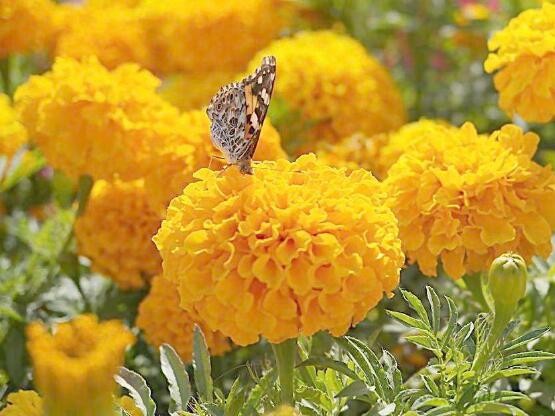
II. Watering methods and precautions for marigolds
1. Watering in spring
Spring is a season quite suitable for marigold growth, so this season also has high water requirements. Generally, the watering frequency is about every 3-4 days. However, spring is a rainy season, so when it rains relatively frequently, the amount of watering should be reduced accordingly. Everyone should remember this point.
2. Watering in summer
Regarding how to water marigolds in summer, the most important thing to pay attention to is the watering frequency. Summer is the hottest season of the year, and the sunlight is also quite intense, so water evaporates relatively quickly. At this time, we basically need to water once every day, which can keep marigolds from lacking water. However, when watering, remember that it is best to do so in the evening or early morning.
3. Watering in autumn
In terms of climate, autumn and spring are similar, but the weather in autumn is somewhat drier than in spring, so the watering frequency for marigolds in autumn needs to be increased a bit. It is best to water once every 2 days.
4. Watering in winter
Regarding how to water marigolds in winter, the most important thing is to reduce the watering frequency. Marigolds are not cold-tolerant, and spring is actually the coldest season of the year, so the watering frequency must be reduced. Try to keep the potting soil from being too moist, otherwise the roots can easily be frostbitten. The watering frequency should preferably be kept to once every 7-10 days.
III. Precautions for watering marigolds
In the above text, the editor walked everyone through the watering frequency for marigolds in each season. Next, let me tell you what to pay attention to when watering marigolds. Marigolds are very afraid of waterlogging, so the amount of water must be well controlled. Keeping the soil moist is enough. If too much water is given and water accumulates, it can easily cause root rot.
How to water marigolds, watering principles for marigolds
When caring for marigolds, watering them is quite particular. If watering is not handled well, problems can easily arise. So how do you water marigolds? Below is a summary of marigold watering methods and precautions.
How to water marigolds 1. Watering method when transplantingGenerally, after determining the transplanting time for marigolds, flower lovers can withhold water from the marigolds 7 days in advance. This prevents leggy growth in marigolds, and at the same time is more conducive to successful transplanting and improves flower quality. This point is very important. If fellow gardeners want to grow marigolds of relatively good quality, they must follow this point. About 3 days after transplanting, normal watering can resume.
2. Watering during high temperaturesThe high-temperature period generally refers to the hot summer. Most plants need a large amount of water to sustain themselves in summer, because when temperatures are high, water loss is also more serious. However, this plant is best kept with the soil on the drier side during high temperatures, because if there is too much water at this time, it is very easy to cause leggy growth. Besides affecting the plant shape, it will also delay the flowering period or lead to poor flower quality. Therefore, watering must be strictly controlled at this time.
3. Watering for daily careThe watering principle for marigolds is alternating dry and wet, so for daily watering, you can wait until the surface layer of the soil has dried completely before watering. This plant likes water but is also drought-tolerant, so it is also fine to water after the surface layer of the soil has dried completely. But liking water does not mean that waterlogging can occur when watering, or that the flower soil can remain in a moist state for a long time. The flower soil used must have good water permeability and air permeability. This is beneficial to the plant's health and also simplifies the difficulty of plant cultivation.
Watering principles for marigolds1. Generally, the watering time and amount for marigolds should both be appropriate. Never let too much water accumulate. Watering only needs to keep the soil in a slightly moist state.
2. If it is a newly planted young marigold, when the weather is hot, it is recommended that flower lovers spray 2~3 times a day to keep the potting soil moist.
3. In addition, watering marigolds should follow the principle of “dry-wet alternation.”
How to grow marigolds: cultivation methods and precautions for marigolds
There are many varieties of chrysanthemums, and marigold is one of them. How do you grow marigolds? Let us take a look together at the cultivation methods and precautions for marigolds.
Cultivation methods for marigolds:
1. Light: Marigolds are light-loving plants and are not shade-tolerant. They must be planted in flowerbeds and other plots with abundant light; for potted marigolds, they must also be placed in conditions with light for care and management.
2. Watering: They like a warm and moist soil environment and are drought-tolerant. Avoid excessive moisture and waterlogging. When the potting soil is too moist, the roots rot easily. Watering should follow the principle of "alternating dry and wet." After rain during the plum rain season, check and promptly pour out any accumulated water in the pot.
3. Fertilizing: Because marigolds have a relatively long flowering period, additional fertilizer is needed to supply nutrients, but it must not be applied excessively. Nitrogen fertilizer must be controlled; otherwise, the branches and leaves will grow vigorously and not bloom. Generally, apply 1 time per month of well-rotted dilute organic liquid fertilizer or nitrogen, phosphorus, and potassium compound liquid fertilizer.
4. Pinching and pruning: During care and management, after seedlings planted in the ground or potted have survived, pinch them in time to promote branching and more flowering. To make the flowers larger, promptly thin or severely pinch leggy branches, dead branches, weak branches, and post-flowering branches. For overly dense branches, thin them to improve light exposure and retain strong branches, but they must not be pinched, so that the flower buds at the top develop fully. In windy seasons, plant height should also be controlled through pruning and pinching to prevent lodging. Otherwise, stakes must be set up to prevent them from being blown over by the wind.
5. Pest control: In dry weather and high temperatures, red spiders are prone to harming the leaves. It is advisable to spray 1000~1500 times diluted Jingyebao.
Precautions for growing marigolds:
Marigolds themselves have a very long flowering period, but in the later stages of growth, the plants tend to lodge, and the leaves age and turn brown, which detracts from their ornamental value. If they are not propagated in stages to let spring-sown seedlings bloom year-round, then spent flowers should be removed in time, overly dense stems and leaves should be cut off, and fertilizer and water management should be strengthened at the same time, so that new flowering branches can sprout after autumn.
More information