What should be noted when cultivating marigolds? Detailed explanation of growing methods and light requirements
I. What should be noted when cultivating marigolds
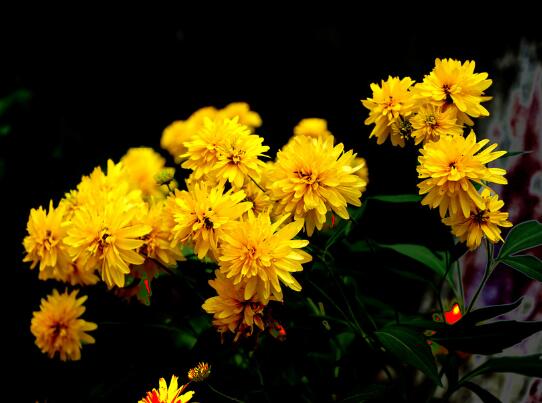
If you want to know what to pay attention to when cultivating marigolds, first we need to understand its growing habits. Marigold is a light-loving plant, and maintaining sufficient light during cultivation can help it grow better. Of course, that is not all that needs attention. As for what else, let us continue reading below.
II. Detailed explanation of marigold growing methods
1. Soil management
When growing marigolds, soil selection is a relatively important point. Choosing suitable soil is more conducive to marigold growth. Generally, we can choose sandy soil with relatively high looseness. This kind of soil has fairly good drainage and aeration, allowing marigolds to absorb nutrients better.
2. Fertilization requirements
During the marigold growing process, fertilizer is one of its main nutrients. During the growing period, marigolds have a relatively large demand for fertilizer and need to be fertilized almost once a month. Only by maintaining sufficient nutrients can marigolds produce more flowers.
3. Watering requirements
Watering is an indispensable step for most plants during cultivation, and marigolds are no exception. Reasonable watering is beneficial to marigold growth. When watering marigolds, it is best to follow the principle of watering when dry, and water only after the potting soil has dried out completely. The specific frequency depends on the situation.
4. Light requirements
Among marigold growing methods, light is a point that requires relatively more attention. During cultivation, it is best to maintain sufficient light so that marigolds can carry out photosynthesis, which can make them grow better and also help avoid some pest and disease problems.
5. Pest and disease control
During the marigold growing process, improper cultivation can easily cause problems such as pests and diseases. When these phenomena occur, we must deal with them in time. If delayed too long, it can easily lead to the plant withering and dying. For specific control methods, everyone can refer to the article on marigold pest and disease control. The editor will not introduce too much here.
Detailed explanation of indoor azalea growing methods and precautions
Azalea, also known by the aliases yingshanhong, shanshiliu, shanzhizhu, hongzhizhu, shanjuan, etc. There are many kinds of azaleas, and the leaf shapes of azaleas vary. Its flowers are borne 2-6 in clusters at the tips of branches, the corolla is broadly funnel-shaped, and the capsule is oval. At present, azaleas have become one of the most popular important flowering trees and shrubs at home and abroad. The editor will tell everyone the growing methods and precautions for azaleas!
Growing methods:
I. Environmental conditions: For cultivating azaleas, it is best to have both indoor and outdoor environments. The indoor environment is used in winter. The outdoor site is used in summer and autumn, preferably with muddy ground, and cement ground should be avoided. The site should be spacious, ventilated and shady. A shade shed should be built above, covered with reed curtains or relying on natural tree shade. A light transmittance of about 30% is suitable, and exposure to the evening sun must be avoided.
II. Potting soil requirements: Azaleas prefer loose, highly permeable, well-drained acidic soil rich in humus, with a pH value of 5.0-6.0. If clay or alkaline soil is used, hardly one in a hundred will survive. Especially summer azaleas and foreign azaleas must have mountain soil. Mountain soil also needs to be improved. At present, 3 kinds of prepared culture soil are usually used.
III. Flowerpot selection: For cultivating azaleas, generally two kinds of flowerpots are chosen: clay pots and purple clay pots. Clay pots have good aeration and water permeability, and production units all use this kind of pot for cultivation. For formed azaleas, especially azaleas that have already been shaped, for indoor and outdoor display, they are generally planted in beautiful and elegant purple clay pots. Purple clay pots have a delicate texture, rich colors and beautiful shapes, which can double their ornamental value.
IV. Improving water quality: For watering azaleas, it is best to use rainwater, followed by river water and pond water. If tap water is used, it is advisable to store the water for 1-2 days to let the chlorine evaporate before use. When using it, add 0.2% ferrous sulfate and water once every 7-10 days during the growing season. Use it regularly to ensure the soil is acidic.
V. Fertilizer and water management: Azaleas prefer shady and moist conditions and should not be too dry. More water is especially needed during the flowering period. In winter, azaleas have entered the dormant period and do not need much water. Generally, water once every 4-5 days, preferably around noon on sunny and warm days;
VI. Outdoor shading: From before being moved out of the room until before flowering, it is advisable to give more sunlight; during the flowering period, short-term shading should be carried out at noon, with a light transmittance of 60%;
VII. Shaping and pruning: Azaleas grow relatively slowly, so generally let them grow naturally, and only shape them after flowering, cutting off leggy branches, diseased and weak branches, deformed branches, and damaged branches.
VIII. Disease and pest control: For the azalea lace bug (also known as the crowned lace bug), spray 40% dimethoate 1500 times solution during the damage period, once every 7 days, for 3 consecutive times. The control method for the terminal bud leaf roller is mainly manual capture and killing. Larvae or pupae can also be sprayed and killed with 40% dimethoate emulsifiable concentrate 2000 times solution or dichlorvos 1500 times solution.
Precautions:
1. The roots of azaleas are as thin as hair strands, and there are very few thick main roots. They are afraid of both dryness and wetness, and especially afraid of heavy fertilizer. If watered too much, the roots will soak in water; if too dry, the branches and leaves will shrink and the leaf petals will fall off, posing a great threat to the plant. As for applying heavy fertilizer, it will endanger life.
2. After the flowers fade, the remaining flowers must be cut off to avoid seed production consuming nutrients. After new branches sprout, properly thin the branches, and decide whether to keep or remove them according to the plant's growth condition.
3. Azaleas are most suitable for planting in clay pots, because clay pots absorb water and breathe, which is beneficial to root growth and development and lush branches and leaves.
4. There are particular requirements for the placement of potted azaleas. Generally, they should be placed on a southeast-facing balcony, and they need ventilation. Move them as little as possible. Without ventilation, they are prone to black spot disease and large numbers of fallen leaves.
5. Azaleas also have moderate light requirements, and direct light should be avoided in summer.
6. Timely thin buds and leaves, removing part of the flower buds and leaves that have grown too many or too densely, so that air can circulate and nutrients can concentrate in the flower buds. After the flower buds form, increase nutrition and apply a moderate amount of extra phosphorus and potassium fertilizer, otherwise the flower buds will turn into leaf buds.
7. The main reasons for azalea leaf drop and failure to bloom include: too strong direct sunlight in summer, freezing damage from severe cold, too much watering, too concentrated fertilizing, being kept indoors for too long, being placed in a place with no air circulation or a dark and damp place, being exposed to acid rain, etc. Therefore, these situations should be avoided during care.
8. Repotting and changing soil does not need to be done every year, generally once every 2 to 3 years. Try to damage the roots as little as possible. The time should be after the flowers fade or in autumn. At the same time, spray thiophanate to prevent diseases.
9. The main pests of azaleas are red spiders, aphids, etc., which can be sprayed and killed with fenvalerate, etc., with relatively good results. If they are not dead after three days, spray once more.
10. The main propagation method for azaleas is cuttings. Around Grain in Ear, choose new branches 5 cm to 10 cm long, cut them off at the branching point, strip off the lower leaves, keep 3 to 4 top leaves, insert 1/3 of the branch into the soil, spray enough water, and cover with plastic film. Strengthen management at ordinary times, and transplant after one year.
[Conclusion]Bai Juyi praised it: "Idly I break off two branches and hold them in my hand; looking closely, they seem not to exist in the human world. Among flowers, this one is Xishi; hibiscus and peony are all Momu."
More plant information>>
|Plectranthus amboinicus|Marigold planting|Growing methods for the happy tree|Flower pictures and names|Effects of pothos flowers|Bowl lotus|
|Orange jasmine bonsai|Growing methods for Christmas cactus|Growing methods for cactus|How to grow gardenia|Effects of lavender|
| Foliage plants | Aquatic plants | Flowering plants | Carnivorous plants | Bryophytes |
|Whole wardrobes |Rural small villa renderings |Shelf decoration pictures |Suspended ceiling keel pictures |Nanmu furniture pictures|
Azalea cultivation Detailed explanation of indoor azalea growing methods and precautions
Azalea, also known by the aliases yingshanhong, shanshiliu, shanzhizhu, hongzhizhu, shanjuan, etc. There are many kinds of azaleas, and the leaf shapes of azaleas vary. Its flowers are borne 2-6 in clusters at the tips of branches, the corolla is broadly funnel-shaped, and the capsule is oval. At present, azaleas have become one of the most popular important flowering trees and shrubs at home and abroad. The editor will tell everyone the growing methods and precautions for azaleas!
Growing methods:
I. Environmental conditions: For cultivating azaleas, it is best to have both indoor and outdoor environments. The indoor environment is used in winter. The outdoor site is used in summer and autumn, preferably with muddy ground, and cement ground should be avoided. The site should be spacious, ventilated and shady. A shade shed should be built above, covered with reed curtains or relying on natural tree shade. A light transmittance of about 30% is suitable, and exposure to the evening sun must be avoided.
II. Potting soil requirements: Azaleas prefer loose, highly permeable, well-drained acidic soil rich in humus, with a pH value of 5.0-6.0. If clay or alkaline soil is used, hardly one in a hundred will survive. Especially summer azaleas and foreign azaleas must have mountain soil. Mountain soil also needs to be improved. At present, 3 kinds of prepared culture soil are usually used.
III. Flowerpot selection: For cultivating azaleas, generally two kinds of flowerpots are chosen: clay pots and purple clay pots. Clay pots have good aeration and water permeability, and production units all use this kind of pot for cultivation. For formed azaleas, especially azaleas that have already been shaped, for indoor and outdoor display, they are generally planted in beautiful and elegant purple clay pots. Purple clay pots have a delicate texture, rich colors and beautiful shapes, which can double their ornamental value.
IV. Improving water quality: For watering azaleas, it is best to use rainwater, followed by river water and pond water. If tap water is used, it is advisable to store the water for 1-2 days to let the chlorine evaporate before use. When using it, add 0.2% ferrous sulfate and water once every 7-10 days during the growing season. Use it regularly to ensure the soil is acidic.
V. Fertilizer and water management: Azaleas prefer shady and moist conditions and should not be too dry. More water is especially needed during the flowering period. In winter, azaleas have entered the dormant period and do not need much water. Generally, water once every 4-5 days, preferably around noon on sunny and warm days;
VI. Outdoor shading: From before being moved out of the room until before flowering, it is advisable to give more sunlight; during the flowering period, short-term shading should be carried out at noon, with a light transmittance of 60%;
VII. Shaping and pruning: Azaleas grow relatively slowly, so generally let them grow naturally, and only shape them after flowering, cutting off leggy branches, diseased and weak branches, deformed branches, and damaged branches.
VIII. Disease and pest control: For the azalea lace bug (also known as the crowned lace bug), spray 40% dimethoate 1500 times solution during the damage period, once every 7 days, for 3 consecutive times. The control method for the terminal bud leaf roller is mainly manual capture and killing. Larvae or pupae can also be sprayed and killed with 40% dimethoate emulsifiable concentrate 2000 times solution or dichlorvos 1500 times solution.
Precautions:
1. The roots of azaleas are as thin as hair strands, and there are very few thick main roots. They are afraid of both dryness and wetness, and especially afraid of heavy fertilizer. If watered too much, the roots will soak in water; if too dry, the branches and leaves will shrink and the leaf petals will fall off, posing a great threat to the plant. As for applying heavy fertilizer, it will endanger life.
2. After the flowers fade, the remaining flowers must be cut off to avoid seed production consuming nutrients. After new branches sprout, properly thin the branches, and decide whether to keep or remove them according to the plant's growth condition.
3. Azaleas are most suitable for planting in clay pots, because clay pots absorb water and breathe, which is beneficial to root growth and development and lush branches and leaves.
4. There are particular requirements for the placement of potted azaleas. Generally, they should be placed on a southeast-facing balcony, and they need ventilation. Move them as little as possible. Without ventilation, they are prone to black spot disease and large numbers of fallen leaves.
5. Azaleas also have moderate light requirements, and direct light should be avoided in summer.
6. Timely thin buds and leaves, removing part of the flower buds and leaves that have grown too many or too densely, so that air can circulate and nutrients can concentrate in the flower buds. After the flower buds form, increase nutrition and apply a moderate amount of extra phosphorus and potassium fertilizer, otherwise the flower buds will turn into leaf buds.
7. The main reasons for azalea leaf drop and failure to bloom include: too strong direct sunlight in summer, freezing damage from severe cold, too much watering, too concentrated fertilizing, being kept indoors for too long, being placed in a place with no air circulation or a dark and damp place, being exposed to acid rain, etc. Therefore, these situations should be avoided during care.
8. Repotting and changing soil does not need to be done every year, generally once every 2 to 3 years. Try to damage the roots as little as possible. The time should be after the flowers fade or in autumn. At the same time, spray thiophanate to prevent diseases.
9. The main pests of azaleas are red spiders, aphids, etc., which can be sprayed and killed with fenvalerate, etc., with relatively good results. If they are not dead after three days, spray once more.
10. The main propagation method for azaleas is cuttings. Around Grain in Ear, choose new branches 5 cm to 10 cm long, cut them off at the branching point, strip off the lower leaves, keep 3 to 4 top leaves, insert 1/3 of the branch into the soil, spray enough water, and cover with plastic film. Strengthen management at ordinary times, and transplant after one year.
[Conclusion]Bai Juyi praised it: "Idly I break off two branches and hold them in my hand; looking closely, they seem not to exist in the human world. Among flowers, this one is Xishi; hibiscus and peony are all Momu."
More plant information>>
|Plectranthus amboinicus|Marigold planting|Growing methods for the happy tree|Flower pictures and names|Effects of pothos flowers|Bowl lotus|
|Orange jasmine bonsai|Growing methods for Christmas cactus|Growing methods for cactus|How to grow gardenia|Effects of lavender|