Do Canna Lilies Need Pruning? Three Pruning Methods to Keep Them Blooming Continuously
Do Canna Lilies Need Pruning
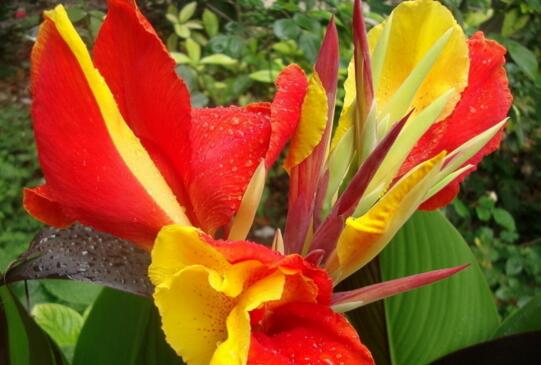
Canna lilies have extremely vigorous vitality, and their growth rate is one of the faster types among plants. They can grow to 1.5 m or even taller in a very short time, and they can also produce new shoots from their stems and branches. So do canna lilies need pruning? The answer is yes.
① Pruning canna lilies can prevent stems, leaves or flower stalks from being attacked by pathogens after they rot, thereby causing pests and diseases;
② Cutting off excess old branches and leaves can avoid excessive consumption of nutrients, allow new branches and leaves to receive sufficient nutrients, and help canna lilies grow new flower stalks and continue blooming;
③ Pruning canna lilies can make their appearance more beautiful. If they are planted indoors, it can bring out the ornamental value among the benefits and uses of canna lilies, and it also makes them easier to manage.
How to Prune Canna Lilies
1. During the growing season
Under normal circumstances, canna lilies can stand upright and tall during the growing season if they are not affected by other factors. However, if they are affected by strong winds, diseases and other factors, the plants may not be so upright, so diseased leaves or crooked branches and leaves should be cut off.
2. Withered stems and branches
Canna lilies have a very fast metabolism. Although they are perennial plants, some stems or branches may wither. Before winter arrives, these withered branches should be cut off to ensure that the canna lilies overwinter smoothly.
3. After the flowering period
Although canna lily flowers are beautiful, they also fade. After the flowers wither, the flower stalks should be cut off from the base of the stems and branches to prevent the spent flowers from causing pests and diseases and consuming nutrients. This can also promote the growth of new stems and keep the canna lilies blooming continuously.
Do Canna Lilies Need Pruning
Canna lilies need pruning
Canna lilies have strong vitality and grow relatively quickly. If you want canna lilies to grow robustly and have a better plant shape, pruning work is necessary.
Therefore, canna lilies do need pruning.
Canna Lily Pruning Methods
Step 1
After the flowers of canna lilies fall, cut the stems and branches at the place where the flowers fell from the base. This helps the canna lilies sprout new branches and buds, and then grow flower stalks that bloom one after another;
After flowering, the flower stems should also be cut off to avoid nutrient consumption caused by excess branches. This can promote new stems to emerge and keep them blooming continuously;
Step 2
Also note that after the aboveground stems and branches wither, the stems and leaves should be cut off and then placed on top of the plants, which can also help the plants overwinter safely.
Before sprouting the following spring, be careful to remove the waste branches and buds covering the plants, so as to facilitate the emergence of new buds from the soil.
Pruning in this way can bring a very good growth trend to canna lilies, so canna lilies definitely need pruning.
Step 3
In their growing space, canna lilies can develop upright plants when left to grow on their own, but there are also many factors in the space that affect normal plant growth;
For example, pests and diseases can cause plant leaves to turn yellow and fall off; the cold wind in winter can also damage the stems and branches of the plants and stop their growth; and strong sunlight can scorch leaves, stems and branches. Therefore, symptoms caused by these factors all require pruning;
Branches with pests and diseases can be cut off or sprayed with a small amount of pesticide; branches and buds scorched by sunlight can be cut off directly.
Alright, the editor has already told you the methods for pruning canna lilies. If you want to give it a try, take action quickly!
An Introduction to Canna Lily Pruning Methods
Canna Lily
Tall plants, green leaves and brilliant flowers - everyone must know canna lilies! Because the plants are relatively dense and tall, reasonable shaping and pruning are needed if they are kept at home. Of course, whether canna lilies are kept at home or outdoors, regular pruning cannot be omitted. So how should canna lilies be pruned?
When the flowers at the ends of the stems fall, the stems and branches should be cut off from the base at any time, so as to sprout new buds and grow flower stalks that bloom one after another. After flowering, cut off the flower stems in time to avoid consuming nutrients and to promote new stems to emerge, so that flowering continues without interruption. After the aboveground parts wither, cut off the stems and leaves and cover them on top of the plants to prepare for safe overwintering. Before sprouting the following spring, remove the covering material to facilitate the emergence of new buds. Root division is commonly used for propagation. Before sprouting in early spring, dig up the rhizomes, divide them into segments, each with 2-3 bud eyes, and plant them directly in open ground in dug holes.
If canna lilies planted in the ground have enough space, they can develop upright plants when left to grow on their own. There are many factors that affect normal plant growth, such as pests and diseases causing yellow leaves and diseased leaves, or spatial competition causing part of the plant to receive no sunlight and lose balance, or attacks by cold winter wind, or strong sunlight reflected from building walls scorching part of the leaves. During vigorous growth and flowering, new buds tiller extremely vigorously and are prone to becoming too dense, all of which require pruning and cutting to achieve a complete plant shape and full but moderate flowering. Generally, pruning and cutting are carried out flexibly according to different seasons and plant growth conditions.
March to October is the season of vigorous growth and flowering for canna lilies. Because new buds tiller extremely vigorously, the plants are prone to becoming too dense. Every 3 days, plants that have already flowered, as well as weak, diseased and degenerated plants without flowers, must be cut off. When a single variety is planted in patches, attention should also be paid to removing off-color varieties. This helps the sprouting and growth of strong buds, dwarfs the plants, and makes flowering uniform. Based on practical experience, the number of flowering plants is controlled at 10 to 15 plants per sq m (28 to 36 plants per sq m when planted in the ground), so that they bloom continuously throughout the year.