How to fertilize canna lilies? Nitrogen, phosphorus and potassium fertilizers are essential
Canna lilies have large and brightly colored flowers, giving them extremely high ornamental value. But if you want the flowers to bloom more brilliantly, fertilizing is the top priority. For example, fertilizing before the flowering period to force blooms is one of the main methods. So how do you fertilize canna lilies? What fertilizer is good for canna lilies? Let's find out together.
What fertilizer is good for canna lilies
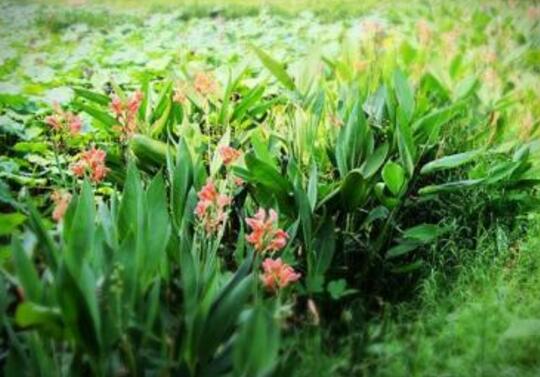
When fertilizing canna lilies, many kinds of fertilizer are needed, such as base fertilizer, nitrogen fertilizer, phosphorus and potassium fertilizer, potassium dihydrogen phosphate aqueous solution, and so on. Each kind of fertilizer provides different nutrients that canna lilies need for growth, so all of them are very necessary.
Base fertilizer: Barnyard manure, compost, livestock manure and the like are the most commonly used base fertilizers. Phosphate fertilizer and potassium fertilizer can also be mixed in. The amount used is generally 10% of the potting soil. It is a slow-release fertilizer, and its purpose is to make the soil rich in nutrients.
Nitrogen fertilizer: The urea we often hear about belongs to nitrogen fertilizer. It can be used as a base fertilizer or seed fertilizer, and can also be used when topdressing. Nitrogen is a main component of chlorophyll, so it is essential. It can also ensure that canna lily seeds are healthier.
Phosphorus and potassium fertilizer: A lack of potassium will weaken photosynthesis in canna lilies, slow plant growth, and cause poor root development. Stems become fragile and often lodge. Seeds and fruits are small and shriveled. Therefore, if you want canna lilies to grow more vigorously, phosphorus and potassium fertilizer is essential.
Potassium dihydrogen phosphate aqueous solution: About 20 days before the flowering period, spraying the leaves with potassium dihydrogen phosphate aqueous solution can effectively force flowering, allowing the plant to successfully produce flower buds when the flowering period arrives.
How to fertilize canna lilies
1. Before planting
Before planting, base fertilizer should be applied at the bottom of the pot, or the base fertilizer can be mixed into the potting soil.
2. Vigorous growth period
In spring and summer, canna lilies grow quickly, so how do you fertilize them at this time? Apply dilute nitrogen fertilizer or phosphorus and potassium fertilizer every month, 3-4 times.
3. After propagation
After dividing and replanting canna lilies, there is generally no need to fertilize immediately. You can wait until the plant has grown 5-6 new leaves before fertilizing, generally once every 15 days.
4. Before the flowering period
How do you fertilize canna lilies before the flowering period arrives? If flower buds have not yet emerged 20-30 days before the expected flowering period, spray the leaves with a 0.2% potassium dihydrogen phosphate aqueous solution, which can force flowering.
The ultimate all-purpose flower calendar, a must-have for flower growers!!
It is now November, so let's first introduce the November flower calendar.
November flower calendar
◎ Weather characteristics: In November come Start of Winter and Light Snow. Northern regions generally experience heavy frost, with ice forming in the mornings and evenings; southern regions are also occasionally hit by cold waves, bringing low temperatures and frost.
◎ This month's flower tasks should be based on the habits of each type of flower and local climate conditions, adapting to local conditions to do a good job of preventing freezing and wind drying. Hardy perennials overwintering in the open ground, such as peonies, hostas, irises, daylilies, sedum (eight treasures), black-eyed Susans, hollyhocks, lotus, tree peonies and so on, should be given one application of organic fertilizer and watered thoroughly with winter water, and then they can overwinter safely. In high, cold, wind-dry places, they should be covered with horse manure or firewood and straw for protection. Biennial and annual flowers sown in autumn to bloom in spring, such as pot marigolds, stock, pansies, snapdragons, daisies, phlox, ornamental kale and so on, need to be heeled in in cold frames in the north, and overwintered in protected areas in the south. They can also be grown in greenhouses as cut flowers or pot flowers for winter and early spring.
◎ Open-ground woody flowers such as Chinese roses, pomegranates and flowering shrubs should have old, weak, diseased and dead branches pruned away. In cold regions, do not do heavy pruning; wait until next spring for shaping. Bank soil around the base of the flowers and shrubs to protect them and provide enough winter water. For tree peonies, before banking soil, water according to soil moisture conditions as appropriate, but do not make it too wet. Newly planted seedlings can be protected by covering with large flower pots, and in deep winter the pot holes should be covered as well. Potted plum blossoms and ornamental peach should be moved into a greenhouse in the middle of the month to force flowers, preparing flowers for New Year's Day and the Spring Festival. Wintersweet should be placed in a cold room to bloom naturally. Potted deciduous woody flowers can, according to the local climate, be moved into a cold room or cold cellar to overwinter safely, and can be heavily pruned before being moved in. The pruned Chinese rose branches can be propagated by cuttings in cold frames or low-temperature rooms.
◎ Greenhouse flowers should be placed separately in high-, medium- and low-temperature rooms according to the different temperature requirements of each flower. The temperature must also be adjusted appropriately according to growth or dormancy. In general mixed greenhouses, the habits of different flowers must also be considered, and they should be placed in positions appropriate to their distance from heat sources and light intensity.
◎ Both north and south should turn over and prepare flower-growing beds and apply organic fertilizer. Repair and maintain the flower-growing site, clear weeds and fallen leaves, and prevent pests and diseases from hiding there.
◎ In the greenhouse, cinerarias, primroses, sweet peas, calceolarias and so on are in the seedling stage, so pay attention to water control, loosening the soil, ventilation and light fertilization. Clivias, cyclamens, wax begonias, pelargoniums and so on are in their peak growing period, so pay attention to topdressing and watering appropriately.
◎ This month's chrysanthemum shows in both north and south are a suitable time for introducing and taking cuttings.
December flower calendar
◎ Weather characteristics: Controlled by cold air. The weather is cold and dry. Sudden cold snaps and frosts are common.
◎ Do a good job of pollinating clivias (late December to early March).
◎ Narcissus carving and water culture (the carving date depends on the number of days needed from carving to flowering; crab-claw narcissus takes about 45 days in water culture to bloom, and pen-rack narcissus takes about 60 days in water culture to bloom).
◎ Chinese rose shaping and pruning: keep 2-3 buds from the base upward, and cut off the part above them.
◎ For shaped stump bonsai, remove the metal wire that has sunk into the bark.
◎ Carry out winter pruning on stump bonsai such as elms and Japanese bush cherries.
January flower calendar
◎ Weather characteristics: Continuously hit by relatively strong cold waves, this is the period with the lowest temperatures of the year. The climate is cold and dry.
◎ Flowering: Spring plum, camellias, narcissus, primroses, daisies, winter daphne, pot marigolds, winter orchids, spring orchids and cicada orchids bloom one after another.
◎ Cuttings: Pomegranate, Chinese snowball, dwarf flowering cherry, pelargonium, Chinese rose, rose, banksia rose, azalea, cherry blossom, peach blossom, Rosa multiflora, carnation and so on.
◎ Division: Wintersweet, magnolia, purple magnolia, banksia rose, wisteria, azalea and so on, as well as bulb flowers such as narcissus and hyacinth.
◎ Layering: Chinese rose, rose, Chinese trumpet creeper, banksia rose, kerria and so on.
◎ Adjust and plant out deciduous flowering trees and shrubs, and plant out or pot up spring-blooming flowers: dianthus, pansy, snapdragon, wallflower, catchfly, cornflower, delphinium, pot marigold, daisy, cineraria, phlox and so on.
◎ Strengthen greenhouse management, paying attention to watering and ventilation. Greenhouse flower forcing: azalea, magnolia, Chaenomeles speciosa, poinsettia and so on.
◎ Flowerbed replanting: daisies, pot marigolds and so on. For dormant flowers, turn the soil and bank it up, apply base fertilizer and protect against cold. Trim hedges, and prune diseased and dead branches of flowering shrubs.
◎ Other: 1. Use heating, plastic bag covering and other methods to do a good job of protecting flowers from the cold.
2. For flowers kept warm indoors, watering should be controlled so that the potting soil remains dry. 3. Potted flowers overwintering in the open should be watered thoroughly when cold waves hit, to prevent freeze damage. 4. Do a good job of turning over the soil in flower planting areas and apply enough base fertilizer. 5. Make and shape stump bonsai.
February flower calendar
◎ Weather characteristics: Temperatures rise slowly, but cold waves still often strike, and the weather is overcast, cold and rainy.
◎ Continue to do a good job of protecting flowers from the cold.
◎ Dig up stumps of deciduous trees and conifers in the wild.
◎ Repot azaleas, elms, Japanese bush cherries, heavenly bamboo, Chinese roses, kumquats and so on.
◎ Repot deciduous tree stump bonsai.
◎ Five-needle pine and Japanese black pine side grafting propagation (late February to early March).
March flower calendar
◎ Weather characteristics: March marks Awakening of Insects and Spring Equinox. The highest temperature can reach 27-28°C, and the lowest is minus 4-5°C. This is exactly when cold and warmth alternate. The temperature gradually becomes warmer, but it is warm at times and cold at others, with a lot of overcast and rainy weather.
◎ Narcissus, spring orchids, winter daphne, plum blossoms, Christmas cactus, cyclamen, cineraria, primroses and so on are in full bloom, and a certain amount of light and temperature should be maintained. When daytime temperatures are relatively high, windows can be opened for ventilation to keep indoor air circulating. The potting soil should not be too dry or too wet; it should remain moist.
◎ Camellias are already in full bloom. Note that room temperature should not be too high, sunshine duration should not be too long, indoor air should circulate, and the potting soil should not be too dry or too wet; remove excess flower buds and control the plant to bloom in batches.
◎ Prepare potted flowers for moving outdoors. When temperatures rise, open windows indoors to let them receive outdoor sunlight and air, so they gradually adapt to the environment and are ready to be moved out in April.
◎ For amaryllis, epiphyllum, clivia, kumquats and so on, through pruning and shaping and removal of dead branches and leaves, combined with topdressing nitrogen and phosphorus fertilizer, promote their growth, bud development and flowering.
◎ Continue making stump bonsai. Also do a good job of repotting evergreen broadleaf stump bonsai.
◎ Repot flowers such as azaleas, winter jasmine, winter daphne and spider plants.
◎ Pot up Chinese roses, and divide lotus grown in vats.
April flower calendar
◎ Weather characteristics: April marks Pure Brightness and Grain Rain. Warm air masses grow stronger, the weather is mild, and there is more rain. Spring has arrived, and this is a very busy solar term for flower work. Different climate regions need to adapt to local and seasonal conditions.
◎ Herbaceous flowers for summer and autumn flowerbeds, such as dahlias, scarlet sage, zinnias, China asters and so on, are sown and cultivated in the open ground when soil temperature is 10-18°C. For herbaceous flowers sown last autumn, such as pot marigolds, pansies, snapdragons and so on, strengthen water and fertilizer management after Pure Brightness, and transplant them to flowerbeds after Grain Rain.
◎ Various perennial flowers, such as canna lilies, daylilies, gladioli, dahlias, arrowroot and so on, can be divided and planted at this time. Aquatic flowers, such as potted lotus and water lilies, can be moved outdoors after Pure Brightness in the north. Deciduous woody potted flowers, such as pomegranates and crape myrtles, should be moved outdoors before sprouting for pruning and repotting.
◎ Southern flowers grown in the north, such as Chinese hibiscus, jasmine and Aglaia odorata, should be moved outdoors only after Grain Rain when temperatures are relatively stable, because northern spring winds are dry and temperatures fluctuate greatly.
◎ Sow and propagate annual herbaceous flowers and flowers such as clivia, pomegranate and asparagus fern.
◎ Propagate by division flowers such as umbrella papyrus, broadleaf lady palm, bamboo palm, spider plant, hosta and clivia.
◎ Pot up or repot warmth-loving flowers such as Aglaia odorata, jasmine, epiphyllum, spider plant, Swiss cheese plant and bird of paradise.
◎ For stump bonsai such as five-needle pine, Japanese black pine and Japanese black pine, remove buds to make the branches and leaves neat.
May flower calendar
◎ Weather characteristics: May marks Start of Summer and Grain Full. The average temperature in the middle and lower reaches of the Yellow River during this solar term is 20°C. The temperature difference between north and south is close, with a lot of continuous spring rain and little sunshine.
◎ Southern flowers overwintered indoors, such as osmanthus, azaleas, camellias, gardenias and banana shrubs, can be moved outdoors. Jasmine, Aglaia odorata, Michelia alba, orange jasmine, epiphyllum, croton, hibiscus and citrus should be moved outdoors on a semi-shaded day when nighttime temperatures are stable at 15°C. After being moved outdoors, some flowers and trees such as azaleas, camellias, gardenias, orchids and fern foliage plants need to be placed under shade nets, and water should often be sprayed on the ground to keep the micro-environment fresh and moist.
◎ Bulb flowers such as tuberose, gladioli, Crocosmia, rain lilies and dahlias should be planted when soil temperature is above 15°C. Summer-dormant bulb flowers such as tulips, hyacinths and freesias should be carefully managed so they do not dry out too early, extending their growing time as much as possible so the new bulbs grow robustly, and they should be dug up, dried and stored around the end of the month. For cyclamen, gloxinia, calla lilies and so on, after the seeds mature, remove old and damaged leaves, clean the surface of the potting soil, place them in a cool, ventilated, rain-sheltered spot, stop fertilizer and restrict water, and do a good job of dormant-period care.
◎ For autumn and National Day flowers such as China asters, cockscomb, African marigolds, Physostegia, coral beads, petunias and amaranth, sow directly in the open ground. For scarlet sage, coleus, Madagascar periwinkle and so on that are sown in indoor pots or raised in cold frames, divide and plant them outdoors this month. Pot up and plant out large shaped early chrysanthemums.
◎ When the day-night temperature difference in May is 10°C, powdery mildew breaks out on a large scale, mainly harming Chinese roses and some flowers under shade nets. It should be controlled in time with triadimefon, chlorothalonil and so on. For aphids and scale insects, use a 40% omethoate 800-1500 times solution for control. Pay attention to clearing weeds in flower pots and cultivation sites.
◎ After camellias and azaleas finish blooming, remove the spent flowers and apply post-bloom fertilizer mainly consisting of nitrogen fertilizer.
◎ Place semi-shade-loving and shade-loving flowers under shade nets or under large trees.
◎ For foliage plants, spray water on the leaves 2-3 times a day (March-September) to increase air humidity.
June flower calendar
◎ Weather characteristics: June marks Grain in Ear and Summer Solstice. The hot summer has arrived, temperatures rise, the plum rain season comes, and the weather is hot, humid and rainy, changeable, with relatively high humidity.
◎ Most famous winter and spring flowers, such as cyclamen, cineraria, primroses, calceolaria, corn poppies, amaryllis and so on, have seeds maturing one after another and should be collected in time and stored in a cool, ventilated, dry place.
◎ Many summer and autumn flowers begin to grow vigorously, such as Chinese hibiscus, pomegranate, jasmine, Aglaia odorata, Michelia alba, orange jasmine and so on. From this time on, they should have "water twice a day and fertilizer once every ten days." Prevent and control pests and diseases, carry out comprehensive care and management, and pay attention to fruiting types such as citron, finger citron, bitter orange and figs: fertilizer should be well rotted and watering should be steady, not suddenly heavy then light, and the environment should be kept moist to prevent fruit drop. Potted plum blossoms, wintersweet and ornamental peach need water control this month, with the growing tips pinched off or growth points twisted off to promote flower bud differentiation, prevent new shoots from growing leggy, and prevent flower branches from becoming too long and unattractive. For shade-loving flowers such as orchids, camellias and wax begonias, pay attention to proper shading and keep the environment moist.
◎ For summer-dormant bulb flowers such as freesias, hyacinths and tulips, when stems and leaves turn yellow and dry, dig them up in time, dry them for one or two days, and store them in a cool, dry, ventilated place.
◎ Aquatic flowers such as potted lotus, water willow and water lilies grow rapidly as temperatures rise, so phosphorus and potassium fertilizer should be supplied in time, and by the end of the month the flowers bloom all together. For National Day dahlias, repot and plant out; for early chrysanthemums, pot up and plant out and establish the main branches. For late chrysanthemums, at the beginning of the month pinch the centers and turn over sprouts to renew the plants. This month most herbaceous flowers grow robustly, and woody flower branches are half-mature; temperature and humidity conditions are suitable, so it is a good time for cutting propagation. Grafting and division of cacti and succulents can be carried out before the hot, rainy season.
July flower calendar
◎ Weather characteristics: July marks Minor Heat and Major Heat, followed by the first and middle fu periods. North and south continue to have high temperatures and lots of rain. The weather is hot, and this is the period of the highest temperatures of the year. There are often prolonged high-temperature periods and summer drought, with strong sunshine.
◎ All kinds of flowers must be carefully and meticulously managed. The south should pay attention to draining waterlogging and preventing drought; the north especially must deal with continuous overcast and rainy days, always guard against pest and disease infection, and pass safely through the critical stage of severe heat and high humidity.
◎ Inspect the care site and promptly eliminate hidden dangers of waterlogging. Shade nets and curtain equipment should be kept at appropriate density and effectiveness. Production greenhouses and facilities storing dormant flowers need proper shading, with front, rear and top windows all opened for ventilation and heat dissipation.
◎ For National Day dwarf sunflowers and dwarf China asters, sow in the middle of the month. For early chrysanthemums, carry out the last pinching and final heading in the first ten days. For herbaceous flowers such as scarlet sage, dahlias, canna lilies and cockscomb, stop using organic liquid fertilizer this month. Pay attention to high temperature and drought, water plus spray water, and lay pots on their sides during continuous overcast and rainy days. Specimen chrysanthemums begin to be potted in final planting pots one after another in the last ten days. Desk chrysanthemums are propagated by cuttings no later than the end of the month.
◎ Southern flowers grown in the north, such as Michelia alba and Aglaia odorata, can be given proper shaping and pruning. In midsummer they grow vigorously and are easy to rejuvenate quickly. For plum blossoms, ornamental peach, camellias, banana shrubs and so on, pay attention to restricting water to prevent leggy growth, and promote flower bud differentiation so there will be more flowers in winter and spring.
◎ This month's high temperature and high humidity are suitable for softwood cutting propagation of many kinds of herbaceous flowers, such as Chinese roses, jasmine, hibiscus, camellias, night-blooming jasmine and so on. The cutting medium should be coarse, granular and loose for a high survival rate.
◎ Midsummer in July is a period when pests and diseases occur frequently, so you must always be vigilant, focus on prevention, detect early and treat thoroughly. For seedling blight and various leaf spot diseases of larger seedlings, use triadimefon to spray the leaves, potting soil and ground for control. For aphids and common leaf-eating pests, use deltamethrin and omethoate sprays for control. Two or more pests and diseases can be treated with mixed pesticides. But the concentration must be strictly controlled according to the instructions, and spraying should be done in the morning or evening to prevent pesticide damage from midday high temperatures.
August flower calendar
◎ Weather characteristics: The first ten days of this month mark the Beginning of Autumn, and the weather turns cooler, but there are often high-temperature periods and summer drought, so attention must still be paid to drought resistance, waterlogging prevention, pest control and disease prevention.
◎ In the last ten days comes End of Heat, temperatures drop sharply, and it gradually becomes cooler. Autumn flowers begin to grow vigorously. Scarlet sage, cockscomb, China asters, early chrysanthemums, various strains of dahlias, "alpine snow," "amaranth"... should each be pinched and shaped separately; Chinese roses should be pruned in the middle of the month to maintain tree vigor and concentrate nutrients in the flower branches. As temperatures drop, gradually increase topdressing and watering to force flowers and plump fruit for National Day viewing.
◎ This month is relatively busy for flower work, and many kinds of flowers need careful cultivation and management. Late chrysanthemums should have their final pinching in the first days of the first ten days; if later, the flowers will not be uniform. Amaryllis begins to form flower buds at this time, so topdressing in time yields twice the result with half the effort. For gladioli and tuberose, immediately topdress after cutting flowers to care for the bulbs, ensuring that next year the stems are upright and the flowers are uniform and dense. For autumn and winter ornamental-fruited flowers, it is appropriate to increase phosphorus fertilizer to keep leaves bright and fruit colorful and glossy. For osmanthus, after the middle of the month, water with fully rotted organic fertilizer once a week until before flowering in mid-September. For potted camellias, according to plant size and vigor, retain one or two robust, well-formed buds per branch as appropriate, and thin out the excess one by one. For bougainvillea, coil the branches, and for poinsettia, bend and shape them; it is best to restrict water at noon and operate when the branches are slightly wilted and soft to avoid breaking or injuring them. For mature clivias, repot and change soil only when the weather is cool and stable.
◎ The summer-dormant flower cyclamen begins to stir again in the cool autumn, so it should be repotted and have its soil changed. Calla lilies should be divided and planted. Oxalis types should be potted in the middle of the month, and freesias in the last ten days. For autumn-sown herbaceous flowers that bloom the following spring, such as pansies, pot marigolds, dianthus, ornamental kale and stock, sow successively from the beginning to the end of the month in northern regions according to local and cold-protection conditions.
◎ Southern flowers grown in the north, such as Michelia alba, jasmine, Aglaia odorata and Chinese hibiscus, gradually stop flowering this month, but attention still needs to be paid to water and fertilizer, keeping them moderately robust. Potted lotus has stopped flowering and is setting lotus roots, so pay attention to stopping fertilizer and restricting water, but light still cannot be cut off, so that next year the leaves will be lush and the flowers abundant.
September flower calendar
◎ Weather characteristics: September marks White Dew and Autumn Equinox. The weather is crisp and often clear, cold air begins to become active, temperatures drop, there are many rainy days, and autumn begins.
◎ During this period all kinds of flowers grow and develop vigorously, so sprinkler irrigation should be frequent and fertilizing should be refined. Pay attention to dry autumn weather and autumn drought. As temperatures drop, gradually increase fertilizer amounts, which greatly benefits autumn flowers, winter flowers and spring flowers. At the same time, do not relax management of flowers under shade nets. In the vast northern regions, guard against clear-sky scorching sun and sudden strong winds.
◎ For National Day scarlet sage, according to growth vigor, remove the colored flower spikes from September 1 to 5, so that the flowers will be neat, full and abundant by the holiday. For early chrysanthemums that bud too early, apply a trace amount of nitrogen fertilizer and increase watering; for those that bud too late, apply phosphorus and potassium fertilizer as appropriate and restrict water appropriately, ensuring all flowers bloom together for National Day. For dahlias that begin to bud and show color in early September, National Day is exactly their best flowering period. For those that are too early, remove the main bud and let side buds develop; for those that are too late, restrict water and topdress phosphorus and potassium fertilizer to force flowering. Other herbaceous flowers for the holiday can also use the same method to force or delay flowering. For northern potted osmanthus that need to bloom for National Day, move them into the greenhouse in early September and keep nighttime temperatures above 16°C to delay flowering, then move them outdoors on the 25th to cool naturally, and they will bloom fully by the holiday.
◎ For various autumn-sown herbaceous flowers, those sown in August in northern regions should be thinned and transplanted in the middle of this month, while southern regions can sow at the appropriate time. Winter and spring greenhouse potted flowers such as cyclamen, cineraria and calceolaria should be sown this month; pelargonium and fuchsia begin cutting propagation; plum blossoms, ornamental peach and so on should be bud-grafted from the beginning to the end of this month, moving from north to south at the appropriate time.
◎ Southern flowers grown in the north, such as Michelia alba, Chinese hibiscus, jasmine and Aglaia odorata, should gradually be moved to wind-sheltered, sunny spots to prevent early frost and wind drought. Tropical and subtropical flowers such as croton, as well as cactus plants such as Christmas cactus grafted onto triangular cactus rootstock, should be moved indoors for care in the middle of the month to prevent cold wave attacks.
◎ Various shaped artistic chrysanthemums enter the stage of comprehensive management. As temperatures drop and sunshine gradually shortens, increase water and fertilizer, and all will bud in the last ten days. For dahlias and large cascading chrysanthemums, carefully select first-generation basal shoots in the last ten days for cutting propagation, preparing for the next year.
October flower calendar
◎ Weather characteristics: October marks Cold Dew and Frost's Descent. The weather turns cooler and gradually colder. Cold air strengthens, the weather gradually becomes cold, and there are many crisp autumn days and continuous clear days. Autumn cold and early frost begin to appear.
◎ Greenhouse flowers should be moved indoors before the middle of the month. All kinds of tropical flowers begin to be heated and kept warm against the cold; although flowers native to the middle and lower reaches of the Yangtze River are relatively cold-tolerant, they cannot withstand the sharp winds and dry weather of the north, so they also need to be moved indoors first to prevent wind drying. As temperatures fluctuate downward, pay attention to opening and closing doors and windows to maintain suitable medium or low temperatures. Only when temperatures steadily drop to the minimum required by the flowers should heating be provided for warmth and cold protection. At the turn of autumn and winter, all kinds of greenhouse flowers should adapt to changing conditions according to the weather and do a good job of the move indoors. In southern regions, as the day-night temperature difference increases in late autumn, all kinds of winter and spring flowers enter the stage of comprehensive management and care. Provide water, fertilizer and shaping in time, and protect against cold appropriately according to climate changes.
◎ From the beginning to the end of the month, from north to south, all kinds of spring-blooming perennial flowers such as hostas, irises, hollyhocks, daylilies and peonies should be divided and transplanted; tree peonies should be divided, grafted using peony roots as rootstock, and propagated by seed, so they will grow vigorously next spring. Winter and spring bulb flowers such as tulips and hyacinths should be planted in the ground and protected for overwintering in high-cold regions. Freesias, various oxalis bulbs and oxalis should be potted and moved indoors for care at the end of the month.
◎ For all kinds of spring- and summer-blooming flowers, collect seeds promptly when they mature. Select fine seeds carefully, keep them pure, dry them in the sun and clean them thoroughly. For open-ground bulb flowers such as tuberose, canna lilies, gladioli and dahlias, when frost appears but before freezing occurs, dig them up in time, clean off the soil, dry them for one or two days, and then move them indoors for storage. For potted dahlias, stop watering when frost appears and store them indoors in the original pots to avoid damage during overwintering. For potted amaryllis, cut off all leaves 3 cm above the bulb, stop watering and store in a low-temperature room. If placed in a greenhouse for care 40-50 days before the Spring Festival, it will bloom. Amaryllis seedlings from sowing can be placed directly in a medium-temperature greenhouse for care and continue growing.
◎ In the north, autumn-sown herbaceous flowers such as stock, pansies, phlox, pot marigolds and snapdragons need to be moved into cold frames for protection over winter. Large standard chrysanthemums cultivated to bear hundreds of flowers in one year, and large cascading chrysanthemums over three meters, should have first-generation shoots selected for seedling propagation in early January, and be moved into medium-temperature greenhouses in the middle of the month for normal care. For all kinds of open-ground overwintering flowers, water thoroughly with winter water in the last ten days, and in high-cold regions they need protection to overwinter.
Autumn flower growing: those things you don't know, practical, a must-read!
NO1 Increase light
In autumn, increase the light exposure time for flowers. Flowers placed in shady spots in summer, such as broadleaf lady palm, Brazilian iron, rubber tree, Swiss cheese plant and asparagus fern, should be moved in autumn to places with sunlight in both morning and evening. At the same time, apply fertilizer mainly of nitrogen, along with nitrogen, phosphorus and potassium, so that the flowers not only grow sturdy and lush, but also improve their cold resistance after entering winter.
NO2 Reduce watering
The autumn climate is cool, the day-night temperature difference is large, and water in the potting soil evaporates slowly. Daily watering should be based on climate characteristics and the growth habits of potted flowers to determine watering frequency and amount. It is best to keep the potting soil alternately moist and dry.
As temperatures gradually decrease, except for autumn-sown herbaceous flowers that bloom in autumn, winter or early spring, such as Christmas cactus, camellias, azaleas and cyclamen, which continue to be watered normally, other flowers should have watering frequency reduced. Do not water unless the potting soil is dry, so as to avoid excessive water and fertilizer, which can cause root rot, yellowing and falling leaves, or leggy branches and leaves that affect flower bud differentiation and overwintering.
NO3 Pruning and shaping
In autumn, potted flowers produce many tender shoots, which should not be allowed to grow unchecked; weak branches should be pruned appropriately to avoid wasting nutrients. For the branches that are kept, bud selection and bud removal should be carried out. For potted flowers that form flower buds in summer and autumn, such as plum blossom, wintersweet, and azalea, heavy pruning should be avoided in order to protect the already formed flowering branches; pruning can be done by pinching out the growing tips.
Most flowers can be pruned and shaped in autumn. Remove diseased branches, dead branches, excessively dense branches, crossing branches, and leggy branches, and carry out wiring and shaping to lay a good foundation for potted flowers to overwinter and grow the following year.
NO4 Repotting and soil replacement
Autumn is a good time for repotting potted flowers and replacing the soil. For any plant whose pot is small and whose root system has grown densely around the walls of the pot, repotting and changing the soil or switching to a larger pot can be done once to promote growth.
NO5 Seed collection and storage
Autumn is the season when the seeds of herbaceous flowers mature, so seed collection and storage should be done in good time. When collecting seeds, choose mother plants that are robust and have excellent flower color and flower shape. For storage, they must be dried, wrapped well, and placed in a ventilated, dry, low-temperature environment (0°C to 4°C) for use the following year. Sow snapdragon, gloxinia, tulip, and others in good time; in particular, begonias, primula types, and gerbera types, whose seeds easily lose viability, should be sown in autumn in good time.
NO6 Sowing and cuttings
For herbaceous spring-flowering plants such as cineraria and hollyhock, sowing from September to early October is the best time. After sowing, pay attention to misting to keep the soil moist, and thin the seedlings in good time after they emerge. For roses, jasmine, tree peony, herbaceous peony, Aglaia, honeysuckle, magnolia, and golden osmanthus, cuttings, division, layering, and grafting are also best done in September and October.
For canna, dahlia, and others, the aboveground stems and leaves can be cut off before frost, the rhizomes dug up, the old soil removed, and after drying for 1 to 2 days, placed in a pot and stored in sand. When the pot soil is too dry, water lightly, but it must not be too wet, so as to avoid premature sprouting and cause weak spring seedlings.
NO7 Disease prevention and pest control
Autumn is a good time to prevent and control diseases and insect pests of flowers and trees. Before potted flowers are brought indoors, to prevent overwintering sources of disease and insects, spray chemicals for prevention. If diseases or pests have already been found, treat them thoroughly in a targeted way, and never let diseases and pests enter the room and harm the flowers and trees.
NO8 Bringing indoors at the right time
The time for bringing potted flowers indoors should differ according to the different flowers. Warmth-loving flowers such as Aglaia, jasmine, and asparagus fern can be brought indoors early; flowers that are slightly cold-tolerant or relatively cold-tolerant, such as kumquat and plum blossom, can be brought indoors later. Apart from cold-tolerant flowers that overwinter in the open, such as pine, cypress, and holly, and flowers such as red maple and smoke tree that are enjoyed for their leaves after frost, the vast majority of flowers are best brought indoors before Frost's Descent.
5 major principles of fertilizing in autumn
NO1 Fertilize at the right time
After the Start of Autumn, the weather gradually turns cooler. For some foliage plants, such as asparagus fern, spider plant, and sago palm, generally apply a dilute liquid fertilizer once every half month to keep the leaves green and improve cold resistance; for chrysanthemum, camellia, azalea, and others that bloom once a year, apply a liquid fertilizer mainly based on phosphorus in good time to ensure sufficient nutrients so that they bloom more and larger; for roses, Aglaia, jasmine, and others that bloom multiple times a year, supply sufficient fertilizer and water so that they bloom continuously; for some ornamental fruit plants, such as kumquat, finger citron, and ornamental pomegranate, apply 1-2 times a dilute liquid fertilizer mainly based on phosphorus.
NO2 Fertilize in appropriate amounts
Fertilizing flowers in autumn should be combined with watering. According to the principle of "light fertilizer, frequent application," generally apply a light fertilizer once every half month. It is divided into base fertilizer, topdressing, and foliar fertilization. Base fertilizer is added with the soil when potting or repotting. Topdressing is generally liquid fertilizer, such as soybean cake water. Foliar fertilizer generally uses quick-acting fertilizers at a concentration of 0.1%-0.2%, such as monopotassium phosphate and urea.
Fertilizing potted flowers should follow the principle of "small meals, more often," that is, fertilize frequently and use a small amount each time. Generally apply dilute fertilizer water once every 7-10 days, and once 15-20 days after the Start of Autumn. As the flowers and trees gradually grow, the fertilization concentration gradually increases; for example, the urea application concentration gradually increases from 0.2% in the early period to 1.0%; phosphorus and potassium fertilizer increases from 1.0% to 3.0-4.0%.
NO3 Master fertilization according to the season
In spring and summer, flowers grow quickly and vigorously, so a moderate amount of more fertilizer can be applied. After autumn begins, the temperature gradually decreases, flower growth weakens, and less fertilizer should be applied. From late August to early September, fertilization should be stopped to prevent a second growth peak, otherwise the flower tissues and cells are likely to become tender and make overwintering difficult. For overwintering flowers, fertilization should be stopped when they are dormant in winter.
For potted flowers that bloom in autumn, such as dahlia, chrysanthemum, and citrus flowers, as well as cyclamen and clivia that bloom in winter, more nitrogen fertilizer and phosphorus-potassium fertilizer can be applied to promote abundant flowers and lush leaves. For foliage-oriented plants such as pines and cypresses, sago palm, palm grass, spider plant, and asparagus fern, topdressing should be applied 1-2 times; this can both keep the leaves green and increase cold resistance after winter begins. Generally speaking, before Frost's Descent, all flowers that need to overwinter in the open should stop topdressing to avoid frost damage.
NO4 Master the temperature
Potted flowers should not be fertilized around midday in high temperatures or on rainy days; fertilizing at this time easily damages the roots, so it is best to fertilize in the evening. After autumn and in winter, when temperatures are low, flowers grow slowly and generally are not fertilized; in summer, when temperatures are high, flowers grow vigorously and more fertilizer should be applied. When temperatures are high, the topdressing concentration should be low and the amount small; when using dilute fertilizer water for topdressing, apply it more times.
NO5 Mixed application of chemicals and fertilizers
If diseases and pests occur during fertilization, an appropriate amount of chemicals can be added to the fertilizer solution, which can play the dual role of fertilizing and preventing diseases and pests.