The hydrangea wilts within a few days - what to do? Cut the overly long stems and soak them in water to keep them fresh and extend the blooming period
The hydrangea blooming period is from June to August. When it blooms, its hydrangea-like flower shape and brilliant, colorful blooms attract countless flower lovers to grow it. But during cultivation, flower lovers often encounter this situation: the hydrangea wilts within a few days! What should be done at this time? At this point, flower lovers should not panic, but should cut off the overly long stems, then soak them in water to keep them fresh. The specific steps will be introduced by the editor below.
I. The hydrangea wilts within a few days
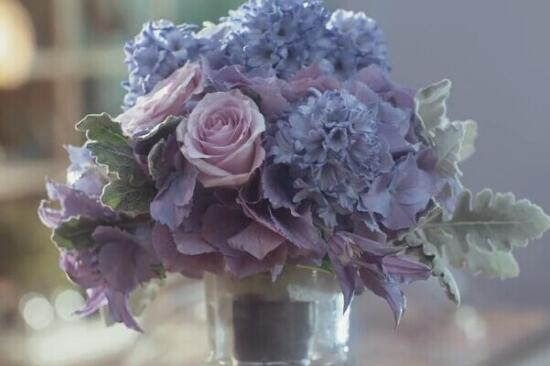
The effects and functions of the hydrangea are amazing. It is not only widely used in gardens, but is also often grown in pots at home, in offices, and other places, giving people a feeling of visual delight. But sometimes, we find that the hydrangea we bought wilts within a few days. What should be done then? The editor has summarized the following points:
1. Cut the flowers
When the hydrangea wilts within a few days, everyone should cut the nearly wilting flowers from the plant. Note that when pruning, cut diagonally with scissors, and make sure there is a very obvious slanted surface on the stem.
Ps: In order to increase the water absorption rate of the flowers, you can crush the base of the cut hydrangea stems with a hard object, so that after soaking in water, the water absorption can be increased.
2. Cut the stems
To alleviate the wilting of the hydrangea, the cut hydrangea stems must not be too long. We should try to cut them short to about 15 cm. This is the same as what was said about how to grow hydrangeas in a vase: the longer the stem, the more water it needs to absorb, and the water needs to travel a longer path to reach the flower, so the stems must be cut short.
3. Soak in water
When the hydrangea wilts within a few days, after the above preparations, the key point comes. Everyone should insert the treated wilting hydrangea into a short vase, with the water level just covering the roots. After caring for it this way for a period of time, the wilted flowers will regain their brilliance.
II. Water-soaking freshness-preservation method
In addition to the above method, if you want to maintain the freshness of hydrangeas, the editor can also introduce a simple water-soaking freshness-preservation method. The specific steps are as follows: First, find a small bucket, fill it with clean water, then turn the entire hydrangea upside down in the water, trying to submerge it completely. Second, soak the hydrangea for 5-10 minutes, and note that the time must not be too long.
After 10 minutes, take the hydrangea out, drain the water from the flowers while retaining a small amount of water on the flowers, then put it back into the flower container. When the hydrangea wilts within a few days, after completing the entire water-soaking freshness-preservation process, the hydrangea will come back to life and regain its brilliance.
Overall, the hydrangea is very beautiful, so its wilting is regrettable. However, as long as everyone can do the above points, the hydrangea blooming period will be extended, and we can enjoy this beautiful sight for a longer time. Regarding the hydrangea wilting within a few days, the editor has introduced it up to here, hoping to be helpful to everyone.
What to do when the hydrangea wilts, increase water and provide appropriate shade / sudden environmental changes are the main cause
The hydrangea, as the name suggests, is a flower that looks like a hydrangea. Its flower colors are vibrant and it is deeply loved by flower lovers. However, during cultivation, many flower lovers encounter some problems, such as wilting. So what should be done when the hydrangea wilts? At this time, everyone should not panic, but should find the cause and then solve it accordingly. The editor will explain below.
I. What to do when the hydrangea wilts, find the cause
As a beautiful flower, the hydrangea is often grown in pots at home. However, most people who grow flowers are beginners, so improper care is unavoidable, leading to symptoms of flower wilting. As for what to do when the hydrangea wilts, the editor has found 4 causes and attached solutions. Let us continue reading.
II. Causes of hydrangea wilting and solutions
1. Sudden environmental changes
There are actually many reasons why the hydrangea wilts, but the first thing everyone should consider should be environmental factors. In daily life, many flower lovers buy their hydrangeas online, which can easily lead to large regional differences, making it hard for the hydrangea to adapt for a while, thus causing symptoms of flower wilting.
Solution: At this time, everyone can communicate with the seller to learn about the growing environment of the hydrangea before purchase, and then create the same environment at home. After that, we can slowly make changes until the plant fully adapts to the current environment. After a period of time, the hydrangea will recover its health.
2. Lack of water
Although the hydrangea is beautiful, it needs sufficient water to make the flowers look more vibrant. If the hydrangea lacks water, the flowers cannot absorb water and will show symptoms of wilting.
Solution: What to do when the hydrangea wilts? If the situation is not particularly bad, everyone only needs to frequently sprinkle water on the hydrangea petals, and it will recover after a period of time; if the lack of water is severe, dig out the hydrangea, then soak the entire plant in water, and after a period of time replant it.
3. Light is too strong
The hydrangea prefers shade and does not like sunlight. Once it is given too strong light, it can easily cause it to wilt. In addition, strong light can also cause the hydrangea leaves to turn yellow, thereby affecting its ornamental value.
Solution: What to do when the hydrangea wilts? If it is caused by too strong light, at this time everyone should quickly move the potted plant to a relatively shady place, then immediately water the plant until the soil in the pot is completely soaked, and finally spray water on its branches and leaves.
4. Improper fertilizing
The hydrangea likes fertilizer. During the growth process, it should be given light fertilizer frequently, which can make the hydrangea produce more beautiful flowers. However, if fertilizing is done well, that is fine; once fertilizing is done incorrectly, it may cause the branches and leaves to wither and turn yellow, or even the whole plant to wilt.
Solution: If the situation is not very serious, everyone can adopt the method of watering more to dilute the fertilizer; if the situation is relatively serious, handling it is more troublesome. First cut off its branches and leaves, and second change the pot soil for the plant, so that the hydrangea can become fresh again.
Regarding what to do when the hydrangea wilts, after reading the above content, everyone should know what to do by now! The beauty of the hydrangea leaves a deep impression on all who have seen it, and it is also a common potted ornamental flower and tree in our country. Therefore, in order to enjoy the beautiful hydrangea, everyone should follow the hydrangea cultivation methods when growing it, and must not be careless~
How to grow hydrangeas in a vase, choose a good vase and control the water level / remember not to let it be blown by wind
The hydrangea, a beautiful flower with a long blooming period and large inflorescences, looks like a hydrangea after blooming, and is welcomed and loved by the general public. Growing a potted hydrangea at home does look quite nice, but compared with keeping it in a vase, it is quite a bit worse. So how do you grow hydrangeas in a vase? What should be noted after growing them in a vase? For this, the editor will explain below.
I. How to grow hydrangeas in a vase, prepare the vase
The hydrangea is very beautiful, and if it is grown in a beautiful vase, the effect will be even better. As for how to grow hydrangeas in a vase, first, we must choose a beautiful vase, then insert the hydrangea into the vase. The specific method will be introduced in detail by the editor below, do not miss it~
1. Choose a beautiful vase, short/long
How to grow hydrangeas in a vase? First, naturally, you must choose a beautiful vase. As for size, there are two kinds: one is a short vase, and the other is a long vase.
①Short vase
If hydrangeas are grown in a vase and the stems are relatively long, they need to absorb more water to keep the flowers fresh, and this will shorten the ornamental time of the flowers. It is best to use a short vase, about 15 cm or shorter, so that the flower branches that need to be retained can be shorter.
②Long vase
Of course, in order to improve the ornamental value, everyone can also grow hydrangeas in a long vase (about 46 cm). As shown in the picture above, doesn't it look beautiful? However, after growing them in a long vase, everyone should often check the water in the vase and replace it in time. Doing so can also appropriately extend the vase ornamental period of the flowers.
2. Handle the hydrangea
How to grow hydrangeas in a vase? After the vase is chosen, the next step is to handle the hydrangea. There are also two situations here: one is receiving fresh hydrangea flowers, and the other is hydrangeas cut from the plant.
①Received hydrangeas
If you receive hydrangeas given by others, everyone should trim the flower material, cutting the roots to an appropriate length according to the height of the vase (cut the roots at a 45-degree angle). Note that the cut should preferably be between two nodes of the root, avoiding cutting on a node, and the larger the cut surface, the better, or crush the end to increase the water-absorbing area of the flower material.
②Cut hydrangeas
How to grow hydrangeas in a vase? Besides received flowers, the flowers can also be cut directly from blooming hydrangeas, preferably at a 45-degree angle. After that, soak the hydrangea flowers in clean water for about 2 hours. In order to increase the water absorption of the stems, you can also use a small hammer to crush the base of the stems. Doing so can keep the flowers fresh and brightly colored, extending their water absorption time and ornamental time.
II. Precautions for growing hydrangeas in water
How to grow hydrangeas in a vase? After completing the above steps, it is basically done, but to grow them well, the following points also need attention:
1. Avoid light and wind
It prefers shade and does not like sunlight, so avoid direct sunlight; at the same time, absolutely avoid wind. Once a hydrangea is exposed to wind, it is very easy for it to dehydrate and wilt.
2. Prune carefully
The leaves of the hydrangea are also very beautiful, but after the hydrangea blooms, they should all be cut off to prevent them from competing for water in the flowers, thereby shortening the life of the cut flowers; in addition, when pruning, do not prune the stems of hydrangeas less than 5 years old that have not yet entered the flowering period, because these branches often become the flowering branches of the next year.
3. Change the water in time
When growing hydrangeas in a vase, the most important thing is naturally water. When caring for them, the water level in the vase must not be low; it needs to be filled with deep water for water cultivation, and the water should be changed and the roots trimmed every day, otherwise it is very easy for them to wilt from lack of water. If the hydrangea wilts, the entire hydrangea branch can be soaked in water, and it can easily recover to its original state. If the dehydration is not serious, soaking for about 4 hours is generally enough; if the situation is more serious, it is best to soak it for a whole night.