How to change the color of hydrangeas? Fertilize at the right time; acidic soil turns them blue, alkaline soil turns them red
The beauty of hydrangeas lies in their ball-shaped blooms, and even more in their rich range of flower colors. Gardeners who have grown hydrangeas know that you can change their color: depending on the soil's acidity or alkalinity, you can turn them red, blue or purple. As for how to change the color of hydrangeas, most gardeners probably don't know. So here I'll introduce a method for changing their color, don't miss it~
1. How to change the color of hydrangeas: soil is the key
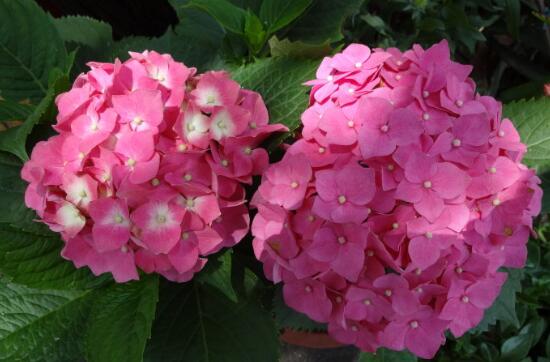
Friends who know something about hydrangeas should know that hydrangea flowers follow the rule of “acid blue, alkaline red”. Simply put: in acidic soil, hydrangeas bloom blue; in alkaline soil, hydrangeas bloom red. But should the soil's pH stay constant all the time, or be adjusted only when they bloom? How to change the color of hydrangeas has become a question every gardener wants to know, so here I'll teach you the secrets of changing hydrangea color!
(1) Making hydrangeas bloom red
If you want red flowers, how do you change the color of hydrangeas? It's actually very simple: just keep the soil on the alkaline side, and the hydrangea will bloom red. Method: don't use acidic soil, and don't apply acidic fertilizer, and it will bloom red. That's why red hydrangeas are very common in everyday life; in roadside planting strips, a swath of bright red hydrangeas looks absolutely beautiful!
(2) How to turn hydrangeas blue or purple
1. Prepare the color-changing fertilizer
How to change the color of hydrangeas? Besides soil, the most important thing is fertilizing. If you want to turn hydrangeas blue or purple, you need to prepare fertilizers that can adjust the soil's acidity or alkalinity, such as aluminum sulfate, white vinegar, ferrous sulfate and potassium fertilizer.
2. Color-changing method and timing
① Making hydrangeas bloom pure blue
If you want hydrangeas to bloom pure blue, you need to pay attention to the timing of adjusting the soil's pH. When the buds form, you should water the roots of the hydrangea with aluminum sulfate fertilizer once every 10 days to increase the aluminum ions in the soil. Why the flowers turn blue: hydrangeas contain an anthocyanin called delphinidin, which turns the flowers blue when it combines with aluminum ions.
How to change the color of hydrangeas? Besides watering the roots with aluminum sulfate once every 10 days, you should also water with acidic water during this period, such as ferrous sulfate and white vinegar water, in order to keep the hydrangea's potting soil acidic for a long time. However, when fertilizing, you must pay attention to the concentration, especially at the beginning; never make it too concentrated. If you find you have fertilized too much or too strongly, immediately water the roots with clean water.
② Making hydrangeas bloom blue-purple-pink
If you want hydrangeas to bloom blue-purple-pink, you also need to apply acidic fertilizer, but the timing needs to be delayed. After the hydrangea starts blooming pink, begin watering the roots with aluminum sulfate and vinegar water, so that as the hydrangea continues to bloom, the color gradually becomes a blue-purple-pink blend. If you keep watering with acidic fertilizer water, the flowers that open afterward may be pure blue.
③ Making hydrangeas bloom blue-purple
How to change the color of hydrangeas? If you want hydrangeas to bloom blue-purple, then besides applying acidic fertilizer before the buds form, you should also stop applying it after the buds show color. After doing this, the soil's acidity will gradually diminish as the acidic fertilizer is stopped, becoming neutral or weakly alkaline, and the hydrangea's flower color will change accordingly, becoming a purple with a hint of blue.
Everything you need to know about planting, caring for and color-changing hydrangeas!
I still remember the first time I saw a hydrangea; I was stunned by it as if it were a heavenly flower. At the time I didn't know it was a hydrangea: a flower ball the size of a head, blooming all over the whole plant, with the colors transitioning just perfectly, so beautiful I couldn't move my feet. "Born like a summer flower" describes passionate flowers like the hydrangea~
The following content comes from: Mr. Beard
Born like a summer flower
Hydrangeas have a dignified, graceful appearance, with flower colors full of variation, sometimes bright and sometimes fresh and elegant, a long ornamental flowering period, and a fondness for semi-shaded environments, so they can even be grown on a north-facing balcony.
Last time we talked about how to tell hydrangeas apart, and many of you left comments asking how to grow hydrangeas. Today we'll explain in detail how to plant, care for and bring out dreamy colors in hydrangeas.
Hydrangea planting
Hydrangeas can be propagated by cuttings, division and layering, among which cuttings are the main method. Because the cuttings need to be kept moist, they are mostly taken during the plum rain season.
Cutting steps
1. Cut a healthy branch of the current year that has not yet sprouted and has plump buds as the cutting, preferably one that feels semi-lignified.
2. When trimming the cutting, keep the nodes: above the node, trim shorter and make a flat cut to preserve the bud; below, make a slanted cut 5cm down; the cut must be smooth and the cut surface must not be crushed; cut the leaves in half to reduce transpiration while still allowing photosynthesis.
3. Choose a well-drained, fertile soil as the medium, and you can add an appropriate amount of perlite to increase aeration; before use, the medium can be sterilized with potassium permanganate or carbendazim; before inserting the cutting, water it thoroughly so it is saturated.
4. When inserting the cutting, make a hole with a wooden stick, insert it and press the soil firm with your hand, then water to settle it in, making sure there are no gaps between the medium and the cutting.
5. Keep it in a shaded spot with diffused light, cool and ventilated; you can cover it with a transparent plastic bag to retain moisture; be sure to check it every day and mist it to keep it moist. If the leaves wilt, it means you watered too little; if the stem turns mushy and black, you watered too much, so discard it promptly to avoid infecting the other cuttings.
Notes
1. If you have rooting powder, you can add a little to improve the survival rate;
2. It will root and be ready to transplant in about 1 month; absolutely do not poke and fiddle with it from time to time.
Daily care of hydrangeas
Hydrangeas like shade, moisture and fertilizer, and have rather poor cold tolerance, so to ensure they bloom abundantly the following year, you need to take good care of them.
Light
In spring and autumn, potted hydrangeas can be placed in a semi-shaded environment; in the strong light of midsummer, move them to a cool, well-ventilated spot; in the cold winter, they can be moved indoors.
Watering
Hydrangea leaves are fairly large and need a lot of water, so water frequently to keep the soil moist; especially in midsummer, water once in the morning and once in the evening; but do not overwater either, drain promptly during the rainy season, and in winter the soil should also be a little drier than usual, so you can reduce watering.
Fertilizing
Some people's hydrangeas bloom little or not at all, very likely because they were not given enough nutrients. During the hydrangea's growing period, apply cake fertilizer once every 15~20 days; when the flower clusters extend, add 1~2 applications of 0.5% superphosphate soaking solution.
Soil
For planting hydrangeas, choose a medium rich in humus, loose and well-drained; for convenience you can directly buy a general-purpose potting mix; every 1~2 years, hydrangeas can be repotted once and pruned.
Pruning
Withered flowers should be pruned, frost-damaged branches should be pruned, and dead branches that no longer grow can be pruned or left alone; apart from that, hydrangeas generally need little pruning, otherwise if you mistakenly cut branches that are growing flower buds, there will be no flowers.
Flowerpot
It is recommended to choose somewhat thicker ceramic or cement pots, which have better breathability.
Color changing of hydrangeas
We often see a clump of hydrangeas blooming beautifully in pink, blue and purple, and we also know the flowering rule of "acid blue, alkaline red", but how exactly do you do it?
Hydrangeas contain an anthocyanin called "delphinidin", which turns the flowers blue when combined with aluminum ions, but it can only absorb free aluminum ions. Most of our potted plants do not contain aluminum, so without color adjustment the flowers are mostly pink.
1. Turning them pure blue
If you want pure blue hydrangeas, before the buds form you can water the roots with aluminum sulfate fertilizer once every 10 days to increase the aluminum ion content; in addition, you can apply an appropriate amount of ferrous sulfate and white vinegar water to keep the soil acidic for a long time.
Pay attention to the concentration when fertilizing; if the hydrangea leaves become soft, it means the concentration is too high, so promptly water the roots with plenty of clean water.
2. Turning them blue-purple-pink
If you want multiple colors, delay the timing of the acidic fertilizer appropriately: wait until the hydrangea begins to bloom pink, then start applying aluminum sulfate and vinegar water. As the soil's acidity gradually changes, the hydrangea will also bloom in dreamy gradient tones.
3. Turning them purple
If you want the hydrangea flowers to lean purple, the acidic fertilizer should be applied before the flower clusters form and stopped after the buds show color; the soil's acidity will gradually diminish as the acidic fertilizer is stopped, becoming neutral or weakly alkaline, and then the flower color will also appear blue-purple.
4. Turning them pink
If the soil you are using is itself on the acidic side and you want to bring out pink, the method is similar, just replace the acidic fertilizer with an alkaline one; you can use plant ash as the fertilizer.
Notes:
1. Fertilizing is not needed all year round; you only need to add and stop it at the appropriate times;
2. For hydrangea varieties, it is best to choose "Endless Summer"; some hydrangea varieties do not have the ability to change color;
3. Each fertilizer must be applied separately when used and cannot be mixed together;
4. Be sure to pay attention to the fertilizer concentration; prefer it dilute rather than strong, and once something seems off, water with clean water to dilute it;
5. During the color-changing period, phosphorus fertilizer should be applied by spraying; watering the roots will hinder the hydrangea from absorbing aluminum ions;
6. Finally, color adjustment must be done in advance; once the buds are set, the flower color cannot be adjusted.
Friendly reminder
Hydrangeas are not edible; accidental ingestion can cause symptoms such as abdominal pain, vomiting, weakness or sweating, and households with children especially need to be careful!
What is the flower language of hydrangeas? How do you cultivate them?
Hydrangea, also known as "eight-immortal flower" and "purple sun flower", is a deciduous shrub of the genus Hydrangea in the family Saxifragaceae, native to China, Japan and other regions. It has a very long planting history in China. Hydrangeas are extremely beautiful, stunning as heavenly flowers: a flower ball the size of a head, blooming all over the whole plant, with the colors transitioning just perfectly, so beautiful you cannot move your feet.
The hydrangea, native to the Mediterranean, has long been famous for being an evergreen tree that blooms in the depths of winter. In the cold winter, suddenly seeing pink buds and white flowers seems to tell people that spring is near. Therefore the flower language of the hydrangea is - hope. People born under the blessing of these abundant flowers are extremely patient and tolerant. They bring hope to many people, and their own lives are also very rich.
Flower language 2: Loyalty, eternity; referring to loyalty in love and the eternity of mutual affection. The blue hydrangea's flower language is romance and happiness.
Flower language 3: Happiness, reunion; the hydrangea's round flowers and beautiful posture symbolize the unbreakable bond with loved ones - no matter how long you are apart, you will always come together again.
Hydrangeas have a dignified, graceful appearance, with flower colors full of variation, sometimes bright and sometimes fresh and elegant, a long ornamental flowering period, and a fondness for semi-shaded environments, so they can even be grown on a north-facing balcony.
Hydrangeas can be propagated by cuttings, division and layering, among which cuttings are the main method. Because the cuttings need to be kept moist, they are mostly taken during the plum rain season.
The most important and most basic thing to know about growing hydrangeas is to pay attention to ventilation; poor ventilation very easily leads to root rot in hydrangeas, and thus the death of the whole plant. Generally, they can be grown in household yards and open balconies. They cannot be grown indoors.
Pay attention to light. Hydrangeas are shade-loving plants, but no light at all will cause the plant to die, and too little light will make it grow poorly; appropriate light can promote the growth of hydrangeas. Taking the Jiangsu-Zhejiang area as an example, outdoor hydrangeas do not need shade when the temperature is below 30°C.
Cutting steps:
1. Cut a node of the current year: above the node, trim shorter and make a flat cut to preserve the bud; below, make a slanted cut 5cm down; the cut must be smooth and the cut surface must not be crushed; take a healthy branch that has not yet sprouted and has plump buds as the cutting, preferably one that feels semi-lignified.
2. When trimming the cutting, keep the leaves and cut them in half to reduce transpiration while still allowing photosynthesis.
3. Choose a well-drained, fertile soil as the medium, and you can add an appropriate amount of perlite to increase aeration; before use, the medium can be sterilized with potassium permanganate or carbendazim; before inserting the cutting, water it thoroughly so it is saturated.
4. When inserting the cutting, make a hole with a wooden stick, insert it and press the soil firm with your hand, then water to settle it in, making sure there are no gaps between the medium and the cutting.
5. Keep it in a shaded spot with diffused light, cool and ventilated; you can cover it with a transparent plastic bag to retain moisture; be sure to check it every day and mist it to keep it moist. If the leaves wilt, it means you watered too little; if the stem turns mushy and black, you watered too much, so discard it promptly to avoid infecting the other cuttings.
Notes:
1. If you have rooting powder, you can add a little to improve the survival rate;
2. It will root and be ready to transplant in about 1 month; absolutely do not poke and fiddle with it from time to time.
Hydrangeas like shade, moisture and fertilizer, and have rather poor cold tolerance, so to ensure they bloom abundantly the following year, you need to take good care of them.
Light:
In spring and autumn, potted hydrangeas can be placed in a semi-shaded environment; in the strong light of midsummer, move them to a cool, well-ventilated spot; in the cold winter, they can be moved indoors.
Watering:
Hydrangea leaves are fairly large and need a lot of water, so water frequently to keep the soil moist; especially in midsummer, water once in the morning and once in the evening; but do not overwater either, drain promptly during the rainy season, and in winter the soil should also be a little drier than usual, so you can reduce watering.
Fertilizing:
Some people's hydrangeas bloom little or not at all, very likely because they were not given enough nutrients. During the hydrangea's growing period, apply cake fertilizer once every 15~20 days; when the flower clusters extend, add 1~2 applications of 0.5% superphosphate soaking solution.
Soil:
For planting hydrangeas, choose a medium rich in humus, loose and well-drained; for convenience you can directly buy a general-purpose potting mix; every 1~2 years, hydrangeas can be repotted once and pruned.
Pruning:
Withered flowers should be pruned, frost-damaged branches should be pruned, and dead branches that no longer grow can be pruned or left alone; apart from that, hydrangeas generally need little pruning, otherwise you may mistakenly cut branches that are growing flower buds.
Flowerpot:
It is recommended to choose somewhat thicker ceramic or cement pots, which have better breathability.
We often see a clump of hydrangeas blooming beautifully in pink, blue and purple, and we also know the flowering rule of "acid blue, alkaline red", but how exactly do you do it?
Notes:
1. Fertilizing is not needed all year round; you only need to add and stop it at the appropriate times;
2. For hydrangea varieties, it is best to choose "Endless Summer"; some hydrangea varieties do not have the ability to change color;
3. Each fertilizer must be applied separately when used and cannot be mixed together;
4. Be sure to pay attention to the fertilizer concentration; prefer it dilute rather than strong, and once something seems off, water with clean water to dilute it;
5. During the color-changing period, phosphorus fertilizer should be applied by spraying; watering the roots will hinder the hydrangea from absorbing aluminum ions;
6. Finally, color adjustment must be done in advance; once the buds are set, the flower color cannot be adjusted.